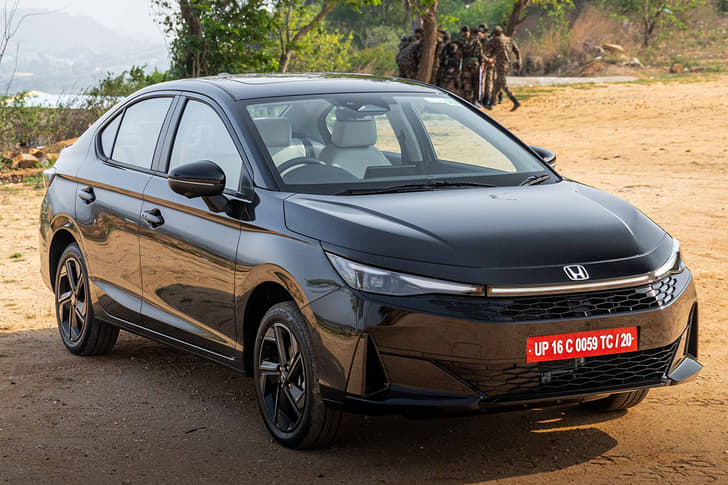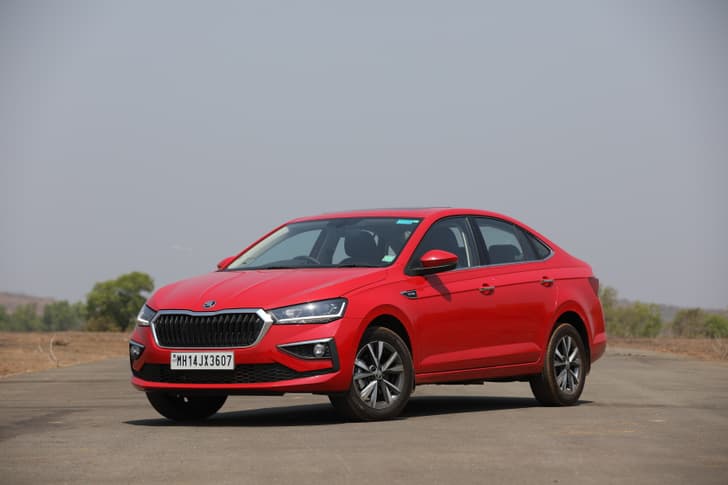

The Verna has always been a refined, comfortable, well-priced, and feature-packed midsize sedan. The latest-gen Verna introduced in 2023 imbibes all of those qualities and wraps them up in a cutting-edge package that outpaces rivals like the Volkswagen Virtus, Skoda Slavia and Honda City in many ways, but it falls short in some. Listed below are three reasons why you should strongly consider buying a Verna, and two reasons why you may be better off with one of its competitors.
1. Competitively priced
Second-most affordable base and top-spec variants
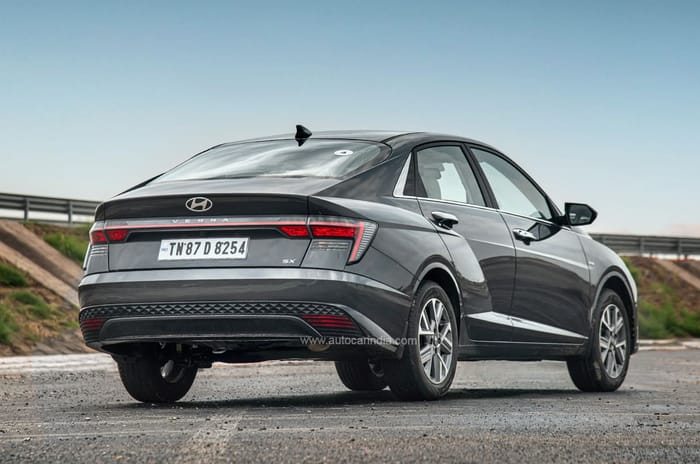
Price is an exceptionally important factor for Indian car buyers, and the Verna does quite well on this front. At Rs 11.07 lakh, the Verna has the second-lowest starting price among its rivals, falling behind only the Slavia’s Rs 10.49 lakh starting price. This is reflected in the range-topping trims as well, with the Verna’s SX(O) Turbo DCT variant coming in at Rs 17.58 lakh, second only to the City’s Rs 16.73 lakh price tag for the top-spec ZX CVT variant.
Verna’s automatic variants start at the lowest price
1.5-litre naturally aspirated engine 11.07-16.40 | 1.5-litre turbo-petrol engine 15.04-17.58 | CVT automatic gearbox 13.62-16.40 |
DCT automatic gearbox 15.27-17.58 |
Notably, the Verna secures a crucial win by offering an automatic gearbox at a more accessible price point than its competitors. The Verna can be had with a CVT automatic gearbox starting from the S IVT trim (Rs 13.62 lakh), while the 7-speed dual-clutch transmission is offered from the S(O) Turbo trim (Rs 15.27 lakh) onwards, undercutting comparable variants from rivals by up to Rs 1.25 lakh.
As for the Verna’s stronger turbo-petrol engine, it’s available with a 6-speed manual gearbox starting from the SX Turbo trim, which costs Rs 15.04 lakh; this, again, is more affordable than the Slavia and Virtus by up to Rs 2.56 lakh.
2. Most powerful turbo-petrol engine in its segment
160hp, 253Nm
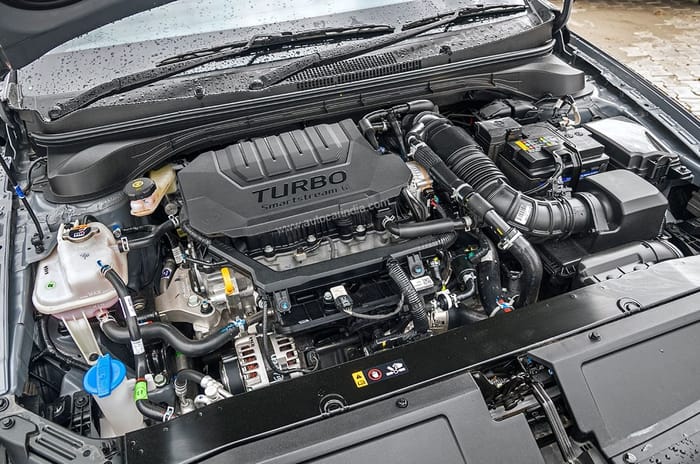
In recent years, midsize sedans have accrued more favour with enthusiasts thanks to their punchy engines, and the Verna’s 1.5-litre turbo-petrol unit is the most powerful of them all. Developing 160hp and 253Nm, the Verna’s engine is 10hp and 3Nm stronger than the 1.5-litre turbo-petrol motors available with the Virtus and Slavia, and when compared to the City’s naturally aspirated VTEC unit, the delta widens to a whopping 39hp and 109Nm.
Verna is the quickest to 100kph
Engine 1.5-litre, 4 cyls, petrol / 1.5-litre, 4 cyls, turbo-petrol | Power (hp) 115 / 160 | Torque (Nm) 144 / 253 |
Gearbox 6-speed MT, CVT / 6-speed MT, 7-speed DCT | Kerb weight (kg) 1,248 (turbo-petrol DCT) | 0-100kph (seconds) 8.82 |
The Hyundai sedan’s 1,248kg kerb weight for the 1.5-litre turbo-petrol DCT variants also places it on the lighter side compared to its rivals. In our performance comparison between the Verna and Virtus, the former’s weight and power advantage allowed it to achieve a segment-best 0-100kph time of 8.82 seconds.
3. More feature-rich than rivals
Radar-based Level 2 ADAS
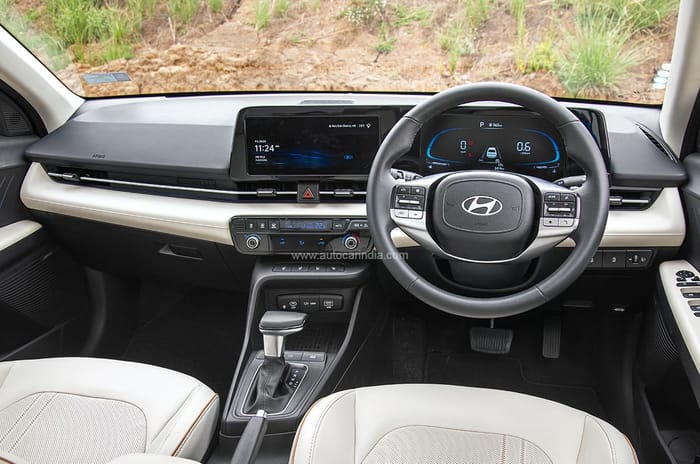
In typical Hyundai fashion, the Verna comes loaded to the gills with features, including a couple of segment-firsts. Chief among them is a Level 2 ADAS suite, which is available in the Verna’s SX(O) automatic variants only. While the City also gets ADAS tech – that too on manual variants – it’s a camera-based implementation instead of the Verna’s radar-based setup, with the latter being much more effective in adverse weather conditions. The Virtus and Slavia, meanwhile, don’t offer any form of ADAS functionality.
Front seats are heated and cooled
Another feature unique to the Verna is a heating function for the front seats in addition to cooling – particularly useful for buyers living in colder climates. The Verna also one-ups rivals with a marginally larger 10.25-inch touchscreen infotainment (10-inch systems in Virtus/Slavia, 8-inch unit in City), partial electrical adjustment for the driver’s seat, customisable ambient lighting, rear disc brakes (barring the City’s hybrid variant), and an electronic parking brake. Audiophiles should also note that the Verna has a Bose sound system, but the 8-speaker setup is matched with rivals.
However, it has a couple of things going against it.
1. Polarising design
Split-headlight setup has drawn criticism
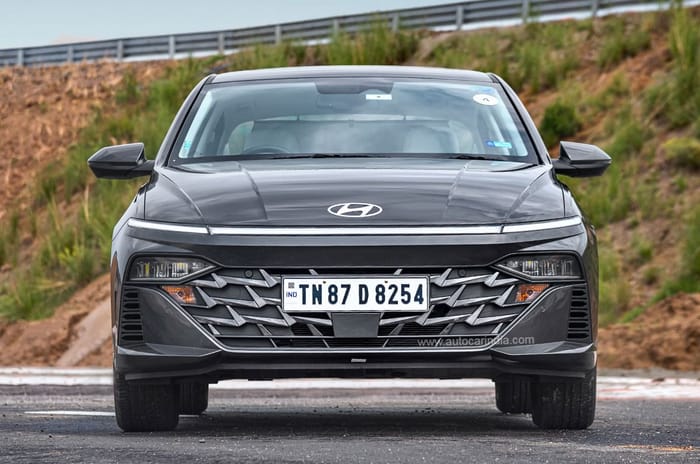
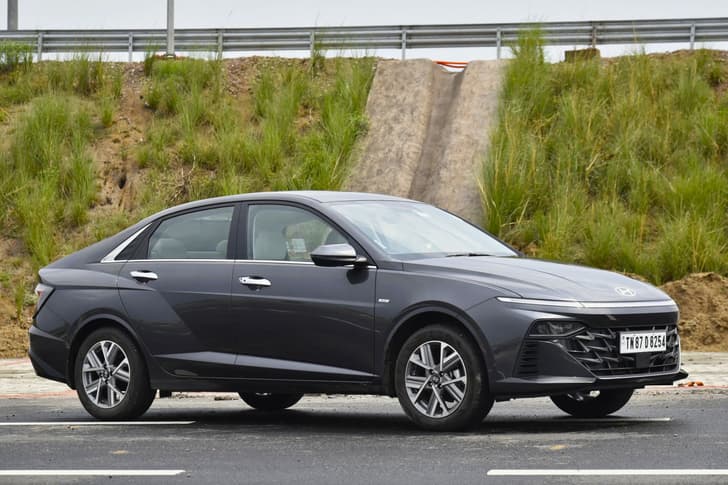
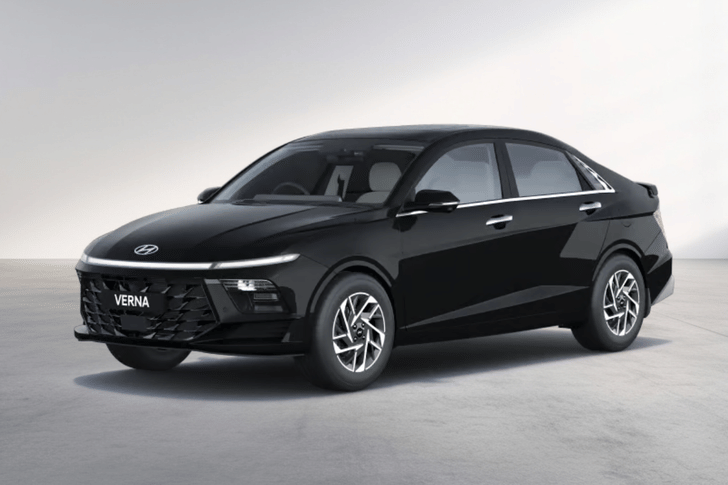
One of the biggest complaints surrounding the current-gen Verna is its radical but divisive styling. Up front, the Verna sets itself apart from rivals with a split-headlight setup, which is commonly seen on SUVs and crossovers, but in execution, many find that it doesn’t gel well with a lower-slung sedan bodystyle. The overall proportions of the Verna are much more angular and sporty – especially the fastback-style roofline – than those of prior-gen models, but there’s an overabundance of design elements on nearly every surface of the car. The tyres look a tad undersized as well.
2. Not as fun to drive as rivals
Lack of steering feel comes through while driving enthusiastically
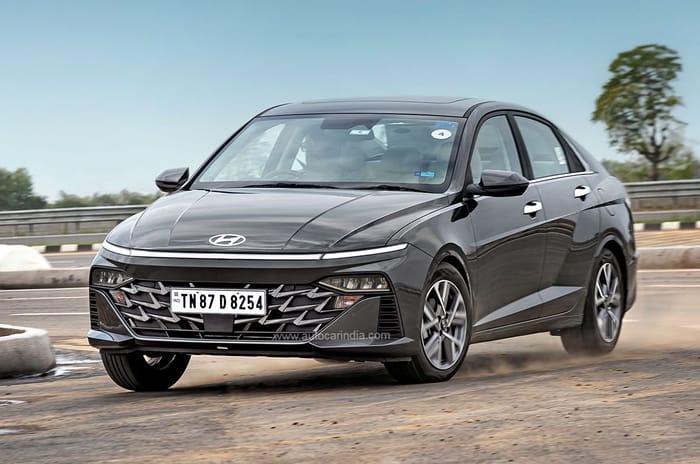
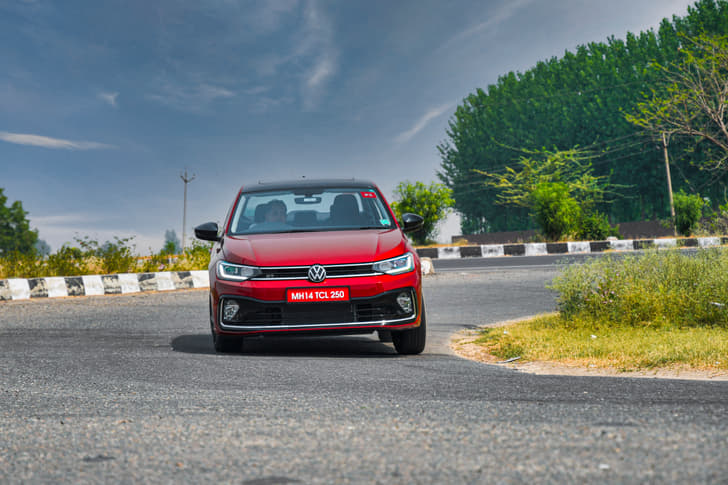
Having a powerful engine and segment-beating straight-line performance is one part of the enthusiast equation the Verna excels at, but it does falter a bit once it’s shown a corner. As noted in our Verna vs Virtus vs Slavia comparison, the Hyundai sedan’s steering feel is an improvement over previous-gen models, but still not as good as its rivals. The Verna’s softer suspension tuning also makes it a bit less engaging to drive in a spirited manner. Hopefully, Hyundai will address most of these concerns in the upcoming Verna facelift – scheduled to launch in 2026.

 Uday Singh
 Glenn Noronha
 Dipan Sur