
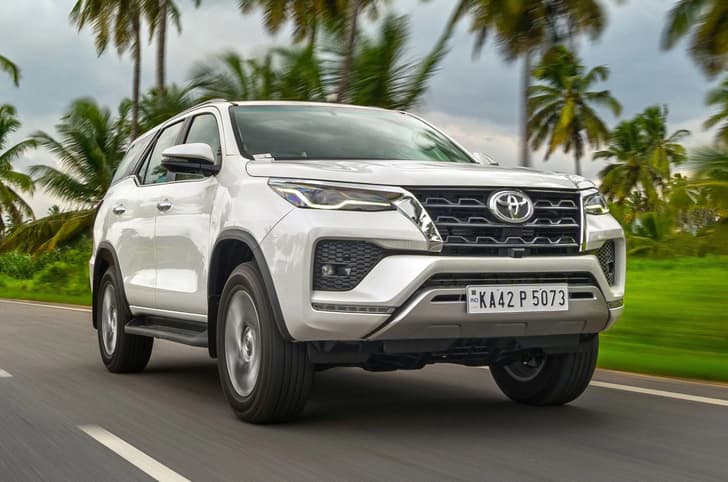
The Toyota Fortuner is one of the most popular SUVs in India, thanks to its powerful engines, rugged construction, off-road ability and Toyota’s reputation for reliability. The SUV is currently available in its second-generation facelift, which was launched in 2021. If you are planning to buy one, here are two reasons to consider the Fortuner and two reasons you may want to look at other options. Let’s start with the positives.
Reasons to buy the Toyota Fortuner:
Feels indestructible
Robust suspension and body-on-frame construction make it feel bulletproof
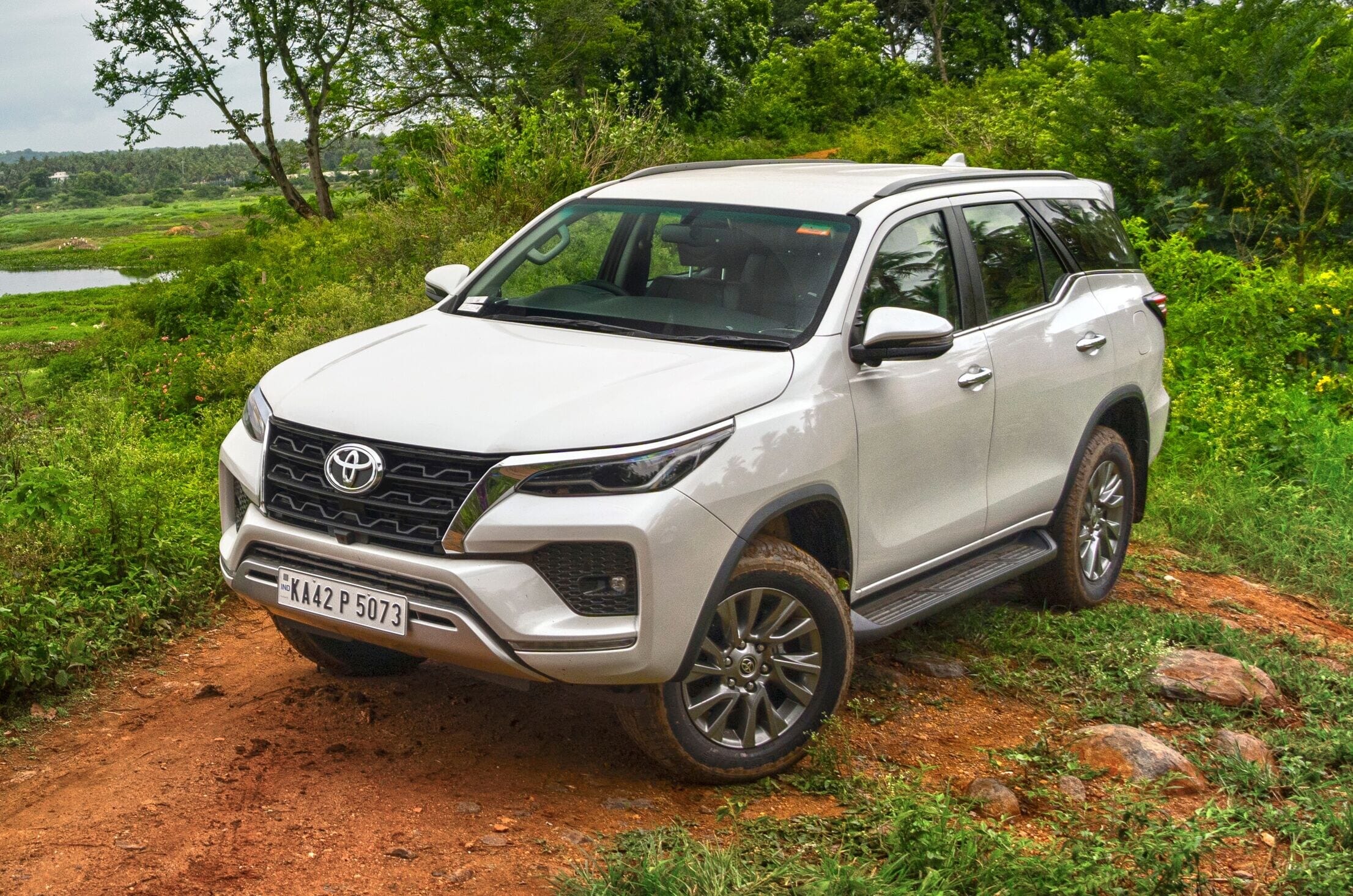
The Toyota Fortuner’s body-on-frame construction makes it feel solid and built to last. Its suspension is tough and designed to handle rough roads with ease. While the ride feels firm at low speeds and small bumps can be felt inside the cabin, the suspension handles large potholes, broken roads and unpaved tracks without much trouble.
The Fortuner is also one of the most capable off-road SUVs in its segment. It comes with a low-range transfer case, Multi-Terrain Select (MTS) modes, an electronic differential lock and a water-wading capacity of 700mm. These features make it easy to drive through muddy trails, rocky paths, steep inclines and even waterlogged roads. Whether you are heading to the mountains or exploring off the beaten path, the Fortuner has the hardware to handle it with confidence.
Offers a strong performance
Torquey diesel engine allows for a sub-10s 0-100kph real-world run time
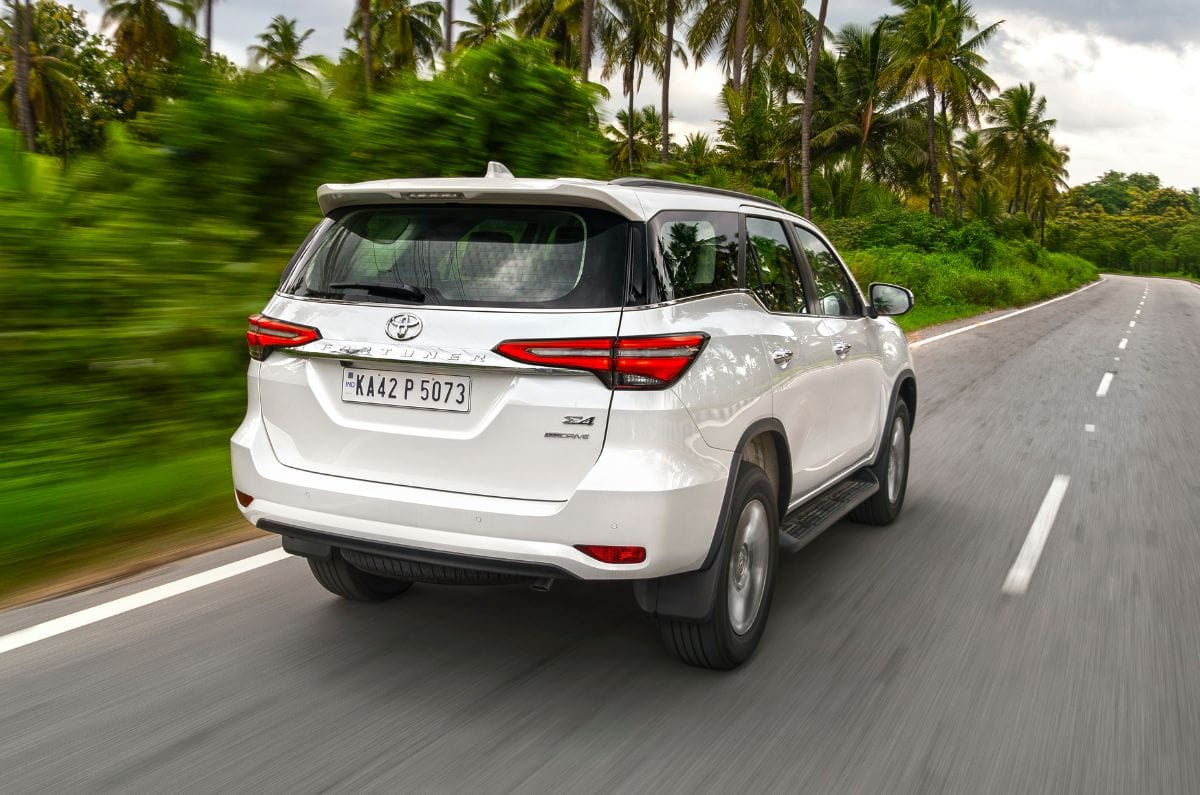
One of the Fortuner’s biggest strengths is its engine options: a 2.7-litre petrol mill that makes 166hp and 245Nm, and a 2.8-litre diesel unit that produces 204hp and up to 500Nm. The diesel engine is also available with a 48V mild-hybrid system.
We tested the diesel-automatic version, which had a 0-100kph time of 9.96 seconds. That’s impressive for an SUV of this size and weight. The diesel engine delivers its maximum torque from low revs, so the Fortuner feels effortless to drive in the city and while overtaking on highways. It doesn’t need to be revved hard, although performance starts to taper off at higher revs.
The 6-speed automatic gearbox is tuned for smooth and reliable performance rather than quick gear changes. It works well for daily driving and long-distance cruising, but enthusiasts may find it less engaging than the faster-shifting automatic transmissions on some newer SUVs.
What community is saying on the Fortuner?
Reasons not to buy the Toyota Fortuner:
Interior does not feel premium
The cabin looks dated and misses out on a lot of feel-good features
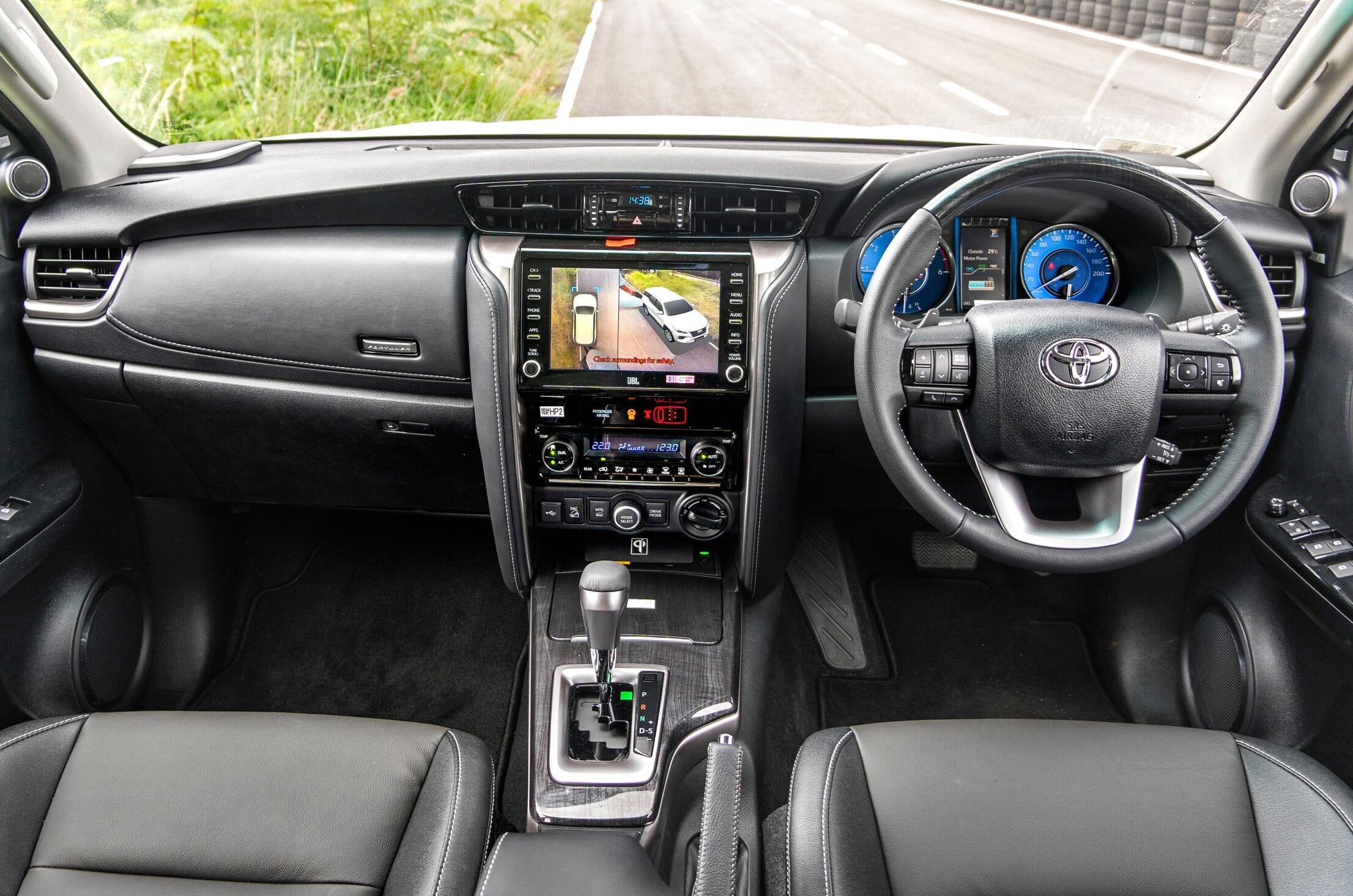
While the 2021 facelift brought some updates, the Fortuner’s overall dashboard design and cabin layout have remained largely unchanged since the second-generation model arrived in India. Compared to SUVs like the MG Majestor, Skoda Kodiaq, Volkswagen Tayron and Jeep Meridian, the Fortuner’s cabin does not feel as modern or premium. The use of hard plastics and average-quality switches also remind you that this is an older design. At a price point that goes up to about Rs 50 lakh, the cabin feels like it could offer more in terms of quality and sophistication.
The Fortuner’s feature list is another area where it falls behind newer rivals. It gets useful features such as ventilated front seats, an 8-inch touchscreen infotainment system, dual-zone climate control, an 11-speaker JBL audio system, a 360-degree camera and a powered tailgate on select variants. However, it misses out on features such as a sunroof, advanced driver assistance systems (ADAS), powered front seats and an electronic parking brake, which are now available in several more affordable SUVs. Even the 360-degree camera quality feels average compared to what the newer competitors offer, making the Fortuner feel less tech-focused than its rivals.
Prices are on the steeper end
The Fortuner is priced at a premium over its rivals
The Toyota Fortuner is priced from Rs 34.76 lakh to Rs 50.46 lakh, making it one of the most expensive SUVs in its segment. In this price range, it is expected to offer a more premium experience, but a dated cabin, average material quality and missing modern features make it feel expensive compared to newer rivals.
However, the Fortuner’s appeal goes beyond features and cabin quality. Its rugged construction, off-road capability, proven reliability, strong resale value and Toyota’s widespread service network continue to attract buyers. For many, the confidence of owning a durable and low-maintenance SUV outweighs the lack of premium features offered by newer rivals. These qualities have helped the Fortuner maintain a strong following in India, despite falling behind competitors in areas like interior quality and technology.
Prices are ex-showroom, India.


 Uday Singh


 Glenn Noronha