Bayon, Venue, or Sonet: Buy?

Last Updated on: 06 Nov 2026
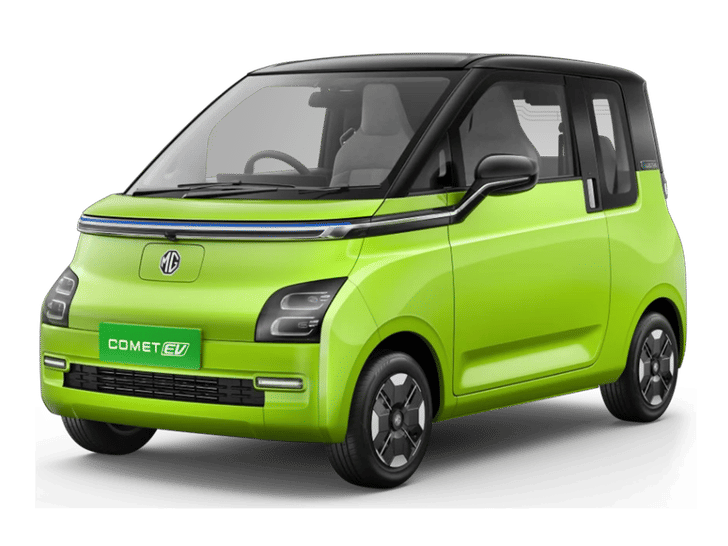
The MG Comet comes in 5 variants across the Executive, Excite and Exclusive trims, with FC versions of the Excite and Exclusive. Every variant uses the same 42hp motor and automatic gearbox, and has the same 230km claimed range.
Which Comet trim gets which features:
Note: As per us, the FC versions are the better buys, and the Excite FC offers the best value in the range.
MG Comet Official Brochure
Download the complete brochure with specs, features, and variants.
Hear from the
Join the Discussions


I am based in Dabolim, Goa, and have been using an MG Comet for the last 2 years. I am looking for an additional car for myself. Recently, I had a look at the Bayon, but I am yet to take a test drive. I found its bonnet to be at a high level from the driver's seat. So, I thought of going for the Venue, which I am also yet to test drive. My annual running is less than 10,000 km, primarily within the city. Kindly suggest what would be best for me. Is buying a Kia Sonet worth it compared to the Bayon and the Venue, keeping in mind that I prefer a somewhat compact car?
Considering that you already have an MG Comet and want something a little bigger but still compact, we would suggest looking at the Hyundai Venue. With annual running of less than 10,000km, a petrol engine makes more sense than a diesel. The Hyundai Bayon is worth considering too, particularly for its refined naturally aspirated engine, but if you don't need the additional space and are willing to compromise a little on engine refinement, the Venue or Kia Sonet will help you save some money.Between the Sonet and Venue, we would pick the Venue. It is the newer product and offers better rear seat space, which could be useful if you want this car to double up as a family car. The Sonet is due for a generational change in 2027, so buying one now may also mean missing out on a substantially updated model.
I've been using Kia Syros from a year and I love the size, the rich cabin and how all of its electronics work fuss free. We've driven for around 5000 km in a year which understandably isn't a lot. I plan to take the car to intercity/state in future. Now, I'm considering an EV Car strictly for city use and I've narrowed down to MG Comet for its size. I'm not worried about pricing as I'm certain what I'm getting. My question is, if there is any small car launch planned during the next 6 months or should I go ahead with Comet? How's MG's Battery Health Calibration done? I haven't seen any elaborate discussion in ranking or refinement on which brand does best/worst battery optimization.
The MG Comet is a genuinely well-packaged city EV - its compact size, tight turning circle and ease of parking make it ideal for urban use, and it is one of the few cars that truly embraces the city-car brief. MG’s battery management system is well-calibrated for Indian conditions, and the brand has not faced any widespread battery health or calibration issues in the market. There is no clear “best” or “worst” brand in battery optimisation – most mainstream manufacturers now have robust BMS systems, and the differences are marginal in real-world ownership. The bigger factors are usage patterns, charging discipline and thermal management, all of which the Comet should handle well. Given your low annual running and city-focused brief, the Comet is a sensible and well-timed purchase.VinFast has still not officially confirmed the VF3 for India, which is a micro electric SUV very popular in its home market, Vietnam. Besides that, there is nothing scheduled to be launched that is as convenient and compact as the Comet.
I need to commute 150 km per week. We have a petrol car at home and solar charging is possible at home. Should I go for MG Comet EV?
Yes, the MG Comet is a sensible choice for your usage. At 150 km per week, your running is not extremely high, but it is enough for an EV to make financial sense, especially with solar charging at home. The Comet is a compact city electric car with a low running cost, and the ability to charge this MG car from solar at home will significantly reduce your operating costs over time. It is also easy to park and manoeuvre, making it well suited to daily commuting.The key consideration is practicality. The Comet is a small car with limited rear seat space and a small boot, so it is best suited as a second car for city use rather than as a family car. If your commute is mostly city driving and you already have a petrol car at home for longer trips, the Comet fits the brief well.If you need more space or plan to use the car for longer trips, you could consider the Tata Punch EV, but for a dedicated city commuter with solar charging, the Comet is a cost-effective and practical choice.
I am planning to buy a small car for city driving. I already have a Toyota Innova Crysta for outstation trips. I would preferably like a clutchless car, and I am also considering EVs.
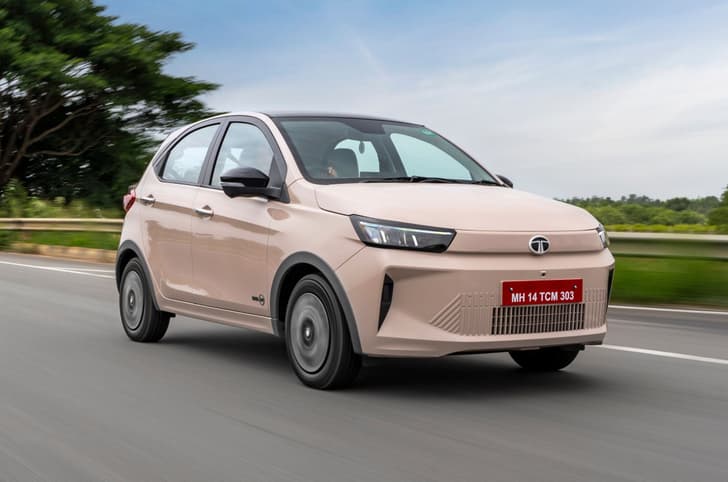
The MG Comet would be our first recommendation. It is genuinely compact, extremely easy to manoeuvre in tight city spaces and has a very low running cost. The only drawback is its limited range, but since your usage is city-focused and you have the Crysta for longer trips, this should not be a major concern.If you want something with a bit more range and a more conventional car feel, the recently updated Tata Tiago EV is a good alternative. The Tata car is still compact and easy to drive, but offers a more traditional hatchback experience and a longer range.Overall, the MG Comet is the better fit for your brief, but the Tiago EV is worth considering if you want a bit more versatility. If your budget is under Rs. 5 lakh, you won't get a brand new EV. However, if you avail of MG's or Tata's BaaS (Battery as a service) subscription system, the upfront cost of both cars' base models does fall under Rs. 5 lakh.
Dear Autocar Team, I am looking to replace our household’s trusty Maruti Suzuki Swift AMT model. This vehicle serves strictly as our secondary car, and its duties are entirely urban: daily school runs, grocery trips, and the occasional trek across the city. It will not see any highway use. Given that city traffic is notorious for tanking the fuel efficiency of petrol cars, I am wondering if shifting to an EV makes sense. I have been looking closely at the Tata Punch EV as a potential replacement. Could you please advise on the following: 1. For an exclusively urban, low-to-medium mileage use-case, is an EV truly recommended over traditional ICE automatic models, and will it be economically viable in the long run? 2. How does the Punch EV fare as a pure city commuter in terms of real-world range, ease of driving in traffic, and long-term reliability? Are there specific variants you recommend? 3. Are there any other petrol, automatic or EV alternatives in this segment that I should consider before making my decision?
Yes, switch to an EV if you have a fixed parking spot where you can install a home charger - for a pure city, second car, the Tata Punch EV fits best. Stop-go traffic is where EVs save the most, and with low maintenance and cheap electricity, the math works out over a few years. If you cannot charge at home, skip the EV idea.As a city commuter, this Tata car is easy. Light steering, smooth creep, strong regen that lets you use the brake less, and ground clearance for bad roads. In real use, the Medium Range handles a typical week of school runs and errands on a single charge; the Long Range provides more buffer if others in the family do longer loops. Tata’s EVs have held up well so far, and support is wide. For variants, pick the Medium Range if your daily running is short and you can top up at home; choose the Long Range only if you want to charge less often. The 7.2 kW home charger is nice to have, not a must-have.Also, look at the Tata Tiago EV for a lower price, and the MG Comet if you want something compact. If you stay petrol, the Hyundai i20 IVT or Amaze CVT automatics are the easiest city alternatives.
Get answers from Autocar experts and owners