
Last Updated on: 18 Sep 2026
Honda Elevate
Honda Elevate is a five-seat SUV built around a 458-litre boot, which is one of the largest in its class. There is a single engine across all 11 variants, a 1498cc petrol producing 121hp and 145Nm of pulling power, and you can have it with either a 6-speed manual or a CVT automatic.
Elevate Key Features
Here is what you get across the range.
Category | Key Features |
Engine and gearbox |
|
Screens and audio |
|
Safety |
|
Comfort and convenience |
|
Practicality |
|
Elevate Road Test Findings
What we liked
Ride and handling are the best part of this car, because the long-travel suspension is on the firm side but works very well, and there is very little body roll for a tall SUV.
The steering is accurate and light at low speeds, weighting up progressively as you go faster.
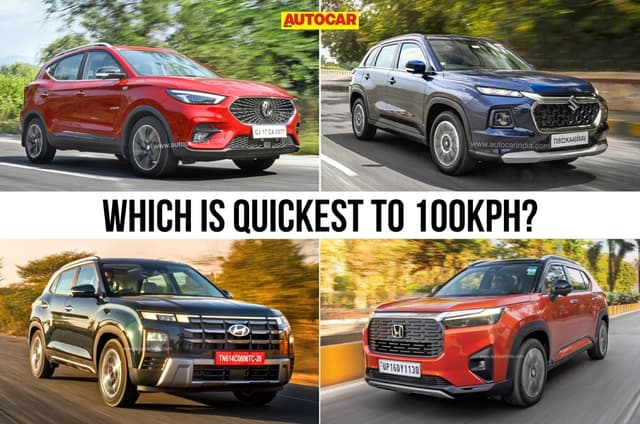
We recorded 10.8 seconds from 0 to 100kph along with a top speed of 161kph, so it is quick enough for its class.
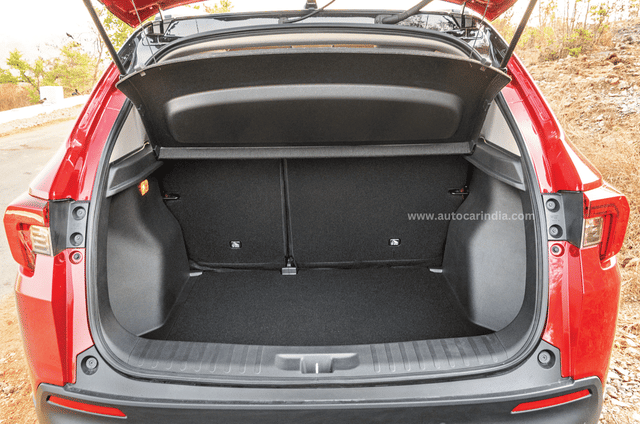
The 458-litre boot is both large and well shaped, and the rear seats split 60:40 when you need more room.
What we did not like
Cabin insulation is poor, because you hear the engine at middle and high revs and tyre and road noise comes through at all times.
The CVT automatic has too much of the rubber-band effect under hard acceleration, holding the engine at high revs when you least want it.
With only 145Nm the engine runs short of pulling power when you push it, and there is no hybrid or turbo option to fall back on.
It is not as well equipped as some rivals, the touchscreen interface is a bit too basic, and a middle passenger in the back will feel unwelcome because the car is narrow.
Who should buy the Elevate?
Based on our road test, this SUV suits five kinds of buyers.
Buyer type | Why it fits |
If you enjoy driving | The steering is accurate and the body control is unusually good for a tall SUV, and our road test rated this the car's standout quality. |
If you carry luggage | A 458-litre boot that is well shaped, with 60:40 split rear seats when you need more space. |
If you want driver assistance as standard kit | Honda Sensing brings collision mitigation, lane keep assist and adaptive cruise control. |
If you drive mostly in traffic | The CVT works well at low speeds and the engine responds immediately to the throttle without any dead zone. |
If you carry four people regularly | Rear space is generous for two adults, though the narrow cabin makes a fifth passenger uncomfortable. |
The buyer it suits least is anyone who wants a quiet cabin or strong pulling power, because insulation is this car's weakest area and the single naturally aspirated petrol leaves no diesel, turbo or hybrid alternative.
Honda Elevate Price Details
Petrol SV MT (base model): 11.81 lakh (ex-showroom)
Petrol ZX MT (mid variant): 15.19 lakh (ex-showroom)
Petrol ADV Edition CVT (top model): 16.78 lakh (ex-showroom)
Honda Elevate Latest Updates
- 08 Sep 2026: Our dealer sources suggest that the Honda Elevate facelift will debut in early October
- 23 May 2026: The Elevate is expected to receive a mid-lifecycle update this year.
Honda Elevate Features and specifications
Our Rating | 8 |
Mileage | 15.31 kmpl - 16.92 kmpl |
Engine | 1498 cc |
Fuel Type | Petrol |
Transmission | CVT, Manual |
Seats | 5 |
Body Style | SUV |
Doors | 5 |
Max Power | 121hp at 6600 rpm |
Max Torque | 145Nm at 4300 rpm |
| Engine Type | |
| Engine Displacement | 1498 cc |
| Number of Cylinders | 4 |
| Engine Installation | Front |
| E20 Compatibility | Yes |
| Emission Standard | Bharat Stage VI |
| Terrain Modes | No |
| Official Fuel Economy | 16.92 kmpl |
| Front Suspension Type | Independent, MacPherson Strut |
| Front Springs | Coil Springs |
| Rear Suspension Type | Nonindependent, Torsion Beam |
| Rear Springs | Coil Springs |
| Length | 4312 mm |
| Width | 1790 mm |
| Height | 1650 mm |
| Wheelbase | 2650 mm |
| warranty Distance | Unlimited km |
| warranty Duration | 3 Years |
| 12 Volt Port | |
| Ambient Lighting | |
| Auto Parking | |
| Bluetooth Connectivity |
| Adaptive Cruise Control | |
| Airbags | 6 |
| Anti Theft Alarm | |
| Anti-Lock Brakes (ABS) |
| Antenna | Shark Fin |
| Body Coloured Bumpers | |
| Connected LED | |
| Cornering Headlights |
| Average Fuel Consumption | |
| Average Speed | |
| Distance to Empty | |
| Gear Indicator |
| AUX Input | |
| Android Auto | Wireless |
| Apple CarPlay | Wireless |
| Audio System |
| Alexa Compatibility | |
| Auto Crash Alert | |
| Car Light Flashing & Honking via App | |
| Check Vehicle Status via App |
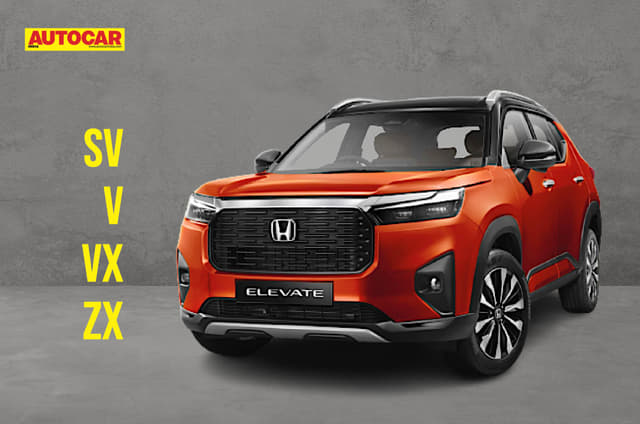
Honda Elevate price & variants
Honda Elevate price in India starts at 11.81 lakh for the Petrol SV MT and rises to 16.78 lakh for the Petrol ADV Edition CVT, both ex-showroom, while the on-road price in Mokokchung runs from 13.11 lakh to 18.63 lakh. All 11 variants share the same 121hp petrol engine, so your choice comes down to gearbox and equipment.
Which one to pick:
The manual is the better choice if you drive briskly, because its shorter gearing makes it quicker in rolling acceleration than the sedan it is based on.
The CVT suits city traffic, where it is smooth and easy, though it gets noisy under hard acceleration.
Honda Sensing driver assistance is worth checking variant by variant, as is the 360-degree camera, which is fitted to the ADV Edition.
EMIs for the Petrol SV MT start at 18,985 a month.
Honda Elevate Expert Review
We like
Space and comfort
Ride and handling
We don't like
Features not up to class standards
Needs a turbo or hybrid engine option
8
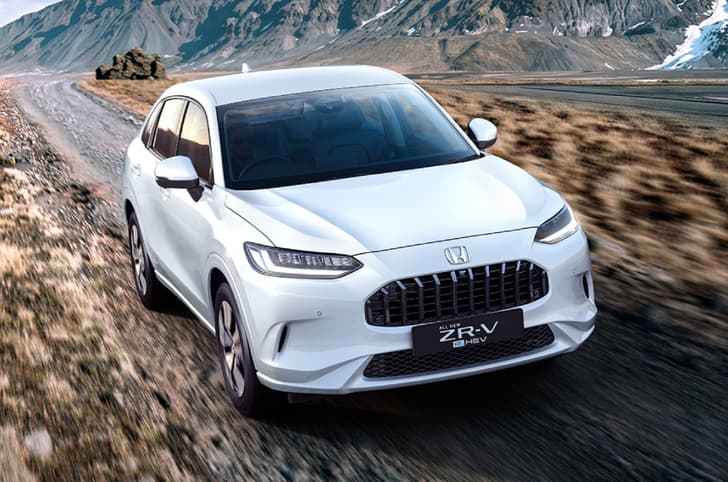
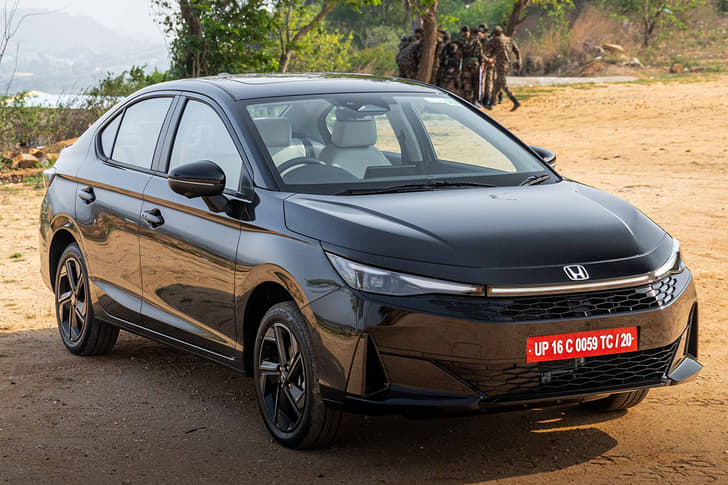
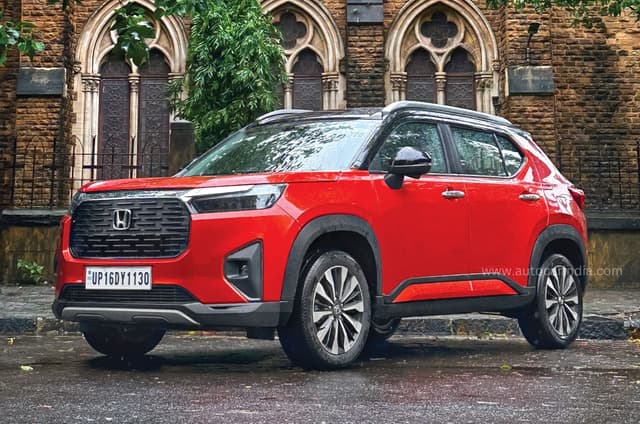
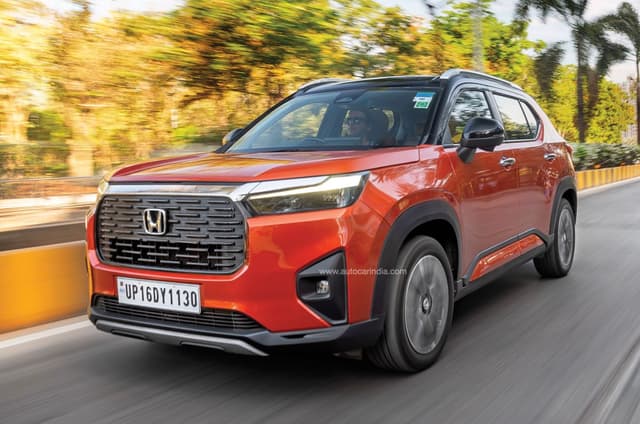
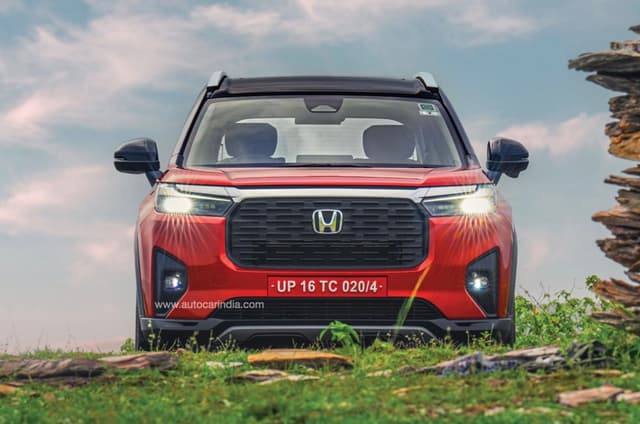
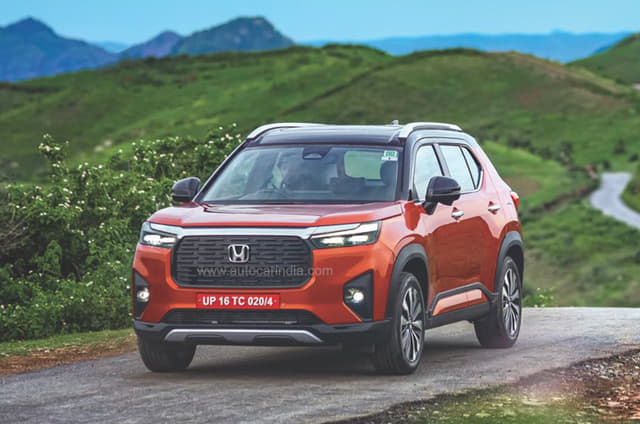
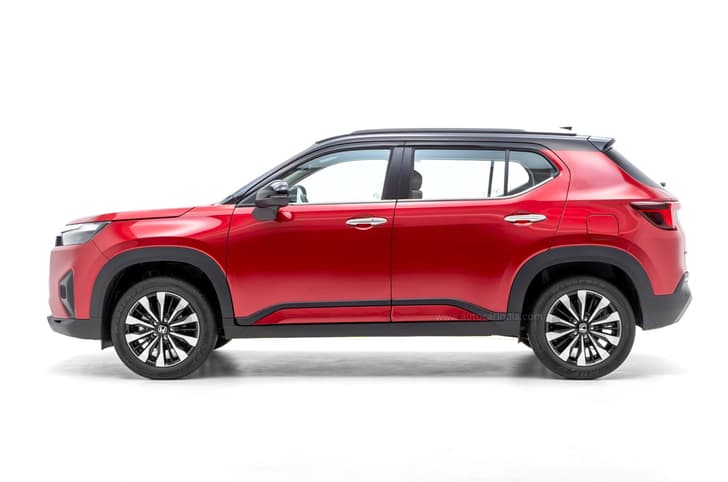
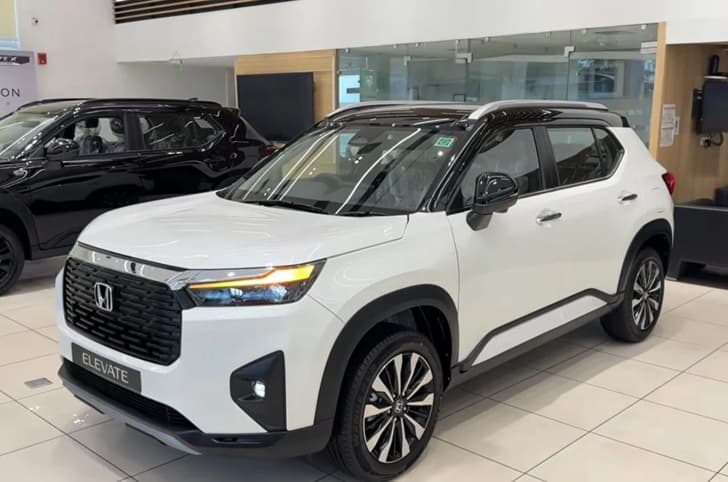
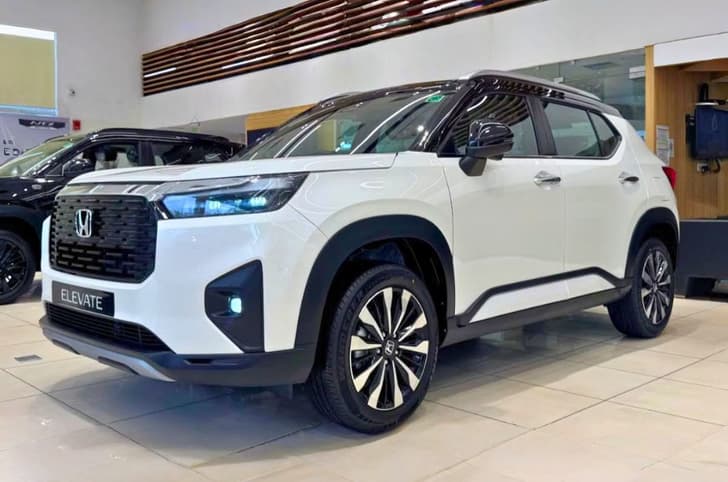
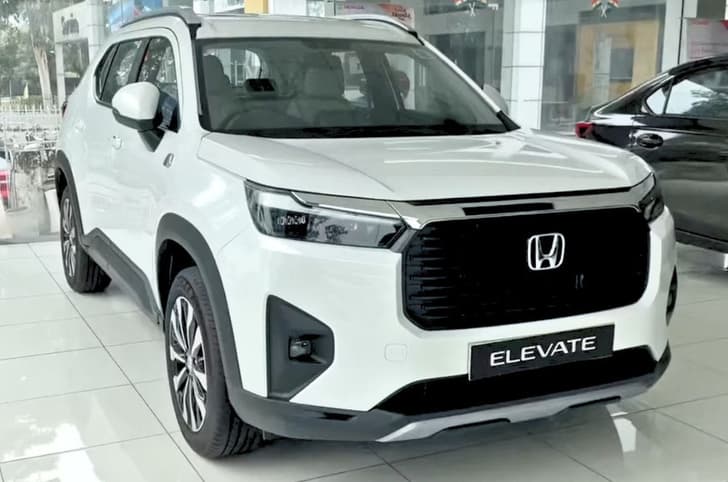
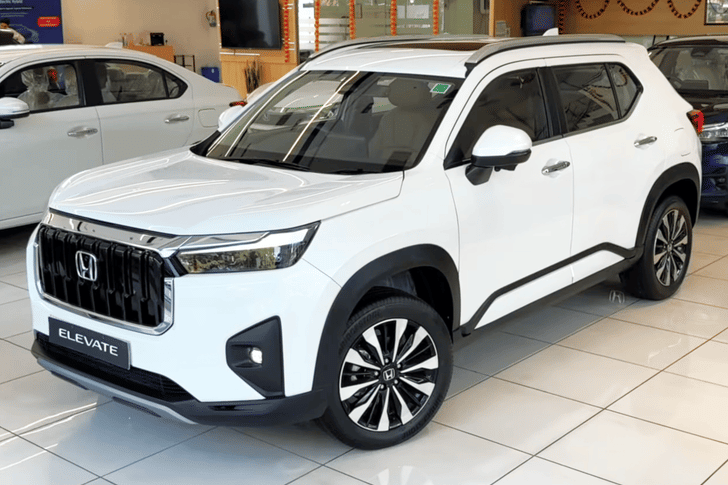
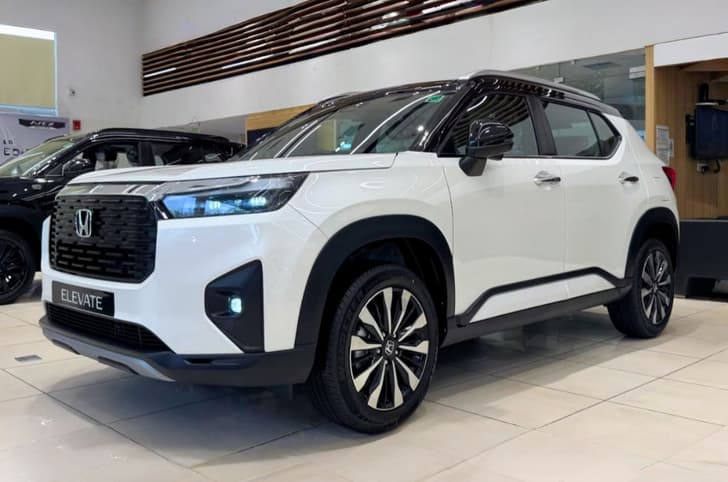
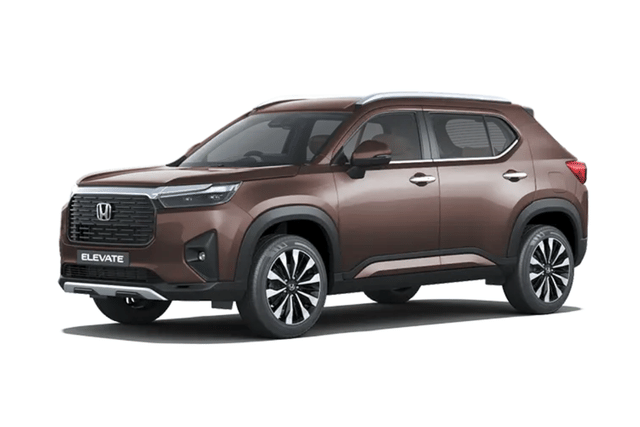
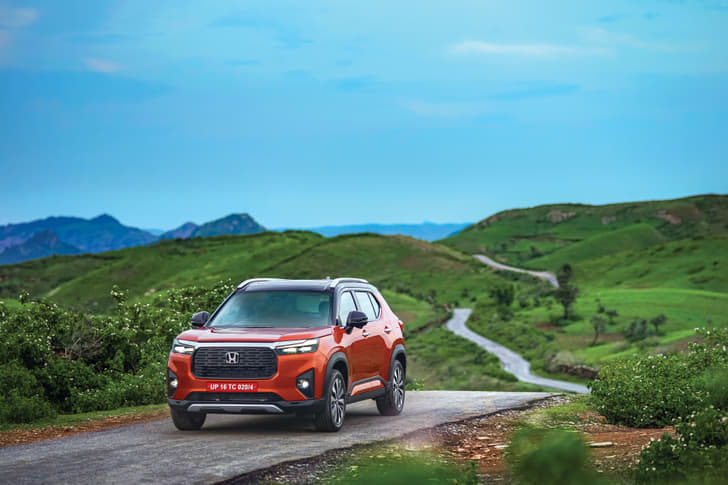
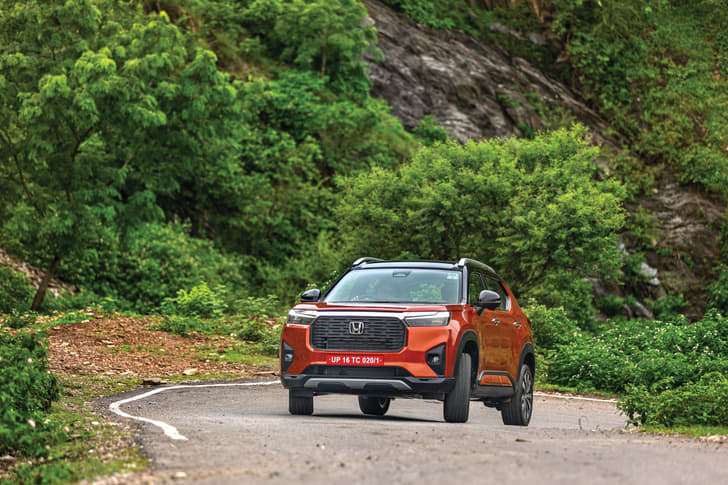
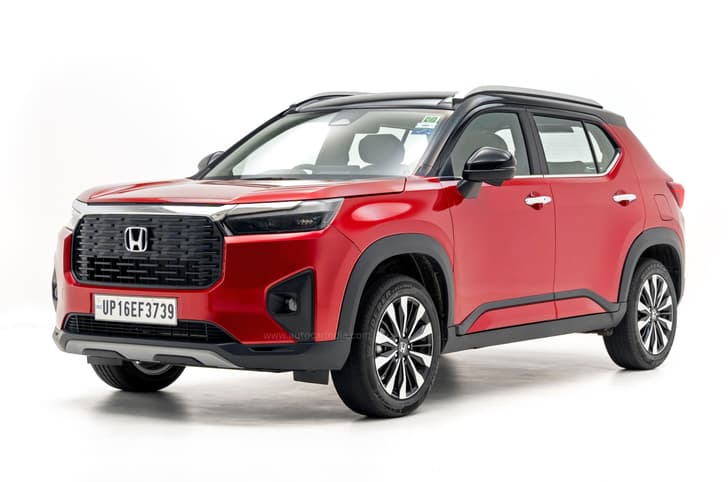
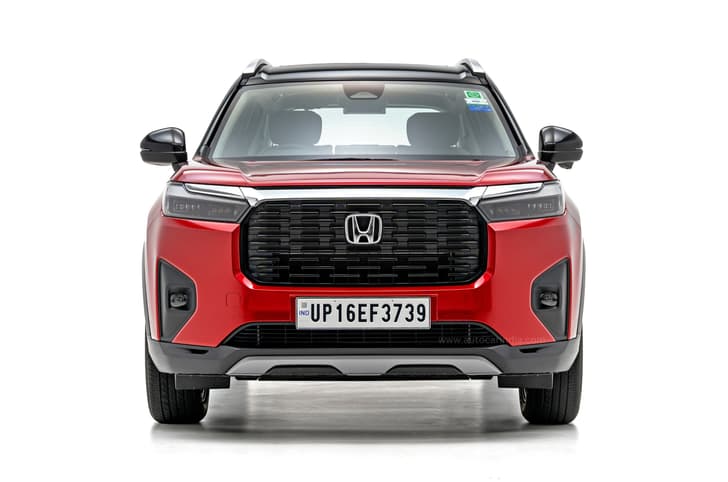
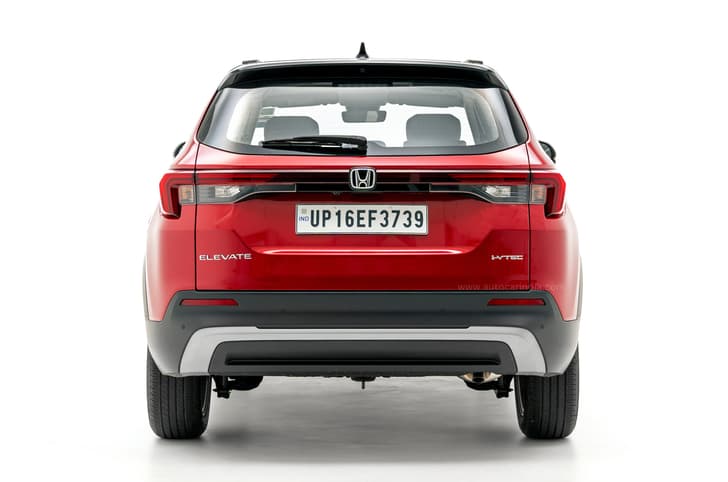
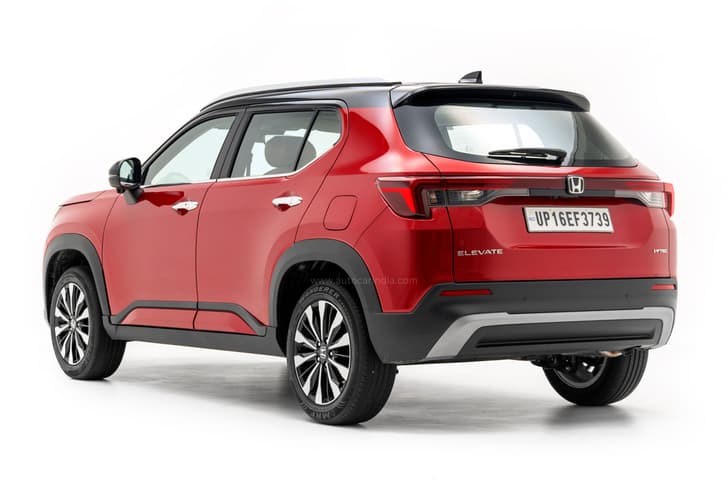
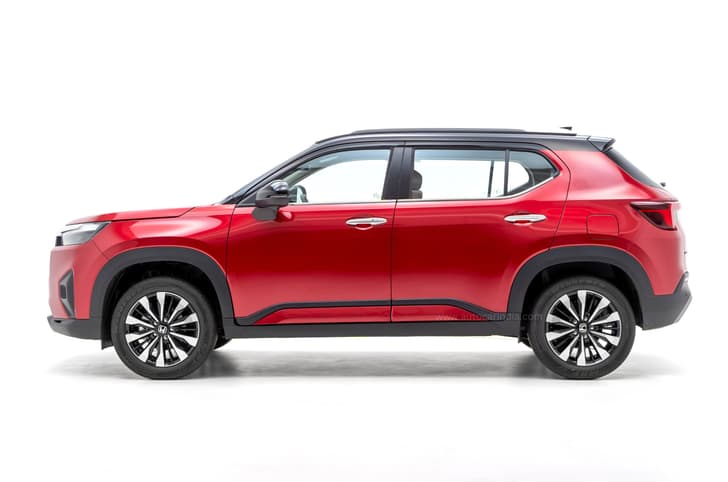
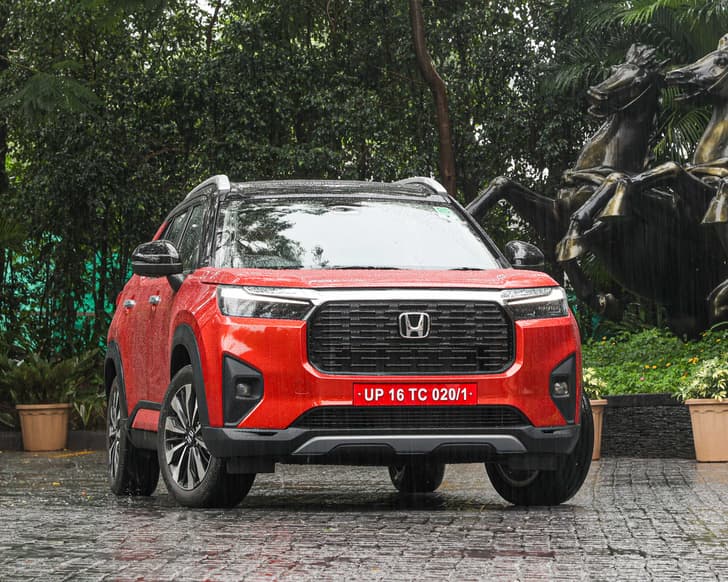
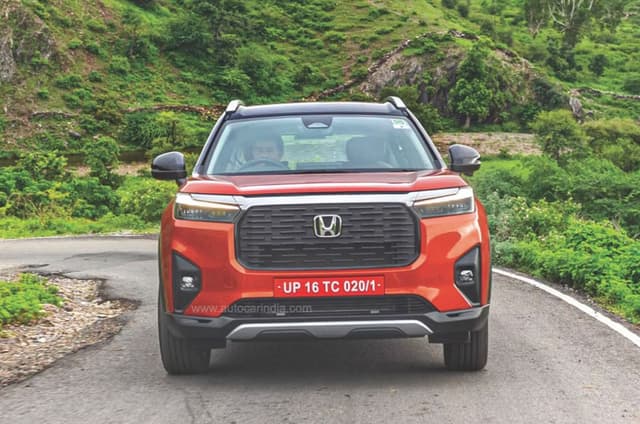
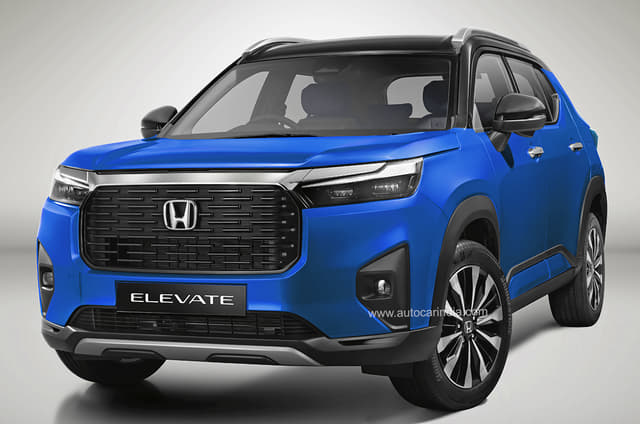
The Elevate has a bold, upright stance with a massive, mostly sealed grille and sleek LED headlamps. Muscular body lines, 17-inch alloys with 215/55 tyres, dual-LED tail-lamps, and SUV touches like roof rails and 220mm ground clearance complete the rugged look. Based on the City platform, it has a stretched 2,650mm wheelbase and widened tracks. Despite its size, it retains a tight 5.2m turning radius.
8
The cabin’s brown-black theme, leatherette upholstery, and mock wood finish are neat, if a bit plain. It shares many components with the City, and while not flashy, build quality is solid. Physical climate controls are retained, though not the premium rotary knobs. The 10.25-inch touchscreen is easy to use but basic. Ergonomics are excellent, with a commanding driving position and supportive front seats, though lumbar support might feel excessive to some.
Rear space is generous, but a third passenger will feel cramped due to limited width and a raised centre seat. The middle seat also lacks a headrest and three-point belt. Boot space is a generous 458 litres, and storage throughout is ample.
7
Powered by a 1.5L i-VTEC petrol engine (paired with 6-speed MT or 7-step CVT), the Elevate offers sharp throttle response and strong high-rev performance. Shorter gearing makes it quicker in rolling acceleration than the City. It does 0-100kph in 10.8sec (manual) and tops out at 161kph. The gearbox is slick, though the clutch is a bit sticky.
The CVT is smooth in traffic but suffers from the typical rubber band effect under hard acceleration. Noise insulation is weak, with noticeable engine and road noise. Honda’s decision to skip a strong-hybrid powertrain is puzzling, especially with no diesel option.
7
Fuel efficiency is modest – 10.8kpl (CVT) and 11kpl (MT). Shorter gearing and sharp throttle responses hurt economy. Unlike rivals, there’s no Eco mode or auto start-stop to save fuel.
8
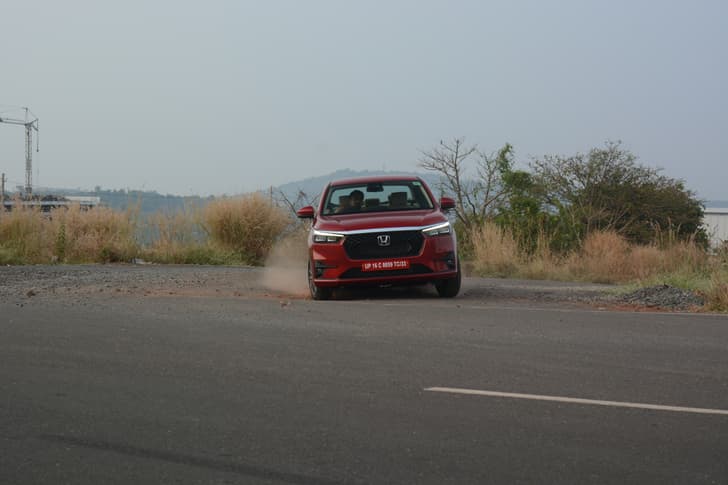
Ride and handling are strengths. The steering is light yet precise, and the long-travel suspension, while firm, is well-damped. Wide tracks and a long wheelbase provide stability with minimal body roll. Braking is strong and progressive, despite rear drum brakes.
7
Honda Sensing ADAS includes collision mitigation, lane keep assist, adaptive cruise control, and more. These camera-based systems work well but are limited in low visibility. LKA needs speeds above 72kph and visible lane markings. Adaptive cruise is smooth and effective.
8
While not packed with features or multiple powertrains, the Elevate is a no-nonsense SUV that nails practicality, comfort, and Honda’s trademark reliability. At Rs 11–16 lakh, its price is lower than its rivals which makes it a compelling option for buyers seeking value and peace of mind.
Reviewed by: Gavin DSouza
Honda Elevate Official Brochure
Download the complete brochure with specs, features, and variants.
Honda Elevate reviews

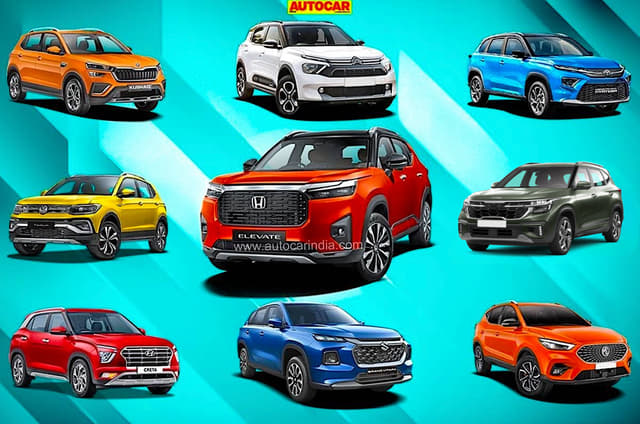
Honda Elevate comparison


Honda Elevate Mileage
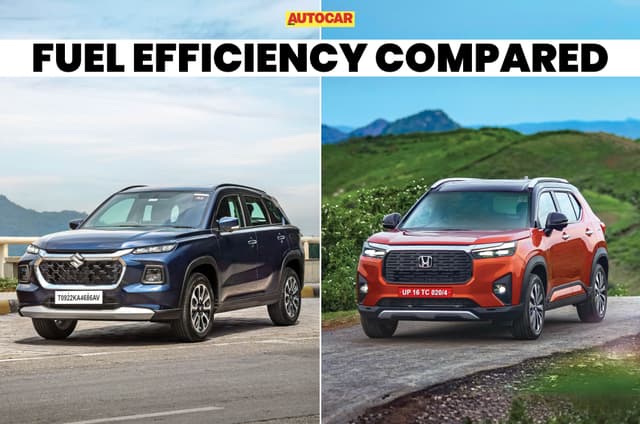
Honda Elevate petrol mileage is certified by ARAI at 15.31kpl with the manual gearbox and 16.92kpl with the CVT automatic. In our own testing we recorded 10.8kpl from the CVT and 11kpl from the manual, so you should expect real-world figures well below the certified ones.
Our road test put the shortfall down to the sharp throttle response and the short gearing, both of which make the car pleasant to drive but push fuel use up. The manual returned slightly more than the automatic in our hands, which is the reverse of what the certified figures suggest. If running cost is your priority, this is a car where how you drive will matter more than which gearbox you buy.
| PowertrainThe combination of engine type, fuel, and transmission that powers your vehicle and determines how it drives and what it runs on. | ARAI MileageMileage certified by the government, tested under controlled lab conditions. Real-world mileage will vary. | Autocar Tested MileageAutocar's experts test each vehicle on fixed city and highway routes under standardised conditions - single occupant, AC running, manufacturer-recommended tyre pressures. Tanks are filled to the brim before and after each run to calculate efficiency. Results reflect realistic real-world usage. | User Reported MileageMileage figures are reported by vehicle owners and represent the approximate real-world efficiency you may experience. Actual mileage will vary based on driving conditions, habits, and vehicle condition. |
|---|---|---|---|
Petrol-Manual 1498 cc | 15.31 kmpl | 11.0 kmpl | NA |
Petrol-Automatic (CVT) 1498 cc | 16.92 kmpl | 10.85 kmpl | 24.02 kmpl |
Honda Elevate news
Honda Elevate Images
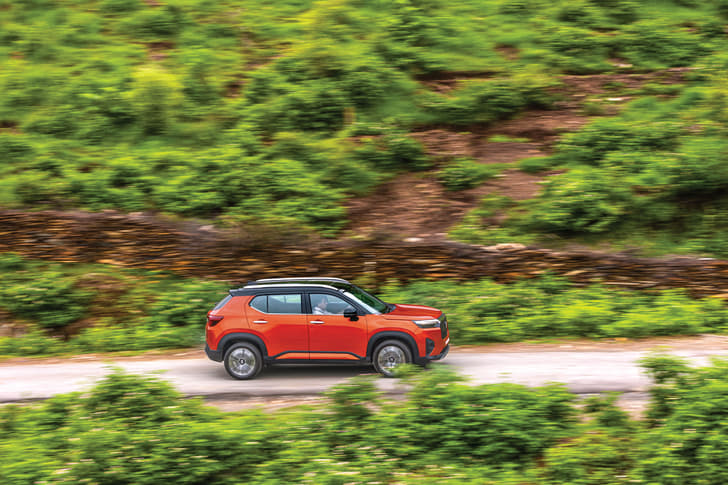
Elevate images show 71 photos of the car, and these are the details worth studying closely:
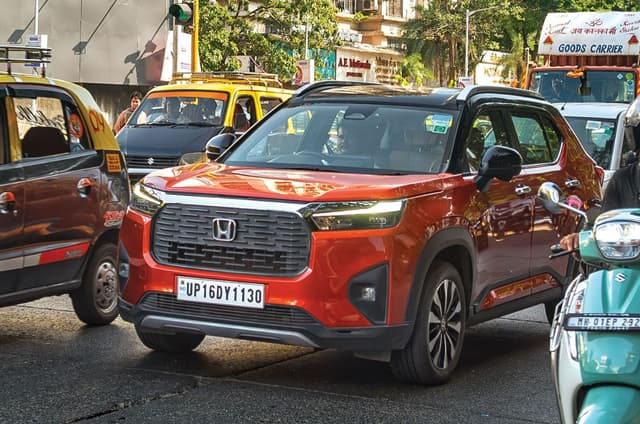
The upright front end and the squared-off SUV proportions
The touchscreen and the dashboard layout, which our review found simple to use
The rear bench, and how narrow the cabin is across the middle seat
The 458-litre boot with the 60:40 rear seats folded down

Honda Elevate videos
Elevate videos cover 3 reviews and walkarounds, and they show you the things a specification list never can:
How much engine, tyre and road noise gets into the cabin, which is this car's main weakness
How the CVT behaves under hard acceleration
How flat the car stays through corners despite its height
How much room two adults really have in the back


Honda Elevate Colours
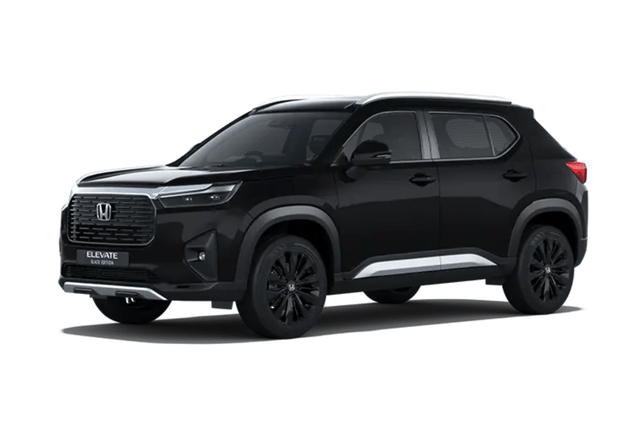
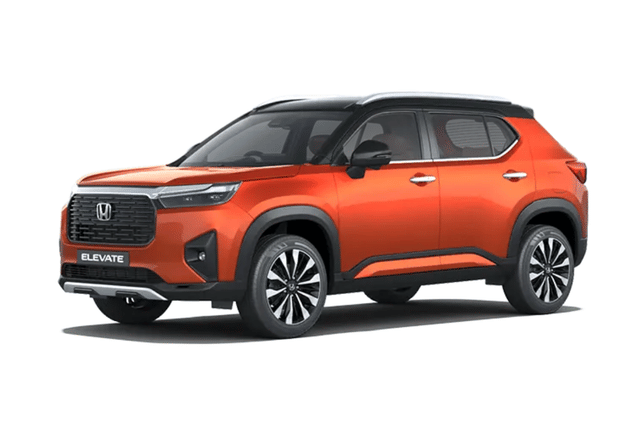
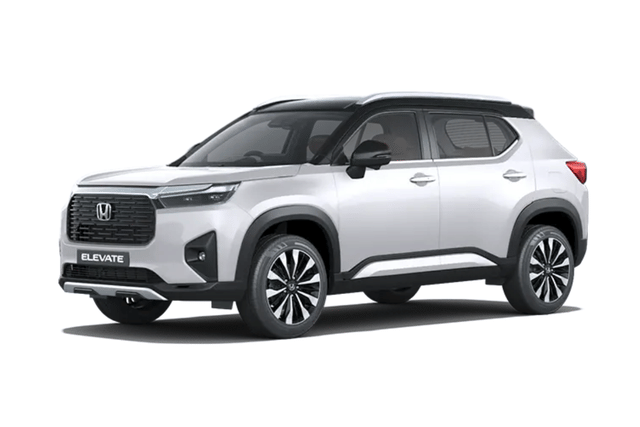
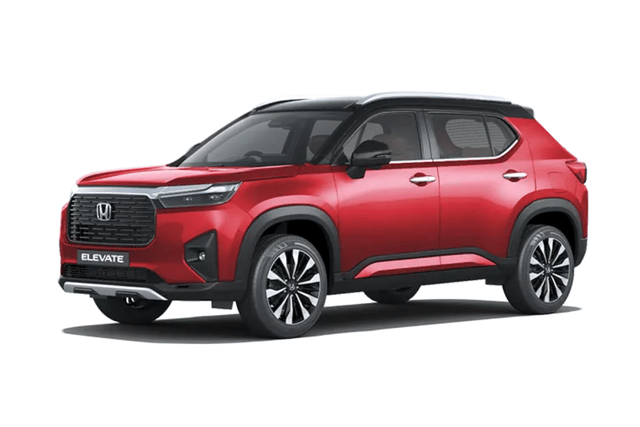
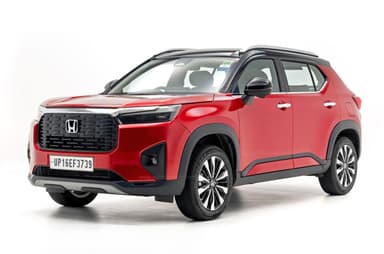
Honda Elevate colours run to 11 options, including Crystal Black Pearl, Phoenix Orange Pearl, Platinum White Pearl and Radiant Red Metallic, along with dual-tone combinations on selected variants.
Colour | Notes |
Platinum White Pearl | Light shade, widely available |
Crystal Black Pearl | Dark shade |
Radiant Red Metallic, Phoenix Orange Pearl | Brighter shades |
Dual-tone combinations | Selected variants only |
Honda Elevate Similar Cars to Explore
Honda Elevate FAQs
The Honda Elevate's top features include 6 airbags, hill-start assist, multi-angle cameras with guidelines, electronic stability control and Level 2 ADAS.
The Honda Elevate does not get a full-digital driver's display, a panoramic sunroof, ventilated seats, automatic wipers, surround-view cameras, an electronic parking brake, USB-C ports, or even a rear-centre headrest.
The Honda Elevate is mainly aimed at buyers who prioritise interior space and comfort, plus a good balance between ride quality and handling.
The 458-litre boot of the Honda Elevate is larger than most rivals, but it's smaller than the boot of the Citroen Basalt, Tata Curvv and Renault Duster.
Due to its light steering, clutch and 6-speed manual gearbox, the Honda Elevate is easy to drive in the city. The CVT automatic option makes it even easier to drive this midsize SUV.
Yes, we expect Honda to launch a facelift of the Elevate in the coming months. The 2026 Elevate facelift is likely to get styling updates and more features.
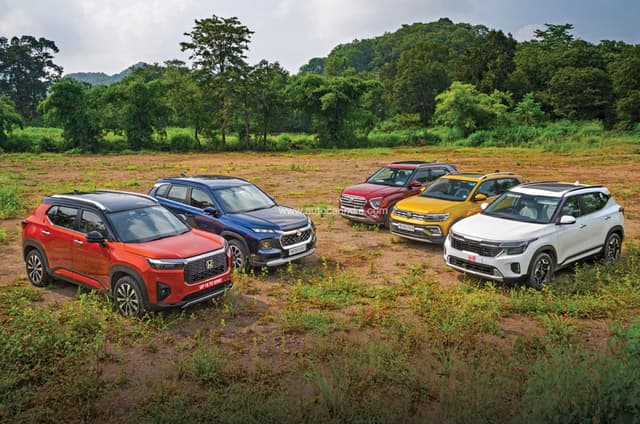
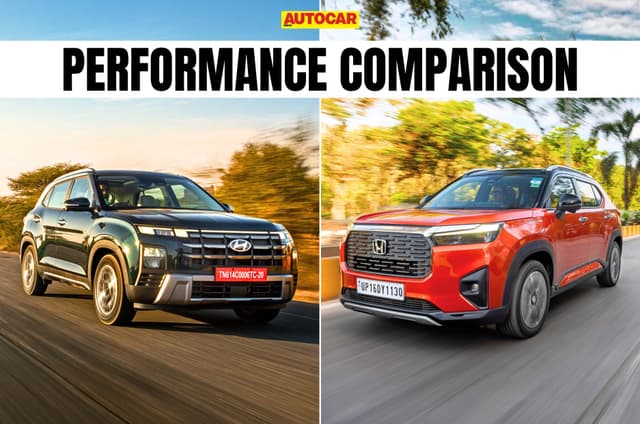
Yes, the Elevate is a good pick over the Creta and Seltos if you're looking for a fun-to-drive, dynamically sorted midsize SUV with an engaging NA petrol engine and a segment-best 220mm ground clearance. While the Elevate does miss out on features like a panoramic sunroof and ventilated front seats, its upcoming 2026 facelift is expected to rectify these drawbacks.
Questions you may find useful
I am planning to buy a car for my family, with comfort for my ageing parents as the main priority. I don't like the rubber-band effect of CVTs, although I found it less noticeable in the Honda Elevate. Because of this, I have ruled out the Seltos and Creta. I would like to know how the performance and comfort of the Maruti Suzuki Grand Vitara compare with the Elevate, especially since the Grand Vitara gets a torque-converter gearbox. I also do a lot of spirited highway driving and need strong performance for overtaking. My maximum budget is Rs 19 lakh on-road. Which one would you suggest?
For your requirements, the Maruti Suzuki Grand Vitara petrol AT makes more sense than the Elevate. The biggest reason is the gearbox. Its six-speed torque converter is smoother and more natural when accelerating hard, and it avoids the rubber-band effect you dislike with CVTs.The problem is performance. The Grand Vitara's 103hp/139Nm engine is noticeably less powerful than the Elevate's 121hp/145Nm unit, so if you frequently make quick highway overtakes with a full load, you will need to plan overtakes and use the gearbox. The Honda Elevate is the better performer on paper and feels stronger when you keep the revs up.Where the Grand Vitara does well is efficiency. In real-world testing, it returned 11.6kpl in the city and 15.3kpl on the highway, considerably better than the Elevate CVT's 8.6kpl and 13.1kpl in the same test. Choose the Grand Vitara AT if avoiding CVT behaviour and getting good efficiency are important. If spirited highway performance is the overriding priority, the Honda car remains the better engine, despite its CVT.
Hi, I have been using a sedan for the past 12 years. I want to purchase a midsize SUV for a usage of around 250 to 500 km per month and a long trip once in a quarter. I have shortlisted Creta, Kushaq, Elevate and Hyryder. My budget is between Rs. 16 lakh and 18 lakh. I want to use the car for the next 10 years. I want a car with a spacious cabin that has enough leg room and offers good riding comfort. Suggest me such a car.
With your low monthly running and long-term ownership plan, petrol is the right choice. The Honda Elevate is the best fit here. It offers a spacious cabin with good rear legroom, a comfortable ride and Honda’s reputation for long-term reliability. The naturally aspirated petrol engine is smooth and easy to live with, and the car is well suited to both city driving and occasional long trips. The Hyundai Creta is also a strong option with a more premium cabin and a slightly more comfortable ride, but the Elevate offers a bit more performance for highway use. The Skoda Kushaq is the driver’s car of the lot, but it is not as spacious as the rest. The Toyota Urban Cruiser Hyryder hybrid is a good, no-nonsense altenative. Go for the Elevate petrol CVT if you want an automatic, or the manual if you prefer to drive. It is the car you are most likely to be happy with after 10 years.
I am looking for a mid-size SUV that is not too large, is reliable, and is fun to drive. Price is not a primary consideration. I am considering the Skoda Kushaq and Honda Elevate. Which one would you recommend? I would also appreciate suggestions for other SUVs that fit these requirements.
Go for the Skoda Kushaq 1.5 TSI DSG. It is the better fit for your brief. The Kushaq is one of the most fun-to-drive SUVs in the segment, with strong performance, sharp handling and a genuinely engaging driving experience. The 1.5 TSI engine is punchy and refined, and the DSG gearbox delivers quick, seamless shifts. It is also not a large SUV, so it remains easy to manoeuvre in the city while still offering a comfortable ride and decent space for a family of four.If you are open to alternatives, the Volkswagen Taigun is mechanically identical to the Kushaq and worth considering if you prefer its styling or interior. The Honda Elevate is a sensible choice. It is reliable, easy to own and has Honda's reputation for long-term durability. But the Skoda Kushaq and VW Taigun 1.5 TSI are more compact and fun to drive.
It was such an amazing car.It has good features.It had adas and reverse camera which help me alert in difficult situations.It also had wireless connectivity which helped me in convenience a lot.I also felt like a comfort car when I sat in elevate ivtec petrol.But it was sad to say that I took grand vitara because I didn't feel so happy when I came into this honda.But I felt overwhelmed when I took grand vitara.Anyways, I still liked the car.
Which of the three would be most suitable for cross-country trips involving a mix of smooth, average and bad roads: the Honda Elevate CVT, Maruti Grand Vitara Smart Hybrid AT, or Volkswagen Taigun 1.0 AT? My key criteria are reliability and safety, ride quality, and fatigue-free driving. I am also considering a few potential downsides: the NVH levels of the Elevate, the long-term reliability of the Smart Hybrid battery in the Grand Vitara, although this is not a deal-breaker, and the possibility of EPC-related faults in the Taigun. I would appreciate some expert advice on which of these three would be the best overall choice for my requirements.
For your requirements, the Honda Elevate CVT is the most balanced choice. It is a simple, robust and reliable package with a proven naturally aspirated petrol engine and a smooth CVT gearbox, which makes it well suited for long-distance touring. The Elevate also offers a comfortable ride, good ground clearance and a suspension setup that can handle a mix of road conditions, including bad patches, without feeling fragile. Honda’s long-term reliability track record is strong, and the car’s simplicity is actually an advantage for ownership over 5-10 years.The Maruti Suzuki Grand Vitara Smart Hybrid AT is also a good option, but the hybrid system adds complexity without a significant advantage on long highway runs, where the fuel savings are less pronounced. The battery is not a major reliability concern, but it is still an additional component to consider over long-term ownership.The Volkswagen Taigun 1.0 TSI AT is the enthusiast’s choice with a more engaging driving experience and strong performance, but your concerns about EPC-related faults are not unfounded. While Volkswagen has improved reliability, the ownership experience is still not as hassle-free as Honda or Maruti.
Upcoming Cars


Honda Cars

Trending Cars


Latest Cars