
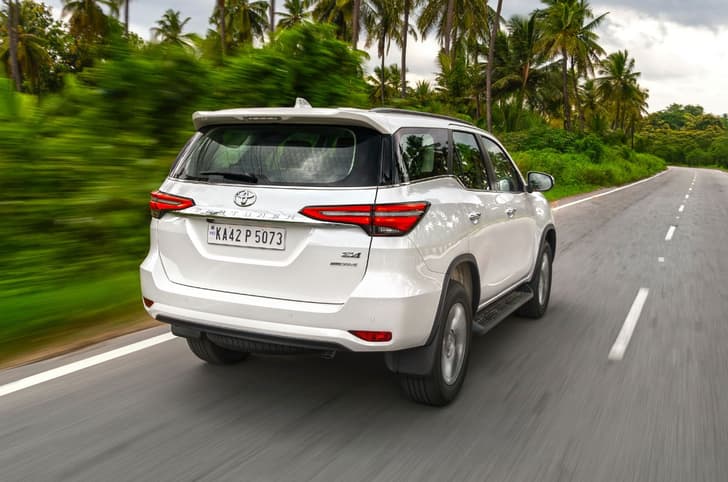
In line with Toyota’s global ambition to reduce the carbon footprint of its entire line-up, the Japanese carmaker has introduced ‘Neo Drive’ variants of the Fortuner and Legender in India. The highlight of these variants is a 48-volt mild-hybrid system paired with the 2.8-litre turbo-diesel engine, aimed at improving fuel efficiency.
Toyota Fortuner Neo Drive Exterior Design & Engineering — 8/10
Besides a badge on the boot, there are no other cosmetic changes to this variant.
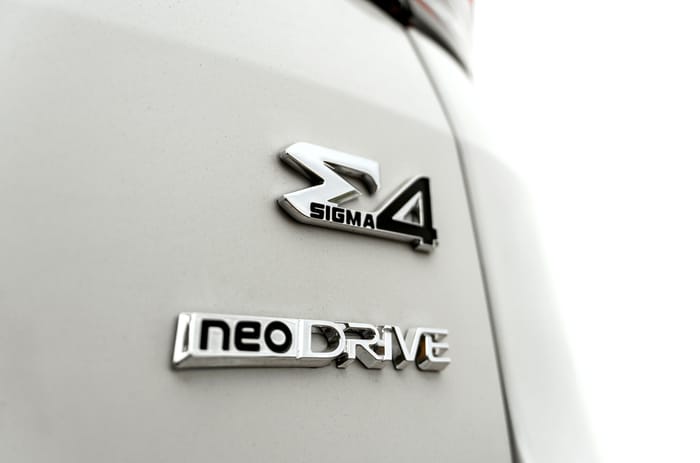
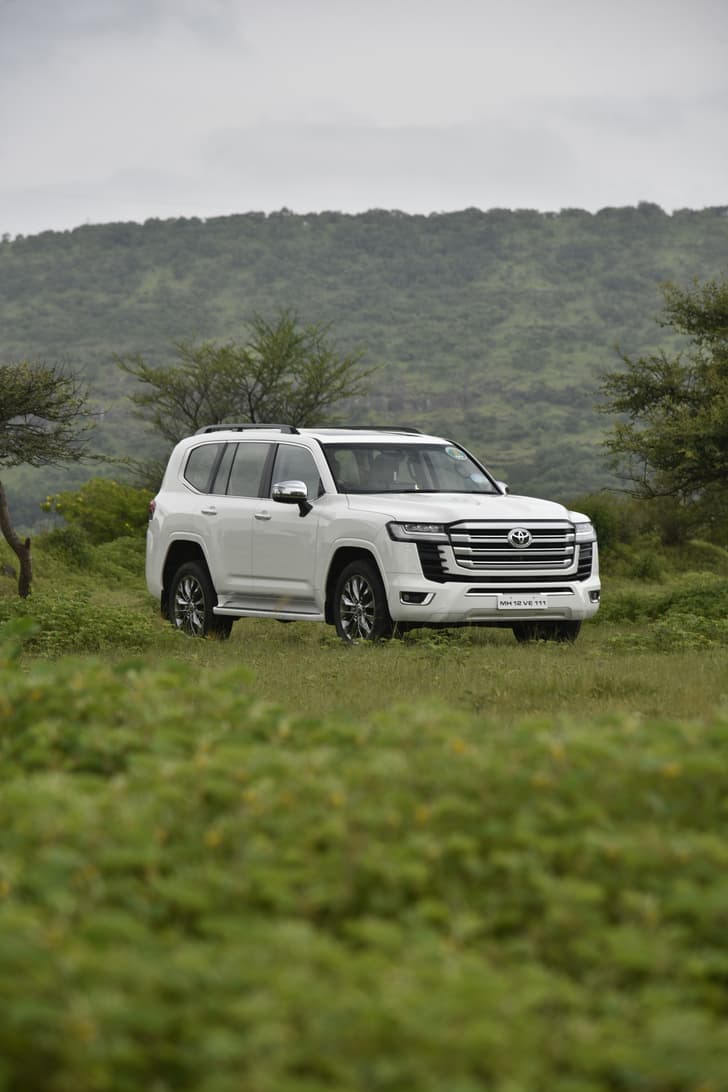
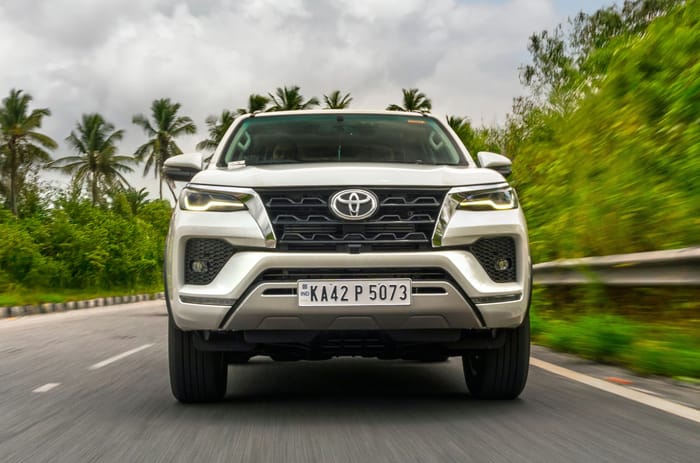
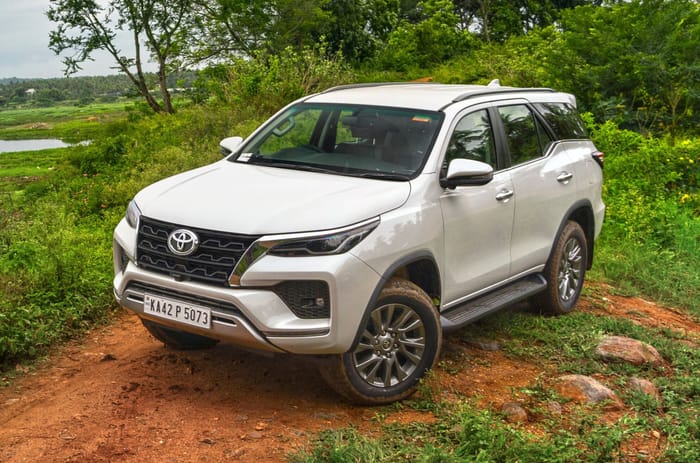
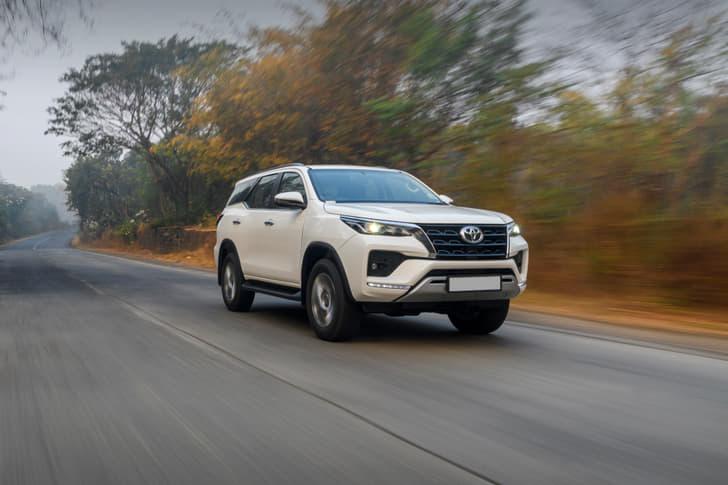
There are no styling changes to the Fortuner Neo Drive variants – it continues with the familiar slim headlights, prominent chrome grille and signature kinked window line. The only distinguishing element is the new ‘Neo Drive’ badge positioned beneath the Sigma 4 emblem on the tailgate. Despite its age, the Fortuner remains a handsome, imposing SUV with immense road presence.
Toyota Fortuner Neo Drive Interior Space & Comfort — 7/10
While the interiors feel built to last, neither the design nor the quality feels up to the mark.
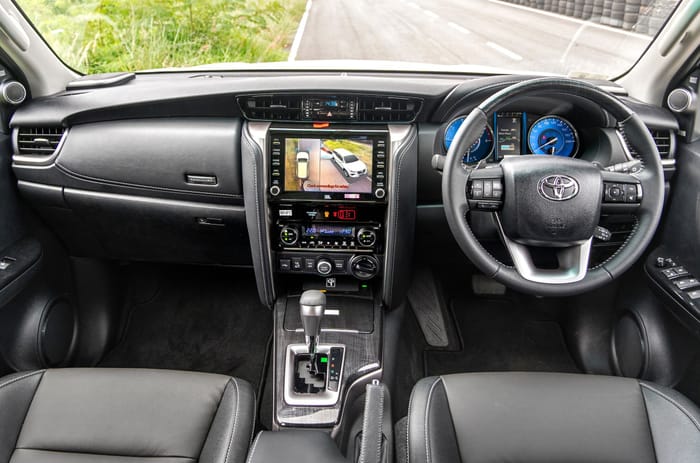
Climbing into the high-set cabin still takes some effort, but once inside, the front seats offer excellent comfort and a commanding driving position. The second row is spacious and features recline and slide adjustments, while the third row can also accommodate adults for extended durations.
However, the cabin design feels dated, having remained largely unchanged for nine years. The material quality, too, doesn’t quite match expectations for a vehicle at this price point. While everything feels built to last, the premium quotient is lacking.
Toyota Fortuner Neo Drive Features & Safety — 8/10
Fairly well-equipped, but the deletion of ventilated seats feels like an unfortunate compromise.
The Neo Drive variants bring two new features to the Fortuner line-up: a 360-degree camera and a Multi-Terrain Select (MTS) system. That said, the camera quality is underwhelming for a vehicle in this segment. The MTS system offers selectable off-road modes to enhance capability across various surfaces like Mud, Sand, Rock, Dirt and Snow, by altering throttle responses, braking and traction control.
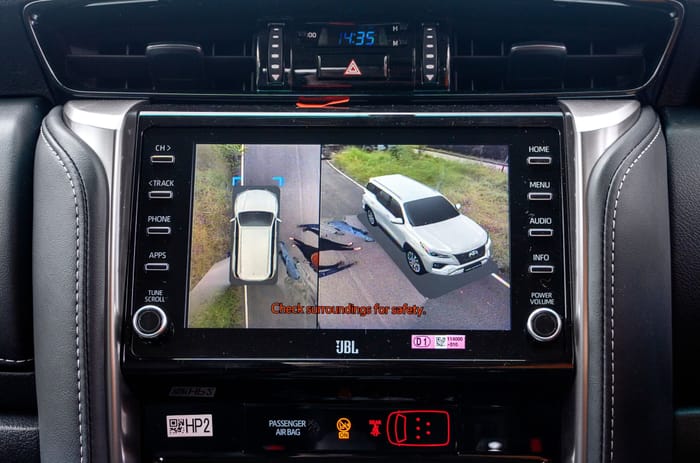
A new wireless charging pad has also been added, carried over from the Legender. Surprisingly, ventilated front seats have been dropped, a step backwards given they’re still offered on lower variants. Toyota attributes this to packaging challenges, as the DC-DC converter for the mild-hybrid system sits beneath the front passenger seat.
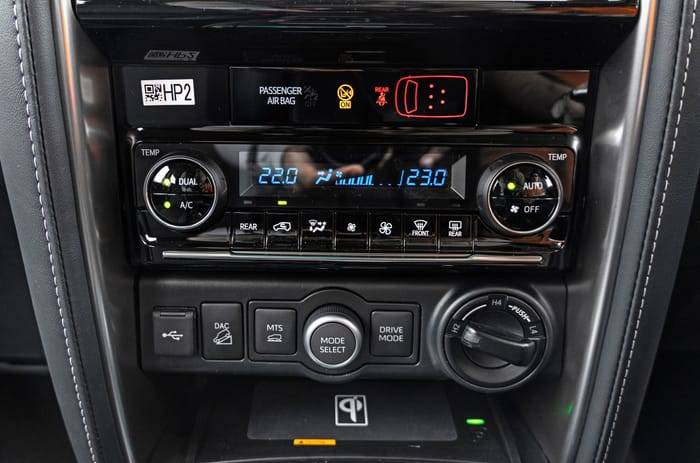
Other notable features include auto LED headlamps, 18-inch alloy wheels, leatherette upholstery, an 8-inch touchscreen, dual-zone climate control, and a powered tailgate. Safety equipment comprises 7 airbags (including a driver knee airbag), vehicle stability control, hill descent control, and hill start assist. However, no variant offers Autonomous Driver Assistance Systems (ADAS).
Toyota Fortuner Neo Drive Engine Refinement & Performance — 7/10
There’s no getting away from the grumbly diesel engine sound, and the benefits of the mild-hybrid system are negligible.
The powertrain remains the same 2.8-litre turbo-diesel engine producing 204hp and 500Nm of torque, paired with a 6-speed torque converter automatic. What’s new is a 48-volt mild-hybrid system comprising a belt-integrated starter generator, a DC-DC converter and a secondary lithium-ion battery.
Engine 4-cylinder, turbocharged | Displacement 2,755cc | Drive layout Four-wheel drive |
Gearbox 6-speed torque converter | Power 204hp | Torque 500Nm |
Mild-hybrid system 48V | 0-100kph (tested) 11.38 seconds |
Key functions include auto engine start-stop, torque assist under load and brake energy regeneration. On startup, the engine feels noticeably smoother and quieter, and the initial throttle response is more refined. However, that sense of diesel grumble quickly returns at mid and higher revs. Around town, tapping the accelerator sends the revs soaring to 2,000rpm with minimal corresponding acceleration, resulting in a droning sound reminiscent of a CVT, even though this is a torque converter (automatic) setup.
Performance-wise, the Fortuner remains strong. The mild-hybrid assist is subtle and barely perceptible under regular driving. Our GPS-based test clocked a 0-100kph time of 11.38 seconds with three passengers onboard – 0.62 seconds quicker than the older BS4 Fortuner 4x4 AT.
Drive modes include Eco, Normal and Sport, with the MTS system adding further adaptability for off-road terrain. Despite the added hybrid hardware, located beneath the seats in the cabin, the Fortuner retains its impressive 700mm water-wading capability.
Toyota Fortuner Neo Drive Mileage — 6/10
The 48V mild-hybrid system barely enhances fuel efficiency.
Toyota hasn’t officially disclosed the fuel economy figures for the Fortuner Neo Drive 4x4 AT. However, the company claims the new mild-hybrid system allows for an additional 43 kilometres on a full 80-litre tank. This translates to a minimal real-world gain, and for a vehicle of this size and price, the improvement feels marginal at best.
Toyota Fortuner Neo Drive Ride Comfort & Handling — 6/10
Feels indestructible, although handling isn’t its strong suit.
The Fortuner continues to feel bulletproof in its construction. The suspension setup is rugged and built to take a beating, making light work of bad roads and rough terrain. However, that toughness comes at the cost of comfort. Ride quality, especially at lower speeds, feels bumpy and unsettled.
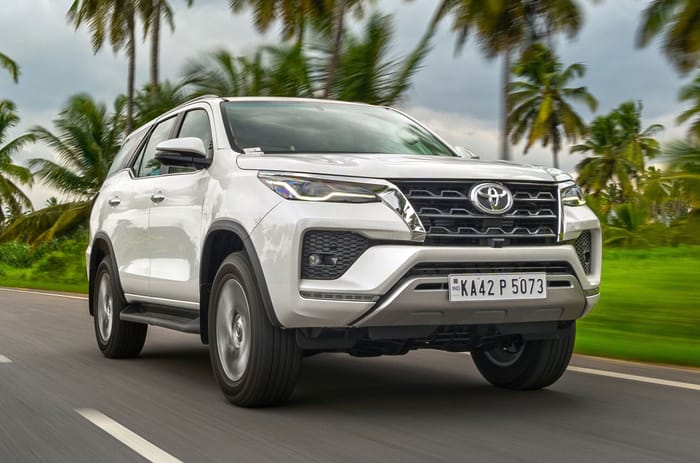
Its tall stance and high centre of gravity also contribute to noticeable body roll during cornering, pronounced nose dive under braking, and a generally top-heavy feel. The heavy steering further adds to the effort required at low speeds or while parking.
Toyota Fortuner Neo Drive Price & Verdict — 6/10
While feature additions are welcome, the negligible benefits of the mild-hybrid system and deletion of ventilated seats don’t justify the price increase.
Toyota has introduced the Neo Drive mild-hybrid system exclusively with the 4x4 automatic variants of the Fortuner and Legender, priced at Rs 44.72 lakh and Rs 50.09 lakh, respectively. These updated variants are around Rs 2 lakh more expensive than the now-discontinued standard 4x4 AT versions. According to Toyota, this price hike is unlikely to deter price-agnostic buyers, who typically opt for the top-end versions of the SUV. Interestingly, the range-topping Fortuner GR-S misses out on this mild-hybrid upgrade.
While fuel efficiency has never been a key concern for Fortuner buyers, the addition of a 48V mild-hybrid system brings little real-world improvement on that front. What’s more disappointing is the deletion of ventilated front seats in these mild-hybrid variants, likely due to packaging constraints – especially since this feature continues to be available in the lower variants. This raises the question: why fix it if it ain’t broken?
However, there isn’t a credible direct alternative to the Fortuner, and even though there are more refined and better-equipped cars available, none offer the same brand equity, reputation for reliability, or rugged appeal as the Fortuner. That’s precisely why, despite ever-rising prices and visible shortcomings, it continues to keep Toyota’s cash registers ringing in India.
 Lenny D'sa
 Sergius Barretto
 Soham Thakur
 Nikhil Bhatia