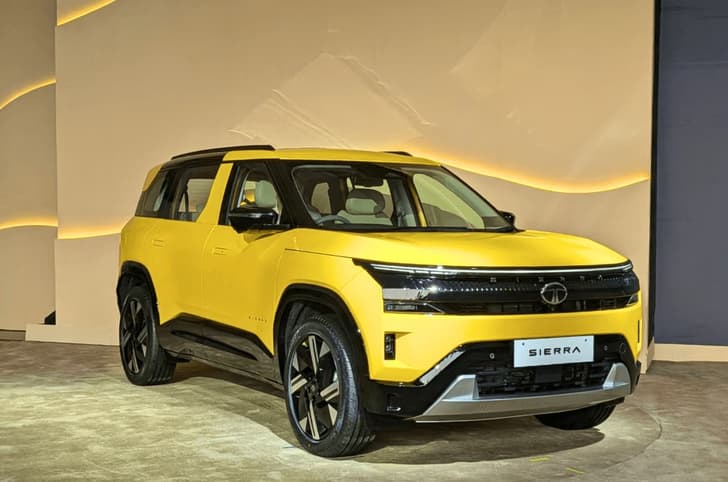
After multiple teasers and plenty of hype, the Sierra is here at an introductory price of Rs 11.49 lakh ex-showroom, India. Let’s now look at the Tata Sierra objectively to understand what it offers. We won’t get into its aesthetics, as they are subjective and have already been much talked about.
Tata Sierra interior space and comfort
Feels more premium and is more practical on the inside than the Tata Curvv
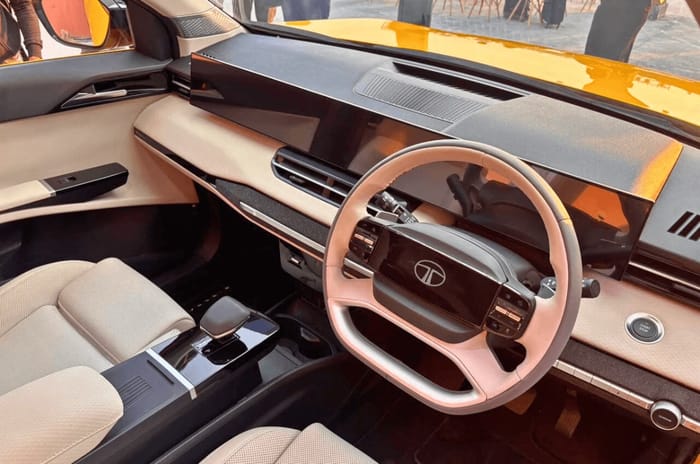
The Tata Sierra has the best interior of any Tata to date. It looks modern with a good mix of colours that creates an airy ambience. The most surprising aspect is the interior quality and fit and finish, which feel premium and appropriate for the price. Is it better than the segment leader, the Hyundai Creta? We will be able to comment on that only after testing both cars back-to-back, so stay tuned.
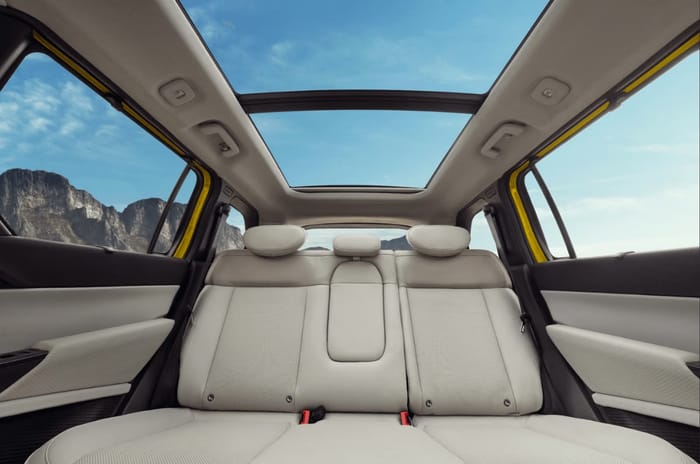
In terms of space, the Sierra does really well. Unlike the Tata Curvv, which appears more like a Nexon with a larger boot and not a major step up in experience, the Sierra feels genuinely spacious. There is ample knee room and generous shoulder room, and despite the large panoramic sunroof, there is plenty of headroom too. Seat cushioning feels well-judged – soft at first touch, with a firmer inner layer for better support. How it performs over long drives is something we will know once we get behind the wheel soon.
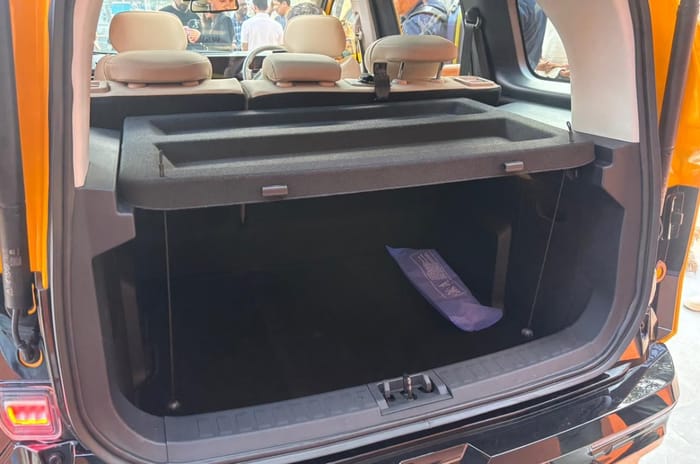
Tata claims the Sierra has a class-leading 622-litre boot, which is massive on paper. For context, it is 433 litres in the Hyundai Creta and Kia Seltos, 385 litres in the Skoda Kushaq and Volkswagen Taigun and 373 litres in the Maruti Suzuki Grand Vitara and Toyota Hyryder mild hybrids. We will take Tata’s claim with a pinch of salt, as measurements vary across manufacturers. However, visually, the boot looks large, well-shaped and deep enough for big suitcases. You can also fold the rear seats to expand capacity to a claimed 1,257 litres.
Tata Sierra features
Highlights include an HUD on select variants, a 3-screen setup and a 12-speaker JBL system
The Tata Sierra gets all the premium features you expect from a car in this segment. These include ventilated front seats, connected car tech, wireless Android Auto and Apple CarPlay, a 360-degree camera, an auto-dimming interior rearview mirror (IRVM), rear sunshades, dual-zone climate control, a panoramic sunroof and a wireless phone charger.
Beyond the usual kit, it also comes with a few wow features that catch your attention. The first is the 12-speaker JBL sound system, which includes a subwoofer. The standout element is the wide soundbar placed in the centre of the dashboard. It also comes with 13 preset JBL sound modes to help you customise the sound to your liking.
You also get a 3-screen setup, with the front passenger getting a dedicated entertainment screen to watch movies or OTT content. The passenger can connect wireless headphones, ensuring that the content does not distract the driver.
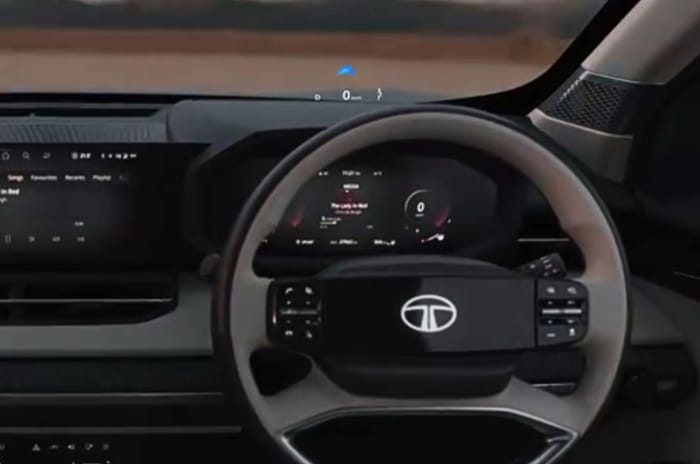
A head-up display (HUD) is available in a few variants. It projects essential information, such as navigation and speed, directly onto the windscreen to help the driver keep their eyes on the road. Interestingly, the HUD is available only in the Sierra’s 2-screen version, not with the 3-screen layout.
For added comfort, you also get an extendable seat squab for the front seats, allowing you to adjust thigh support to your preference.
Tata Sierra engine, gearbox and suspension
Tata debuts two new petrol engines on the Sierra
The Tata Sierra’s engine options are similar to those of rivals Hyundai Creta and Kia Seltos. The base engine, which we expect will be the more popular choice, is a naturally aspirated 1.5-litre 4-cylinder unit. It produces 106hp, which is slightly lower than Hyundai and Kia’s 115hp, though the torque, at 145Nm, is similar to Korean rivals (144Nm). It will come with either a 7-speed dual-clutch automatic or a 6-speed manual transmission.
Enthusiasts will favour the 1.5-litre direct injection turbo-petrol engine, producing an impressive 160hp and 255Nm of torque. It will be paired only with a 6-speed automatic transmission and will go up against the Hyundai Creta N Line, Kia Seltos 1.5 turbo-petrol, VW Taigun GT and Skoda Kushaq 1.5 turbo-petrol.
For people with higher running, there is a diesel option as well. The 1.5-litre turbo-diesel produces 118hp and 280Nm of torque and will be available with either a 6-speed manual or a 6-speed torque converter automatic transmission.
For better dynamics and comfort, the Sierra is equipped with frequency-dependent damping, which adapts to road conditions to offer optimal suspension performance. Select variants also get terrain modes – Auto, Wet and Rough. The new Tata SUV has a claimed turning diameter of 10.6 metres.
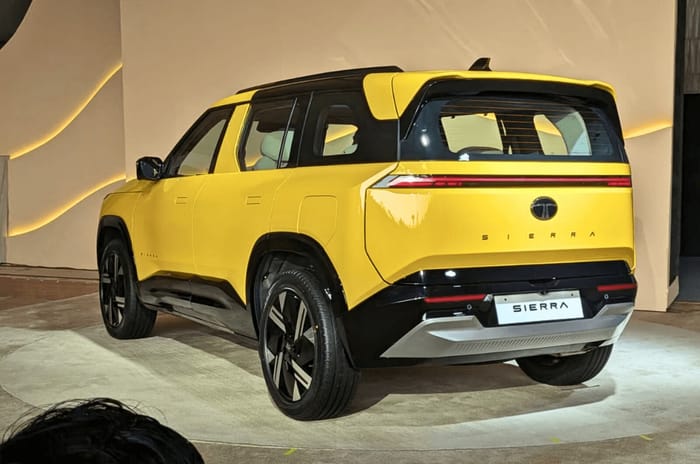
It should also be noted that the platform the Sierra is based on is compatible with alternative fuel powertrains, including petrol-electric hybrid and CNG. Tata also says that it is all-wheel-drive-ready and teased that a Sierra AWD is “forthcoming”. Additionally, the brand claims that the Sierra has 205mm of ground clearance, 450mm water-wading capability, and approach, departure and breakover angles of 26.5, 31.6 and 23.1 degrees, respectively.
Verdict
The Tata Sierra ticks almost every box and even delivers a bit more. On paper, it is well-priced, has the right feature set, is spacious, and offers multiple engine and gearbox options for different needs. What remains to be seen is how it does in the real world in terms of performance, comfort and, most importantly, reliability. If executed well, Tata definitely has a winner on its hands.

 Uday Singh
 Glenn Noronha
 Dipan Sur