

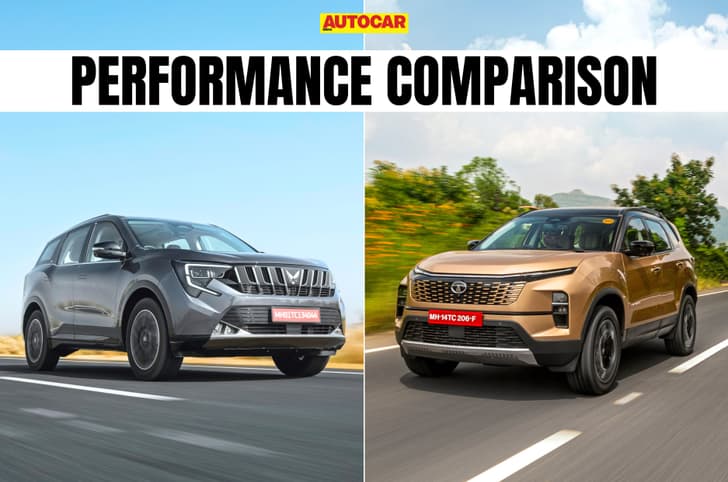
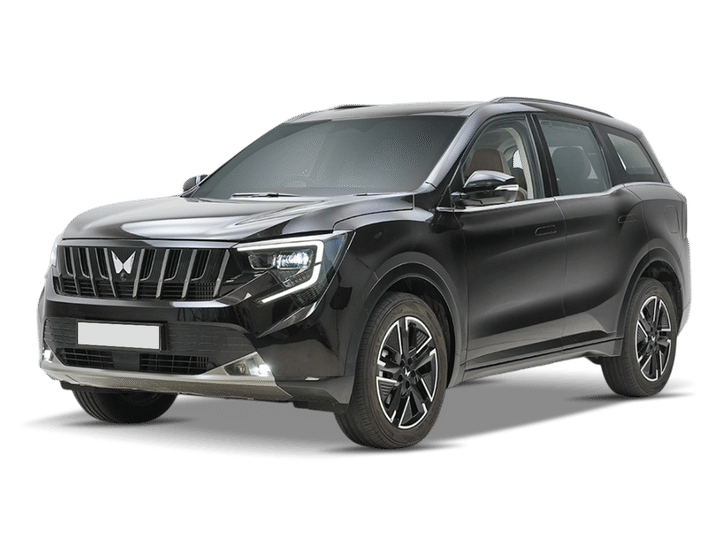
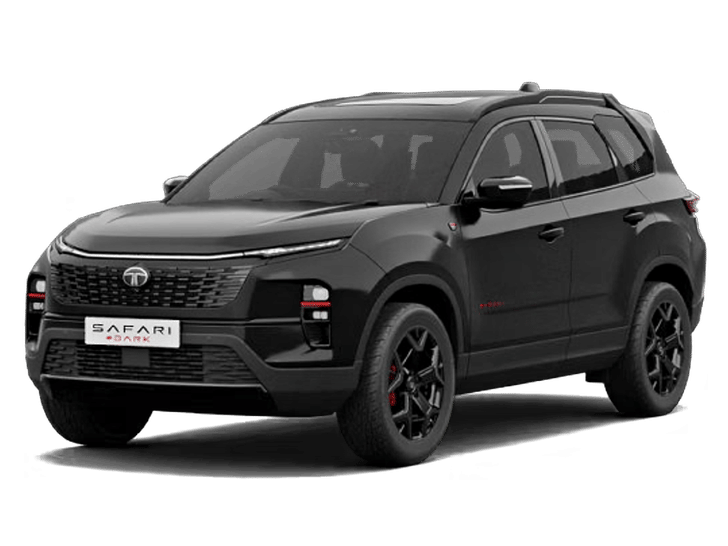
The Mahindra XUV 7XO and Tata Safari are both midsize SUVs with seating for up to 7 occupants. While they are available in petrol and diesel guises with manual and automatic transmission options, we will focus on their diesel-automatic versions here. Let us find out which of these two homegrown SUVs offers better performance in the real world.
Explore full specs, features, and a price breakdown in our XUV 7XO vs Safari comparison
Mahindra XUV 7XO vs Tata Safari diesel AT: Specifications
The XUV 7XO’s displacement advantage becomes clear out on the open road
Under the bonnet of the Tata Safari diesel is a 2.0-litre turbocharged engine that produces 170hp and 350Nm of torque. However, its displacement is 228cc lower than the unit powering the Mahindra XUV 7XO, whose 2.2-litre mill offers 15hp and a significant 100Nm more torque than the Safari’s engine. While the extra torque allows the Mahindra SUV to get a move on quicker out on the open road, that performance comes at a cost. And that cost is the entry price for the XUV 7XO diesel AT, something we explain later in this article.
Mahindra XUV 7XO vs Tata Safari diesel AT: 0-100kph acceleration test
Mahindra’s SUV is quicker than the Safari across the board
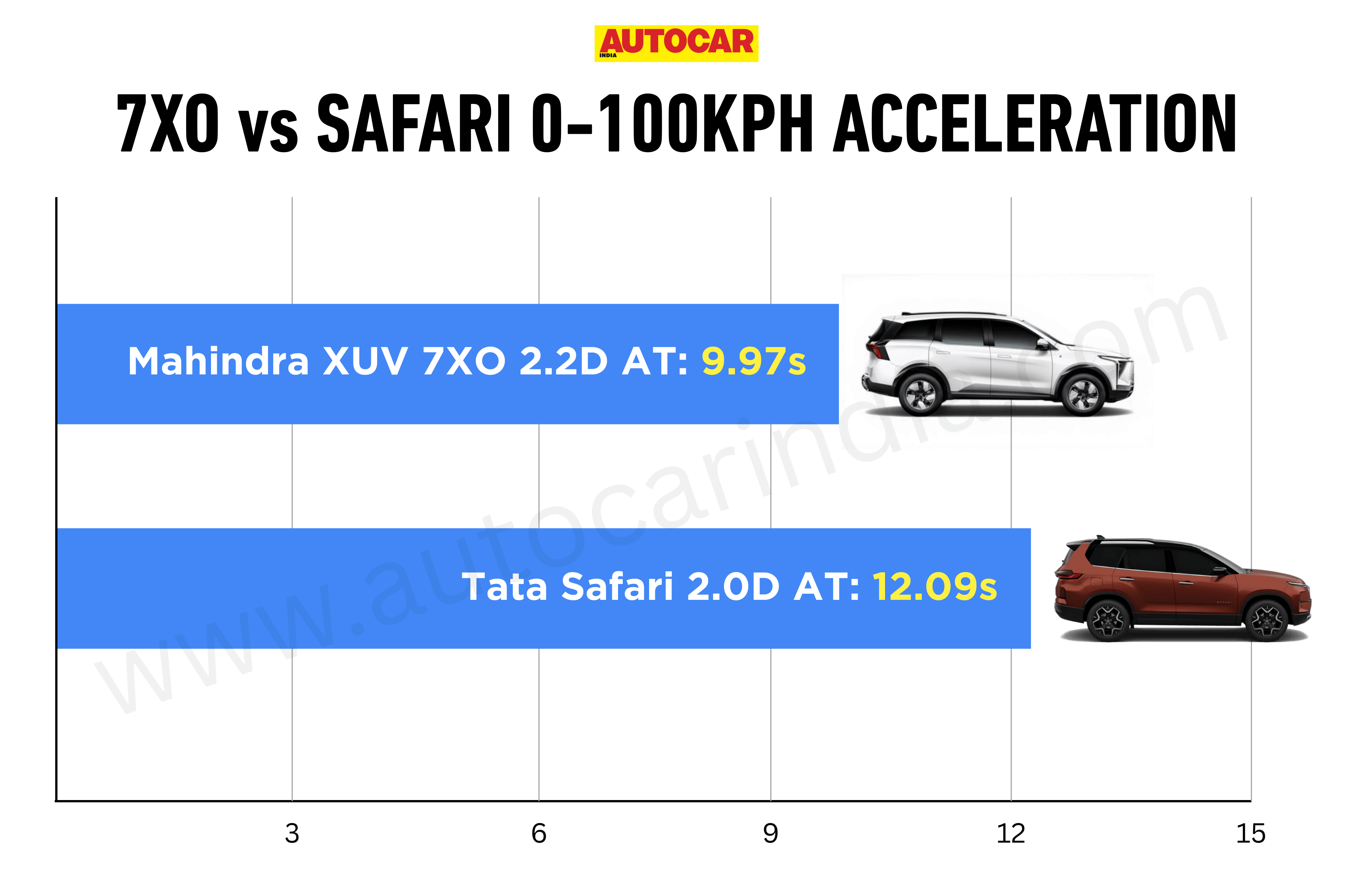
During our acceleration tests, the Mahindra XUV 7XO diesel took just 9.97 seconds to go from a standstill to 100kph, while the Tata Safari diesel took 2.12 seconds longer. Mahindra has given the XUV 7XO Zip, Zap and Zoom drive modes – Zoom being the sportiest setting. While the Safari also comes with three drive modes (Eco, City and Sport), it features paddleshifters for extra engagement behind the wheel.
As far as the automatic gearboxes of these cars are concerned, the XUV 7XO’s unit is quicker to downshift when required, despite lacking paddleshifters. The engine refinement is noticeably better in the Mahindra XUV 7XO, whereas the Safari’s diesel unit produces a distinct clatter at idle.
Mahindra XUV 7XO vs Tata Safari diesel AT: Rolling acceleration tests
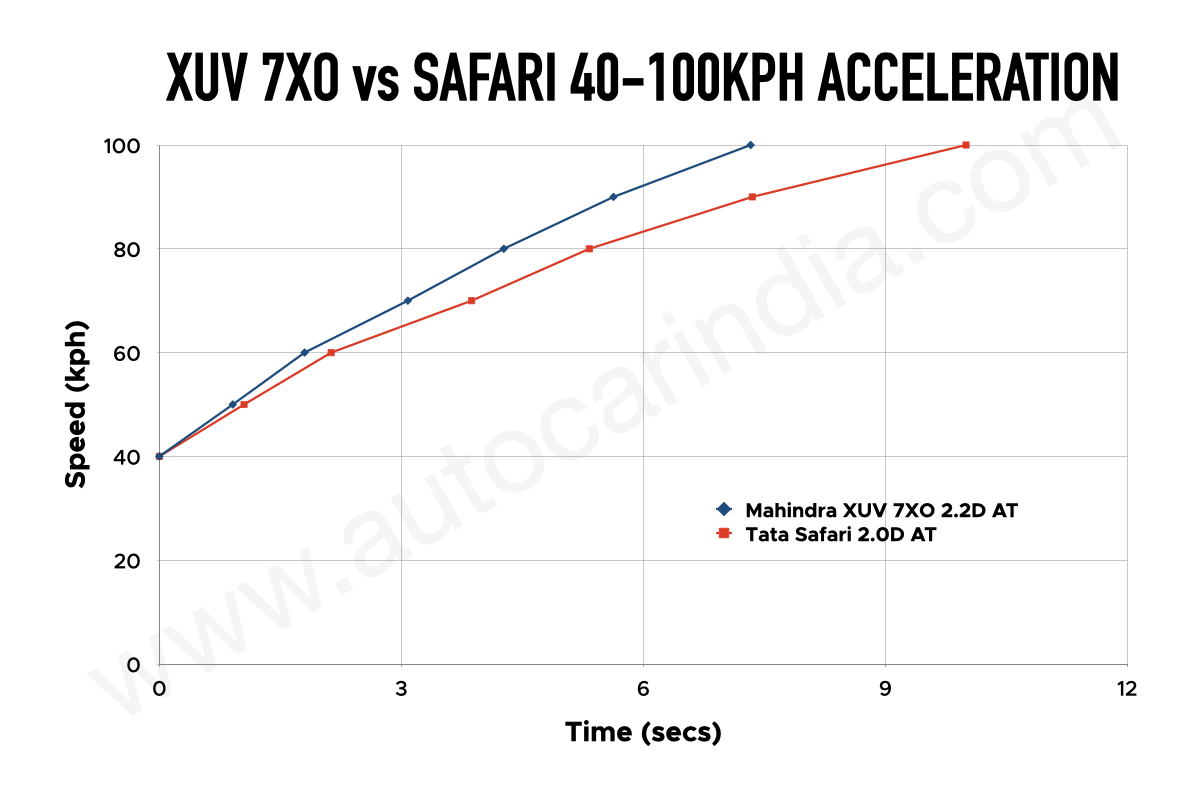
The Safari trails behind the XUV 7XO regardless of the acceleration metrics
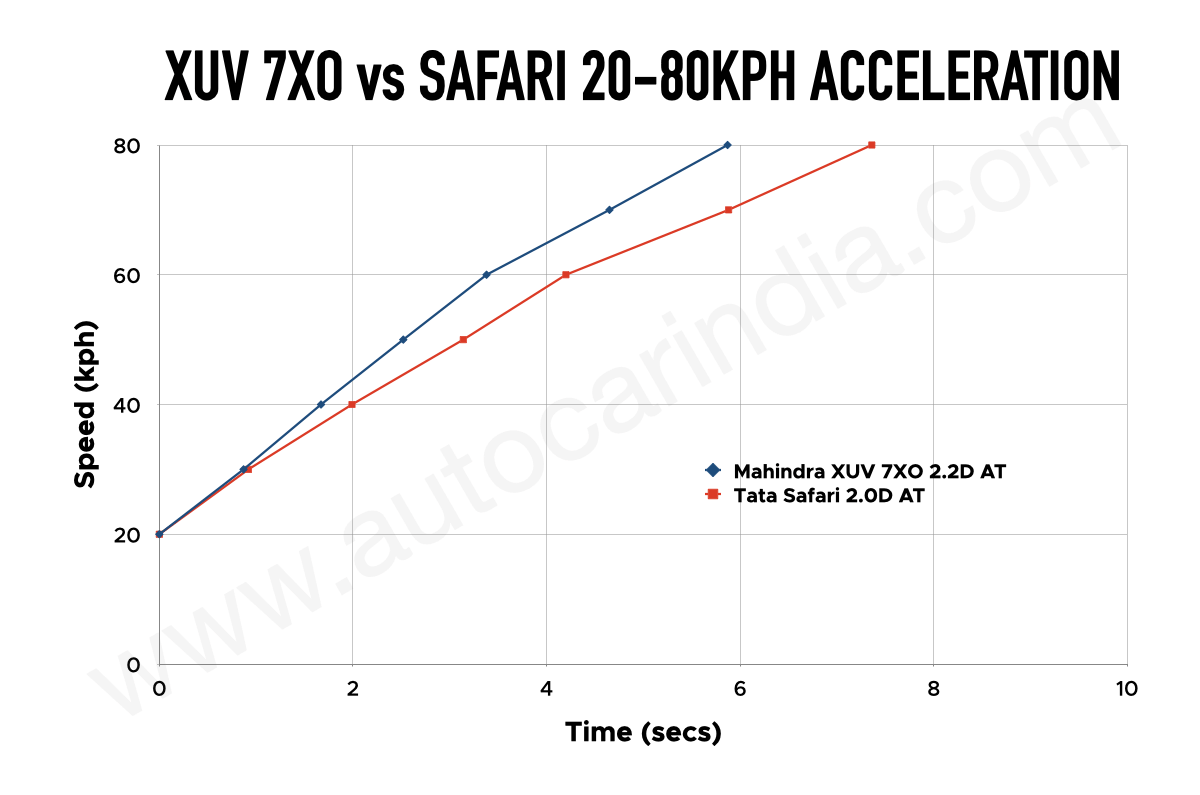
In 20-80kph acceleration tests, the Safari diesel trailed the XUV 7XO by barely 1.5 seconds. However, during the 40-100kph run, this gap widened to a noticeable 2.64 seconds in the Mahindra’s favour.
What community is saying on the XUV 7XO?
Mahindra XUV 7XO vs Tata Safari diesel AT: Braking test
Performance of both SUVs is comparable under heavy braking
It was not only in outright acceleration that the Mahindra XUV 7XO outperformed the Tata Safari; it repeated this trend in our braking tests as well. In our simulated panic-braking scenario, the XUV 7XO came to a dead stop from 80kph over a distance of 26.74 metres. For reference, the Safari needed another 0.36 metres (or roughly 1.2 feet).
Mahindra XUV 7XO vs Tata Safari diesel AT: Prices
The Safari diesel AT’s base trim costs far less than the XUV 7XO’s
The most affordable trim of the XUV 7XO diesel automatic, the AX7L, starts at Rs 23.92 lakh, making it Rs 4.82 lakh more expensive than the Safari’s Pure X automatic. At the top end, however, it is the Safari’s Accomplished + 6S trim that commands a premium of Rs 53,000 over the equivalent XUV 7XO. It is also important to note that the latter gets all-wheel drive (AWD), whereas the Safari is only available with front-wheel drive (FWD).
Autocar India’s testing standards
Before we conduct our performance tests, we check and maintain tyre pressures based on the manufacturer’s recommendation and ensure the car has a full tank of fuel. The car is then tested in a controlled environment with two people on board, and the data is collected via highly accurate GPS-based timing equipment.
Prices are ex-showroom, India.

 Uday Singh
 Dipan Sur
 Glenn Noronha