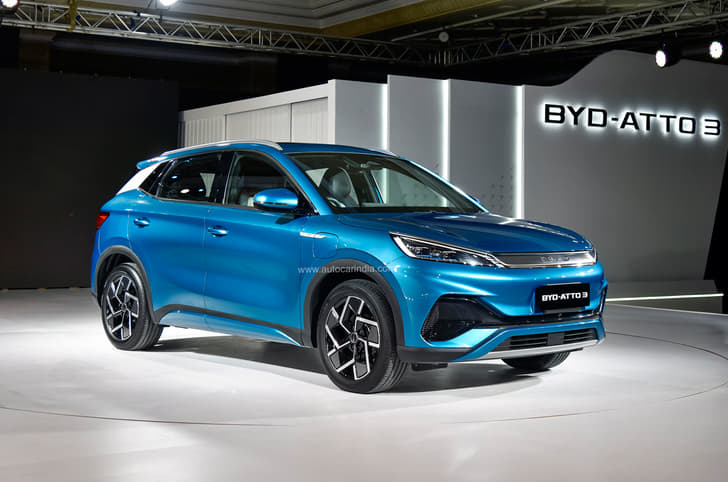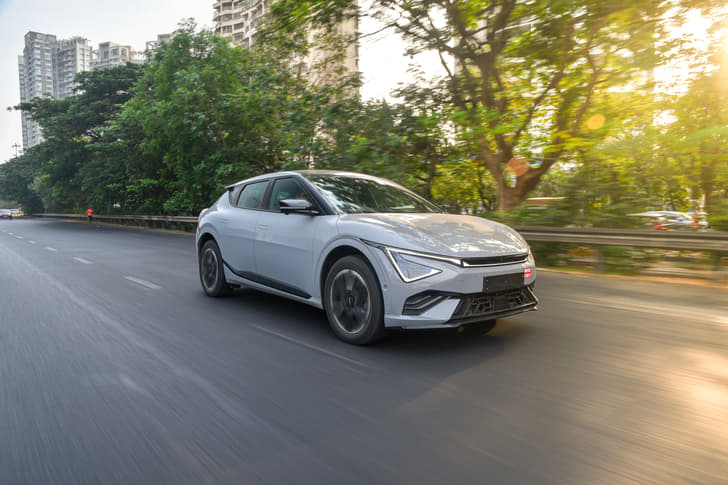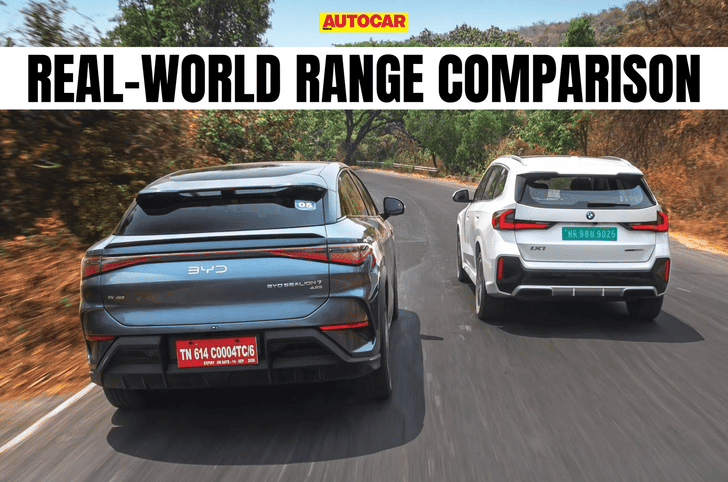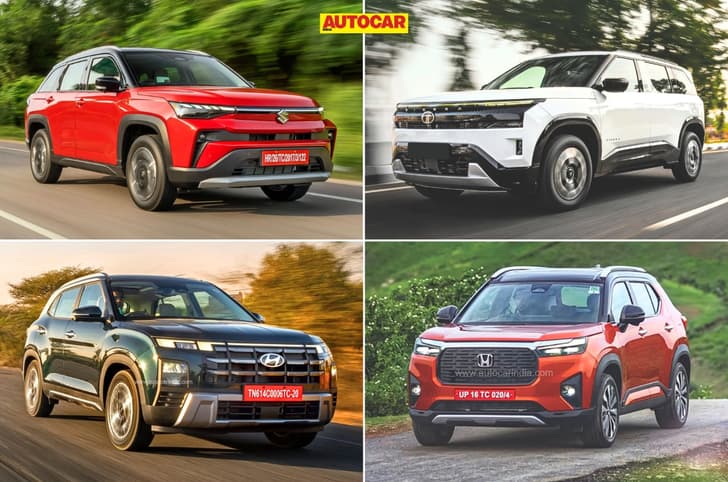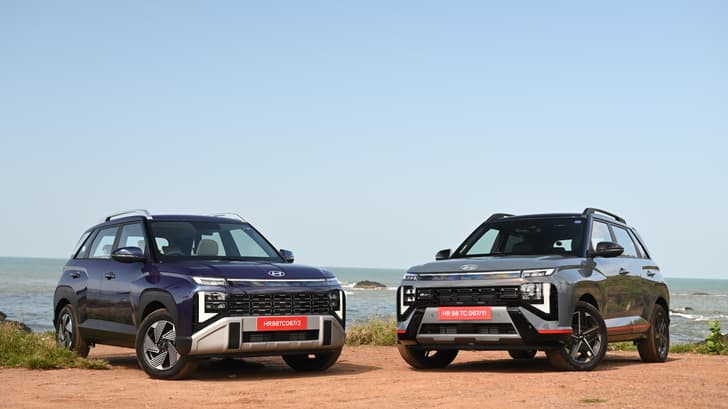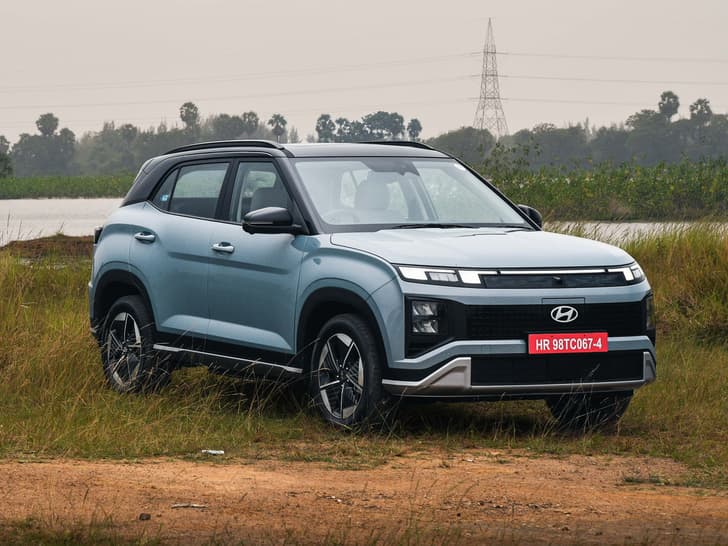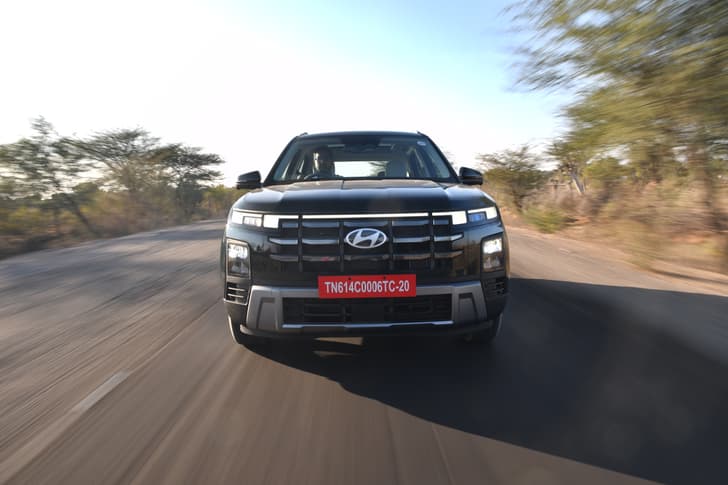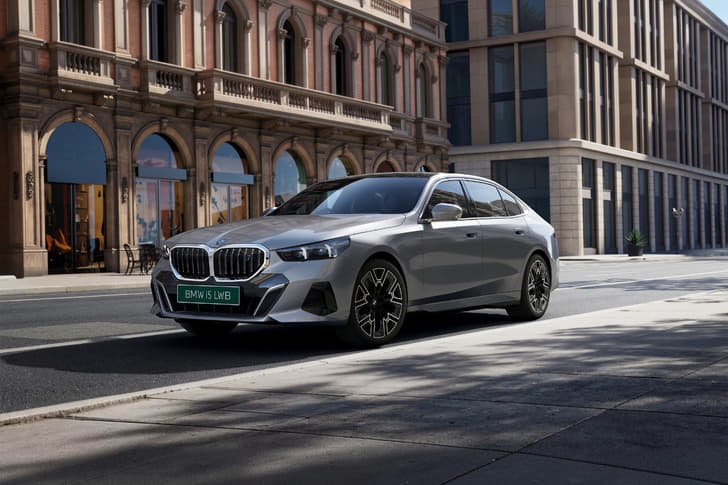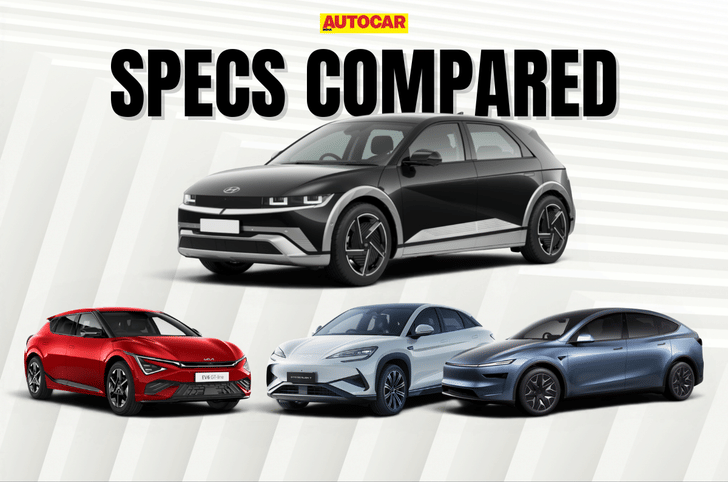
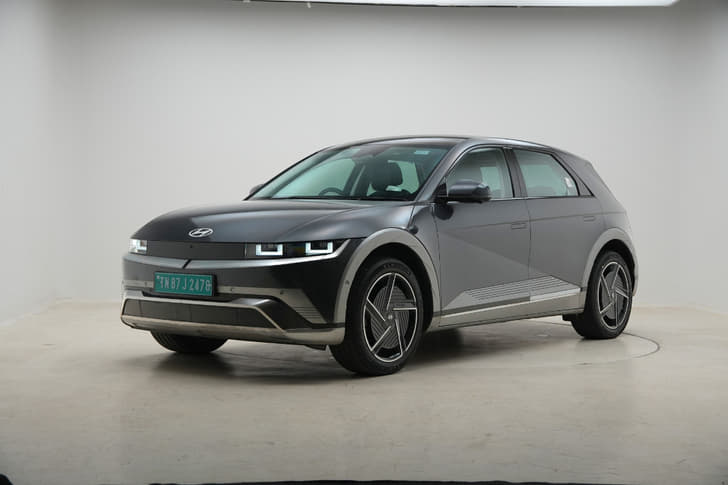
Hyundai has updated the Ioniq 5 electric SUV with a larger battery pack and feature additions that bring it up to speed with the competition, albeit with a price increase. But how do the Ioniq 5’s specifications stack up against its competition? From price, power, range and charging, we compare it with the likes of the Kia EV6, BYD Sealion 7, BMW iX1 LWB, Tesla Model Y, Mini Countryman Electric, and the Volvo EC40.
Hyundai Ioniq 5 vs rivals: Price
In pre-facelift guise, the Hyundai Ioniq 5 was once the most affordable in its class at Rs 46.90 lakh. The facelifted version costs over Rs 9 lakh more at Rs 55.70 lakh, making it the 4th most expensive model here. Currently, the BYD Sealion 7 in base trim is the most accessible, followed by the BMW iX1 LWB. Out of all models here, it's the Model Y’s higher-end trims that are the most expensive, while the Kia EV6 sold in one fully loaded trim is pricier than the Tesla's base trim version. More importantly, it's the Model Y (in L guise) that's the only one here that offers a 6-seater option, while the rest of the EVs here are only 5-seaters.
Hyundai Ioniq 5 vs rivals: Dimensions
The Hyundai Ioniq 5 ranks 3rd in terms of width, and 4th in terms of length and height. In this segment, the Sealion 7 is the longest, while the Model Y is the widest and the tallest. Furthermore, the Ioniq 5 and the Model Y (in LWB guise) have the longest wheelbases here, measuring 3 metres and above. On the other hand, the iX1 LWB and the Countryman Electric ride the highest off the ground.
When it comes to boot space and frunk space, the Model Y is the largest here at 822 litres and 117 litres respectively, followed by the Ioniq 5. However, the iX1 LWB and the Countryman Electric are the only ones here without a frunk. Models emerging with the largest wheel sizes are the Ioniq 5, Countryman Electric, and the Sealion 7 at 20 inches. But the Countryman Electric’s base spec 17-inch rims make it the smallest here.
Hyundai Ioniq 5 vs rivals: Battery and range
** Australian-spec model
The Model Y gets the largest battery pack, with the Ioniq 5 and EV6 falling short by 4.2kWh. In contrast, the BMW iX1 and Countryman Electric’s shared battery pack are the smallest here. Notably, the Sealion 7 is available in two states of tune, while the Model Y offers three battery pack choices, and the rest have only one powertrain on offer.
Power figures on the Ioniq 5 are among the lowest here, just above the iX1 LWB and the Countryman Electric. Interestingly, despite being the second most affordable, the Sealion 7’s high-end variant offers the best price-to-performance ratio. When it comes to drive setups, the iX1 LWB and the Countryman Electric are FWD, while the Ioniq 5 is RWD only. The Kia EV6 and Volvo EC40 are available only with AWD, while the Sealion 7 and Model Y offer RWD and AWD setups.
As for WLTP range, the Ioniq 5, along with the EC40, stands in third place. In LWB guise, the Model Y L gets the highest claimed range figure, followed by the Kia EV6. Only the Mini Countryman Electric and the Sealion 7 Performance have claimed ranges below the 500km mark.
Hyundai Ioniq 5 vs rivals: Charging times
The Ioniq 5 requires over 7 and a half hours to juice up its battery from 10-100 percent at AC speeds. Along with the EV6, the Ioniq 5 is the fastest to charge from 20-80 percent as both support 350kW DC charging speeds. Due to having the smallest battery packs, AC charging on the iX1 LWB and the Countryman Electric is the quickest.
All prices are ex-showroom, India

 Uday Singh

 Dipan Sur