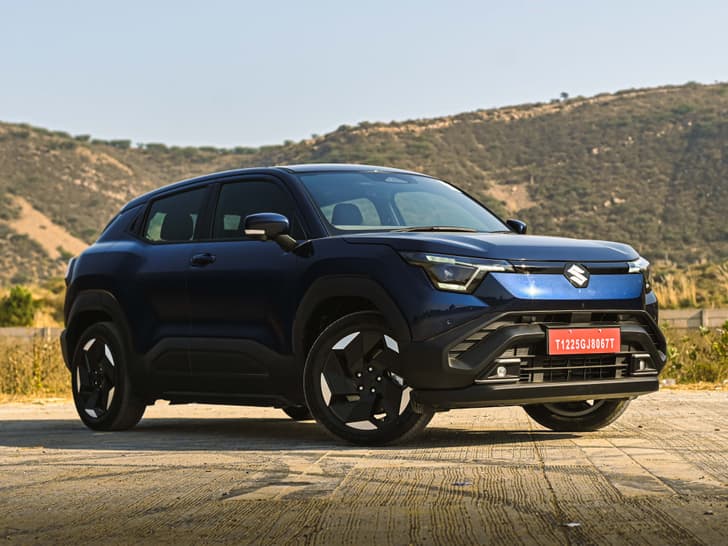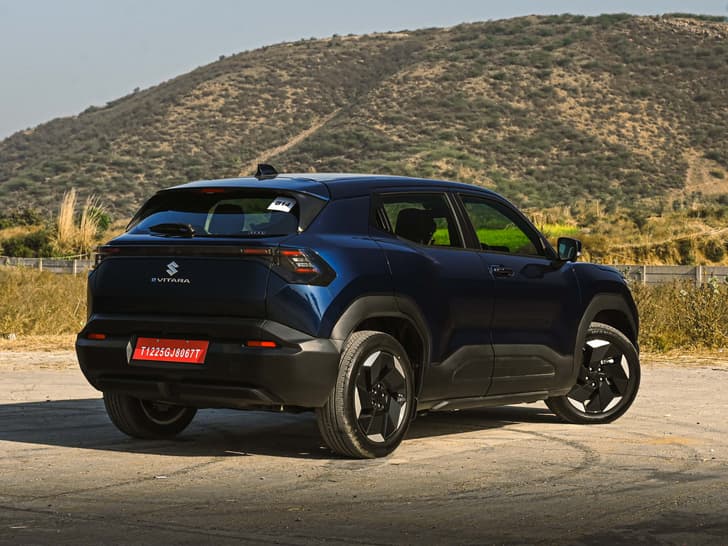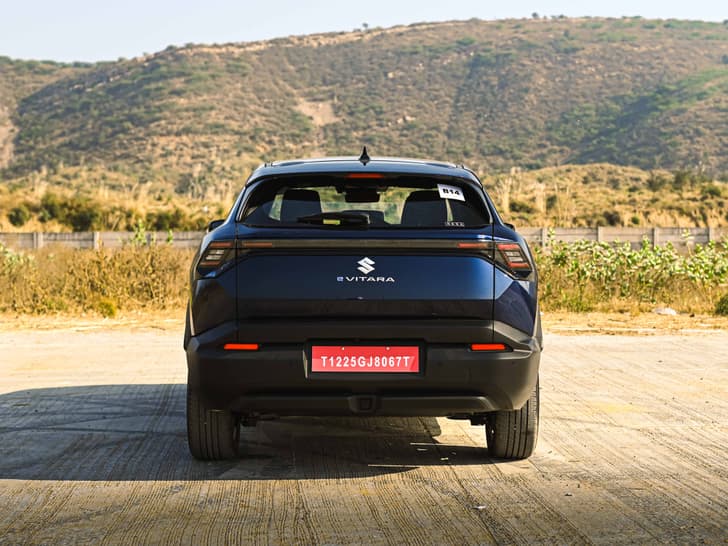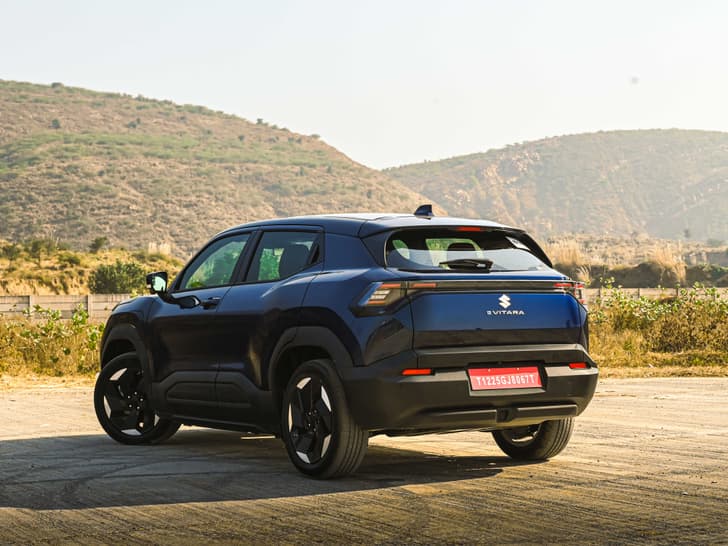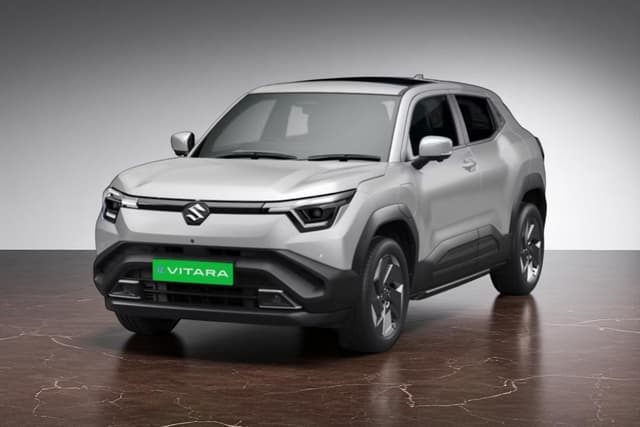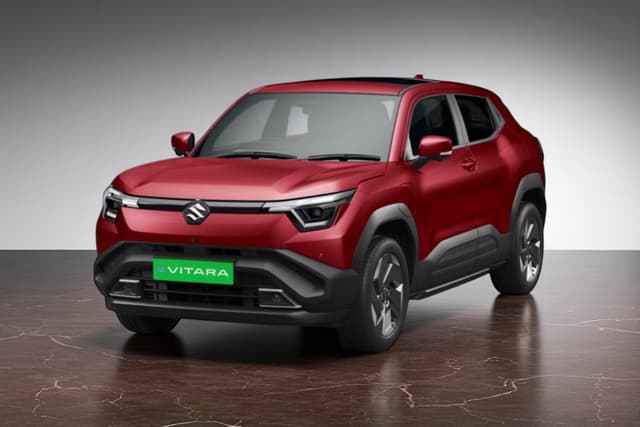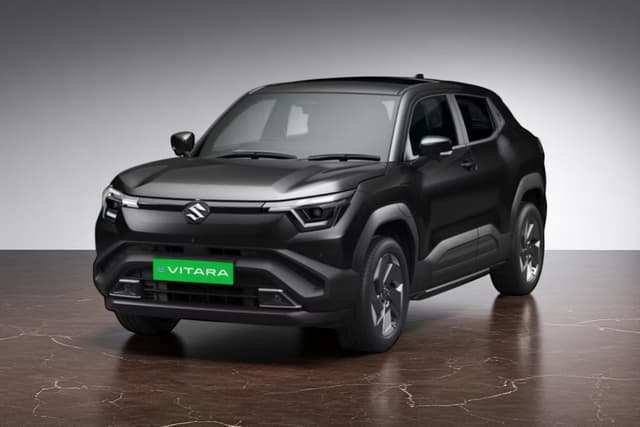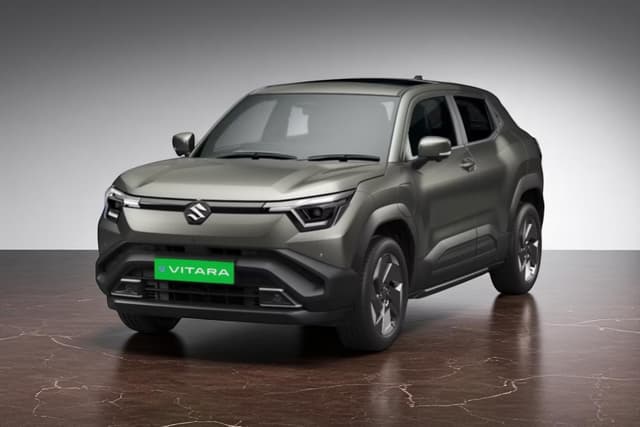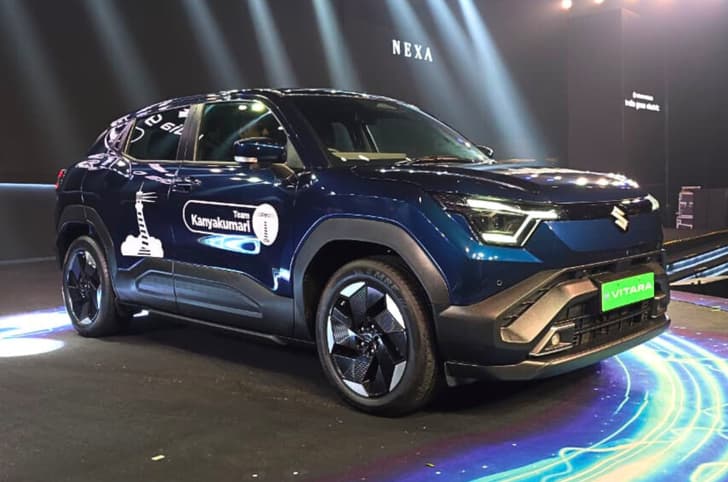
Kr Motors Arena - Kolhapur
319/3, Khanapur Road, Gargoti, Khanapur, Kolhapur, Maharashtra 416209
Last Updated on: 25 Jun 2026

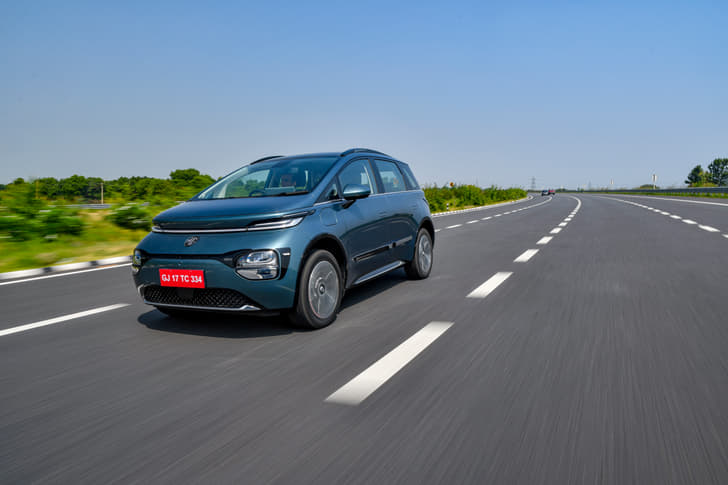
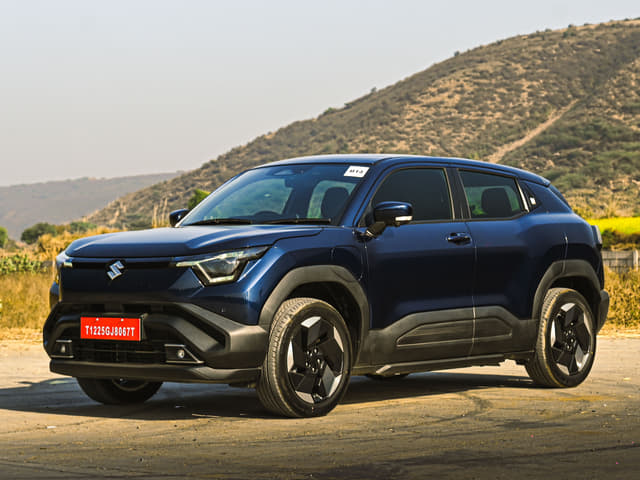
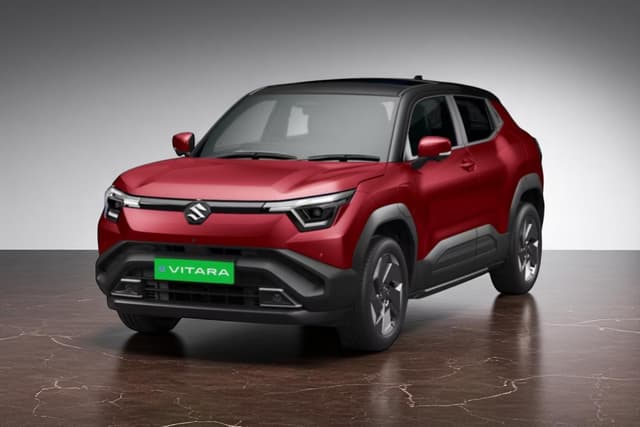
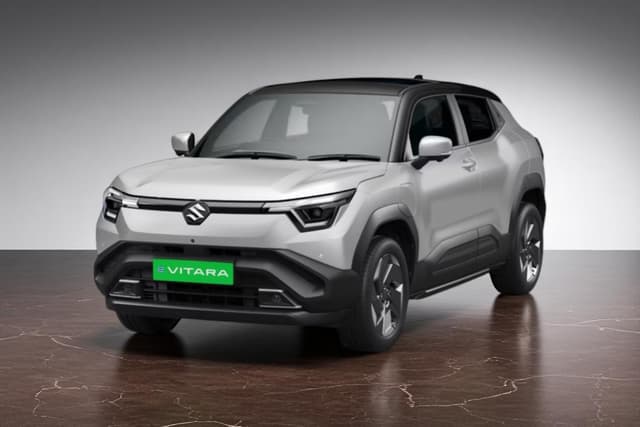
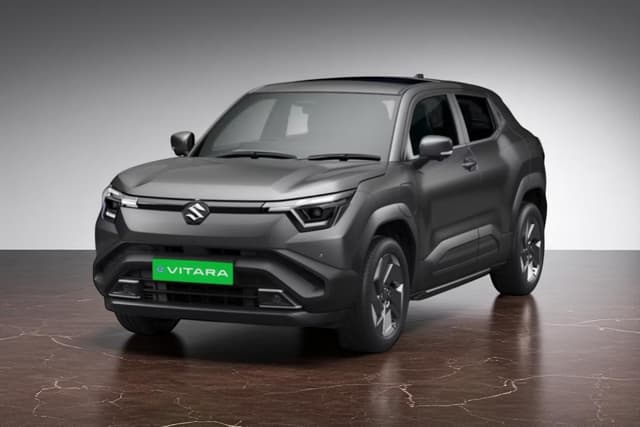
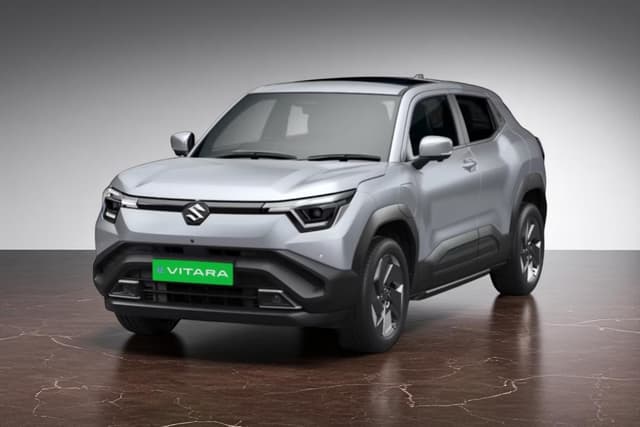
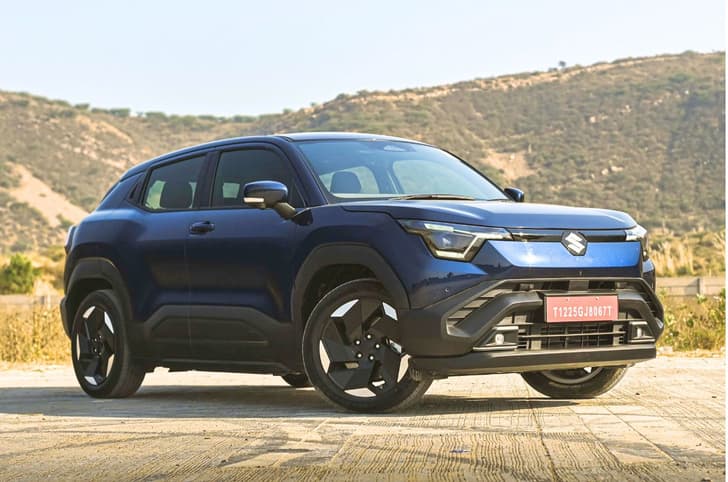
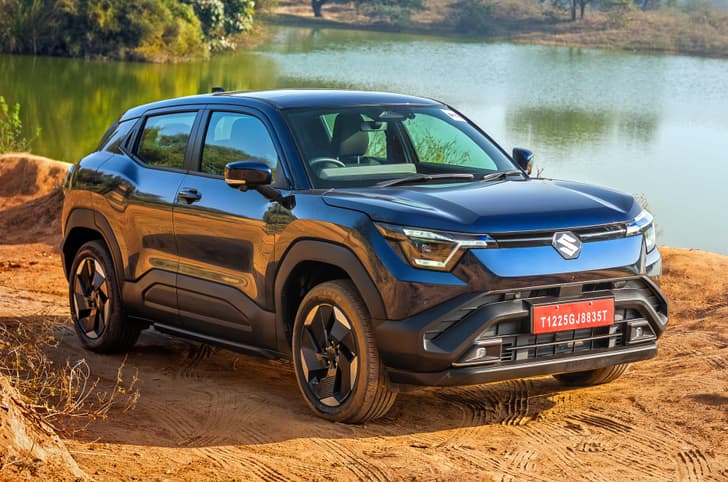
Maruti Suzuki e Vitara price in Kolhapur
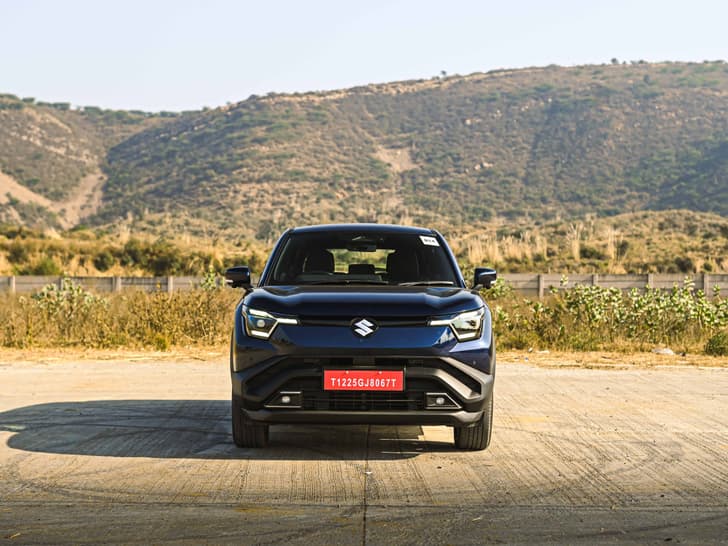
Maruti Suzuki e Vitara price with battery-as-a-service (BaaS) scheme starts from ₹10.99 lakh, where customers will have to pay ₹3.99 per km as a battery subscription fee. BaaS prices for the other variants with larger battery pack are ₹11.99 lakh and ₹14.29 lakh, but these have a higher battery subscription cost of ₹4.39 per km.
Regular prices of the e Vitara (without the BaaS scheme) range between ₹15.99 lakh and ₹19.99 lakh, ex-showroom.
Here are the on-road prices of the e Vitara:
Maruti Suzuki e Vitara price with battery-as-a-service (BaaS) scheme starts from ₹10.99 lakh, where customers will have to pay ₹3.99 per km as a battery subscription fee. BaaS prices for the other variants with larger battery pack are ₹11.99 lakh and ₹14.29 lakh, but these have a higher battery subscription cost of ₹4.39 per km.
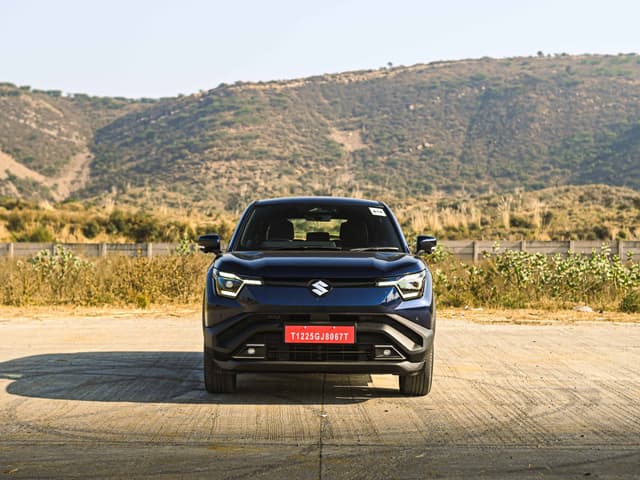
Regular prices of the e Vitara (without the BaaS scheme) range between ₹15.99 lakh and ₹19.99 lakh, ex-showroom.
Here are the on-road prices of the e Vitara:
* Estimated on-road price. Final amount may vary.
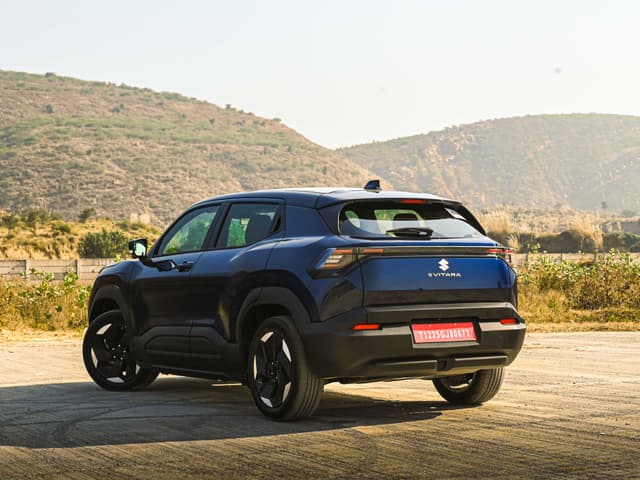
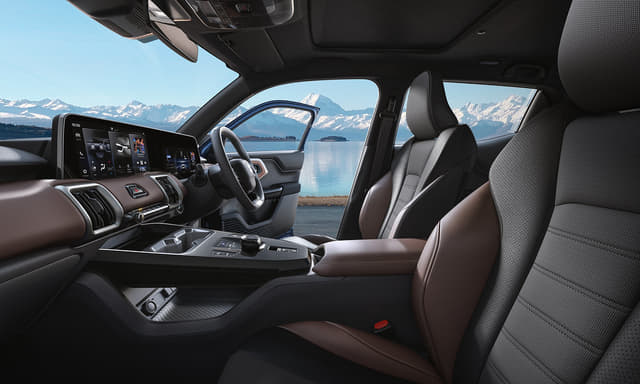
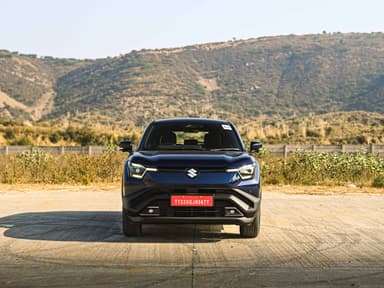
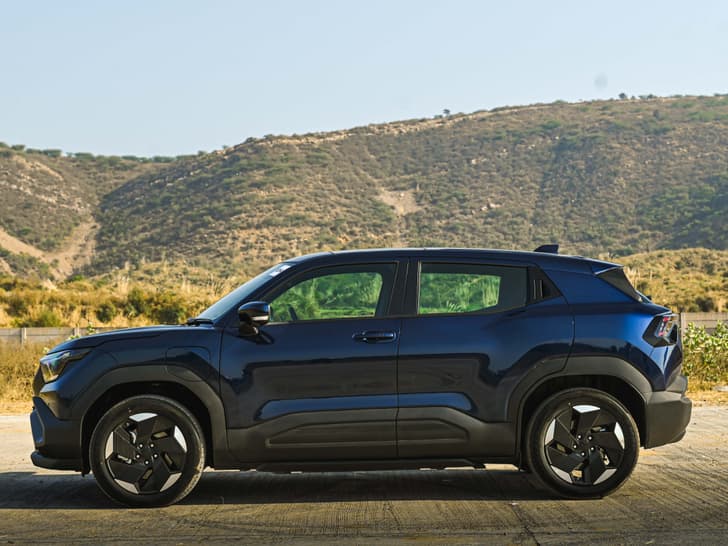
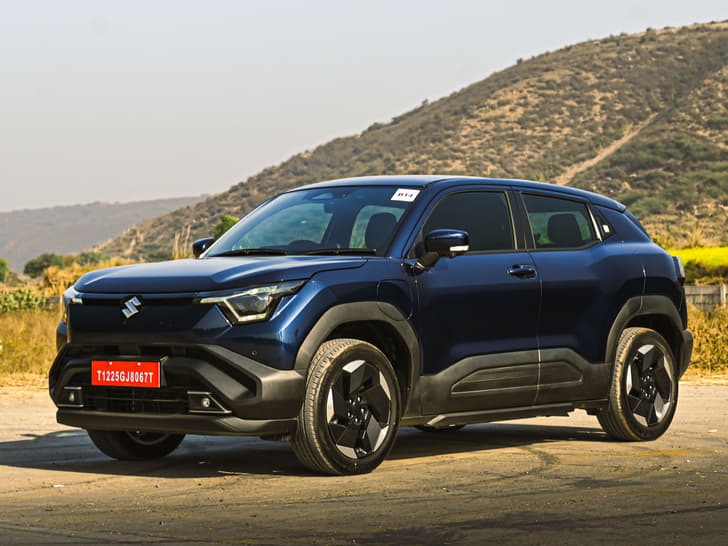
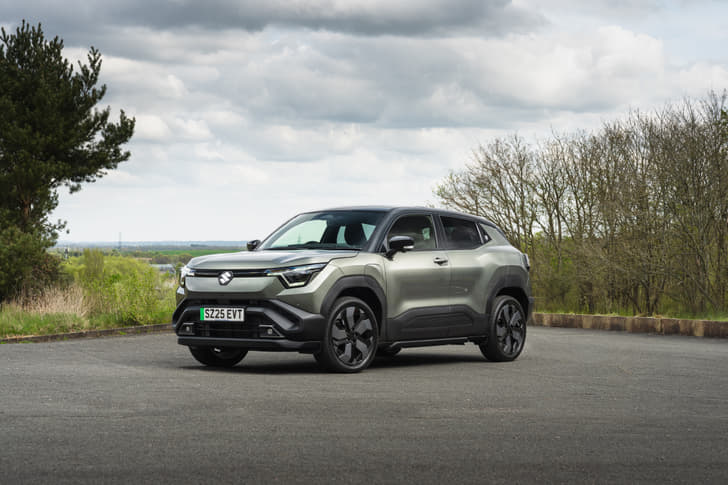
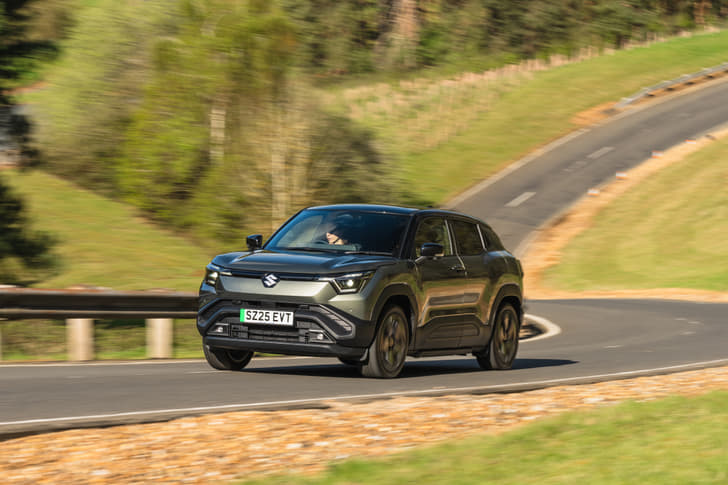
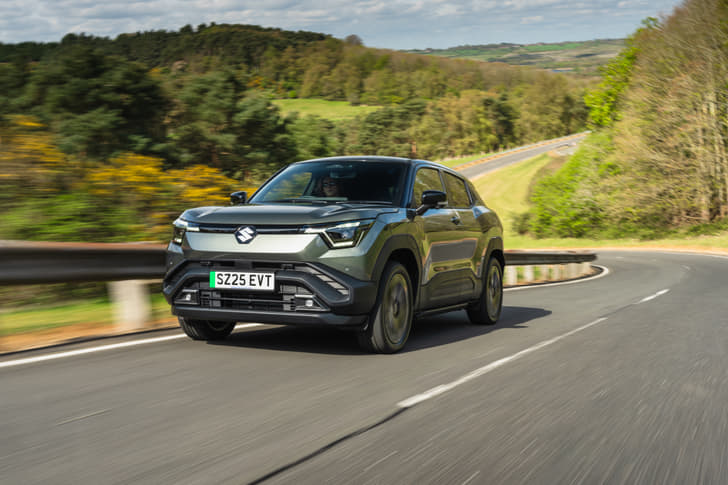
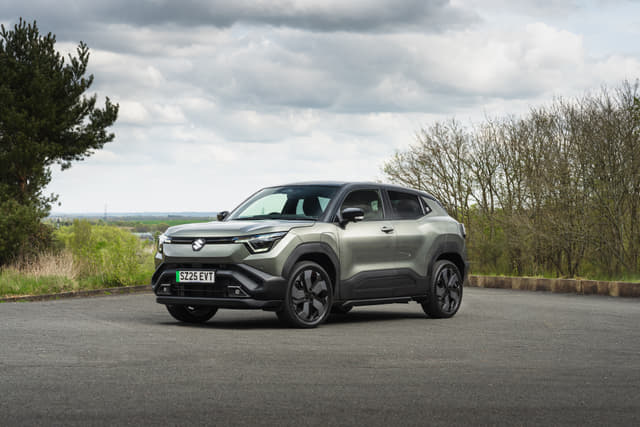
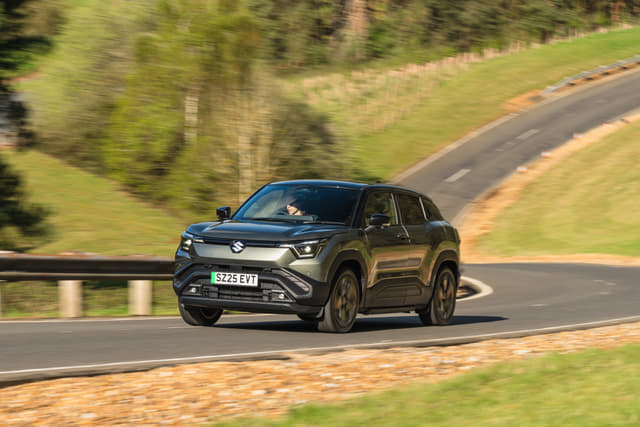
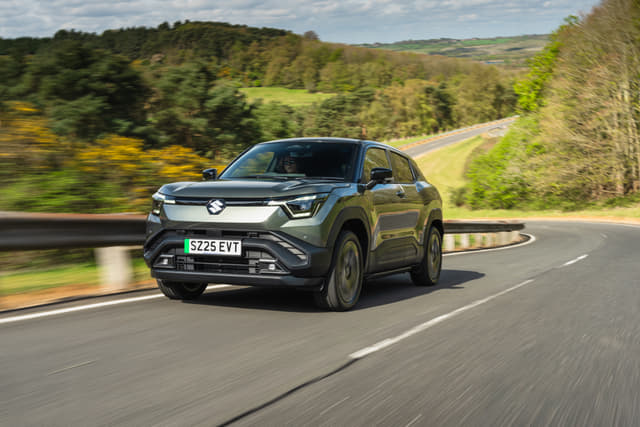
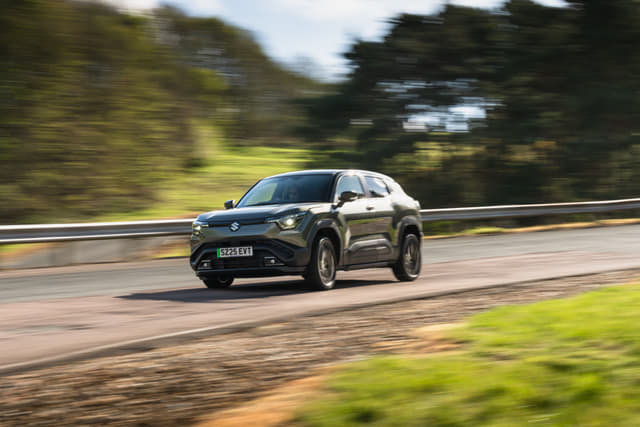
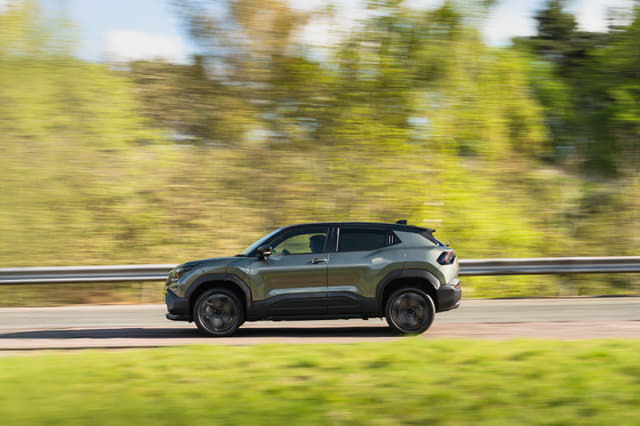
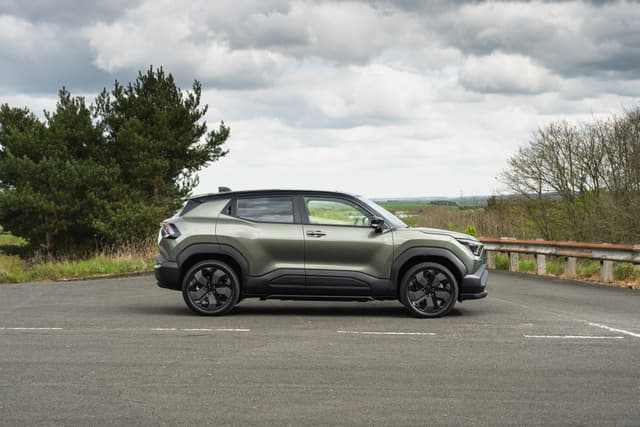
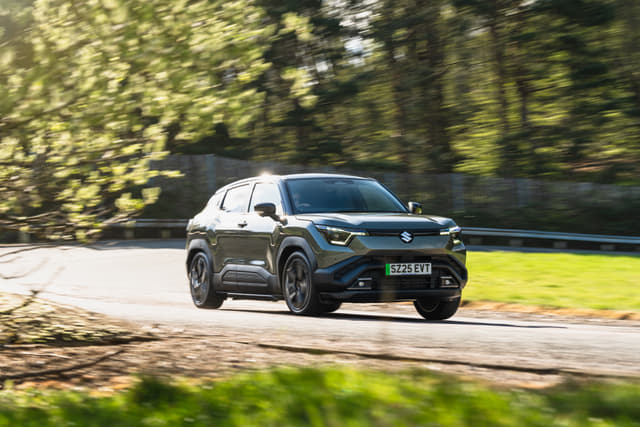
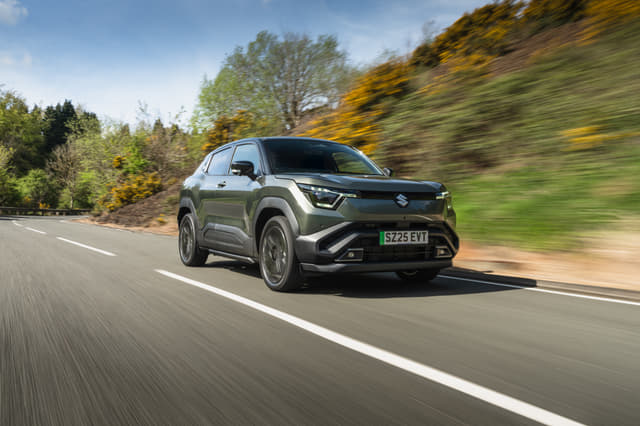
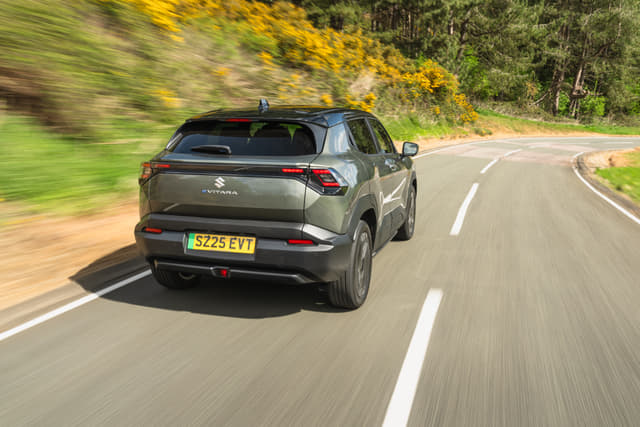
The e-Vitara is a new EV from Maruti. It benefits from Suzuki's vast service network, though it's a newbie in the EV segment.
Tell us about your experience
Download the complete brochure with specs, features, and variants.
Planning to buy e Vitara? Here are a few dealers in Kolhapur
319/3, Khanapur Road, Gargoti, Khanapur, Kolhapur, Maharashtra 416209
Plot No. 462, 24B, Opp. Shahu Market Yard, Kolhapur, Maharashtra 416005
Gat No. 1122, A At, Tal, Kodoli, Panhala, Kolhapur, Maharashtra 416114
Hotel Opal Building, Old Pune-Bangalore Hwy, Road, Kolhapur, Maharashtra 416005
Gat No.360 G.P.M No.157 A/P, Halkarni Taluka Chand, Kolhapur, Maharashtra 416501


In Kolhapur, the Maruti e Vitara base Delta 49 kWh is priced at ₹10.99 lakh + ₹3.99 per km for the BaaS scheme.
The Maruti e Vitara Delta 49 kWh variant has an on road price of ₹16.96 lakh in Kolhapur.
Maruti e Vitara mid-spec Zeta variant on road price is ₹18.52 lakh in Kolhapur.
The fully loaded Maruti e Vitara Alpha 61 kWh variant is priced at ₹19.99 lakh, which translates to an on-road cost of ₹21.20 lakh in Kolhapur.
In Kolhapur, the Maruti e Vitara BaaS prices range between Rs 10.99 lakh and Rs 14.29 lakh, excluding a subscription fee of up to Rs 4.39 per km.
adhishagrawal.2
Which electric car should I buy under Rs. 17 lakh for a daily commute of 50-80 km: the Tata Nexon EV Fearless 45, Maruti Suzuki e Vitara base model, MG Windsor EV, Tata Punch EV, or any other better 5-seater EV option?
autocar.india
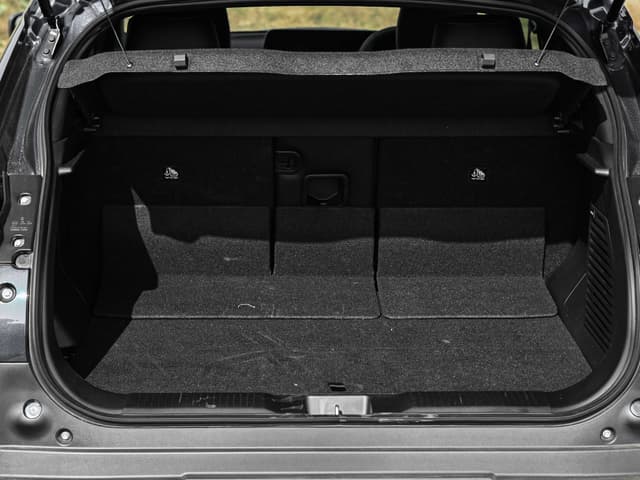
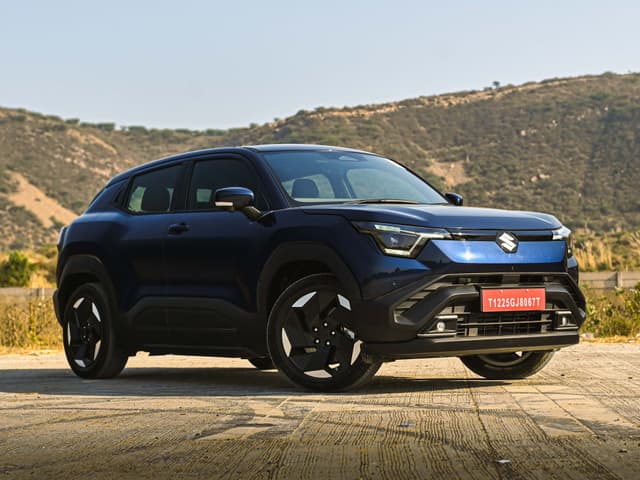
The MG Windsor EV would be our recommendation here. Coming from a Honda City diesel, you're likely looking for a comfortable, spacious and practical family car. Among the EVs you've shortlisted, the Windsor feels like the most complete package. It offers the roomiest cabin, excellent rear-seat comfort and enough space for five adults to travel comfortably. It also feels like a genuine upgrade from a sedan in terms of practicality and everyday usability.The Nexon EV 45 would be our second choice. It is a proven product, offers good performance and range, and is a sensible option if you prefer a more compact SUV. However, it cannot match the Windsor for rear-seat space and overall family-car appeal.The Maruti Suzuki e Vitara is worth considering, but it does have some notable shortcomings. The rear-seat headroom and boot space are limited, the seating position is slightly knees-up, the ride can feel busy and there is more road and tyre noise than we'd like. Given how late it is to the EV market, we expected Maruti to address some of these areas more effectively.The Punch EV continues to offer excellent value, but it is a segment smaller than the others and may not feel like a significant upgrade from your Honda City in terms of space and overall comfort.
anupam.3
I want to buy the Maruti e Vitara Alpha as my first car. Would it be a good choice?

autocar.india
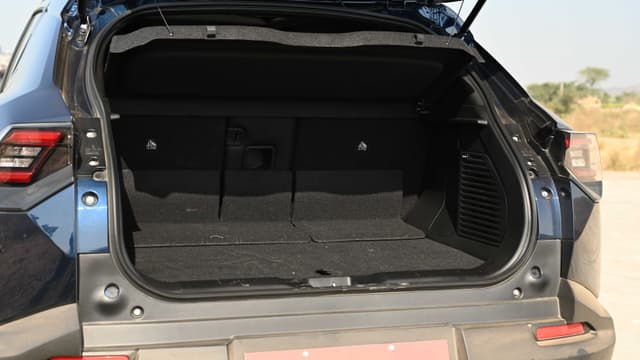
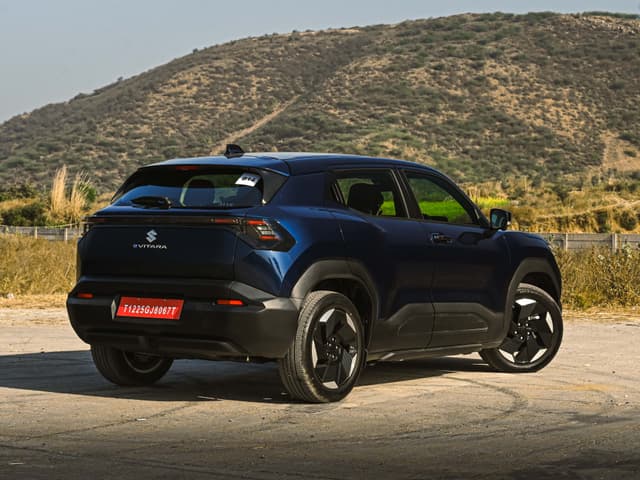
The Maruti e-Vitara Alpha is a smart pick for a first car, for a couple of reasons.For one, EVs are simply the easiest cars to drive. The instant, linear power delivery has none of the hesitation or lag you get from a conventional engine. Think of it as the smoothest automatic you can buy. That seamlessness translates into a lot of confidence behind the wheel, which matters when you're still finding your feet as a driver.Secondly, this is a Maruti Suzuki, so you get the brand's trademark reliability and, more importantly, its widespread service network. That's a real advantage for a first-time owner who doesn't want to deal with unfamiliar after-sales hassles.The Alpha trim's 61kWh battery is the sweet spot, too. It's rated for a healthy range, and in the real world, you should comfortably manage 400+km on a full charge, enough to banish any range anxiety on highway runs.Bear in mind that the boot is on the smaller side, and the rear seat isn't the most spacious for taller passengers. But for someone using it primarily as a self-driving car, for daily commutes and the occasional road trip, those are easy compromises to live with.Hence, as an easy, low-stress, well-supported first car, the e Vitara Alpha checks the right boxes.
Lalit Bhatia
I am planning to buy an electric vehicle with a budget of around ₹20 lakh. My usage will mainly be within Mumbai city, with occasional long-distance trips as well. Could you please suggest the best EV options?

autocar.india
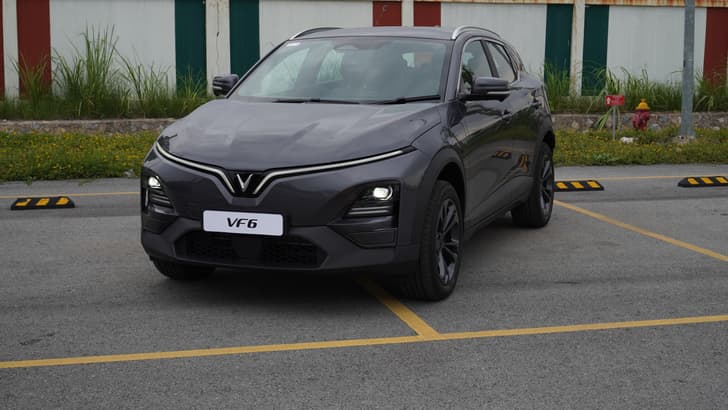
There are quite a few EV options within your budget, but the Hyundai Creta Electric stands out as the most complete and fuss-free option. It offers the same space, practicality and user-friendly experience as the ICE Creta with the refinement and power of an electric powertrain. The Creta Electric is available in two battery pack options - the base 42kWh battery pack will serve you well for Mumbai city commutes. However, you'd do well to extend your budget and go for the larger 51.4kWh version. The added outlay will get you more range, which would give you greater peace of mind on outstation trips. Alternatives to the Creta EV include the Maruti Suzuki eVitara and Vinfast VF6, but neither feels as wholesome as the Hyundai.
Gowtham M
Hi, I am planning to buy an electric car under a 10 lakh budget. Unable to decide on the car. Mostly for city (Hyderabad) purposes, with daily usage of 10-20 km. Did test drive Punch, Curvv, e-Vitara, Windsor - I thought Punch better, some people are saying Tata service is not good. Kindly help me select an EV car.

autocar.india
For your daily running of 10-20 km in Hyderabad and with a budget of Rs. 10 lakh, you should consider the base Tata Punch EV Smart variant. It suits short city use best because it is small and easy to park, feels smooth at low speeds, and has enough range to do your commute multiple times on one charge. The tall seat gives you a good view out, and the good ground clearance makes dealing with speed breakers and broken patches easy.Meanwhile, the Tata Curvv EV, Maruti Suzuki e-Vitara and MG Windsor are larger and pricier, and will go well past your budget. As for your concerns, Tata's service quality varies by outlet. In Hyderabad, the EV network is among the widest, but pick a dealer with strong Google reviews, choose their bigger workshop, and take an extended warranty to keep peace of mind.Alternatively, you could even consider the MG Comet EV as an urban runabout.
dheeraj reddy
I am planning to buy the e-Vitara, as I feel the cost is a bit easier on the pocket when compared to the Creta EV, which is 5 lakh costlier for the same variants. Or should I wait for Sierra EV? What can it cost? What would you suggest among e Vitara, Creta EV and Sierra EV?

autocar.india
The Tata Sierra EV is expected to launch in just a few months from now, thus we would recommend you wait and then make a decision. As for the price its hard to pinpoint what that would be, but expect it to undercut the Hyundai slightly. If you cannot wait, between the Maruti Suzuki E Vitara and the Hyundai Creta Electric, pick the Maruti only if you are on a tight budget. It also offers you all the basics; however, while the Hyundai costs a bit more, it does come across as the superior product.In our reviews of the two cars, we have rated the Hyundai better thanks to better performance feel and a more user-friendly experience, including easily adjustable regeneration levels. The cabin is also more spacious and comfortable, with a larger passenger area and boot.
Bhasker Gandham
Hi Sir/Madam, Thank you for your valuable assistance and advice. I am planning to buy an EV and have been considering the MG Windsor Pro Exclusive. However, I have held off my decision after coming across several reviews mentioning a stiff suspension and not-so-effective air conditioning. Could you please advise whether these are real deal-breakers, or if there are better alternatives I should consider? My usage will be approximately 30% city and 70% highway.

autocar.india
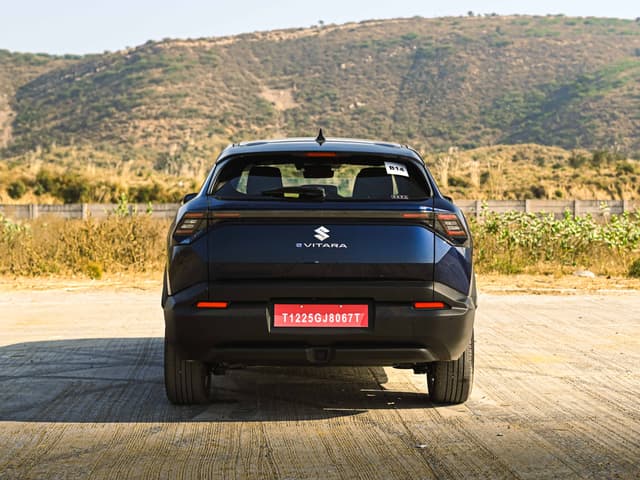
The MG Windsor EV’s ride is indeed on the firmer side, and that’s something we’ve pointed out in our review as well. On broken roads and sharp bumps, it doesn’t feel very plush, but at higher speeds, it settles down and is quite stable. The air-conditioning isn’t the strongest in the class, yet in normal use, it does the job and is not a major weakness.Given the price, space and long list of features the Windsor offers, there’s very little that matches it for sheer value, so these compromises are something most buyers can live with.However, if you don’t really need that much space and mostly drive yourself, the Maruti Suzuki e Vitara is worth considering. It has a more comfortable ride, better overall refinement and an efficient air-con system, which will matter on long highway runs and in hot weather.
JV
I am looking to buy a compact car for my family, with an annual running of 30,000–40,000 km. My father strongly prefers diesel vehicles, while I am also considering an electric vehicle within a ₹20 lakh budget. We currently own a 2017 Hyundai i20 (top model), which is nearing 3 lakh km and needs replacement. The new car will be used mostly for city driving, along with occasional long trips of 300-500 km. We also have a 2021 Jeep Compass 4x4 Model S, which has clocked 1.2 lakh km and will be retained, although its fuel efficiency is around 11 km/l. Given our usage and long-term ownership plans (up to 3 lakh km), should we opt for an electric vehicle, a diesel car, or a hybrid? We also have an 8 kW solar setup at home with surplus power generation. I am considering EVs like the Tata Punch EV, Tata Nexon EV, MG Astor EV (if launched), and the upcoming Kia Syros EV. For diesel options, I am looking at the Kia Sonet, Hyundai Creta, and Tata Curvv. However, while I like Tata cars, I have some concerns about after-sales service. Could you suggest the most suitable electric or diesel automatic options for my needs?

autocar.india
With your kind of usage of 30,000-40,000 km a year, mostly city driving, long-term ownership and an 8 kW solar setup, going electric makes a lot of sense. Running costs will be significantly lower, especially since you can charge at home using surplus solar, and the smooth, silent nature of an EV suits city driving perfectly.The Tata Nexon EV Long Range is still one of the most well-rounded options here. It offers a good balance of range, practicality and ease of use, and can handle your occasional 300-500 km trips with one planned charging stop. It is also a proven product with a wide user base.However, since you have concerns about Tata’s service, it is worth considering alternatives. The MG Windsor EV with the larger battery pack is a strong option. It offers more space, a more premium feel and a bigger battery, which helps with range and reduces charging stops. The Maruti Suzuki e-Vitara is another promising option, especially from a long-term ownership perspective, thanks to Maruti’s strong service network and reliability.Diesel is still a valid fallback. If you prefer complete flexibility and do not want to depend on charging infrastructure at all, options like the Hyundai Creta diesel automatic or Kia Sonet diesel automatic make sense, offering strong mileage and effortless highway performance.So, the decision comes down to priorities. Given your high running and solar setup, an EV is clearly the smarter long-term choice. Among EVs, the Nexon EV is the proven option, the Windsor EV offers more space and range, and the e Vitara is the safest bet for long-term ownership. Diesel should only be considered if you want maximum convenience without planning charging stops.
Yatrik
Hi, my daily usage is 70 to 80 km and around 25,000 km per year. I am about 6 feet 3 inches tall and want to buy an EV, as I have solar panels at home. My budget is around ₹17 lakh, and I am considering the Maruti Suzuki E Vitara.

autocar.india
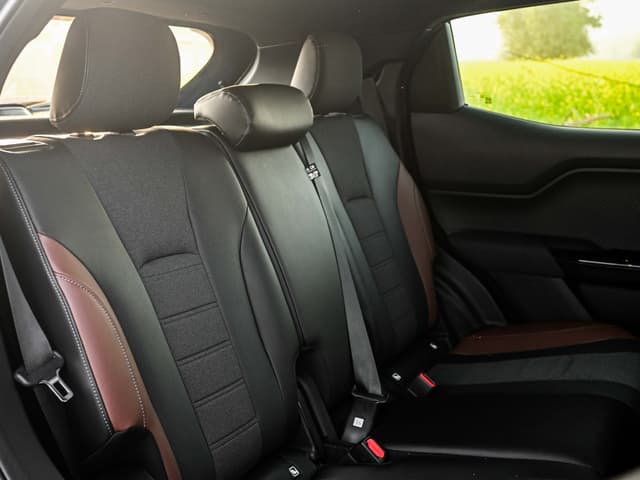
The Maruti Suzuki E Vitara is a sensible EV for your usage and budget.For 70-80 km a day and around 25,000 km a year, going electric will significantly cut your running costs, and charging from solar makes it even more economical. The e‑Vitara is positioned as a reasonably priced compact electric car, so it should sit comfortably within your 17 lakh budget and still offer the ease of an automatic, quiet drive and low maintenance.However, there are some important comfort limitations to be aware of, particularly for someone who is 6'3". The cabin is not very spacious, and you’re likely to need the driver’s seat pushed all the way back, which leaves very little legroom for a passenger sitting directly behind you. The floor is also quite high because of the battery pack, so your knees sit more upright than normal, which can reduce long‑distance comfort for tall occupants.If rear‑seat space matters or you often travel with family, it’s worth looking at alternatives like the MG Windsor EV, which offers a noticeably roomier cabin and more comfortable back seat. But if you mostly drive alone or with one front passenger, the e‑Vitara will do the job quite well.
Aayush gupta
I am planning to buy an electric car, as I travel around 100 km daily on highways. I am confused between the Mahindra XEV 9S, Tata Harrier EV, and Maruti e Vitara (Delta). We are a family of four and often travel with around 200 kg of luggage. My priorities are real-world driving range, safety, suitability for highway usage, and low maintenance. Which of these cars would be the most suitable for my needs, and what real-world range can I expect?

autocar.india
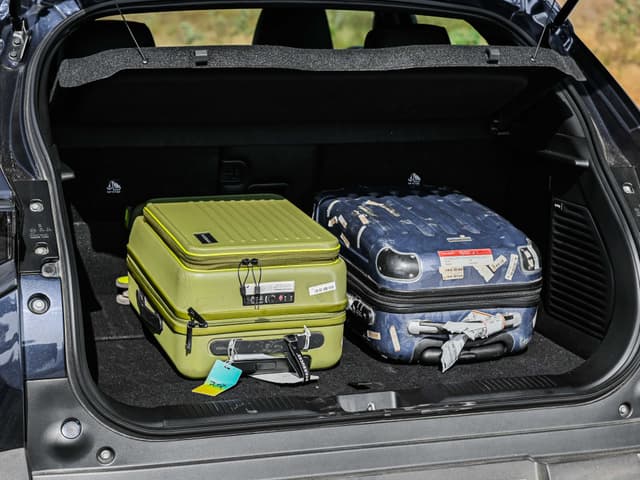
For your use case, the Maruti Suzuki eVitara, despite a range of 400+ km, drops out first. Its boot is only around 300 litres, which is tight even for two large suitcases, let alone 200kg of luggage plus four people. It’s fine as a family crossover, but not for heavy luggage and long‑haul highway use.Both the Mahindra XEV 9S and Tata Harrier EV are large, comfortable SUVs that will easily take four adults, and with their rear seats folded or adjusted, they can swallow serious luggage. The XEV 9S, being a three‑row SUV, gives you a huge, flat boot with the third row down, so it’s the most practical of the three for your 200kg luggage requirement.On range, the XEV 9S with the 79kWh battery delivers around 478km in Autocar’s real‑world test, versus about 401km for the Harrier EV AWD with a 75kWh pack. For your 100km daily highway run, both are adequate, but the Mahindra gives you a much bigger buffer even when loaded.In terms of driving feel, the Harrier EV feels more planted and tied down at high speed; the XEV 9S is softer and moves around a bit more on uneven highways, though it’s still safe and stable. On safety and maintenance, both are modern, 5‑star‑oriented SUVs with robust equipment; long‑term, Tata’s and Mahindra’s EV ecosystems are still maturing, so factor in dealer experience in your city and expect a few niggles too. Given your load, highway usage and need for range buffer, the Mahindra XEV 9S 79kWh is the most suitable overall.
Gangadhar Gupta
I am planning to buy an electric car primarily for local usage. I have shortlisted the Tata Punch EV, Tata Nexon EV, and MG Windsor EV, but I am confused between these options. My key considerations are real-world driving range and rear seat comfort, especially legroom. Could you please suggest which of these EVs offers the best range and the most spacious rear seating? Also, are there any better alternatives I should consider?

autocar.india
The Maruti Suzuki e Vitara with its 61 kWh battery pack has an officially claimed range of 543 km on a full charge, which is comfortably the highest among the three you’ve mentioned. Even if you factor in real‑world conditions, you can expect a useful touring range that’s still well ahead of the Punch EV and Windsor.For rear seat space, the MG Windsor EV is the one to go for; it has the most generous back‑seat legroom and overall cabin width, making it the most comfortable for passengers in the back. If you choose the Windsor Pro variant with the 52.9 kWh battery, you get a certified range of 449 km.In real‑world use, that typically translates to roughly 340-370 km depending on your driving style and conditions, which is more than sufficient for daily local and city driving. The Windsor isn’t quite as refined or efficient as the e-Vitara, but it strikes the best balance between range and rear seat space if those are your two main priorities.