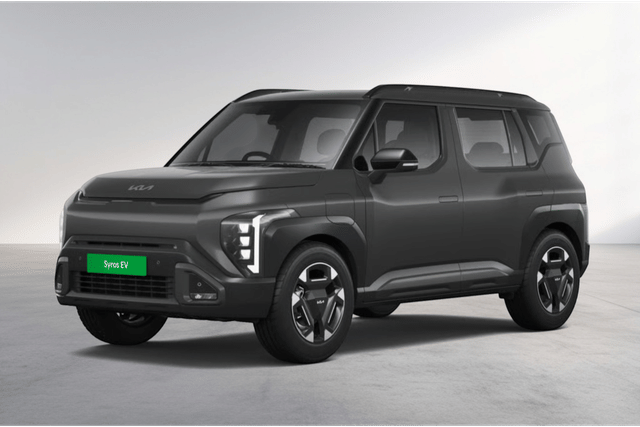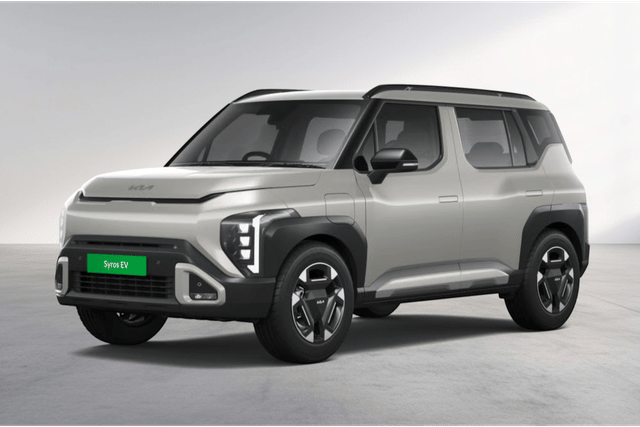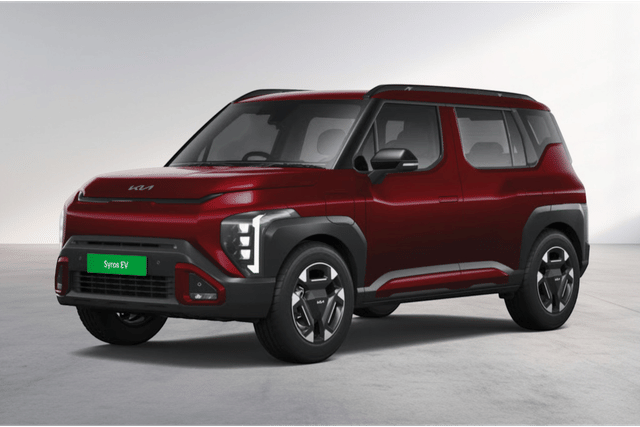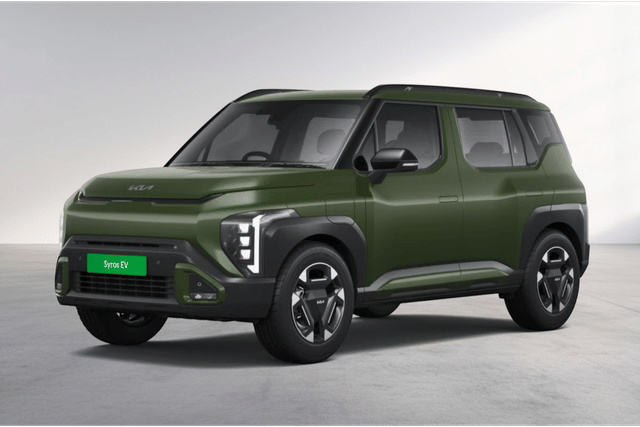

Brezza or Curvv EV: Buy?


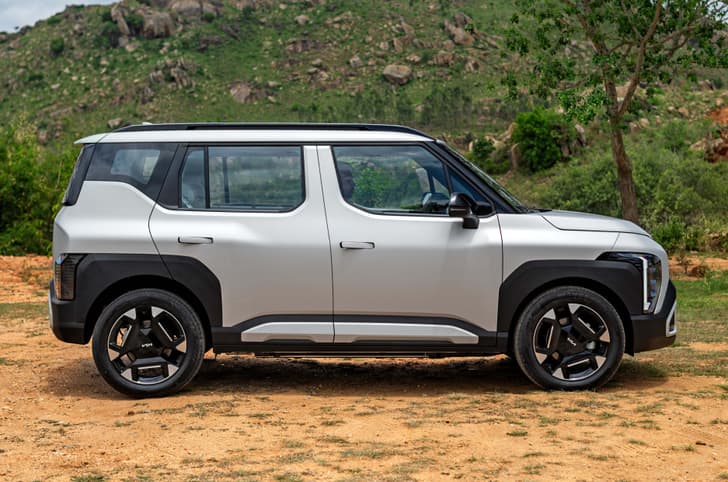
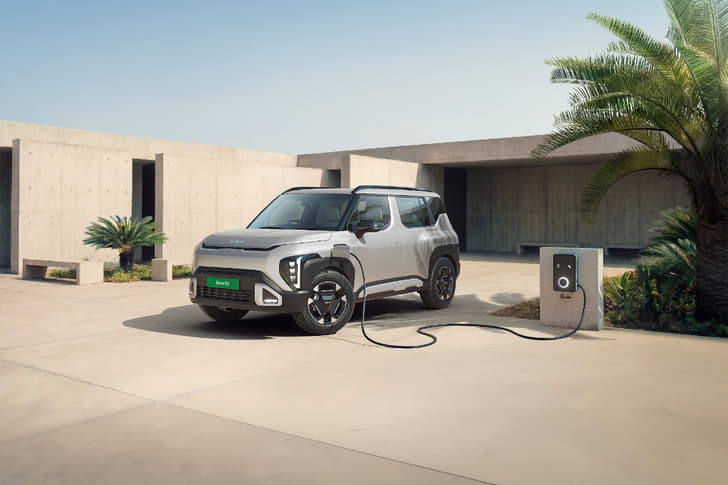
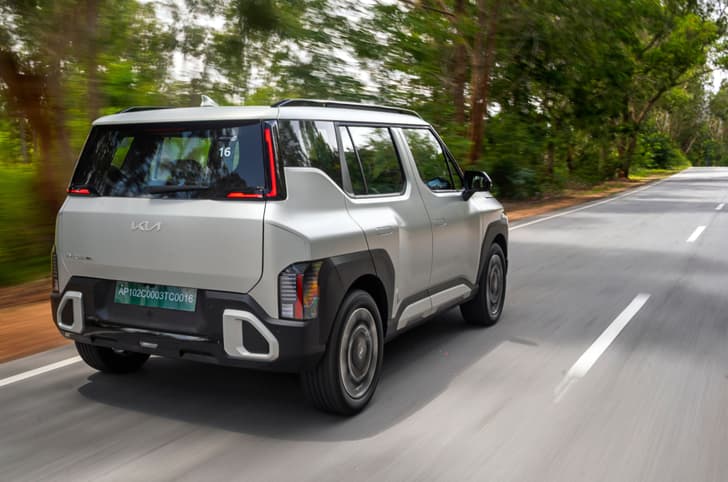
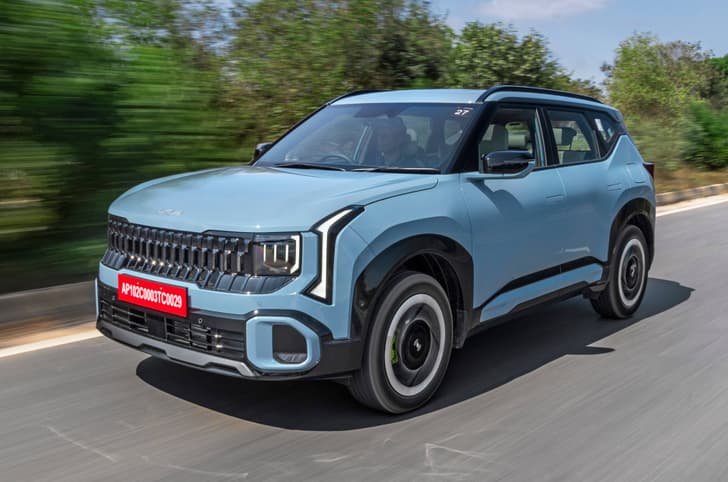
Kia Syros EV price in Amalner
* Estimated on-road price. Final amount may vary.
* Estimated on-road price. Final amount may vary.
* Estimated on-road price. Final amount may vary.
* Estimated on-road price. Final amount may vary.
* Estimated on-road price. Final amount may vary.
* Estimated on-road price. Final amount may vary.
* Estimated on-road price. Final amount may vary.
No dealers available in Amalner
We don't have authorised Kia dealers here
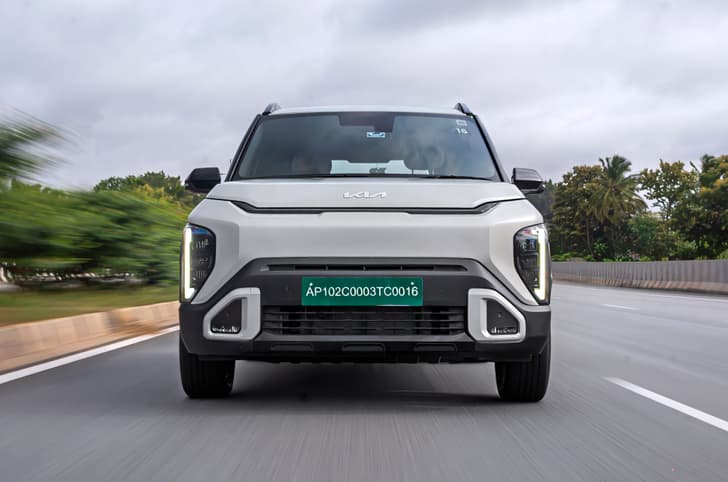
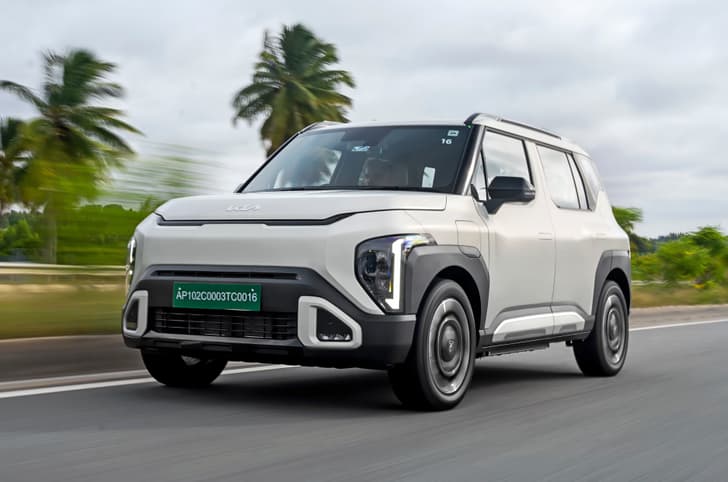
The Kia Syros EV HTK costs ₹14,31,494 on-road in Amalner. At 9.00% interest for 7 years, your estimated EMI is ₹20,731 per month.
Tell us about your experience
Kia Syros EV Official Brochure
Download the complete brochure with specs, features, and variants.
Get answers from Autocar experts and owners
I'm planning to buy a new car for daily use (we already have a Ciaz diesel at home), and I've been going back and forth for a while, so I'd really appreciate some expert opinions. I started with the Brezza, then widened it to the Nexon, XUV 3XO and a few others. My running is high, about 20,000 km (In total, 2 cars) a year (well over 15,000 km at the least), so I figured a diesel makes more sense than petrol. I liked the 3XO MX2 diesel the most. If I go ICE, it will be a manual only. Now the Kia Syros EV is on my shortlist too. On-road prices as I see them: 3XO MX2 about Rs 11 lakh, Syros EV about Rs 15 lakh, so a Rs 4 lakh gap. My rough numbers: - 3XO diesel at around 18 km/l and about Rs 98/litre works out to roughly Rs 1.09 lakh a year in fuel. - Syros EV charged at home (42 kWh pack, 320 km claimed, maybe 250 km in real life) works out to roughly Rs 30,000 a year in electricity. - Including lower servicing for the EV, I'm getting a payback of about 4.5 to 5 years. I'm also considering a home solar plant (about Rs 2.25 lakh). Other points: I can charge at home every day, and I rarely do trips above 300 km (and the Ciaz is there for any long trips). I also hear the Hyundai HE1i is coming around the end of this year or early next year, so I'm wondering whether to wait for it. So, what would you do? Is the Syros EV worth the extra Rs 4 lakh at this running, or should I stick to the 3XO diesel? Anything I'm missing, like battery warranty, resale value, or real-world range and service experience? Thanks in advance!

 Kia Syros EVMahindra XUV 3XO
Hi Autocar Team, I'm looking for some guidance on whether I've made the right decision or whether I should reconsider before delivery. My current car is Toyota Etios Liva V Petrol, which has been extremely reliable but now it delivers only around 10-12 kpl for my usage. This results in high running costs. My monthly driving is approximately 1,200-1,500 km that consists of daily commute and occasional highway trips. My initial plan was to keep costs under control and I had booked the Tata Punch EV Empowered+ 40 kWh, largely to restrict my budget to around Rs. 15 lakh on-road. However, while researching alternatives up to approximately Rs. 20 lakh ex-showroom in Kerala, I ended up booking the Kia Syros EV X-Line. The Syros EV appeals to me because of significantly better rear-seat space and cabin width as compared to my Etios Liva, more premium interior and features, better long-term family comfort, larger battery and range as well as better overall sense of upgrade from my current car. However, I'm still feeling anxious about whether I'm overspending. The jump in EMI from the Punch EV to the Syros EV is substantial and will have a noticeable impact on my monthly finances. While I can manage it, I want to be sure that the additional expenditure is genuinely justified and not merely an emotional decision. Based on my monthly running of 1,200-1,500 km, could you please advise if the Syros EV worth the additional cost over the Punch EV 40 kWh? From a value-for-money perspective, would you proceed with the Syros EV or step back to the Punch EV? Are there any other EVs under Rs. 20 lakh ex-showroom that I should seriously consider instead? I am not interested in the MG Windsor EV due to its styling, so alternatives apart from the Windsor would be appreciated. If you were in my position and were planning to keep the vehicle for 8-10 years, which option would you choose and why? Looking forward to your expert opinion.
Kia Syros EVTata Punch EVHi team! 🙋 Hope you are having a good day. Wanted your help in reaching an informed decision. I'm getting a used 45K Run 2024 Curvv EV Empowered+ A 55 for 16.5L . Do you think it is an okay price? I haven't negotiated yet. What will I be missing in comparison to the new SeriesX? Is the backseat of the old model comfortable for long journeys? I heard there were some complaints before n they improved it in the new one. Was there anything else bad apart from the headroom before, and how bad was it anyway, if tall passenger won't be sitting at the back? Also r there any known issues? What should I double check before buying one used? Or should I wait n buy a new Syros EV instead? Really appreciate your work in helping us out. Thanks in advance.
I own a Tiago XZA (2017 model) that has clocked 60000km on odo in an excellent condition. Shall I upgrade it or keep it for a few more years? I am thinking of buying an EV under Rs. 18 lakh (on-road) but I am not sure about its running cost.
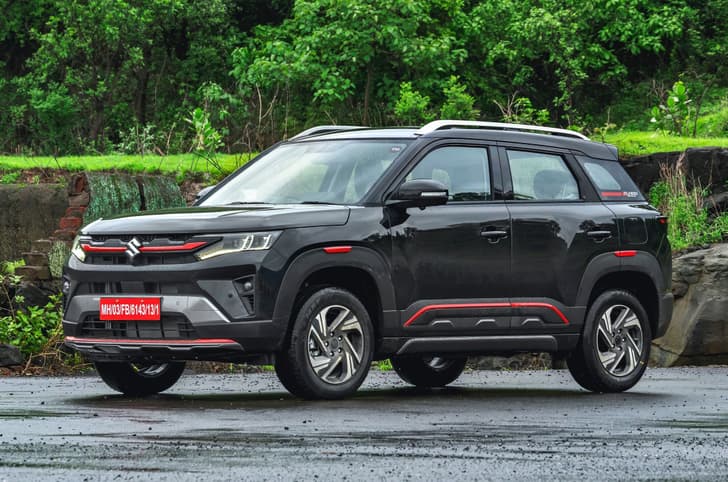
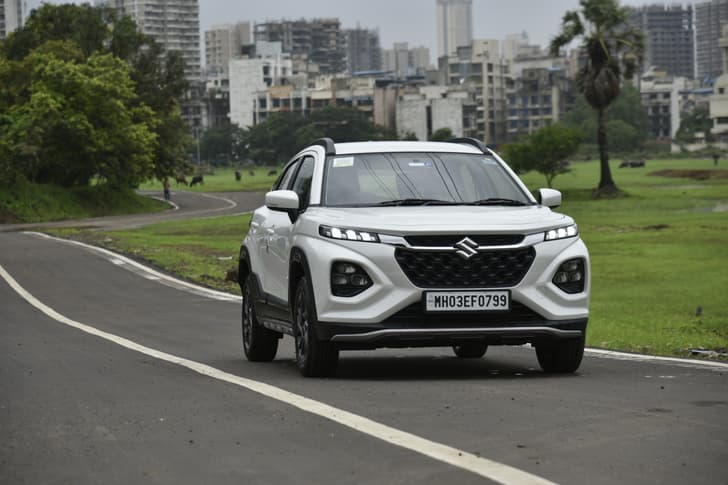
Kia Syros EVMaruti Suzuki e VitaraMG WindsorTata Nexon EVHello Autocar team, I am planning to buy a car, and as advised by many, I was looking at the Brezza 1.0L Turbo ZXi Plus MT (Rs. 13.5 lakh ORP). It would not be cost effective if I go for the Brezza 1.5L ZXi Plus AT (Rs. 16 lakh ORP) but when I went for the test drive, I really liked the Victoris ZXi (O) AT (19.4L (ORP) that was parked next to the Brezza. In terms of driving, I found the Brezza 1.0L to be better than the Victoris. Now, for my family of 5, I felt the Victoris is better than Brezza. If I buy Brezza, I am saving atleast 5-6 years of petrol cost but if I plan to buy a Rs. 19.4 lakh car, I feel I should go for an EV in which my options are either the e vitara Delta (Rs. 20 lakh ORP) or the Curvv EV Empowered X 55 (Rs. 20.20 lakh ORP) which will save a lot on fuel. My driving will be mostly within the city (approximately 500km per month or lower) and ocassional Mumbai-Goa and rarely Mumbai-Delhi driving with 5 people onboard with their luggage. The driving distance may increase in case of EV since the fuel cost is less. I do not have any problem waiting for charging because at the end of the day, I will be taking breaks during long rides. Given the 380-400km range of Curvv EV, I don't think that there would be much problem. As for charging, we have a 7.2W AC charger in our society which costs 14 rupees per unit (the unit price at home is 10 rupees if the FAC and meter charges are added. I feel the overall cost would be around 14 rupees per unit). The charger that I will get with the car can be installed in my home in Goa. Which between Bezza or Curvv EV is the better option? Also, is the EV charging infrastructure good enough so that I can visit any part of the country without worrying about charging (eg. hill stations and remote areas).
Maruti Suzuki BrezzaMaruti Suzuki e VitaraTata Curvv EVKia SeltosKia Syros EVMaruti Suzuki Victoris



Last Updated on: 18 Nov 2026