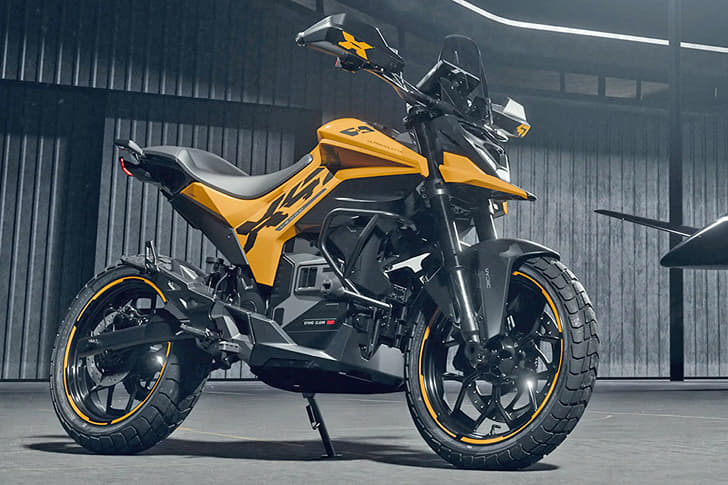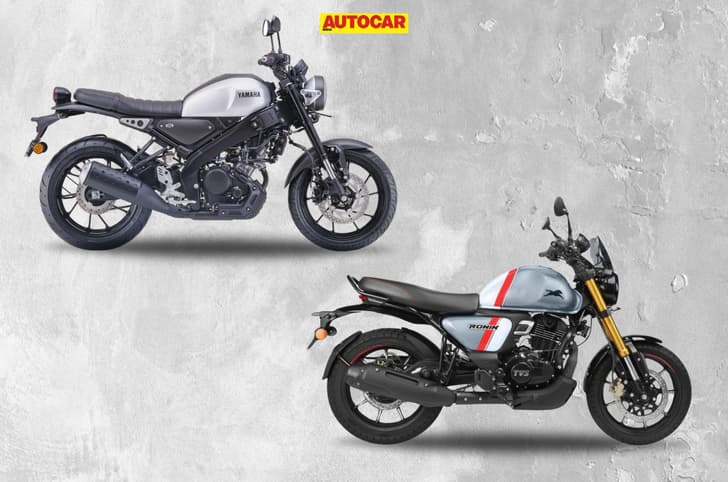
The Yamaha XSR 155’s price has been hiked a little under three months after its launch in India. Here’s how it now stacks up against another neo-retro rival, the Ronin, on paper.
Yamaha XSR155 vs TVS Ronin: Engine and output
The XSR produces lower power but has a better power-to-weight ratio
The Ronin produces more power and significantly more torque from its larger engine, and it is delivered much earlier, which should translate into it being a great city bike. The XSR 155, on the other hand, benefits from an additional cog, which results in taller gearing and allows it to achieve a higher top speed. Despite the XSR’s lower power output, its power-to-weight ratio is marginally better due to a much lower kerb weight. The XSR also features a more sophisticated cooling system as opposed to oil cooling on the Ronin, enabling the Yamaha to extract more power from a comparatively smaller engine.
Yamaha XSR155 vs TVS Ronin: Weight and dimensions
The Ronin has a higher kerb weight
As mentioned, the XSR benefits from a lower kerb weight, but it also has a smaller fuel tank. The XSR 155 has a ground clearance similar to that of the MT-15. However, Yamaha had earlier disclosed a 120mm figure, which raised some concerns, but it later emerged that this was the laden ground clearance and that the unladen figure matched the MT-15’s. The Ronin, meanwhile, has a marginally lower seat height, which should help riders better manage the heavier motorcycle.
Yamaha XSR155 vs TVS Ronin: Suspension, tyres and brakes
The XSR155 gets a radial rear tyre
The Ronin and the XSR feature a similar suspension setup, although the former gets a chunkier 41mm front fork and, in its top variants, also benefits from gold-finished fork tubes. The XSR has smaller brake discs, but this is in line with its lower kerb weight and should provide adequate stopping power. The XSR has a narrower front tyre but benefits from a wider, radial rear tyre.
Yamaha XSR155 vs TVS Ronin: Features
TVS Ronin gets two ABS modes
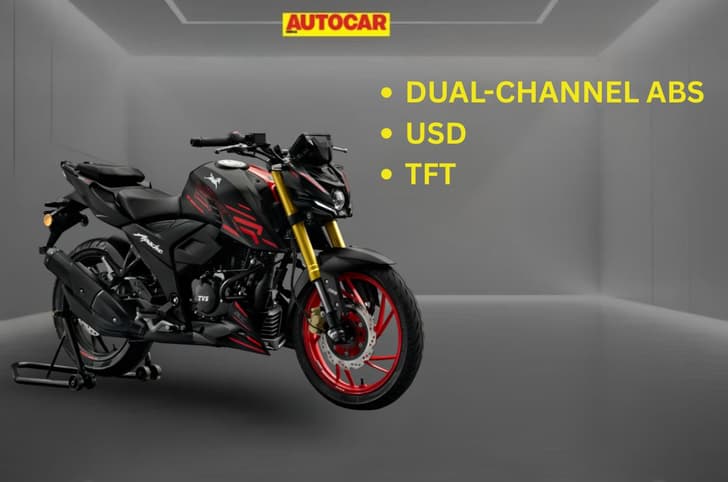
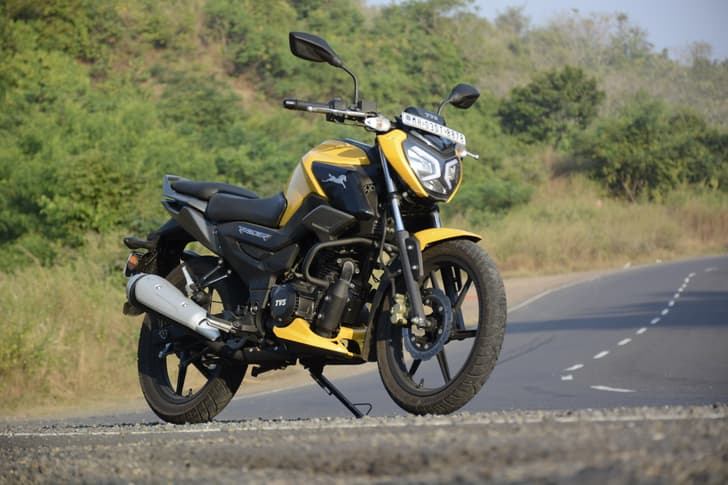
Both motorcycles follow a neo-retro theme and feature a round-pod LCD instrument cluster. Phone connectivity with app support is offered on both models, as is all-LED lighting. The Ronin stands out with a ‘T’-motif DRL integrated into the headlight, while the XSR features a semi-circular DRL occupying the lower half of the headlamp. The Ronin gets dual-channel ABS with two modes – Urban and Road – while the XSR 155 also comes equipped with dual-channel ABS. Both motorcycles additionally feature a traction control system.
Yamaha XSR155 vs TVS Ronin: Price
The Ronin has a lower starting price
The XSR 155 is available in a single variant, and pricing varies based on the chosen colour scheme. While the trademark Yamaha blue colour option still retains the introductory price of Rs 1.50 lakh, the other colours have seen notable increases, with the multi-coloured green/bronze and white shade witnessing the biggest hike, now costing Rs 1.59 lakh.
The Ronin, on the other hand, starts at a significantly lower price and is offered in three variants. The base variant comes with a black USD fork, while TVS also offers the Agonda Edition, which features cosmetic differences, although it’s based on the base variant. The top two variants get gold-finished USD forks, and the range-topping model even adds a short flyscreen. This top variant is priced at around Rs 10,000 more and primarily adds dual-tone colour options, among other differences, while the overall mechanicals remain unchanged.

 Autocar India Team
 Stephen Raj Antony
 Vishal Venugopal