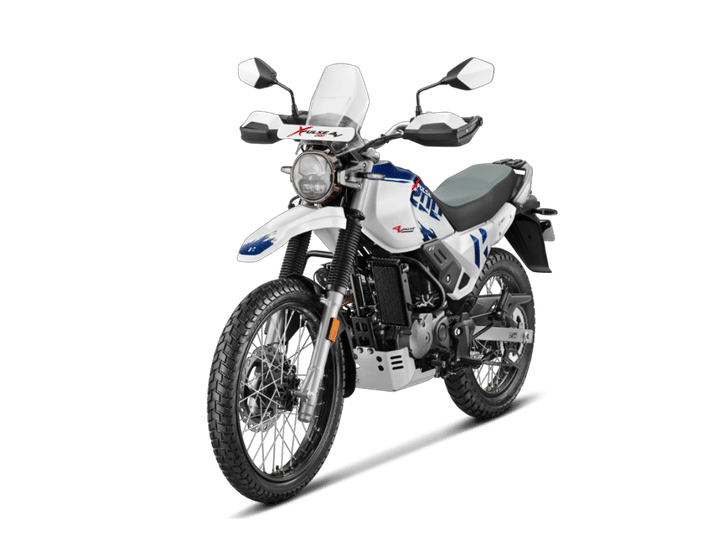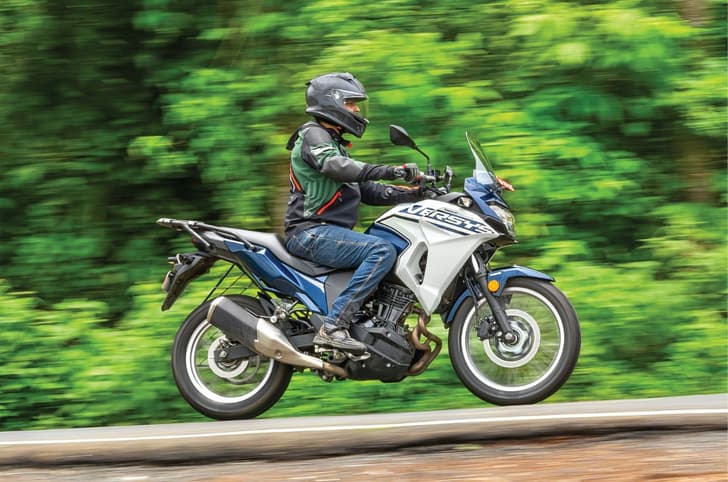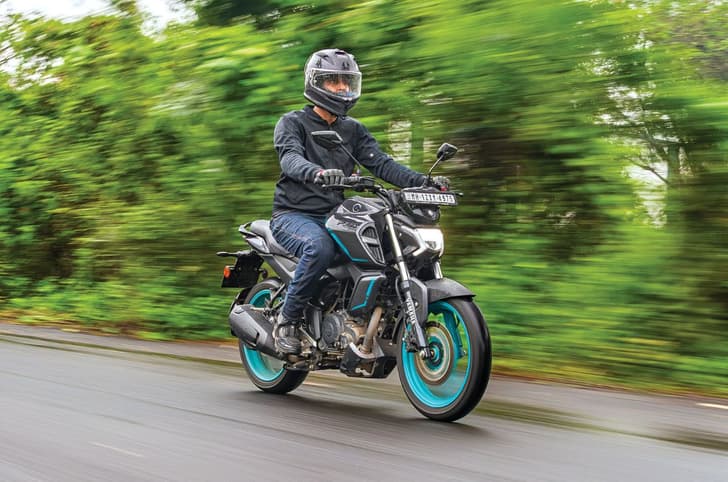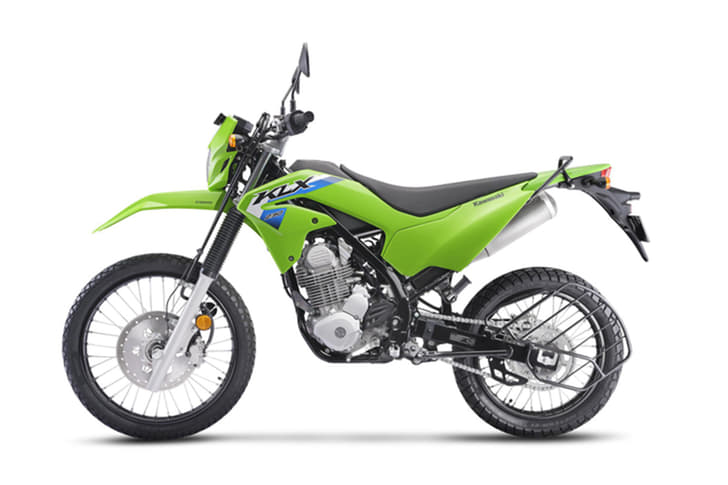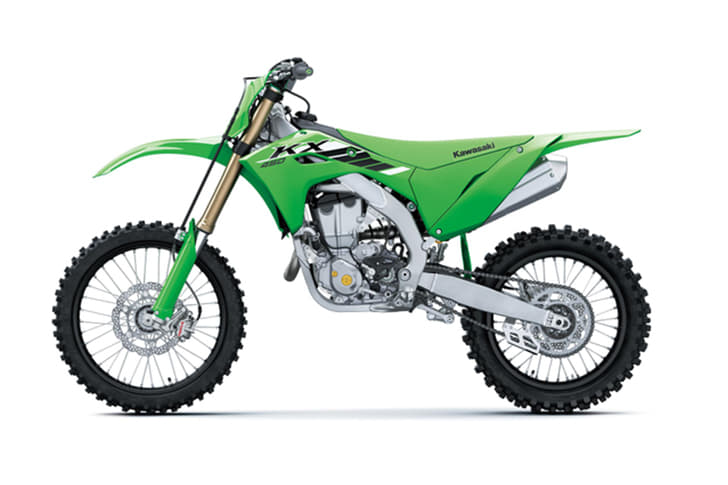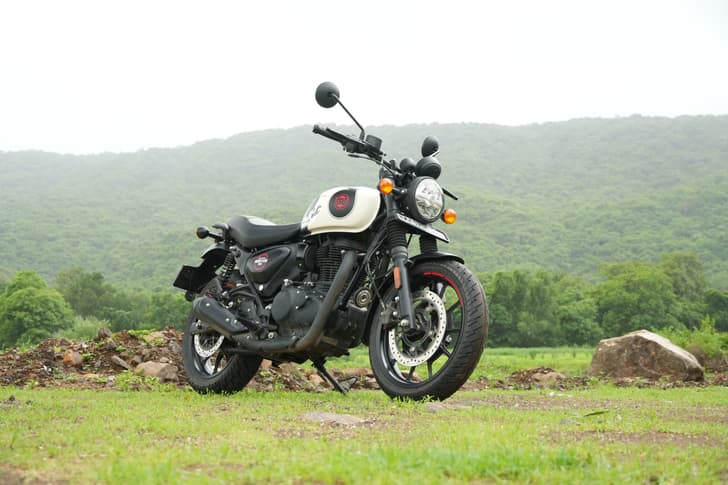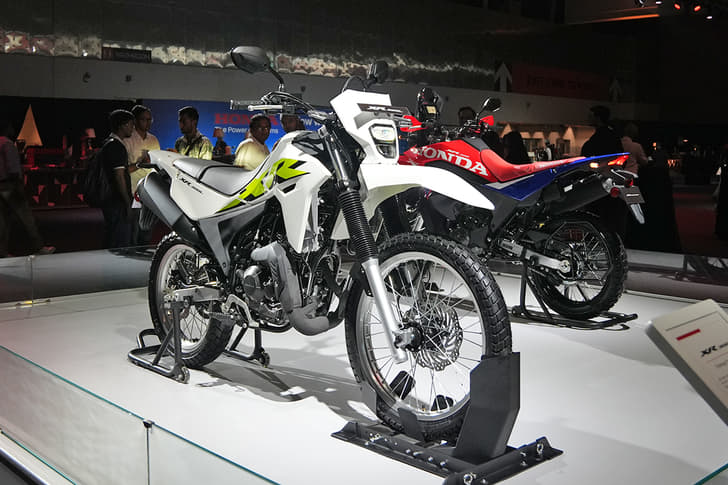

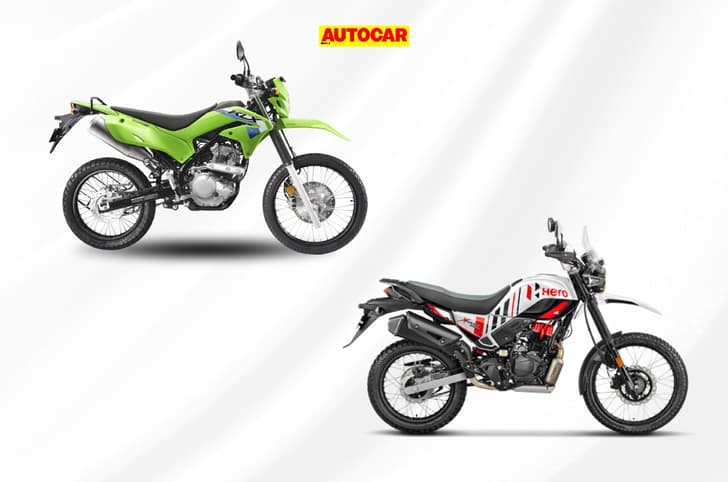
The Hero Xpulse 200 4V Pro has been the benchmark for an accessible adventure motorcycle. With Kawasaki recently localising the KLX230 and reducing its price, the gap between the two motorcycles has narrowed considerably. On paper, this brings the KLX230 into direct contention with the Xpulse.
Kawasaki KLX230 vs Hero Xpulse 200 4V Pro: Engine & output
Both the Xpulse and the KLX are powered by 200cc-ish single-cylinder engines, but their architectures are quite different. While the Hero uses a modern 4-valve head, the Kawasaki persists with an old-school 2-valve unit. However, the Japanese dual-sport one-ups the Indian one by offering a 6-speed gearbox, instead of the 5-speed unit seen on the Xpulse.
The locally assembled KLX230, which replaces the earlier CKD model, delivers slightly higher peak output figures. Its power is now nearly on par with the Hero, while torque is over 1.5Nm greater. And despite the small power gap, the KLX boasts a noticeably stronger power-to-weight ratio than the Xpulse, thanks largely to its lighter kerb weight.

Kawasaki KLX230 vs Hero Xpulse 200 4V Pro: Weight & dimensions
There is a 22kg weight difference between the KLX and Xpulse, and that’s bound to be one of the biggest advantages for the little Kawasaki. Its wheelbase is also 57mm shorter, which should make it much more flickable than the Hero. With seat heights of 880mm and 891mm, respectively, both the Kawasaki and the Hero are tall machines. But the KLX can be had with an accessory lower seat, which lowers the perch by 14mm to 866mm.
Of course, the flip side is that the Hero’s extra weight and longer wheelbase will make it feel more planted both on and off the road. Also, with a 13-litre fuel tank, the Xpulse carries almost double the fuel the KLX can, aiding its practicality.
Kawasaki KLX230 vs Hero Xpulse 200 4V Pro: Suspension & brakes
The Xpulse uses a simpler diamond frame, whereas the Kawasaki uses a more sophisticated perimeter unit. Other than that, the underpinnings are fairly similar on both bikes, although the Xpulse offers you damping adjustment on the fork, unlike the Kawasaki. Both bikes have a preload-adjustable monoshock.
The KLX 230 offers notably less wheel travel at the front, but the rear figures are quite comparable. Both bikes also offer switchable ABS settings for off-road use.
Kawasaki KLX230 vs Hero Xpulse 200 4V Pro: Features
Neither of these bikes can be described as cutting-edge, and that’s alright, given that they’re meant to be hardy things that can withstand a lot of abuse off-road. Both bikes get simple LCDs, but the Xpulse’s unit can be paired with your smartphone via Bluetooth for basic notification alerts and navigation prompts. Interestingly, this was a feature offered on the earlier CKD-spec KLX230, but the locally assembled MY26 Kawasaki KLX230 does not offer Bluetooth functionality.
Both the Xpulse and the KLX have LED headlights, although the Kawasaki is available in two colours – green and grey – while the Hero comes in only one.
Kawasaki KLX230 vs Hero Xpulse 200 4V Pro: Price
Following its recent price cut thanks to localisation, the Kawasaki KLX230 now sits much closer to the Xpulse in terms of price. When we rode the KLX230 last year, it came across as the more competent and focused machine when compared back-to-back with the Xpulse. How the localisation and its accompanying changes have affected the bike remains to be seen, but on paper, the KLX230 now shapes up as a serious contender to the Xpulse in almost every respect.
 Autocar India Team
 Stephen Raj Antony
 Vishal Venugopal