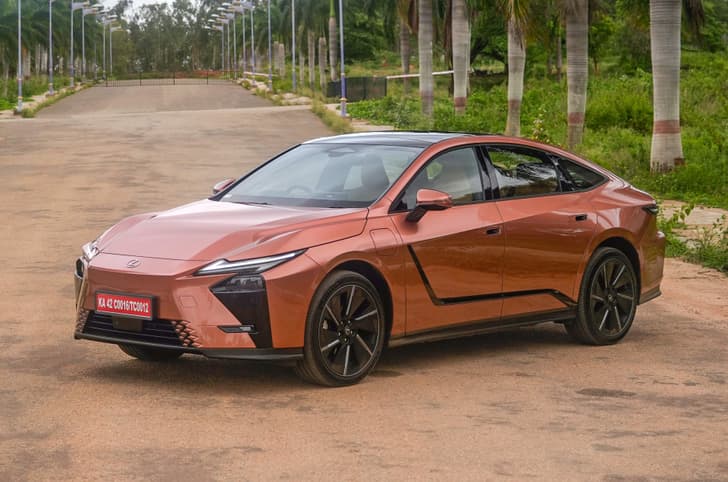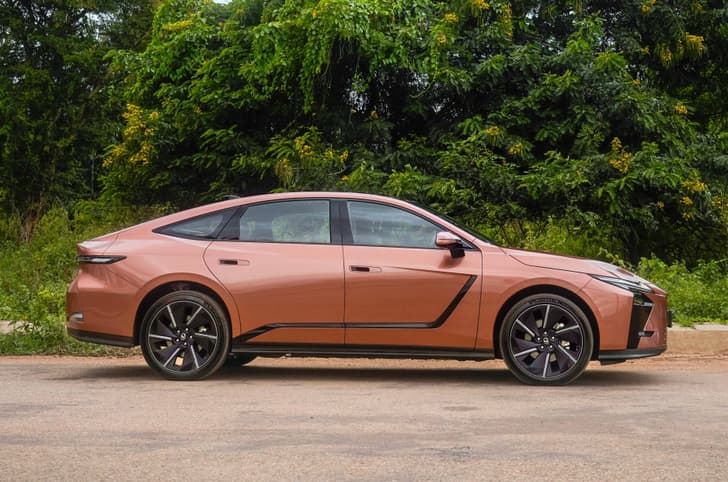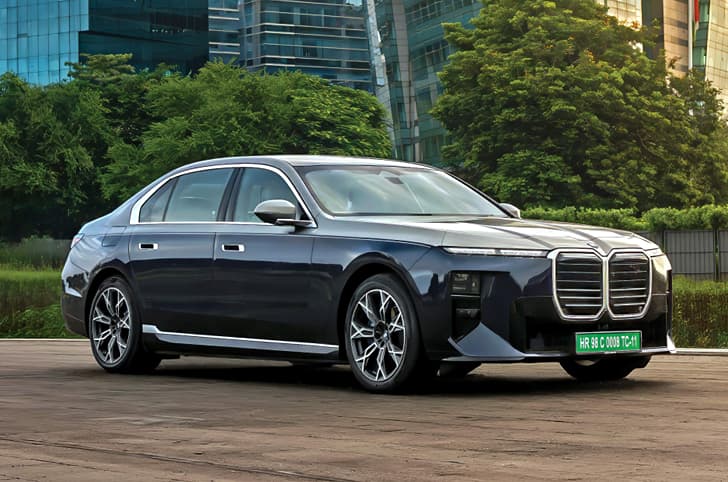


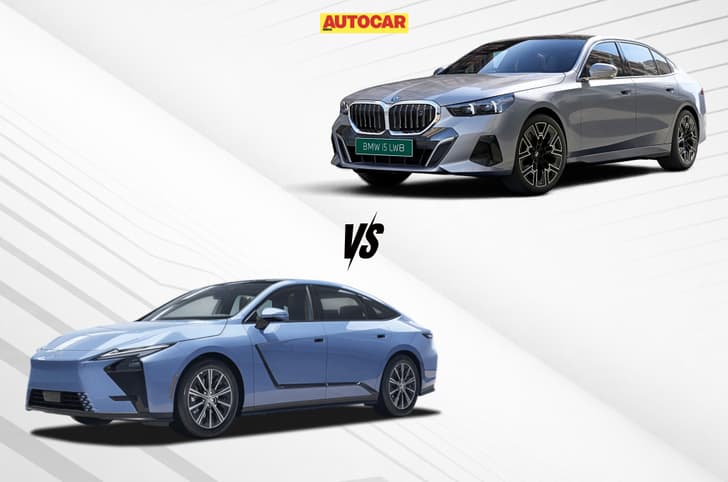
The BMW i5 LWB (long wheelbase) and Lexus ES 500e are two of the latest additions to the luxury electric sedan segment. Both pack an extensive list of features, but each has an advantage in some areas. They also get different battery pack sizes, and their peak power and torque outputs vary. So, how different are the two on paper? We find out.
BMW i5 LWB vs Lexus ES 500e: Dimensions
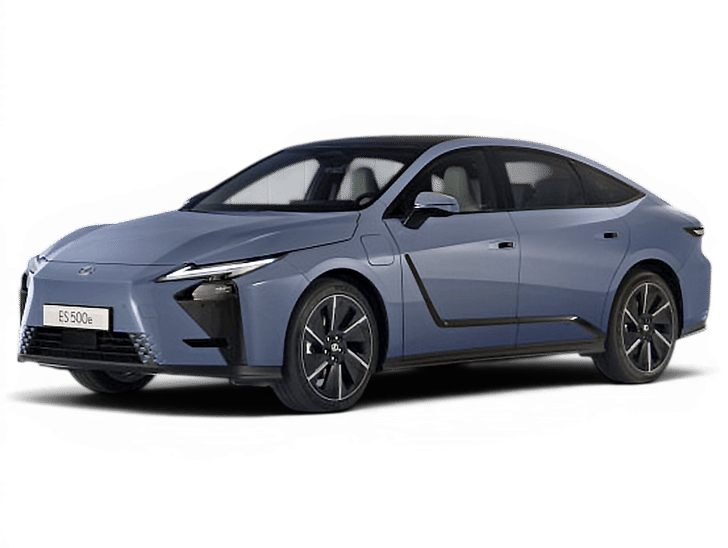
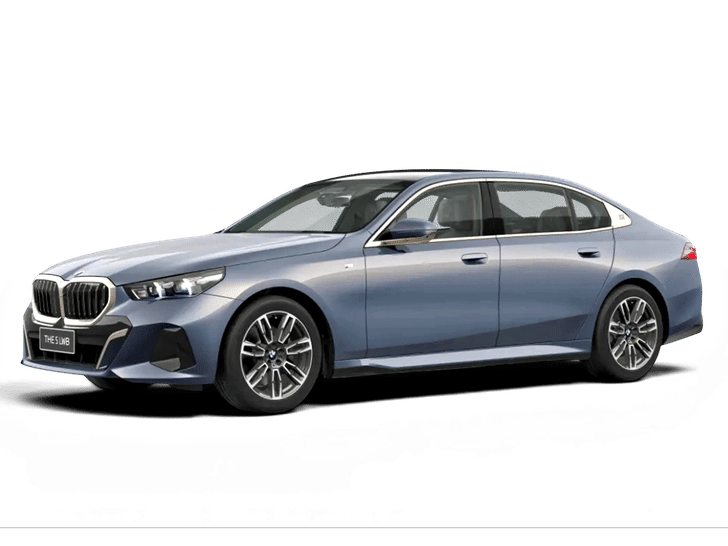
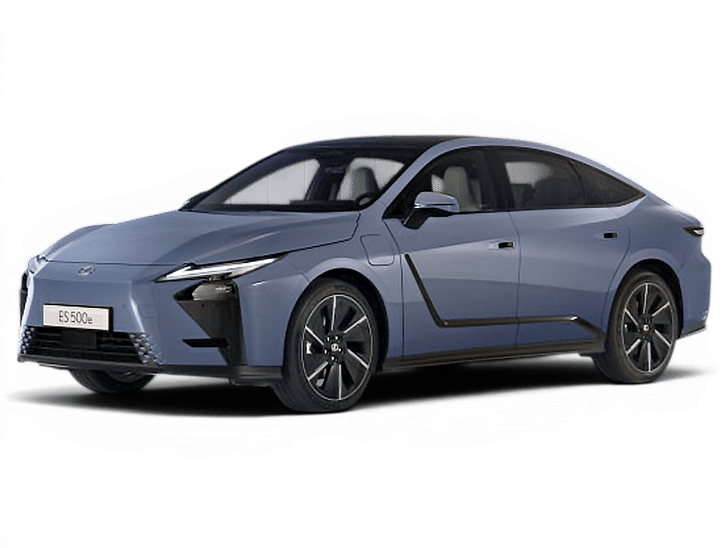
The BMW i5 LWB is 30mm longer than the Lexus ES 500e, but the bigger difference is in width – a substantial 236mm. It also has a 155mm longer wheelbase. However, the ES 500e is 55mm taller. As for wheels, the Lexus EV rides on 21-inch units, a size larger than the i5’s 20-inch ones. BMW has not disclosed the i5 LWB’s boot capacity at the time of writing. Meanwhile, the ES 500e has a 377-litre boot.
Another point of difference is the suspension. The i5 LWB gets rear-axle air suspension, which should offer better ride comfort in real-world conditions, while the ES 500e uses a multi-link setup.
BMW i5 LWB vs Lexus ES 500e: Powertrain specs
Clearly, the ES 500e’s dual-motor setup has much higher peak outputs than the i5 LWB, which gets just a rear-mounted electric motor. Compared to the i5, the ES 500e has a 75hp and 28Nm advantage. It takes 5.5 seconds to go from 0-100kph, which is 1.2 seconds quicker than the BMW. The BMW, however, gets a larger 81.6kWh battery than the Lexus’s 74.68kWh unit.
As for the claimed range, do note that the i5 LWB’s 669km figure is based on the modified Indian driving cycle (MIDC), which is more relaxed than the worldwide harmonised light vehicles test procedure (WLTP). The ES 500e, meanwhile, claims a range of 580km on the stricter WLTP cycle.
When it comes to fast-charging times, the ES 500e has the upper hand. On DC charging, the Lexus takes 28 minutes from 10-80 percent compared with 33 minutes for the BMW. Although the BMW supports a slightly higher maximum charging speed of 160kW against the Lexus’s 150kW, its longer charging time could be due to the larger battery pack.
BMW i5 LWB vs Lexus ES 500e: Exterior features
In terms of exterior features, both sedans are similarly equipped. Both get LED headlamps, LED daytime running lamps (DRLs), LED tail-lights, powered outside rearview mirrors (ORVMs), a shark-fin antenna and a powered tailgate. The Lexus, however, stands out here with fog lamps. The two also differ in their door-handle designs. The i5 LWB uses flap-type handles, while the ES 500e gets flush-fitting units.
BMW i5 LWB vs Lexus ES 500e: Interior features
The two sedans get a 12.3-inch digital driver’s display, 17 speakers, ventilated front seats, rear centre armrest, ambient lighting, wireless Apple CarPlay and Android Auto and connected car tech. While the BMW features a Bowers & Wilkins sound system, the Lexus opts for a Mark Levinson setup.
The BMW has a slightly larger 14.9-inch touchscreen compared to the Lexus’ 14-inch unit. The sunroof setup is different too, with the i5 LWB getting a fixed panoramic unit with integrated lights, while the ES 500e has an openable single-pane unit. The BMW also gets one wireless charger each at the front and rear, whereas the Lexus gets two at the front. The Lexus claws back some ground with rear sunshades, soft-close doors and a digital interior rearview mirror (IRVM), all of which are missing on the BMW.
BMW i5 LWB vs Lexus ES 500e: Safety features
Both the sedans are evenly matched on most safety features. Both get eight airbags, a 360-degree camera, an electronic parking brake, Isofix child-seat anchors, a rear defogger and ADAS. The Lexus, however, offers a digital IRVM, which is not offered on the BMW.
BMW i5 LWB vs Lexus ES 500e: Verdict
Pricing is one area where the BMW i5 LWB and Lexus ES 500e differ quite significantly, by Rs 10.39 lakh to be precise. The other difference is in outright performance. The ES 500e’s AWD setup gives it an advantage in acceleration from 0-100kph. However, for most buyers, the i5 LWB makes more sense, as it gets a relatively larger battery pack and is much more accessible in terms of price. Additionally, you get the BMW badge value.


 Dipan Sur
 Glenn Noronha