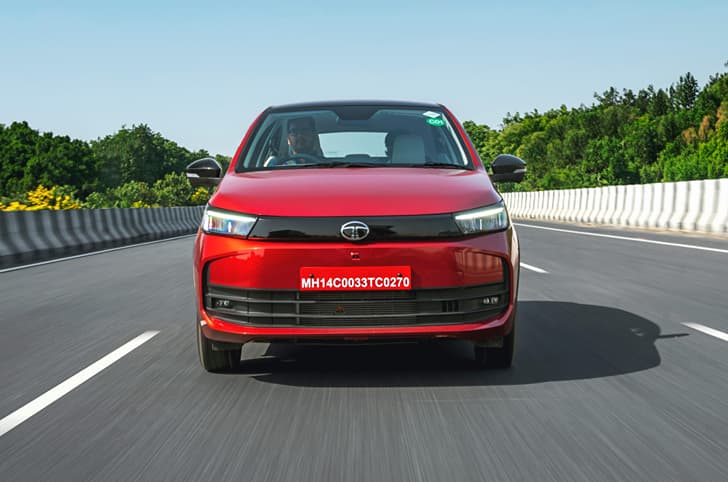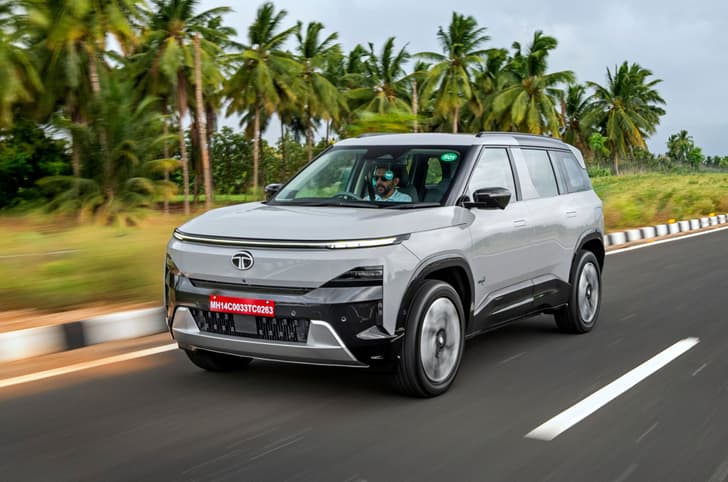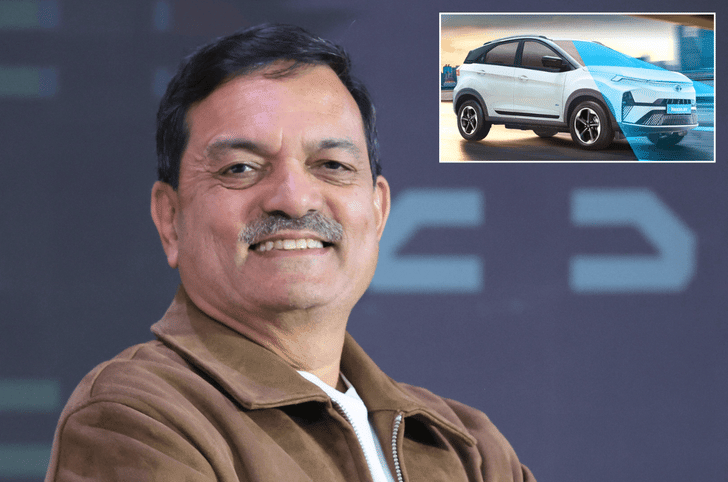
Tata Motors has built a strong reputation for occupant protection in recent years, which is reflected in its cars' performance in crash safety assessments. ADAS, or Advanced Driver Assistance Systems, takes safety a step further by helping prevent road accidents in the first place. We speak with Tata Motors Chief Product Officer Mohan Savarkar to discuss how ADAS is being tuned for Indian roads, how drivers are using it, and more.
1. Are all the ADAS components used in Tata cars designed, developed and produced in India?
Our ADAS capability is built on a calibrated blend of strong in-house engineering in India and proven, global best-in-class technologies. This ensures high safety performance tailored for Indian conditions, while remaining aligned with a mature global ADAS ecosystem.
For delivering the ADAS suite of features, different hardware and software are required, which can be radars, front camera modules, and rear cross radars. Our supplier partners help us to equip our cars with these by utilising their global development engineering centres.
2. Are all the hardware components manufactured locally?
Empowering ADAS as a safety feature in a car requires a lot of hardware parts. Currently, supplier partners such as HL Klemove, Aptiv and more have design offices in India. These companies also manufacture parts in India. Some of the parts have already been localised in India, and there is a plan to localise the required parts for production at the India facility.
3. Which ADAS features are mostly utilised by Indian drivers?
In the Indian context, ADAS features that deliver the most consistent value are those focused on collision avoidance and driver assistance - such as autonomous emergency braking, forward collision warning, lane departure alerts, and blindspot monitoring.
4. How does the usage differ between rural and urban settings?
Usage patterns differ by environment: on highways and open roads, drivers tend to rely more on adaptive cruise control and lane support functions, while in urban and semiurban settings, alert-based and intervention-focused features are more frequently engaged due to dense traffic, varied road users, and higher unpredictability.
5. Is ADAS used more in cities or on highways?
Historically, ADAS has delivered maximum value on highways, where operating conditions are more structured and predictable, making features like adaptive cruise control and lane assistance highly effective.
However, as sensing, software, and AI maturity improve, we are increasingly deploying ADAS in urban environments as well, enabling safer operation amid dense, complex, and highly variable traffic conditions.
6. How do you tune ADAS for poorly marked roads?
Unlike Western markets, India’s "road chaos" involves mixed traffic, unmarked lanes, and unpredictable elements like stray animals and jaywalkers. The industry is now leading the world in ‘Localised Sensor Fusion’, where algorithms are specifically calibrated to detect high-density two-wheeler movement and non-standard vehicle shapes (like rickshaws), ensuring that ADAS acts as an aid rather than an intrusive nuisance to the driver.
7. Which road conditions are the most difficult for ADAS to handle?
The most challenging road environments for ADAS are those with high complexity and low predictability - particularly conditions involving mixed traffic, unmarked or inconsistently marked lanes, and frequent interaction with pedestrians, cyclists, and two-wheelers.
Such scenarios place significant demands on perception, interpretation, and decision-making systems, and they underscore why robust local validation and context-specific tuning are critical to delivering safe and reliable ADAS performance.
8. Will entry-level models like the Tata Tigor and Punch add an ADAS suite?
The focus in India will remain on safety-first deployment and regulatory alignment rather than rapid autonomy adoption. Incremental deployment of Level 1 and Level 2 ADAS features will likely dominate before more advanced autonomous functions become mainstream.