


The central government is open to examining recommendations to simplify ownership transfers of used vehicles, according to Harsh Malhotra, Minister of State for Road Transport and Highways (MoRTH). Admitting that buyers and sellers face problems in the process, Malhotra said differences in how states implement transport policies remain a challenge.
- MoRTH to study EVOI 2026 report’s suggestions and take them up with officials
- Report found ownership transfers cost nearly 10 times the official fee
Harsh Malhotra on used vehicle ownership transfers
Centre’s policies depend on state governments for implementation, says minister
Malhotra was speaking at the launch of the Ease of Vehicle Ownership Index (EVOI) 2026 report by IndiaTech.Org and Consumer VOICE in New Delhi. Responding to the report, he said “there is no doubt” that transferring vehicle ownership comes with problems. The EVOI 2026 report looked at the challenges in transferring ownership of used vehicles and suggested ways to improve the process.
While the government is drawing up policies for vehicle-related services, Malhotra pointed out that putting them into practice is up to the states and that each state may follow different administrative practices. This, according to Malhotra, makes coordination between the central government and states important.
Malhotra told the report’s authors that MoRTH would study their suggestions and take them up with the respective officials to see what could be improved. He also asked them to send their recommendations to the ministry, adding that it is open to technology-driven changes that make mobility, living and doing business easier. However, Malhotra did not announce any changes to the transfer rules or set a timeline for acting on the recommendations. He did highlight digitisation as a way to make transport services simpler and more convenient for vehicle owners.
Used vehicle ownership transfer costs
Charges vary widely between states and even between RTOs
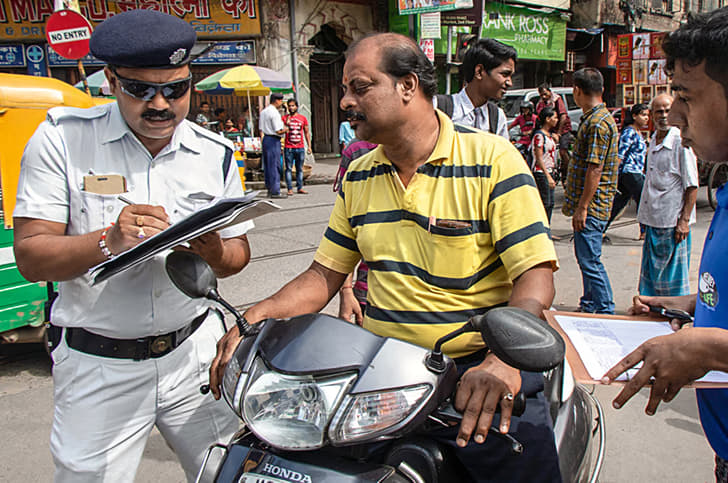
Transferring the ownership of a vehicle in India can cost nearly 10 times the official fee, with charges going as high as Rs 14,000 in some locations, as per the EVOI 2026 report. It covered 15 states that together make up over 85 percent of India’s organised used-car market. According to the report, the higher charges are due to factors such as manual verification, intermediary charges and requirements that vary from one Regional Transport Office (RTO) to another.
The report cited Bihar having the highest recorded costs for used vehicle ownership transfer, coming in at Rs 13,000 to Rs 14,000 in Muzaffarpur. In Tamil Nadu, respondents reportedly paid Rs 7,000 to Rs 8,000 at Hosur and Krishnagiri RTOs compared to the official fee of about Rs 800. Charges in Delhi ranged between Rs 3,000 and Rs 3,600, according to the EVOI 2026 study. These figures take into account the official fees and charges by agents, though they are based on costs reported by respondents and are not fixed rates for each state.
All respondents reported relying on agents or intermediaries to complete the ownership transfer. The survey also found that 39 percent of respondents were still waiting for their Registration Certificate (RC) to be transferred after completing their vehicle transactions, while 63 percent could not accurately estimate the total transfer cost.
Ease of Vehicle Ownership Index 2026
No state scored above 6 out of 10 in this index
With a score of 5.91 out of 10, Andhra Pradesh topped the index, with Kerala coming in second by scoring 5.74. Meanwhile, Uttar Pradesh was last with a score of 2.47, with Bihar and West Bengal faring slightly better with scores of 2.51 and 2.56, respectively. The report attributed Andhra Pradesh’s high score to its biometric-based ownership transfer system, which has reduced the need for physical RTO visits.
IndiaTech.Org and Consumer VOICE have recommended eight reform measures. These include a standard ownership transfer process across states, integrated digital vehicle records, automatic removal of hypothecation once a loan is repaid and uniform rules for no-objection certificates (NOCs). Other suggestions, as cited by the 2026 report, include a common road tax framework to resolve interstate tax issues, a unified payment system for both statutory and service charges and binding timelines for service delivery. The report also proposed a service completion timeline of under 24 hours.
 Dhruv Dhaka

 Ajit Dalvi