
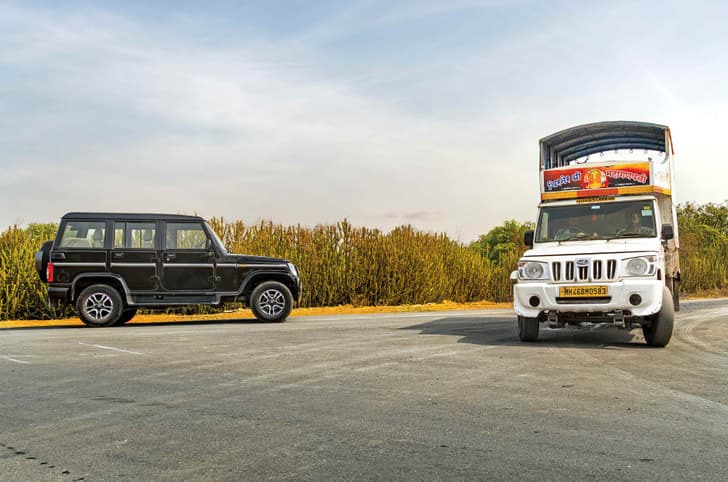
26 years – that’s how long the Mahindra Bolero has been on sale. While it’s been updated over the years, the basic recipe remains the same, and buyers keep lapping it up. Last year, the Bolero line – Neo included – accounted for 16 percent of the brand’s sales. Clearly, it’s important, so Mahindra has given it a small update, adding a new top trim, some features and revised suspension. Does it need this new lease of life, or should it be sent out to pasture?
2025 Mahindra Bolero exterior design and engineering – 5/10
Subtle tweaks can’t hide the age-old design, but it still commands respect on the road.
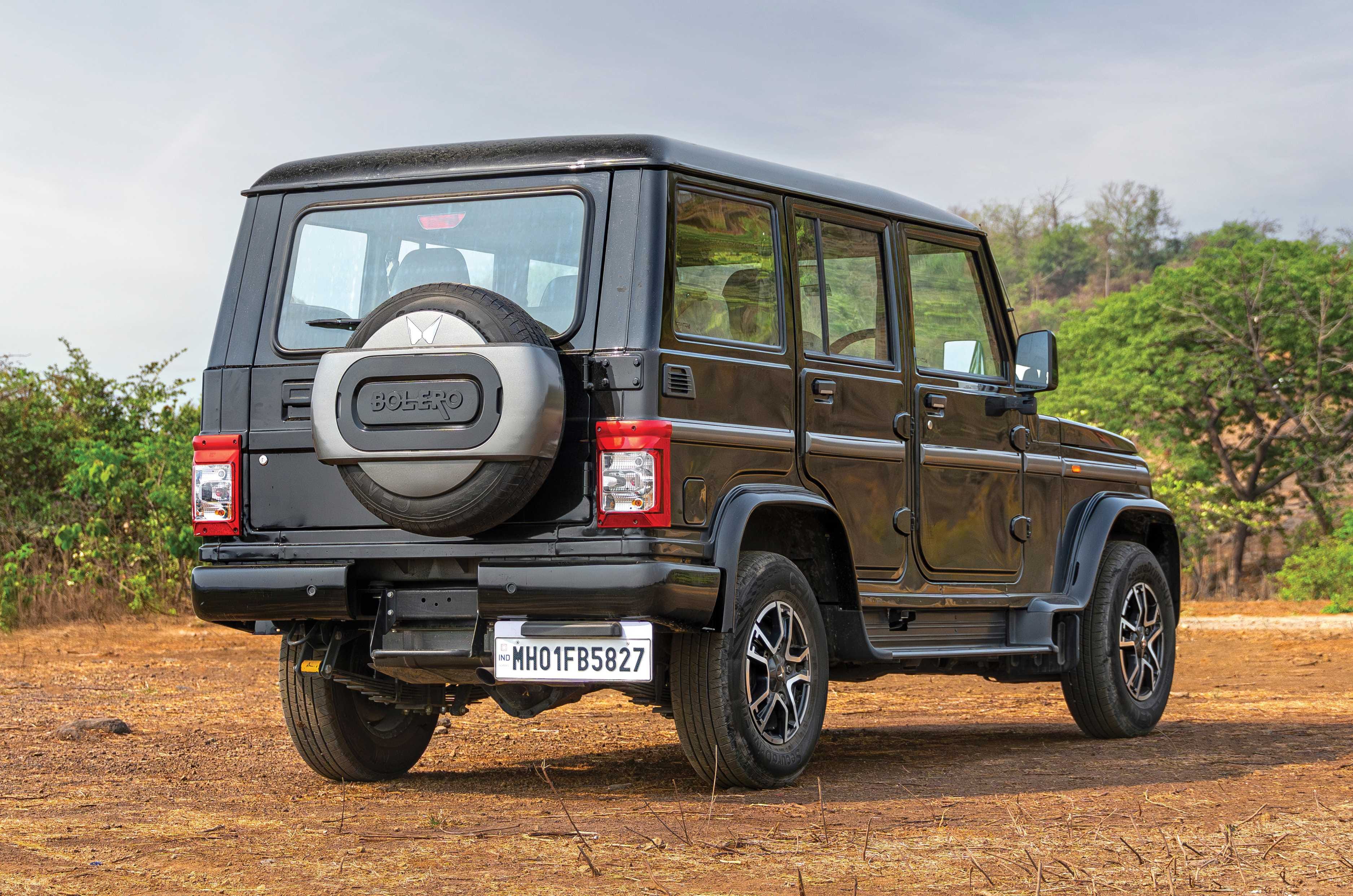
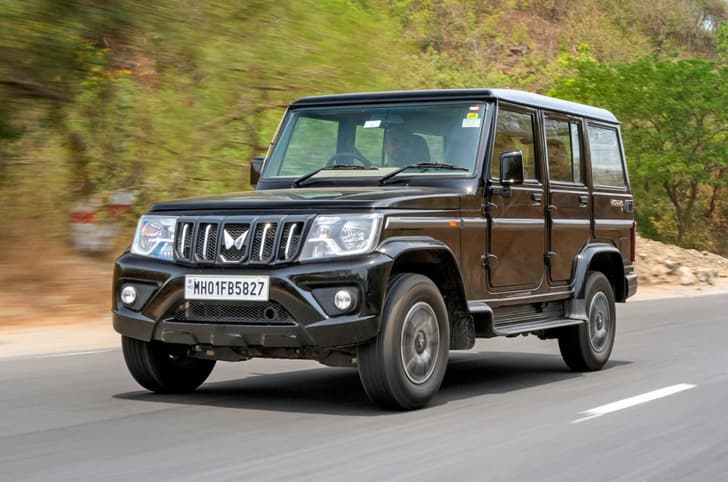
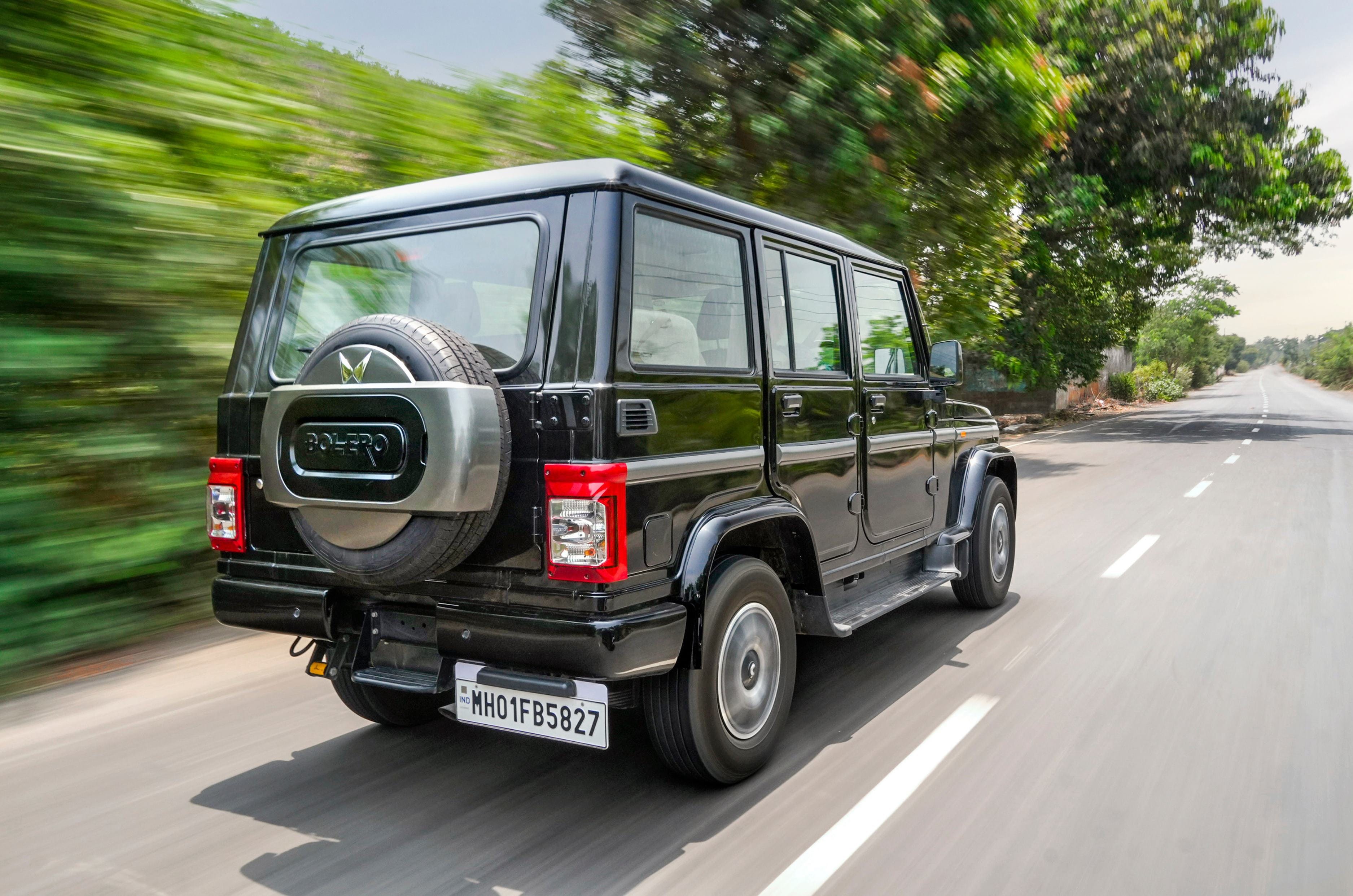
The Bolero’s basic shape is one of the most ubiquitous, but it still commands a fair bit of authority. Traffic generally thinks twice before cutting across – perhaps assuming it’s a government vehicle or remembering it has a metal bumper. The update brings a revised grille, while the headlights and fog lamps continue as bright halogens with a cornering function.
In profile, the new B8 trim gets smart 15-inch diamond-cut alloys, while the old-school manually adjustable mirrors and antenna remain. There are no changes at the rear, which still sports a tailgate-mounted spare and clear-lens tail-lights with halogen bulbs.

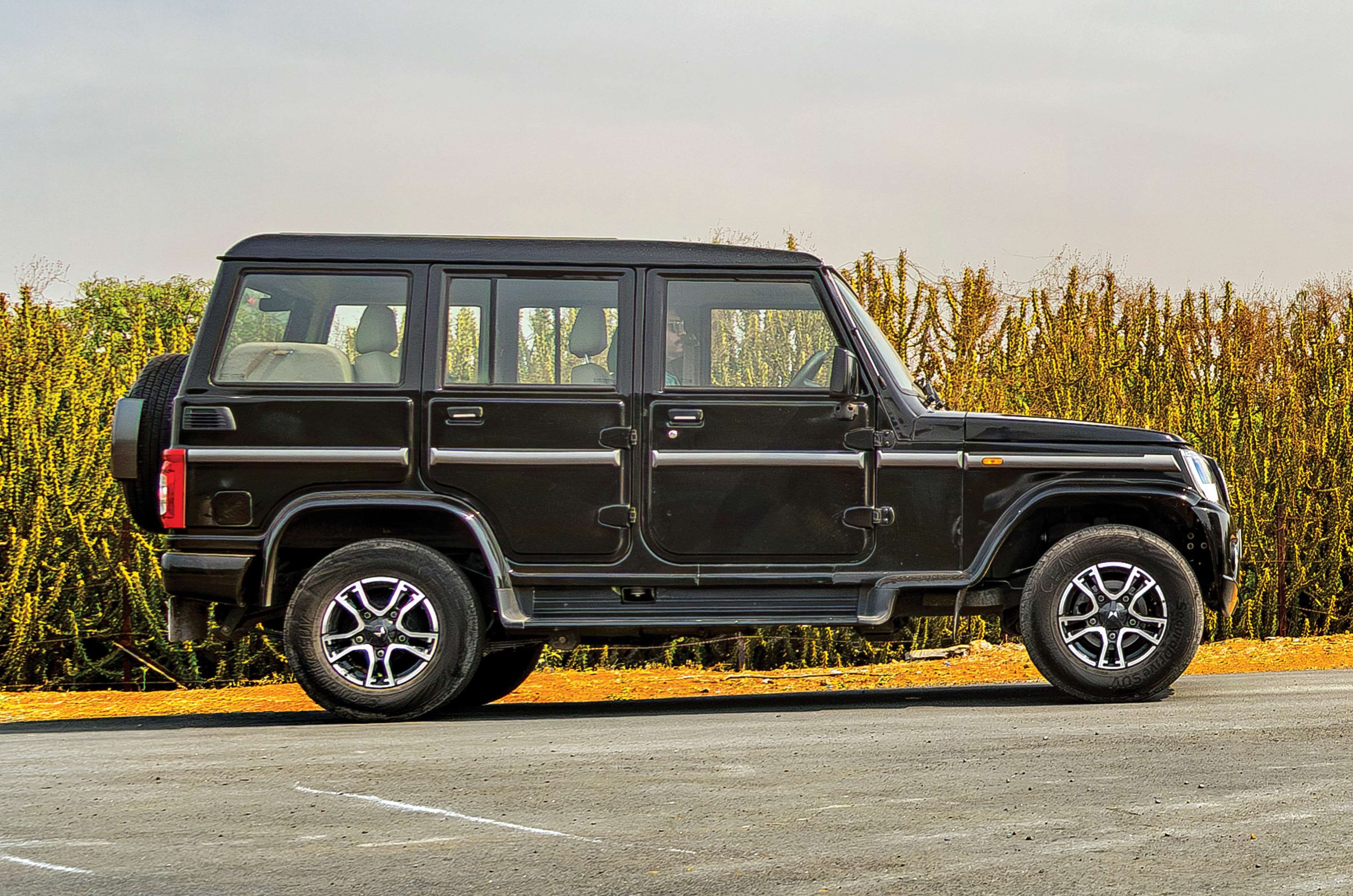
Its boxy proportions make it look imposing – particularly in the new Stealth Black paint option – but it is, in fact, a sub-4-metre SUV. Its 2,680mm wheelbase is longer than that of any compact SUV, while its tall ground clearance and short front overhang mean it’ll go places they wouldn’t dare.
2025 Mahindra Bolero interior space and comfort – 4/10
Comfort is serviceable for a utility vehicle, but ergonomics are all over the place.
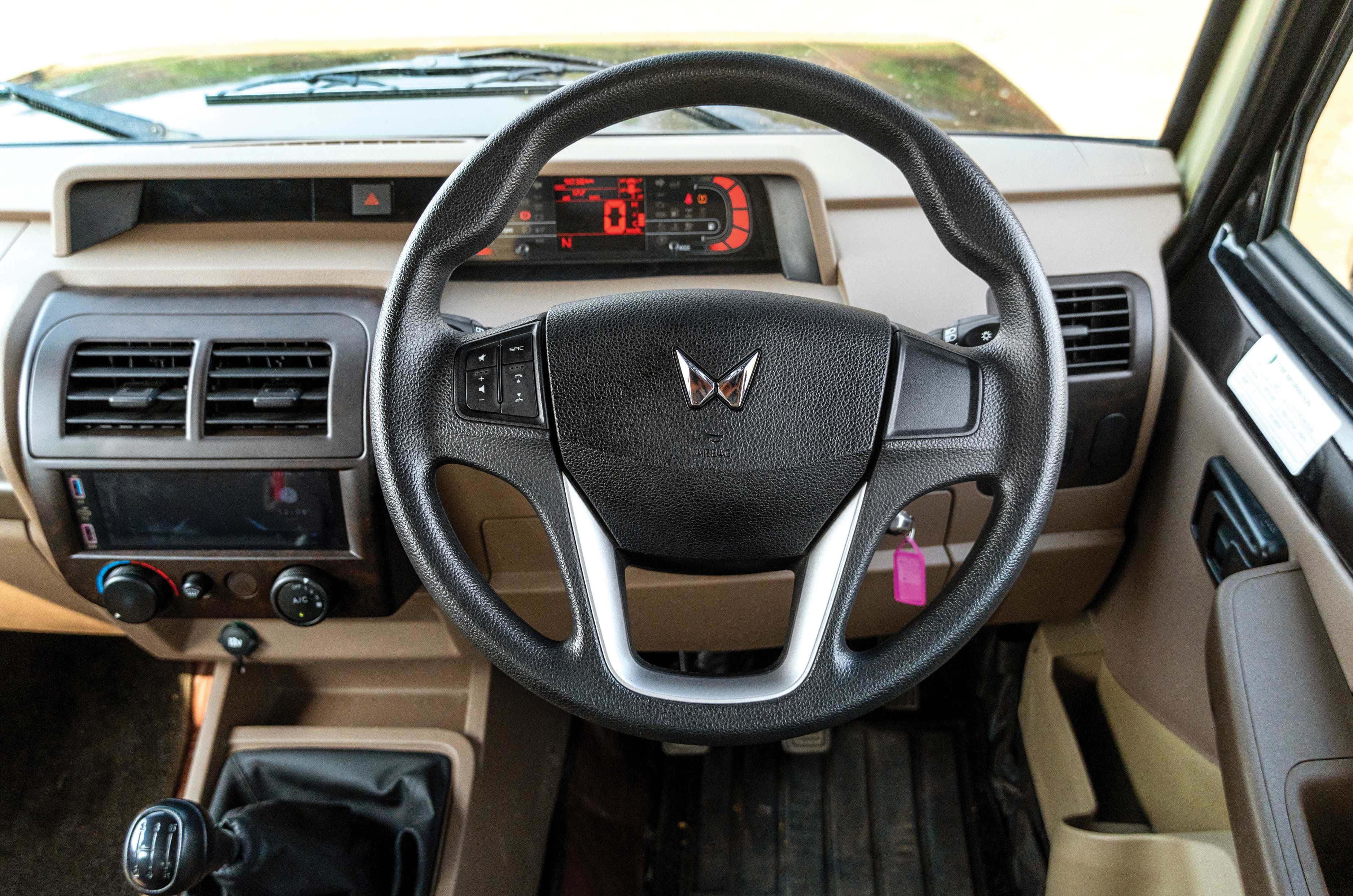
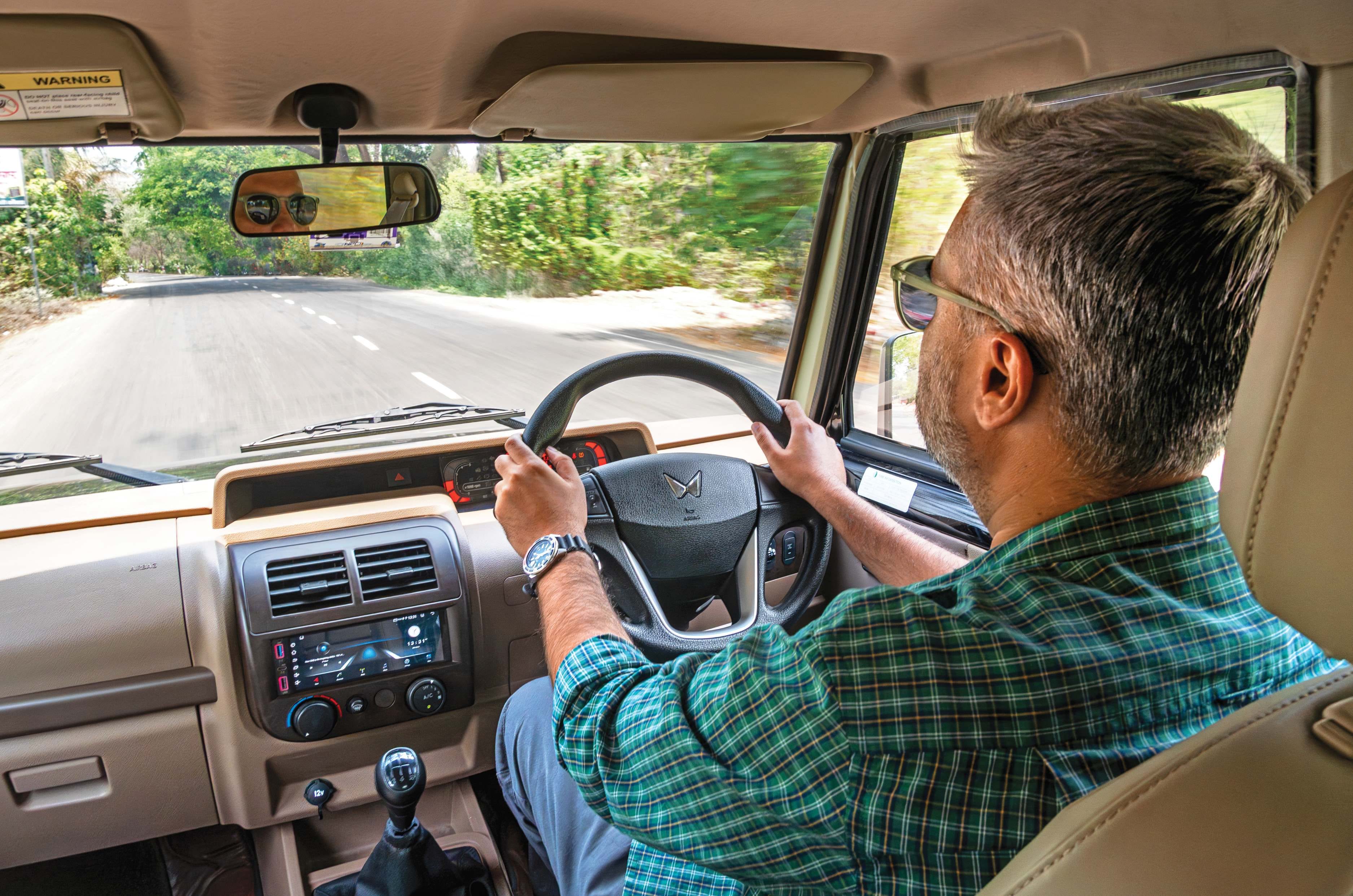
Inside, the dashboard layout hasn’t changed in a decade, and it shows. You wouldn’t expect soft-touch plastics, but even so, the finish feels crude, while the trim colour and faux wood look dated. The new digital instrument cluster looks a touch ’80s, but it gets a tyre-pressure monitoring system (TPMS) and a gear indicator, as well as fuel economy and distance-to-empty readouts. There is even a tacho, but it’s almost completely obscured by the steering because of how off-centre the display is.
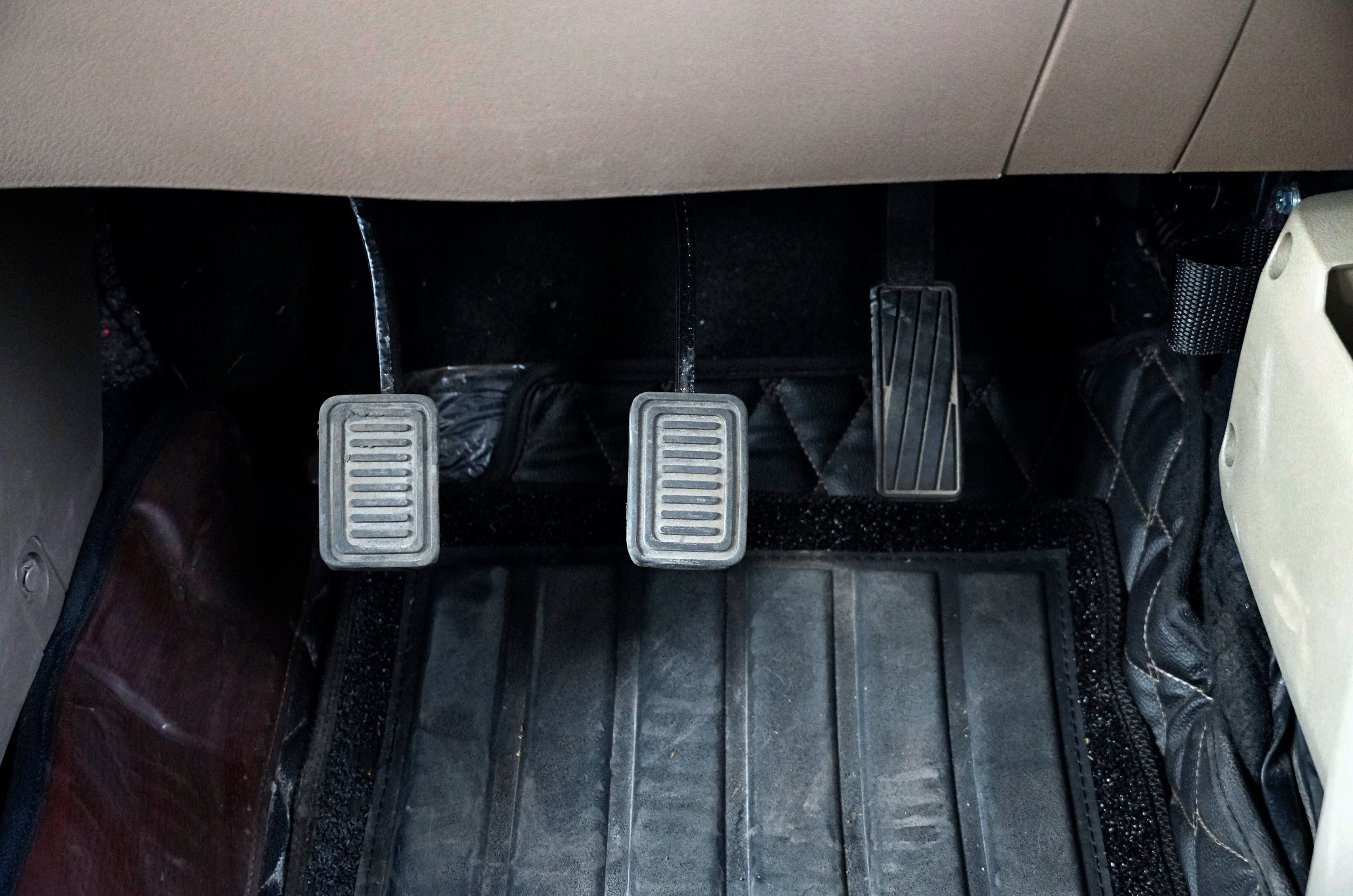
Storage space is limited, and while bottle holders have been added to the front doors, they foul the driver’s right leg. Ergonomics are not great. Even with my average 5’8” frame, the high-set pedals had me sitting further back than ideal, made more awkward by the non-adjustable steering wheel. The seats themselves are reasonably comfortable, but the new leatherette upholstery can get hot. Thankfully, the air conditioning is very effective – crucial, since there are no rear AC vents whatsoever.

The middle row is more comfortable than the front – there is decent cushioning, good thigh support, a centre armrest and a relaxed seatback angle. Legroom, though, requires some compromise from the front passengers. Shoulder room is reasonable even with three passengers, thanks to slim door cards.

There are two jump seats in the rear compartment, but getting in is not easy, even with the provided step. Once inside, the passenger’s head sits precariously close to the beam connecting the D-pillar, the backrest is uncomfortably upright, and seating two means knees end up intertwined. The biggest issue, though, is the lack of seatbelts and the fact that this is not a good position to be seated in during a crash.
2025 Mahindra Bolero features and safety – 4/10
New touchscreen infotainment is hard to use, while safety needs a rethink.
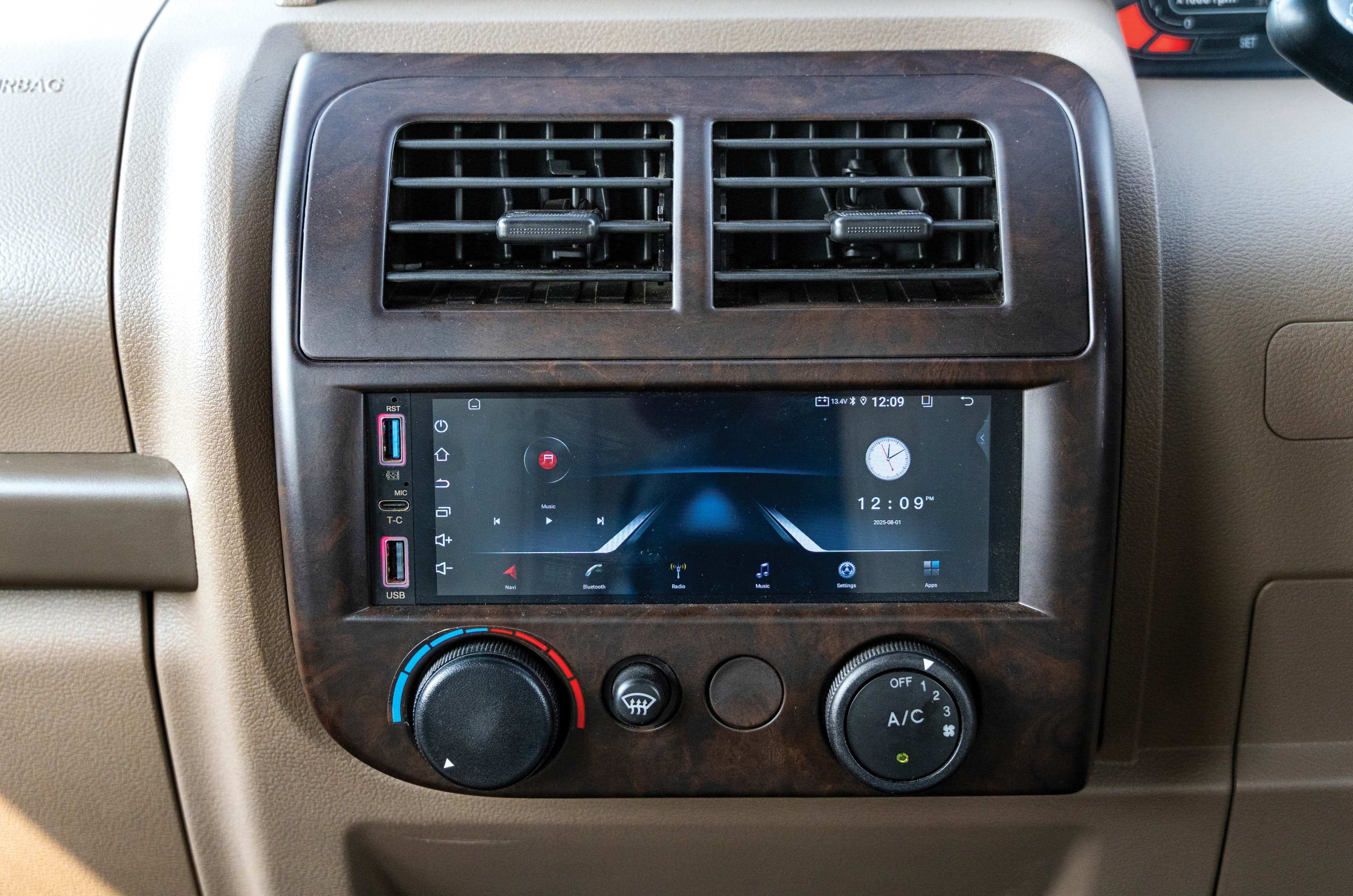
The big new addition is a 7-inch touchscreen infotainment unit, though being a single-DIN unit, it is rather hard to use. It gets Bluetooth, but it doesn’t have Android Auto or Apple CarPlay. Instead, you connect to it using a proprietary app and a cable, and even then, built-in apps like Google Maps and Spotify are locked behind paywalls. To get around this, you can mirror your phone’s screen to it, but your phone must stay unlocked and placed in landscape mode to be remotely legible. On the plus side, there are basic steering wheel controls and three USB ports, including a fast-charging Type-C.
The rest of the feature list is largely unchanged and includes basics such as central locking and power windows – no frills, but fine for the use case. It’s really the safety suite where things need improvement. As standard, the Bolero has two airbags, ABS, reverse parking sensors and seatbelt reminders with load sensors. However, other staples, such as retractable seatbelts for rear passengers, are still missing. Both the outer three-point belts and the centre lap belt need to be manually unwound and tightened – like you would on an aeroplane, but far more cumbersome. Combine this with a constant seatbelt reminder buzzer, and owners will simply not use them, instead keeping the belts buckled at all times, which is unsafe. As mentioned earlier, the jump seats do without belts altogether.
2025 Mahindra Bolero performance and refinement – 6/10
Torquey engine makes light work of city traffic, and refinement is decent too.
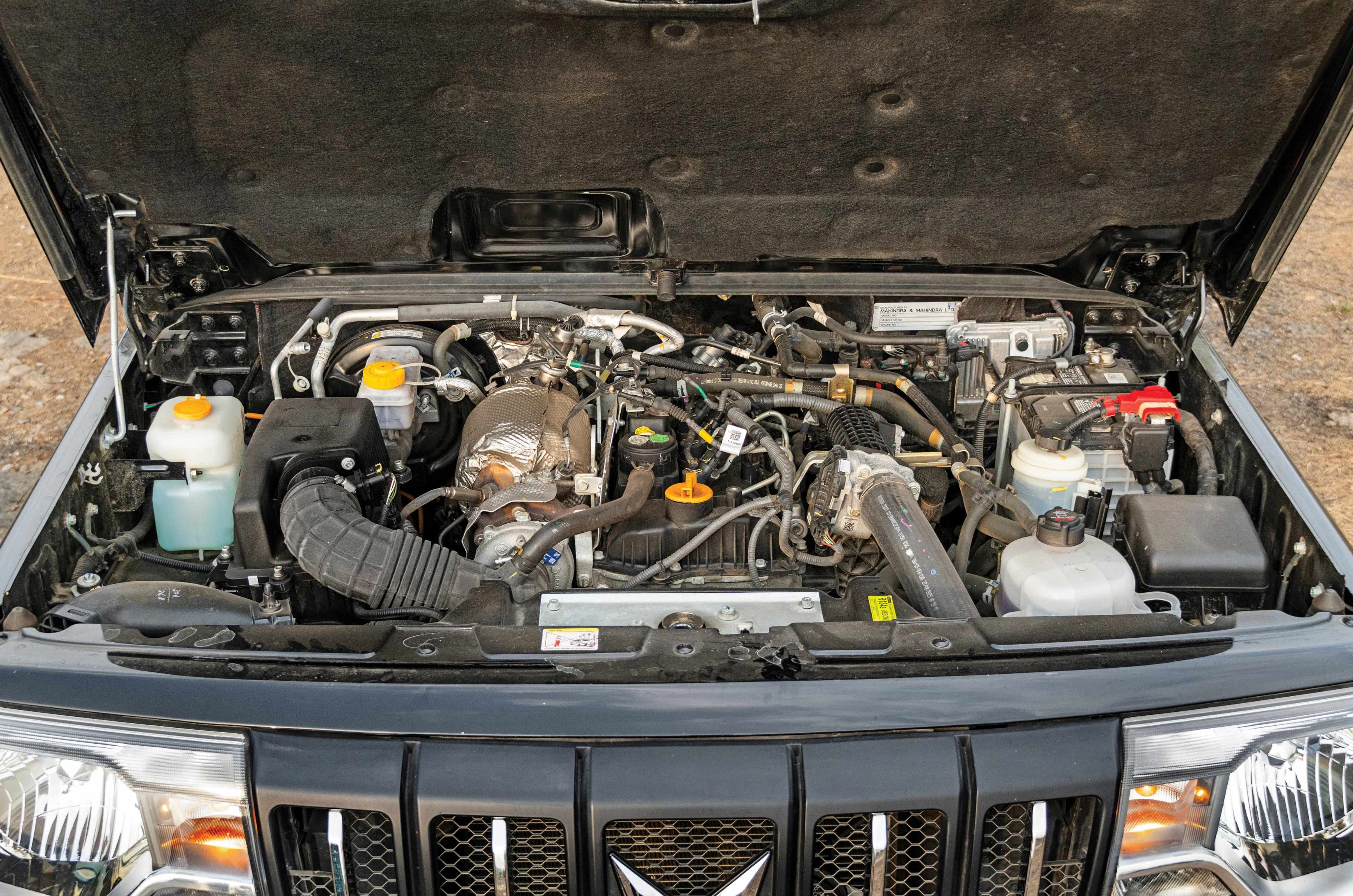
Under the bonnet is a 1.5-litre three-cylinder turbo-diesel engine, shared with the Bolero Neo but in a lower state of tune. While the 76hp figure isn’t impressive, the 210Nm of torque available from just 1,600rpm makes it feel more grunty than you’d expect. You won’t be winning races, but minimal turbo lag makes it easy to scoot through traffic. It’s also very tractable, easily taking off from a standstill in second with no throttle input and happily chugging along in a high gear at low rpm.
Refinement is also decent for a ute. There is plenty of diesel clatter, but it isn’t too intrusive under 2,500rpm, where you spend most of the time. Extend it beyond that or push into triple digits, though, and it gets loud – equal parts mechanical and wind noise.
What community is saying on the Bolero?
Clutch and shifter weights are also heavier than what we’ve become used to, while throws are long and vague, but these are manageable with time. Overall, the powertrain feels more modern than you might expect, but the rest of the driving experience is as old-school as it gets.
2025 Mahindra Bolero range and efficiency – 7/10
Decent efficiency and a big tank means big distances between refills.
Fuel efficiency is claimed to be 16.5kpl, and it is possible to get close to that on a highway cruise. The torquey nature of the engine means you don’t need to extend it to make progress, which helps with city efficiency too. A large 60-litre tank also gives it excellent range.
2025 Mahindra Bolero ride comfort and handling – 5/10
Feels tough on bad roads, but passengers are in for a bouncy ride.
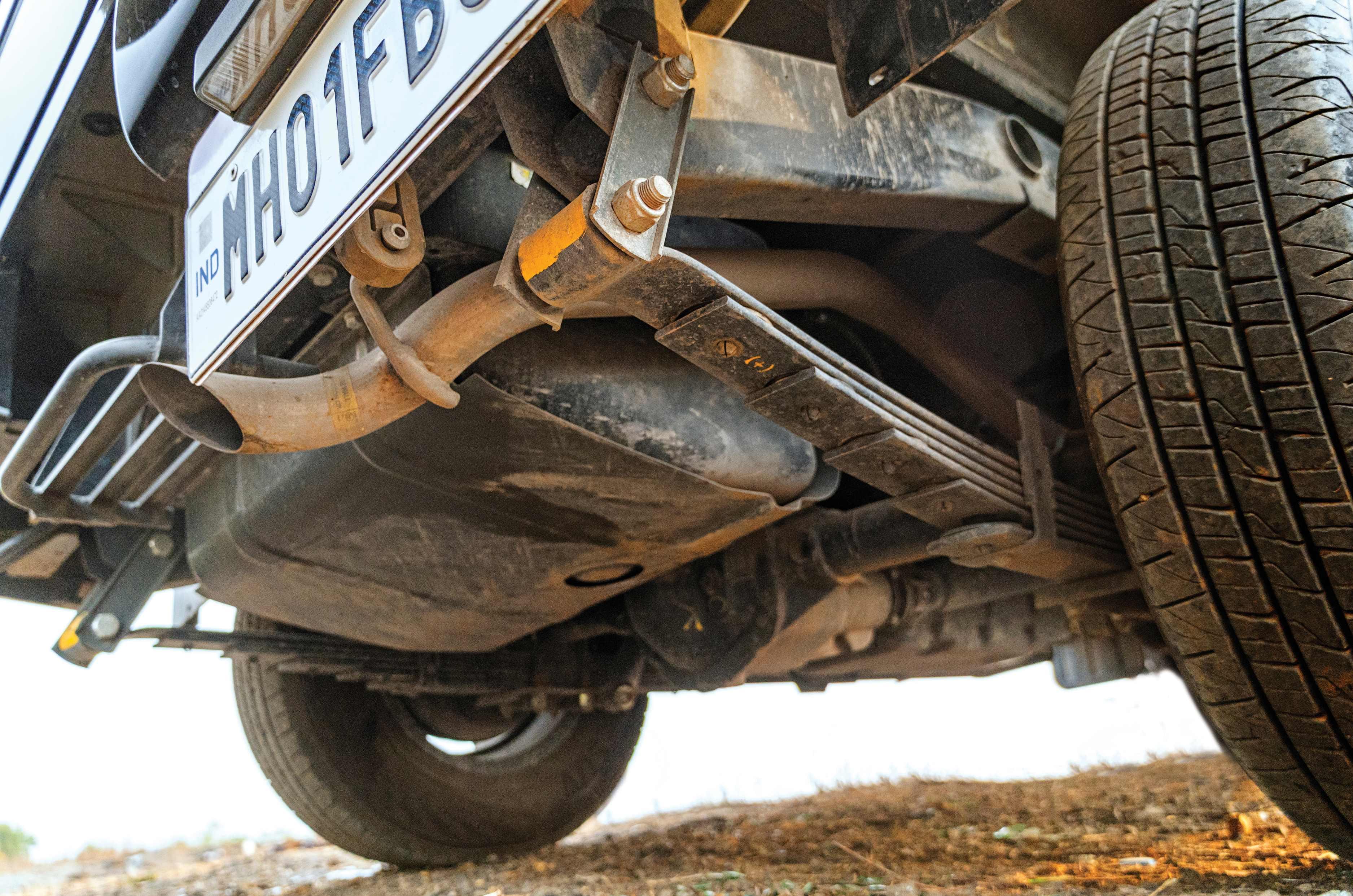
While it still rides on a hardy ladder frame, Mahindra has made some notable improvements to the Bolero’s suspension for 2025. Specifically, the independent coil springs up front and leaf springs at the rear have been revised, along with tweaked front bump stops, all in pursuit of a softer ride.
To an extent, it has worked. Low-speed ride, at least for front passengers, is acceptable, soaking up potholes and sharp bumps quite well, helped by the tall tyre sidewalls. But with archaic rear leaf springs, the ride is very turbulent – particularly in the second and third rows. As speeds rise, so does the body movement, which can be unsettling for those prone to motion sickness.
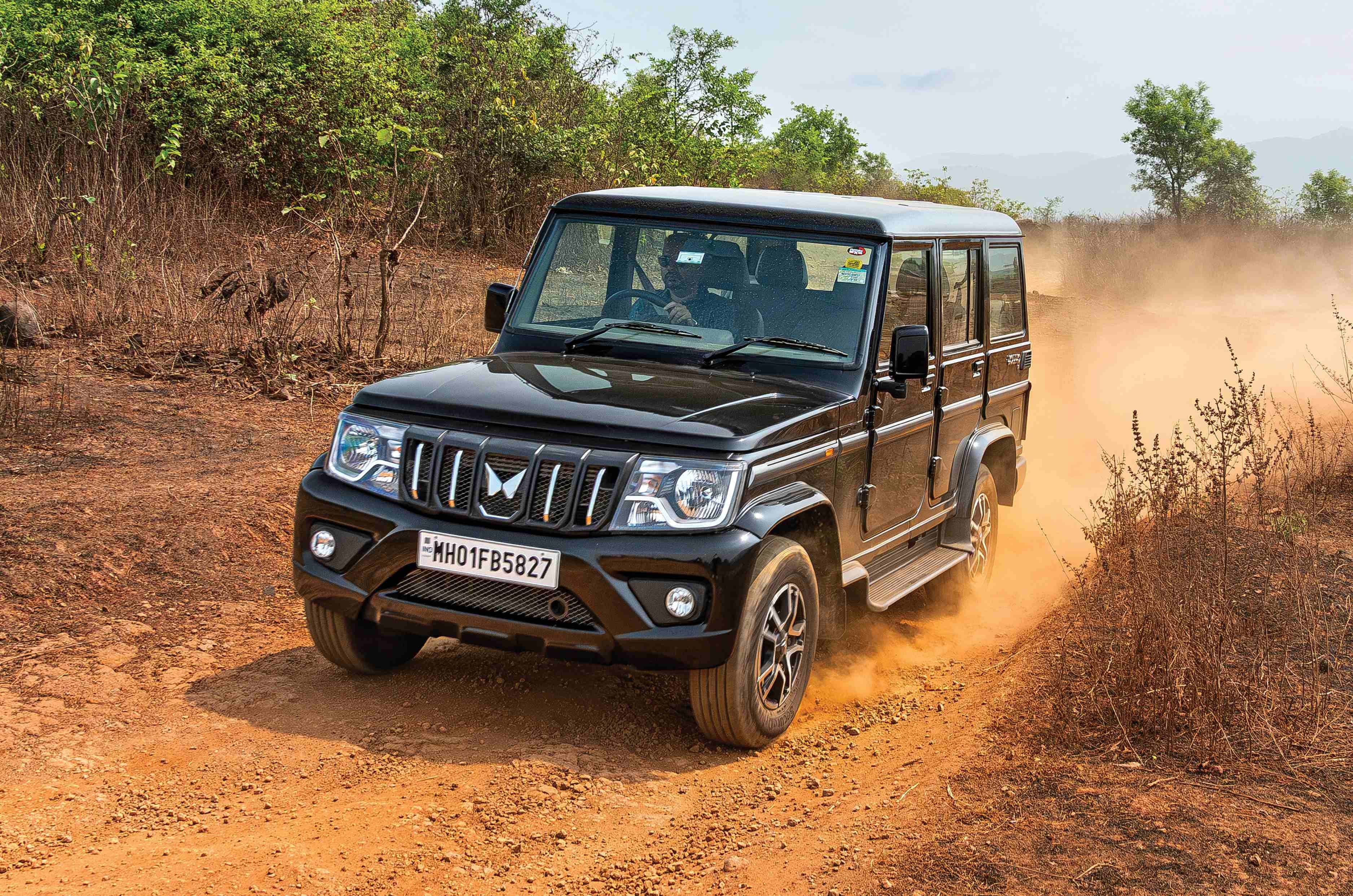
On the flip side, the suspension feels indestructible. You can carry surprising speed through pothole-ridden streets or dirt tracks with confidence that nothing will come apart. One thing to be wary of, though: shocks are often transmitted through the steering wheel – sometimes violently. The upper control arms are stiffer, which Mahindra says should reduce steering effort; however, the hydraulic assist is still much heavier than modern electric systems. It is also a bit vague and doesn’t self-centre, which makes it harder to place accurately.
Through the bends, there is a fair bit of body roll – even with the revised anti-roll bar – but stability is passable. The brakes are sufficiently strong too, with the new brake booster, but there is some fishtailing on uneven surfaces. Overall, rather than trying to hustle the Bolero, it’s better to adjust your driving to its don’t-bother-me vibe.
2025 Mahindra Bolero price and verdict – 5/10
Nothing at this price will match it for rugged utility, but look elsewhere for urban use.
Prices for the updated Bolero start at Rs 8.00 lakh and go up to Rs 9.91 lakh for the new B8 trim seen here. For that money, you can pick from hatchbacks, base-variant compact SUVs, and even a couple of monocoque seven-seaters, all of which are easier to live with.
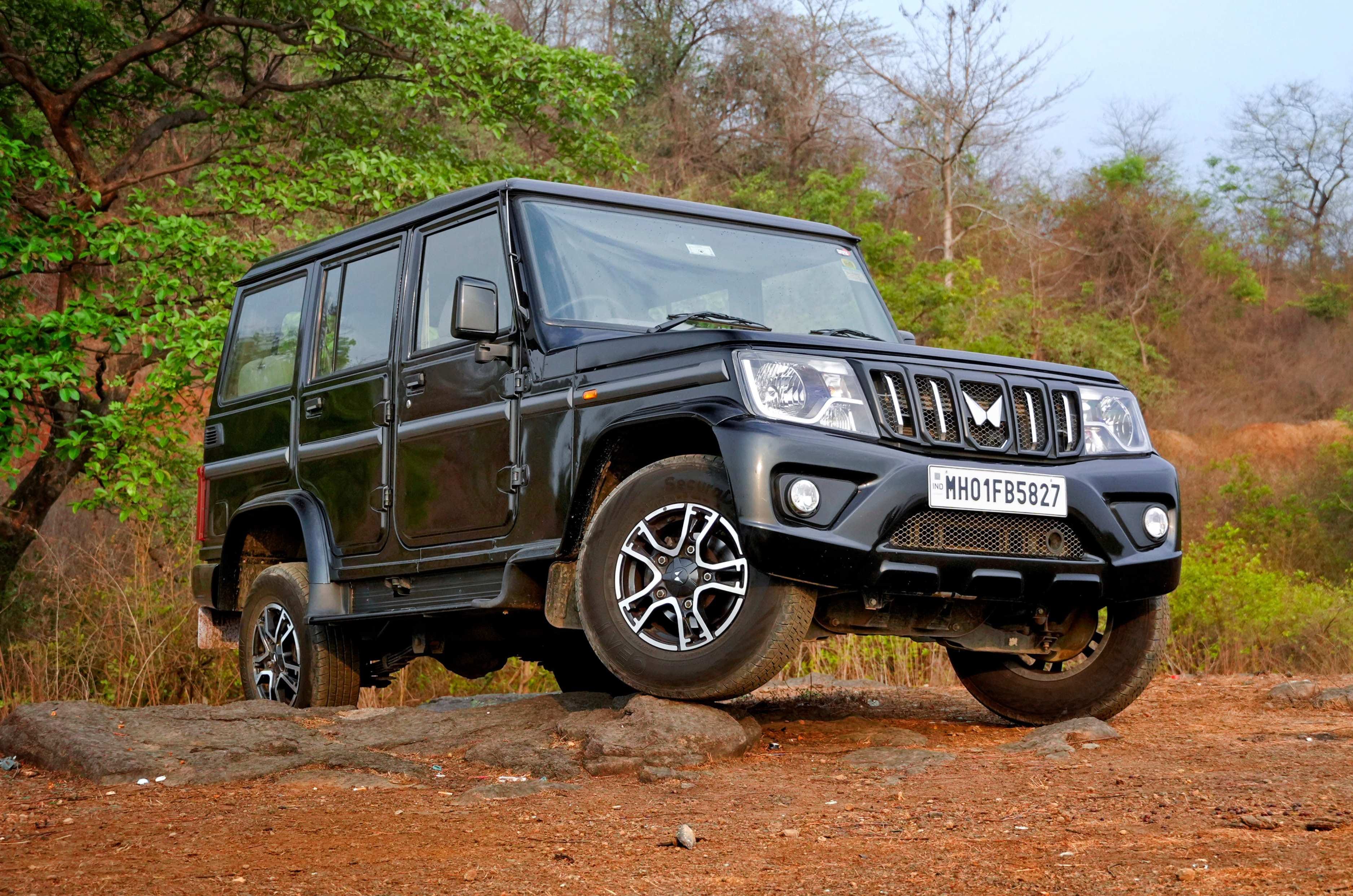
However, none offer the rugged utility of the Bolero. It has many drawbacks, but in parts of India where roads are non-existent, service is scattered and affordability is key, the Bolero shines. For urban use, though, it’s worth stepping up to the Bolero Neo, if not something else altogether.



 Saumil Shah
 Soham Thakur
 Sergius Barretto
 Nikhil Bhatia