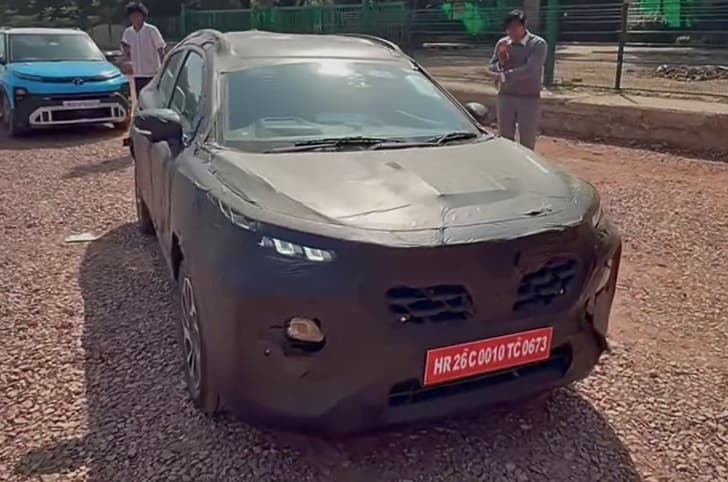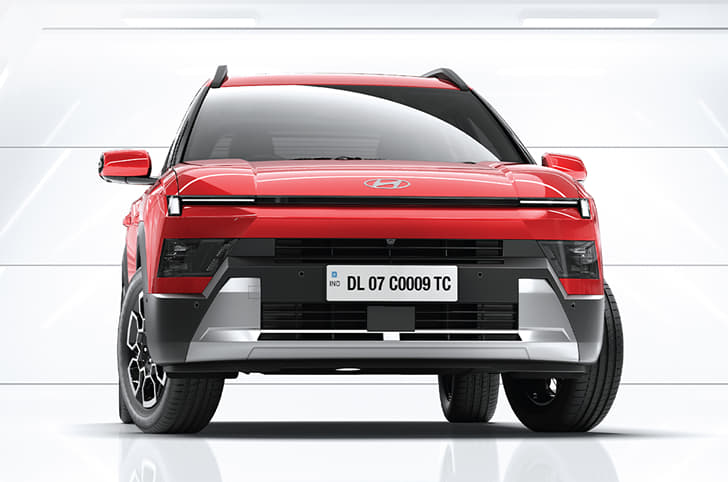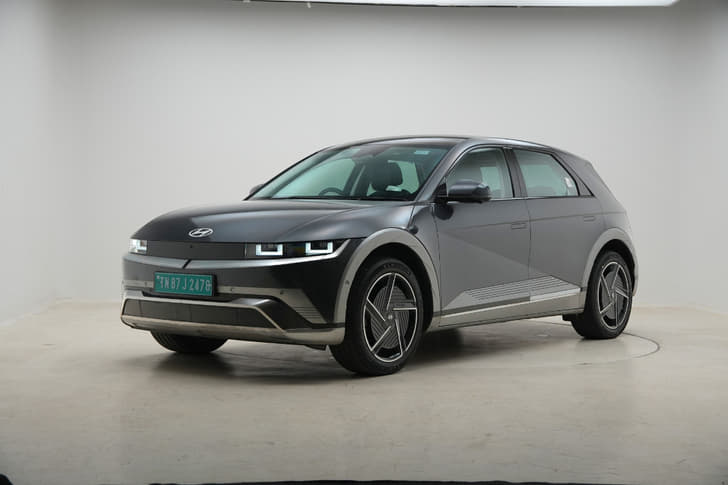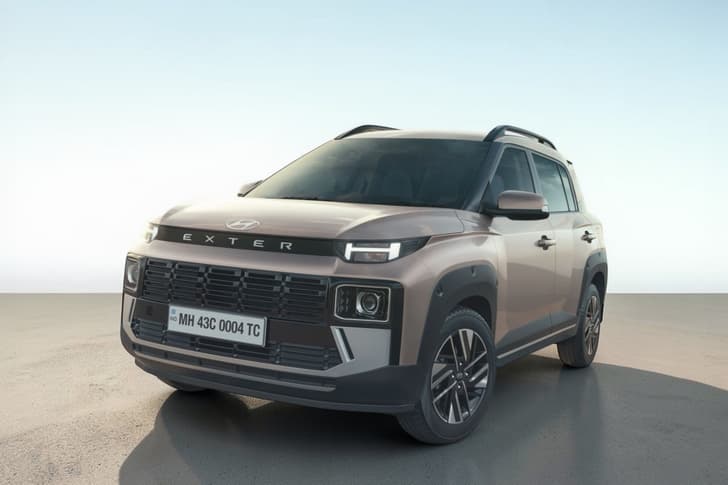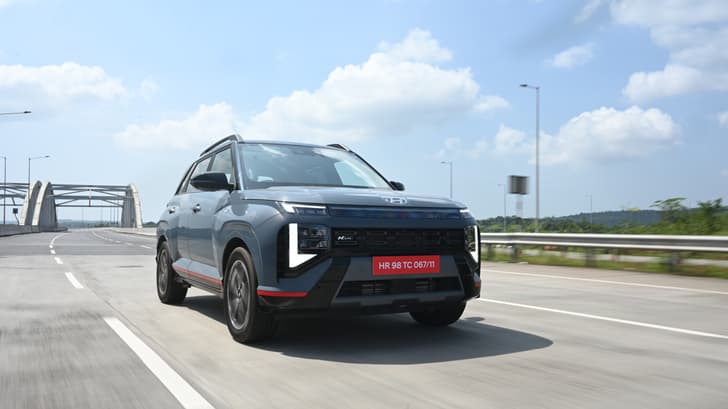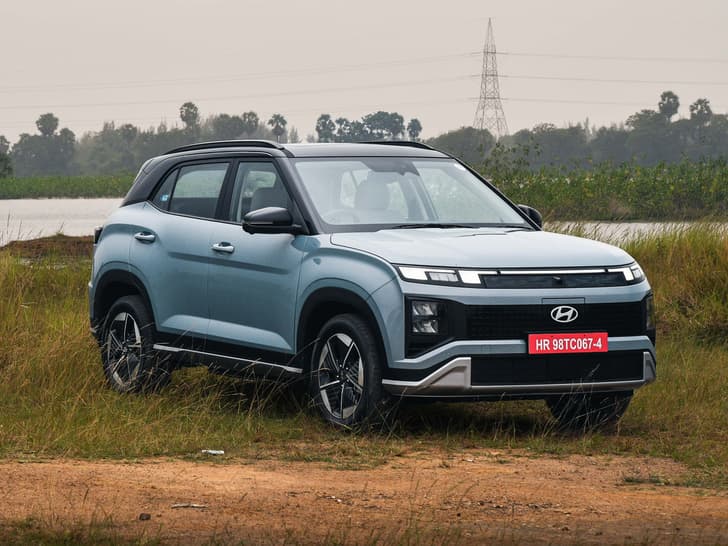


Hyundai Motor Company’s upcoming made-for-India compact electric SUV, codenamed HE1i, is expected to carry the Ioniq P name, extending its globally recognised Ioniq nameplate into a more accessible segment of the Indian market.
Outlining its regional product plans during the third-quarter 2026 earnings conference call with analysts on October 29, Hyundai management said the company would introduce the Ioniq P in India following the Bayon. Hyundai Motor India has yet to officially announce the nomenclature, while the management commentary did not explicitly connect the Ioniq P name to the HE1i project.
- Ioniq P expected to make India debut in January 2027
- Likely to be offered with two battery packs
- Will rivals compact EVs like Nexon EV and Syros EV
Which features do you want in Compact EV?
Hyundai Ioniq P: What to expect?
The upcoming model will lead Hyundai’s effort to narrow the gap between its own electric vehicle penetration and the industry average. India’s electric passenger vehicle sales have risen almost 90 percent so far in FY27, increasing the importance of a more affordable EV in Hyundai’s portfolio.

Tarun Garg, managing director of Hyundai Motor India, said the company aims to bring its EV penetration closer to the industry average in FY28, led by a made-for-India mass-market electric vehicle. Hyundai has not disclosed a sales target for the new model.

What community is saying on the Compact EV?
The Ioniq P is expected to be underpinned by the E-GMP (K) platform, also used by the internationally available Inster EV. It will likely be offered in two versions – standard range and long range – but the exact specifications are under wraps. For context, the Inster EV is also available in standard-range and long-range versions, with 42kWh and 49kWh batteries, respectively, offering a claimed range of up to 355km (WLTP).
The upcoming compact EV will initially use imported battery cells. Hyundai had planned to source locally manufactured cells through its partnership with Exide Industries, but Exide has indicated that supplies under the Hyundai-Kia programme will not begin this year. Local cell sourcing will follow at a later stage. For its more accessible EV offering, local cell supply will be an important part of controlling costs and reducing dependence on imports as volumes grow.

Hyundai has also previously confirmed that the new compact EV will get a ‘next-generation infotainment system’, which could be the Pleos Connect infotainment system seen on the brand’s several new-age models, and a ‘Level 2 assisted driving technology’.
The EV will be manufactured at Hyundai’s Sriperumbudur facility in Tamil Nadu and lock horns with the Tata Nexon EV, Mahindra XUV 3XO EV and Kia Syros EV. The official debut is expected in January 2027, later than the end-of-2026 timeline indicated earlier.

 Dipan Sur
 Viraaj Bhatnagar
 Suraj Viswanathan
 Hormazd Sorabjee

 Uday Singh
 Kiran Murali