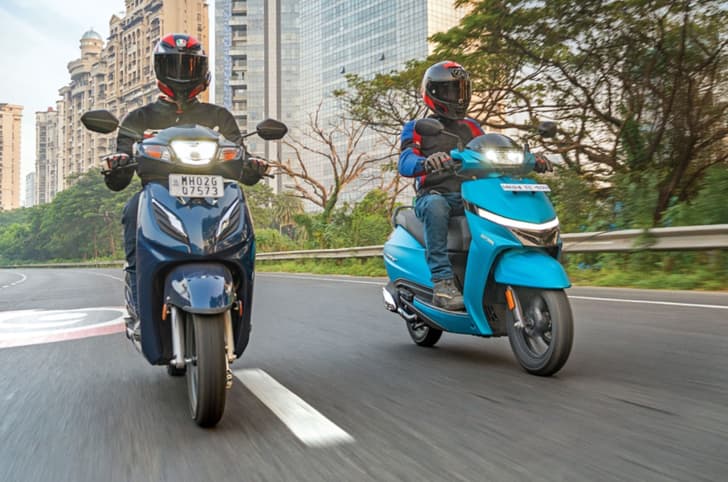

While the Indian manufacturers have been quick to capitalise on the EV boom, the Japanese have been rather more measured in their approach. Honda arrived in 2025 with not one but two in-house electric scooters, though both had unique limitations that prevented them from succeeding.
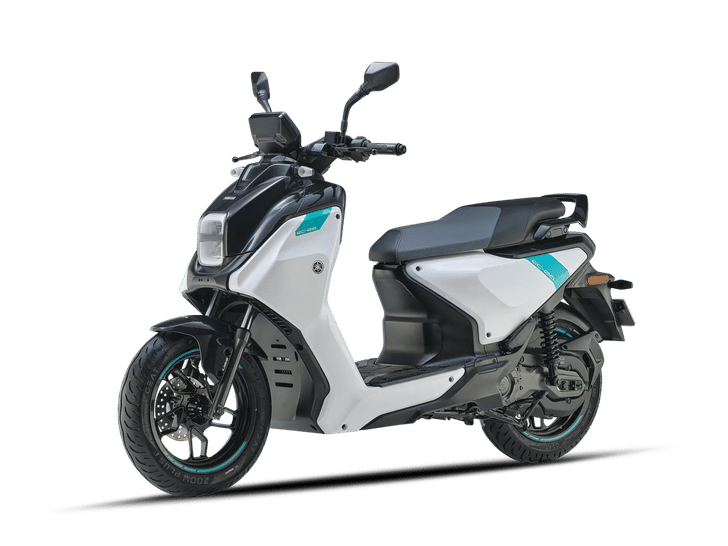
Suzuki, like Honda, chose to develop its own platform from scratch, but its e-Access appears expensive for what it offers. Yamaha, meanwhile, took a markedly different route for its more affordable offering and partnered with an Indian startup. The EC-06 is, in essence, a more expensive River Indie in sharper clothes.
So if you’ve been waiting for a Japanese e-scooter, you now have two choices, but like their very different inceptions, both also offer you two very different flavours of electric scooter. The question, then, is which one deserves your money – and whether either deserves it over the competition.
Not hiding in plain sight
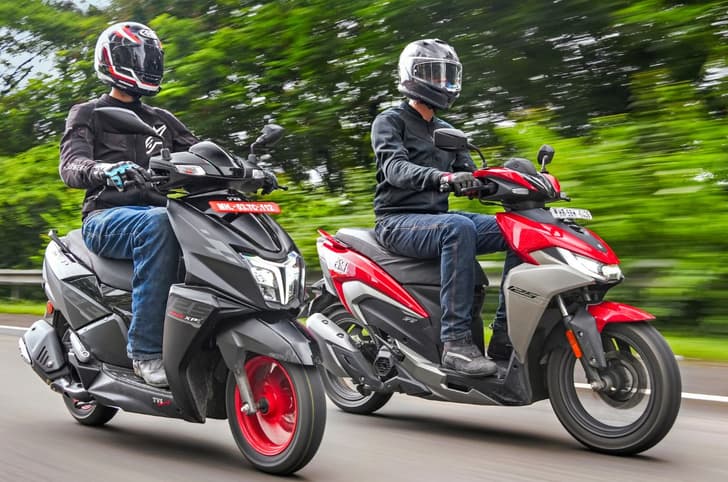
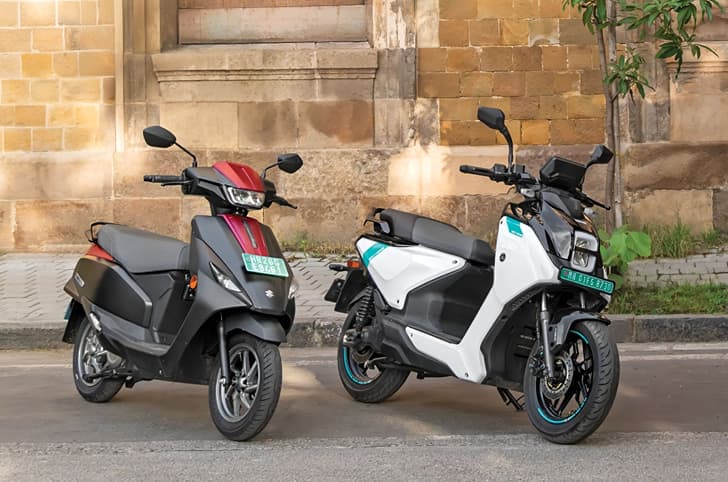
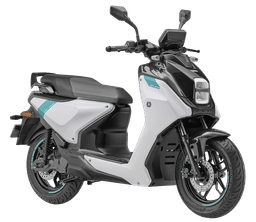
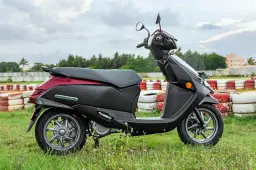
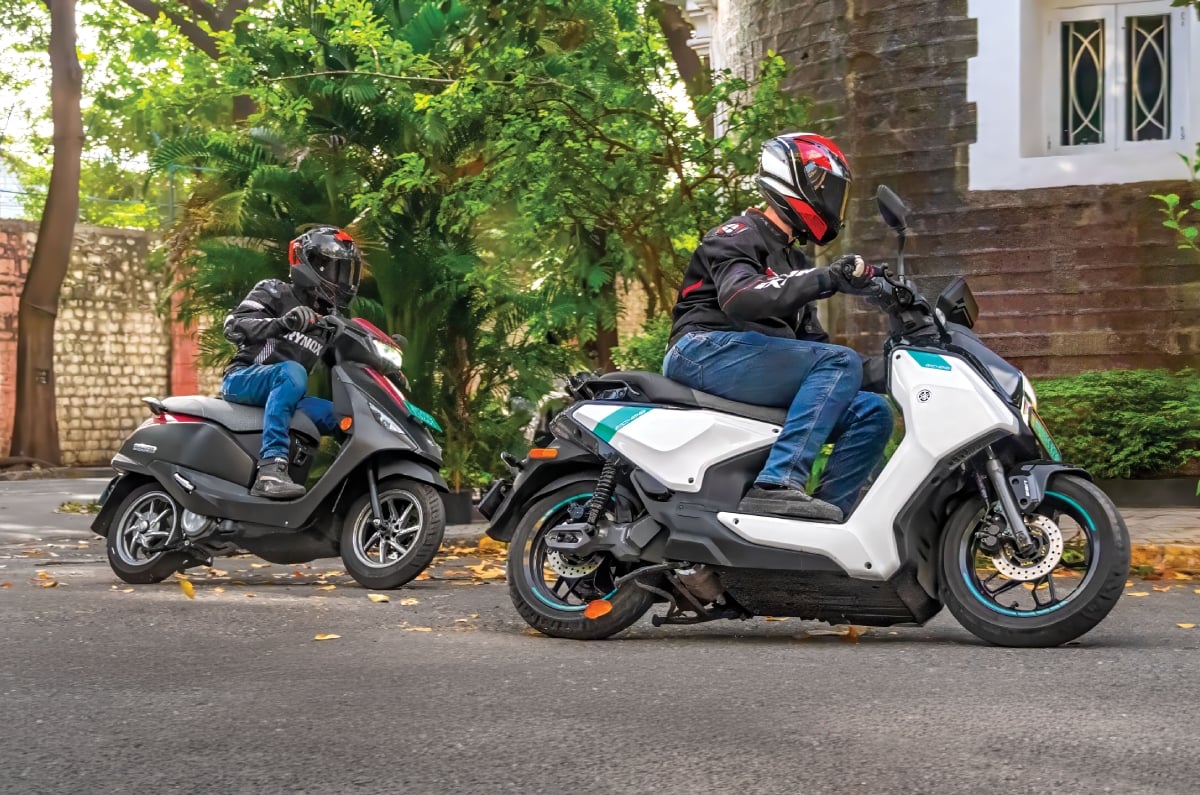
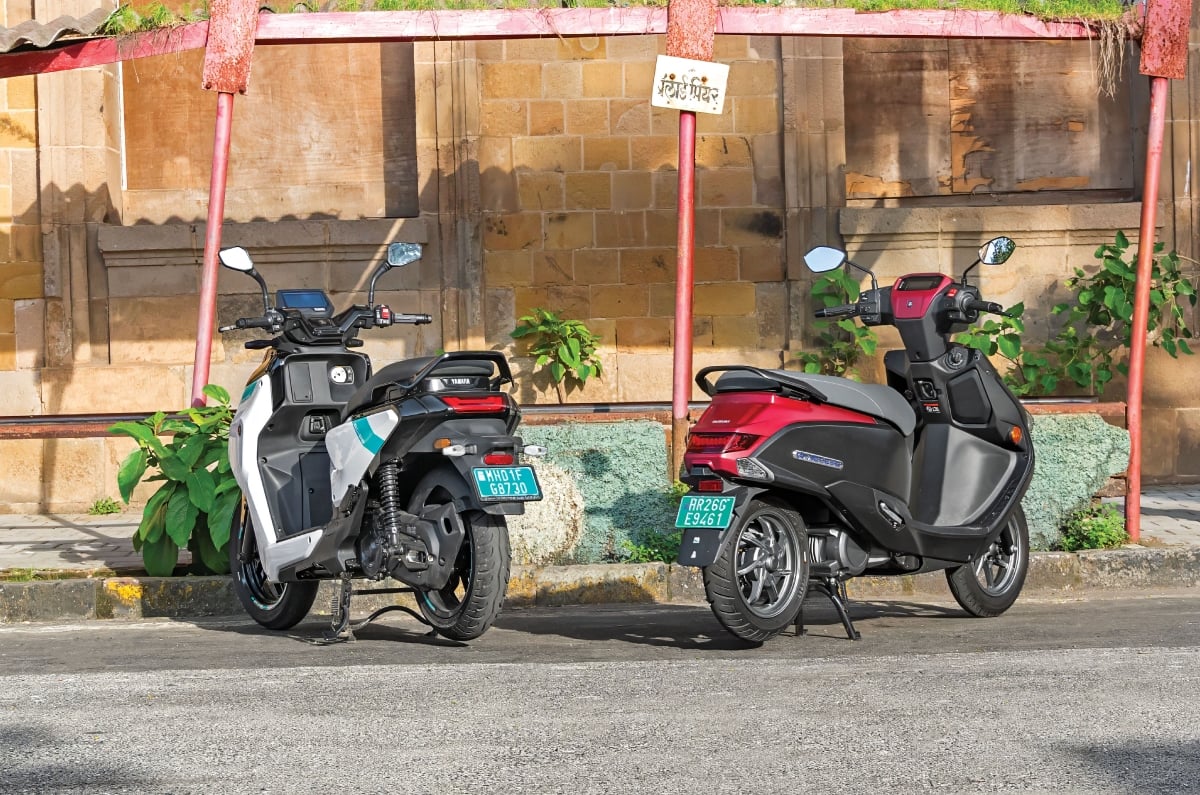
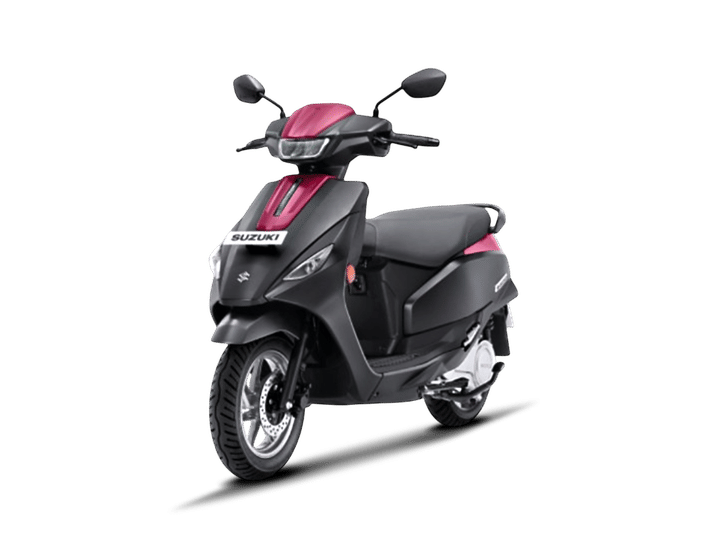
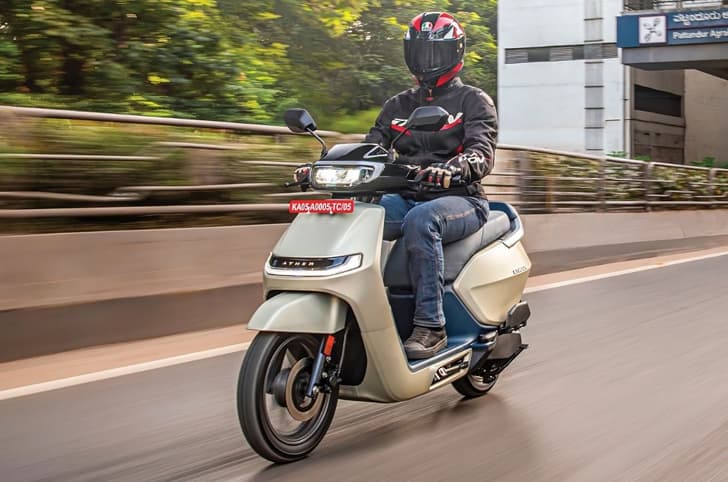
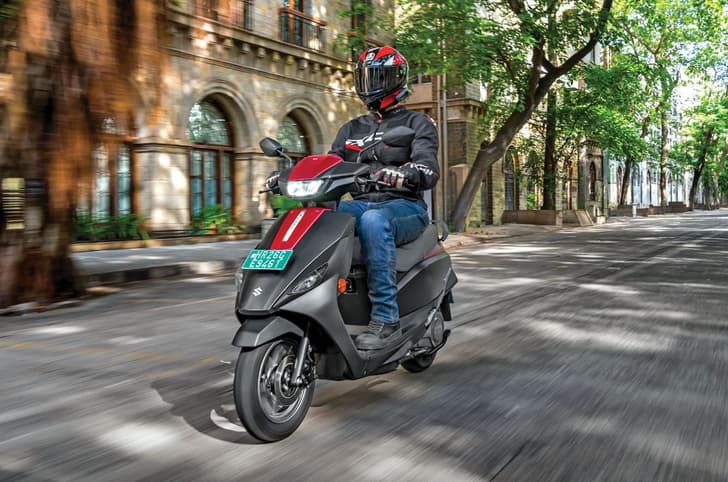
Subtle, these scooters are not. Both take distinctly left-field approaches to styling and will stand out from the crowd. Over the fortnight we spent with them, the EC-06 consistently drew more positive attention thanks to its chunky, squared-off proportions. The e-Access found its niche too, though its double duck-bill nose, flowing front panels with a contrastingly boxy tail make it more of an acquired taste.
Climb aboard and their personalities diverge further still. The e-Access feels more like a conventional scooter. Despite its compact dimensions, it never feels cramped, even for taller riders, while its 765mm seat height makes it instantly approachable for shorter ones.
The EC-06, by comparison, feels a size larger. Its riding triangle is noticeably roomier, which taller riders will appreciate in a segment that seldom caters to them. Yet, with a friendly 770mm seat height, it remains fairly unintimidating for shorter riders. In fact, tall riders will want a higher seat.
Different strokes
The riding experience of both also reflects two very different engineering philosophies. The 122kg e-Access feels exceptionally light on its feet; whether wheeling it around a parking space or flicking it into a bend, it responds eagerly – actually, a bit too eagerly. Some of that can be attributed to Suzuki mounting the battery pack vertically beneath the seat, a decision that, as you will read further on, has implications elsewhere too.
Like the latest Burgman, its ride also errs towards the firmer side rather than the plush feel of a TVS iQube. It isn’t uncomfortable by any means, but it is something worth paying attention to on a test ride. Taller riders will also discover the Suzuki’s compactness during full-lock U-turns, where their knees will foul the handlebar.
On the flip side, the EC-06 is relatively heavier and slower to steer, but it’s a small tradeoff. That’s because its larger 14-inch wheels lend it greater stability at faster speeds and also help it dismiss broken roads with admirable composure. Its absorptive suspension also factors in here, though particularly sharp impacts can provoke a slight judder in the fork.
The Yamaha’s seat, however, leaves quite some room for improvement. Its forward-sloping shape constantly makes you slide forward, necessitating frequent shuffling about. The padding is also too soft, and after just 30 minutes or so, you find yourself sinking into the seat pan. This results in a gradually more knees-up riding position, which might sound like a trifling problem at first but one that becomes increasingly apparent over longer journeys.
Neither one gets ABS, which feels like quite an egregious oversight considering their price points. Nevertheless, the Yamaha’s brakes inspire greater confidence because they are powerful without being overly aggressive, and its wider tyres also provide better traction. The Suzuki’s brakes, conversely, are almost too sharp. On Mumbai’s slippery concrete roads, they demand a more measured touch when coming to a halt quickly.
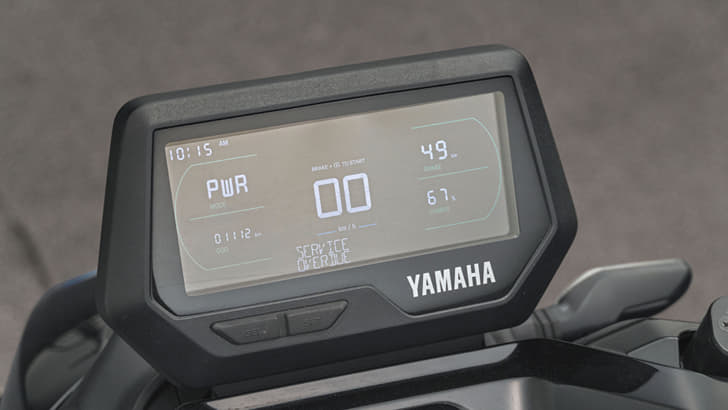
Not that you’ll often rely heavily on them. That’s partly down to the well-calibrated regenerative braking system and partly because the e-Access’ performance is quite unremarkable. Not only is it much slower than the EC-06, but it also feels noticeably less eager than the petrol-powered Access. It’s perfectly usable in the city, but on faster roads, overtakes require planning. Unsurprisingly, the Yamaha feels considerably livelier. It accelerates with genuine enthusiasm in its top Power mode, the regenerative braking is seamlessly calibrated in all 3 modes (Standard and Eco being the other two) and, despite using chain drive, its drivetrain is remarkably silent – akin to a hub-mounted motor.
Feel Good (?) Features
Build quality on both is reassuringly solid and exactly what one expects from the Japanese. At these prices, however, there are a few omissions that are difficult to overlook.
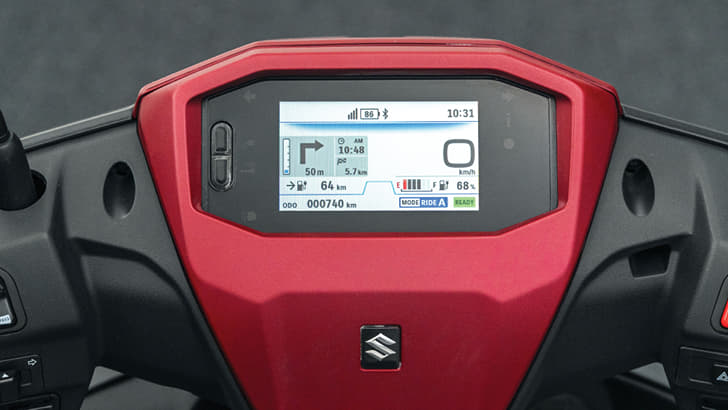
The e-Access employs the same TFT display found on the ICE Access 125 and Burgman, both of which cost substantially less. Yamaha, meanwhile, supplies only the slower 480W charger, despite the considerably more affordable River offering a faster 750W unit as a Rs 3,000 option.
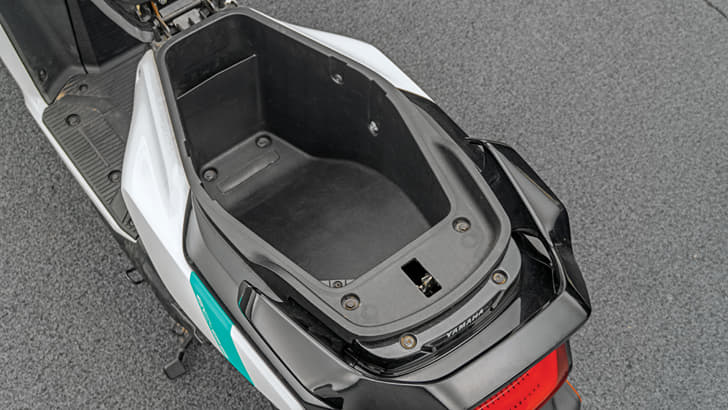
The EC-06 also sacrifices a lot of storage compared to the Indie. Its 24.5-litre under-seat boot is far short of the latter’s enormous 43-litre boot and trails established rivals such as the iQube, Rizta and Chetak. The River’s lockable 12-litre glovebox has been omitted too, though Yamaha has used this to reposition the charging port to a more convenient location.
What community is saying on the EC-06?
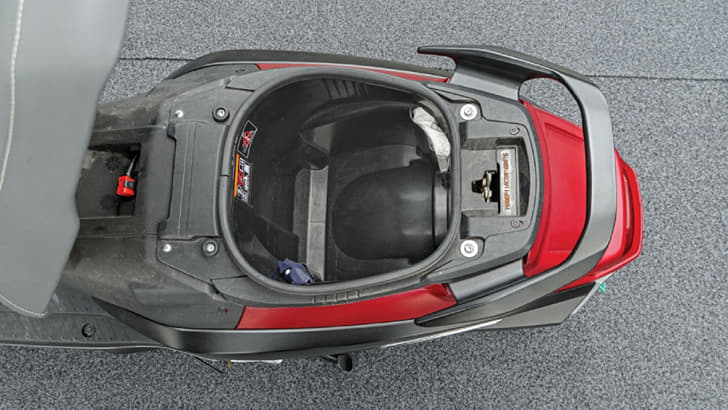
If the Yamaha’s storage is merely average, the Suzuki’s is positively outclassed. The battery’s position beneath the seat results in just 17 litres of bootspace – roughly half what you’ll find on rivals like the Rizta and Chetak. In fact, even the ICE Access 125 offers you quite a bit more storage space. The e-Access’ boot is also shaped quite awkwardly, and unless the charger’s cables are folded with almost Victorian precision, it simply refuses to fit.
Range Rovers?
An electric scooter ultimately needs to deliver one thing above all else – promising range to reduce your running costs. In Ride A mode, which delivers full performance and max regen, the e-Access covered a little over 88km in our range test. Given its smaller 3kWh battery and its use of safer, but less energy-dense, LFP chemistry, the result is respectable in isolation; however, compared to the market’s front-runners, it falls far short.
Our test on the EC-06 was conducted in its middle Standard mode, which retains full performance but softens throttle response compared to Power mode. It covered 114km, comfortably exceeding the distance initially predicted. Both scooters deserve praise here, as their range indicators proved refreshingly honest, not indulging in optimistic guesswork.
Using Eco mode will naturally extend the range on both, though with reduced acceleration and lower top speeds. Thankfully, neither becomes painfully slow. Even in Eco, both climb flyovers and keep up with city traffic without reducing themselves to rolling roadblocks.
While the Yamaha’s range is undoubtedly more impressive, its charging time is a rather different story. The supplied 480W charger requires a glacial ten hours to replenish a flat battery. Meanwhile, the Suzuki’s 600W unit requires around six hours to do the same, although its battery pack is also smaller.
One thoughtful detail both manufacturers deserve credit for is the inclusion of a dedicated charger bag. It is a small touch, but one that should help protect the charger from spending years rattling around inside the boot.THE BIGGER PICTURE
Judged purely against each other, the result is straightforward – the EC-06 clearly wins. It offers superior performance, greater comfort, longer range and also costs much less than the e-Access.
However, if you zoom out and look at the broader market, the context changes. At Rs 1.71 lakh, the Yamaha is hardly inexpensive, and the Suzuki, which is knocking on the door of Rs 2 lakh, is even worse off. When proven alternatives from TVS, Ather, Bajaj, Vida and River offer similar or even superior alternatives for substantially less money, the Japanese appear more like fringe players and less like mainstream contenders.
There will undoubtedly be a small demographic of buyers for whom a Japanese badge carries enough cachet to justify this big premium. However, for the rest of us, the more keenly priced and proven homegrown contenders are the better bet.
 Rishaad Mody
 Azaman Chothia