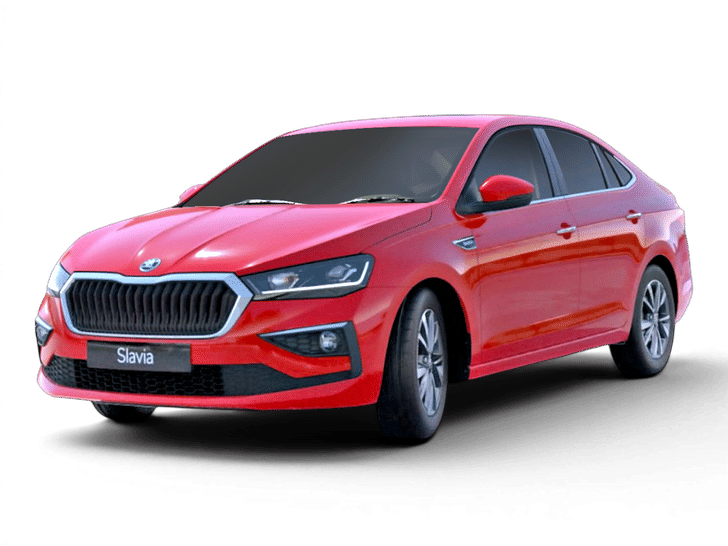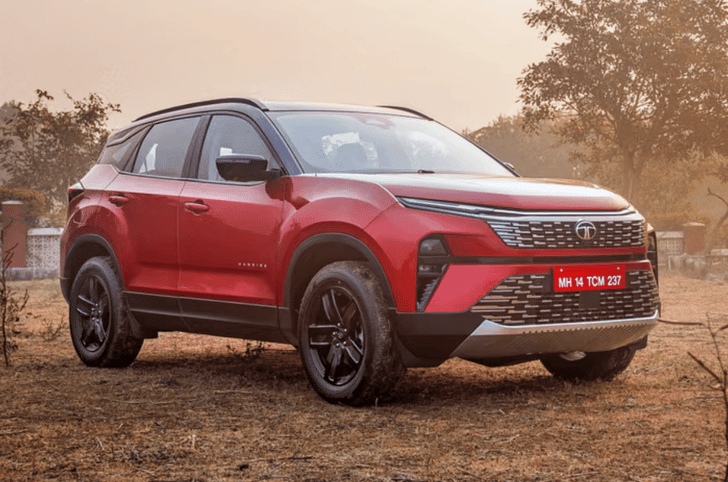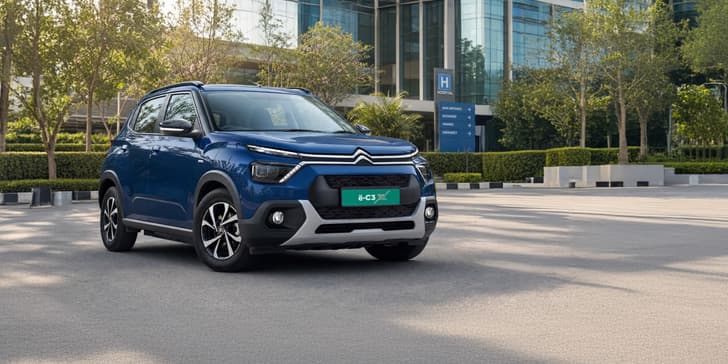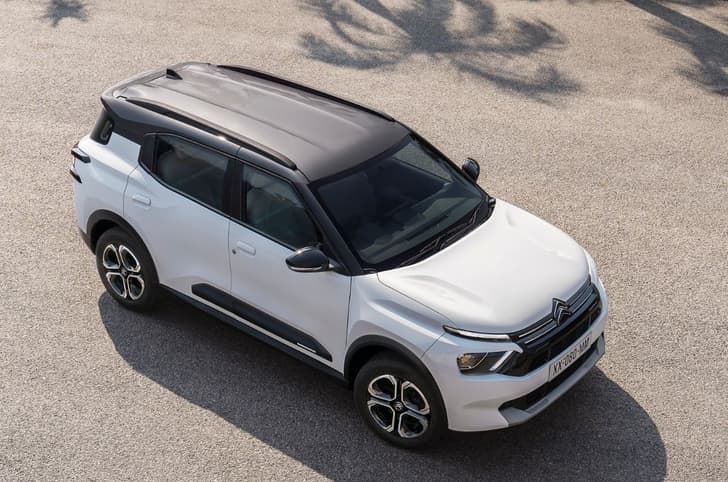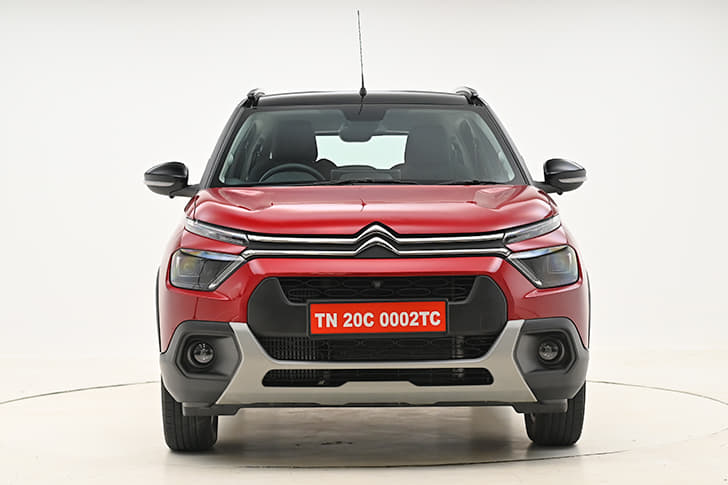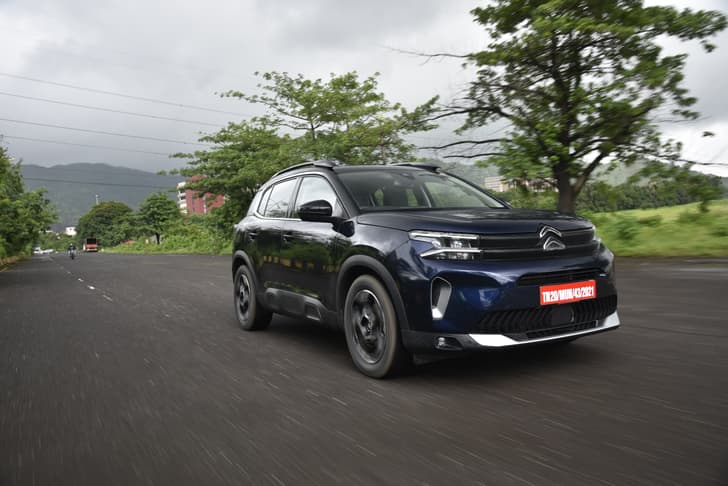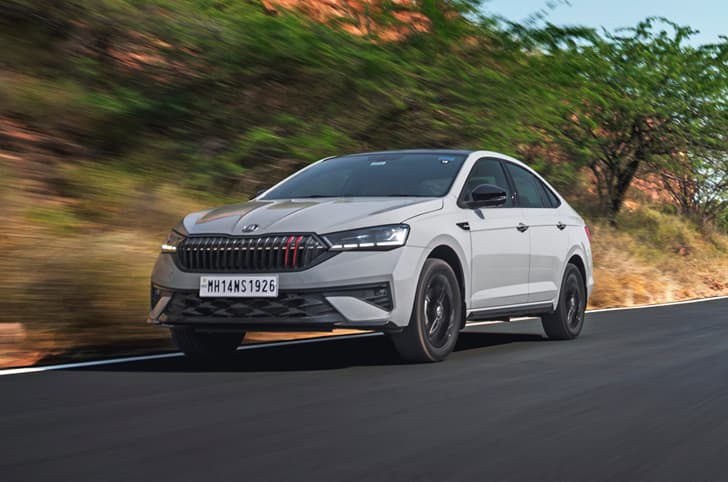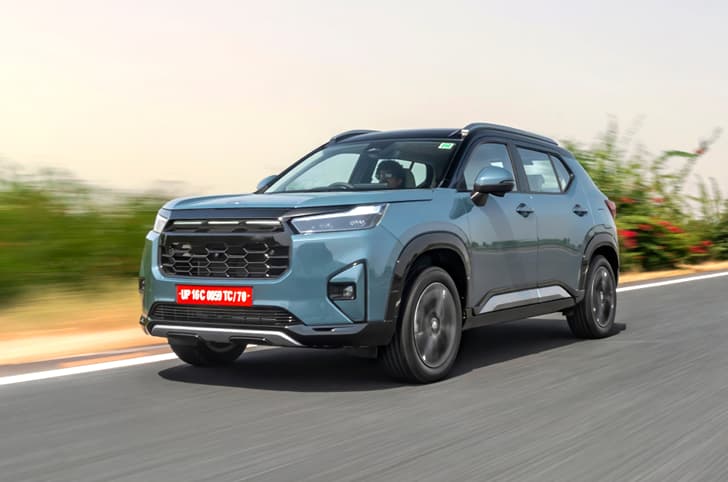

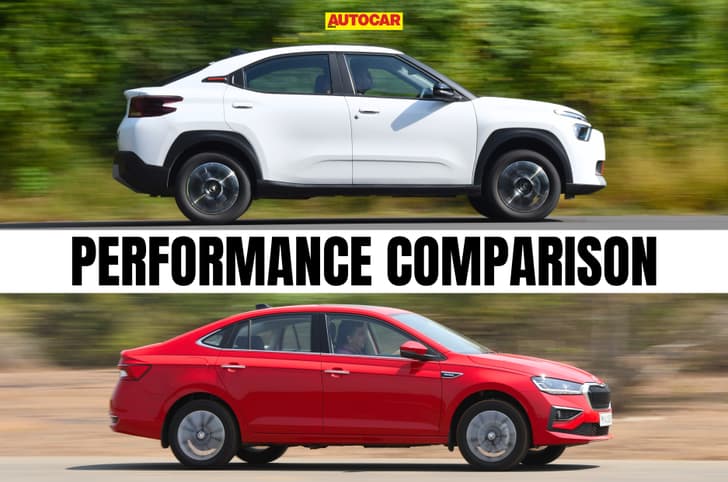
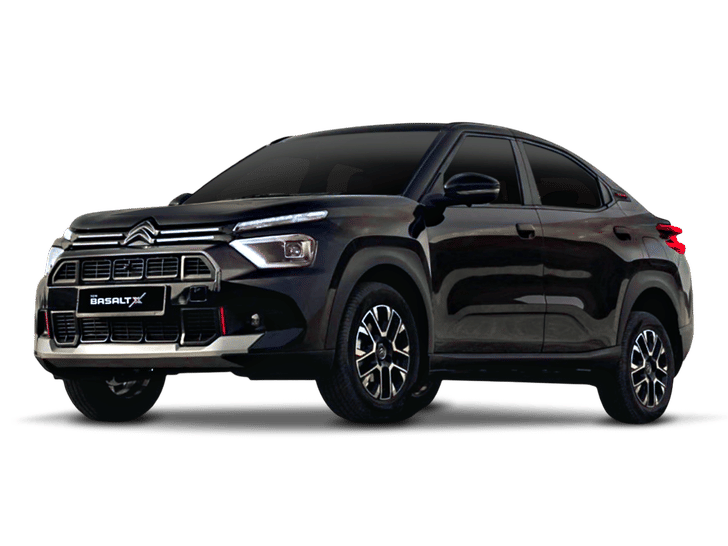
If you are in the market for a performance-oriented midsize vehicle, the Citroen Basalt coupe-SUV and the Skoda Slavia sedan can be prime contenders to suit your requirements. Both offer similar specifications with their turbo-petrol automatic options. But which of these offers better real-world performance? Let’s find out.
Explore full specs, features, and a price breakdown in our Basalt vs Slavia comparison.
Citroen Basalt vs Skoda Slavia: Specifications and price
What community is saying on the Basalt?
The Basalt gets a bigger heart and also weighs less than the Slavia.
While the Basalt offers the bigger turbocharged engine, it produces 5hp less than the Slavia, which has a better power-to-weight ratio. In contrast, the Basalt offers a better torque-to-weight ratio, as its torque output is 27Nm more than the Slavia’s. The Basalt is also 12kg lighter. That said, both models come with a similar 6-speed torque converter automatic transmission.
All turbo-petrol automatic variants of the Basalt are priced lower than the comparable Slavia variants, with the top-spec Basalt AT being over Rs 1 lakh more affordable than the least expensive Slavia AT option.
Citroen Basalt vs Skoda Slavia: 0-100kph, quarter-mile
The Basalt is quicker off the line, but the Slavia has better overall acceleration.
The Citroen Basalt has a quicker 0-20kph time than the Slavia, a major reason for which could be its higher torque output. However, from there, the Slavia pulls more efficiently than the Basalt. It takes 0.46 seconds less to reach 80kph, and the gap increases to 0.83 seconds at 100kph.
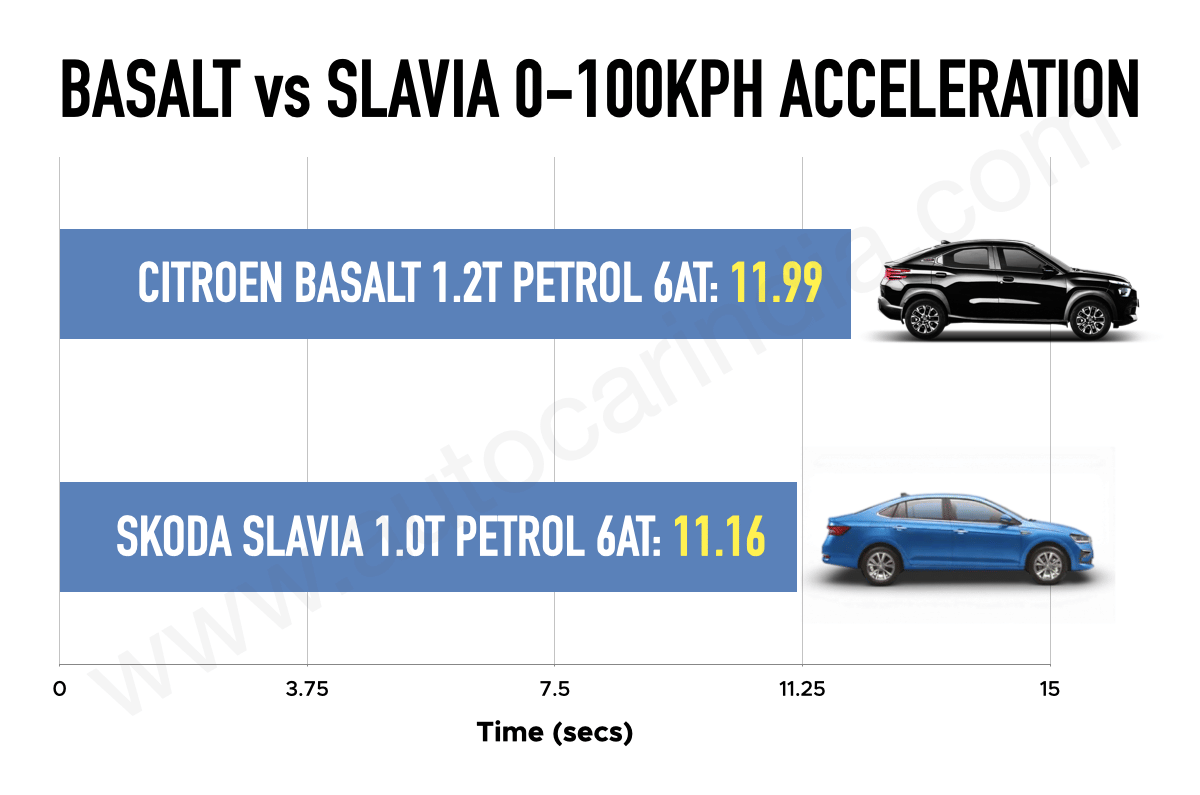
Notably, reaching 120kph requires some time for both cars, but the Slavia takes 1.38 seconds less than the Basalt to achieve this speed. It also completes a quarter-mile run 0.46 seconds faster than the Citroen coupe-SUV.
Citroen Basalt vs Skoda Slavia: Rolling acceleration tests
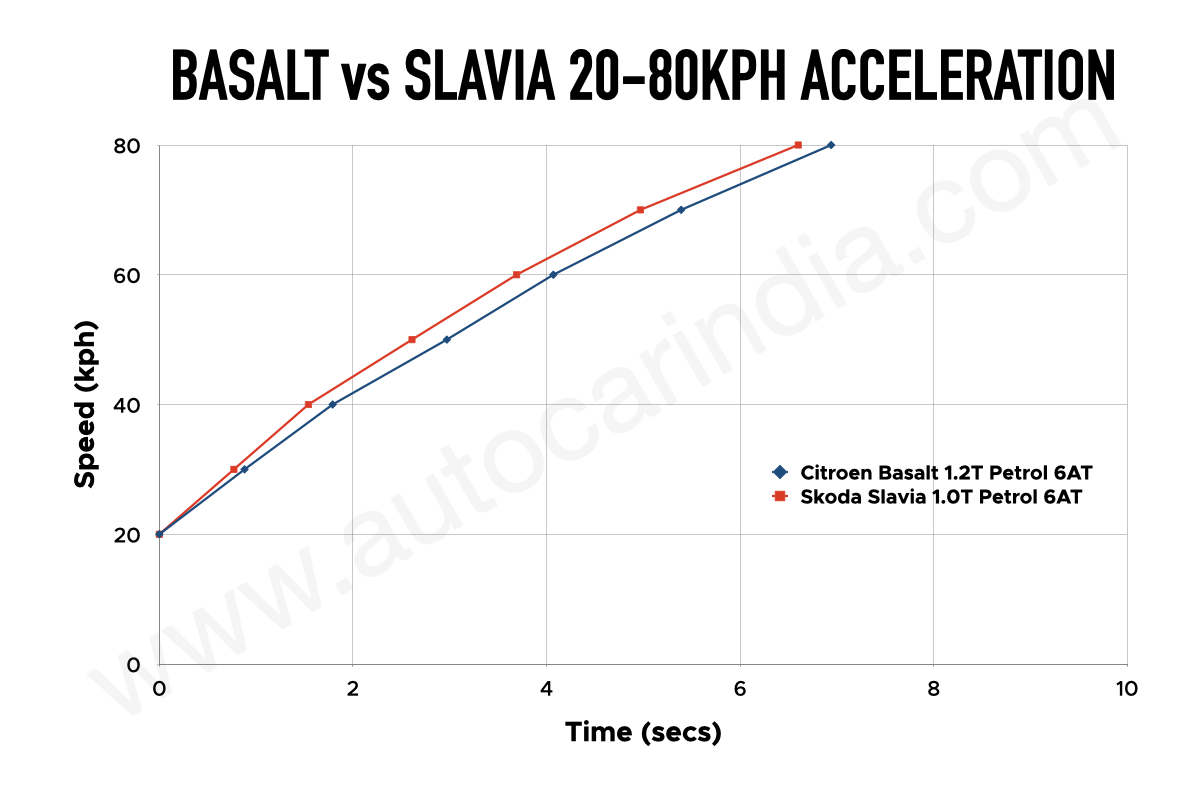
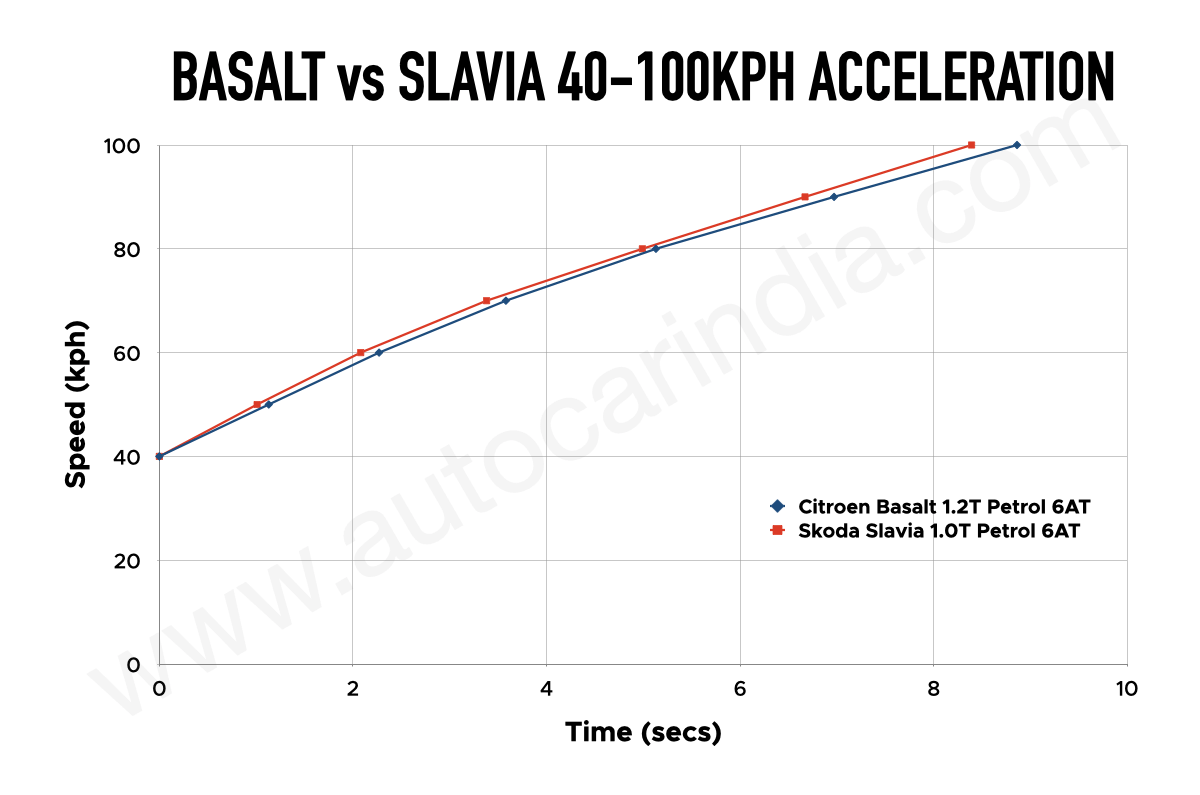
The Slavia is also quicker in 20-80kph and 40-100kph acceleration tests.
In the rolling acceleration tests, the Slavia again beats the Basalt turbo by 0.34 seconds and 0.47 seconds, respectively, in the 20-80kph and 40-100kph in-gear acceleration tests.
Citroen Basalt vs Skoda Slavia: Braking tests
Despite a higher kerb weight, the Slavia brakes faster than the Basalt.
While the Slavia outperforms the Basalt in the acceleration tests, it also does not lose out in the braking department. It takes 3.45 metres less to come to a standstill from 80kph. This amounts to a difference of 0.56 seconds between the two cars.
Autocar India’s testing standards
Before conducting our performance tests, we check and maintain tyre pressures based on the manufacturer’s recommendation and ensure the car has a full tank of fuel. The cars are then tested in a controlled environment with two people on board, and the data is collected via highly accurate GPS-based timing equipment.
All prices are ex-showroom, India.



 Uday Singh


 Glenn Noronha