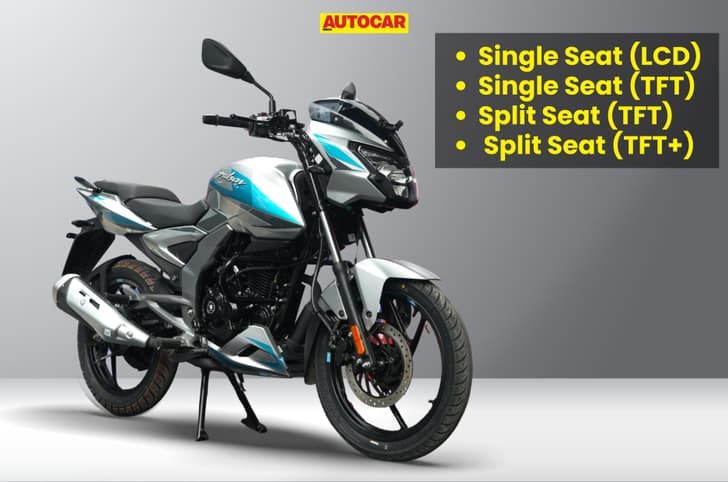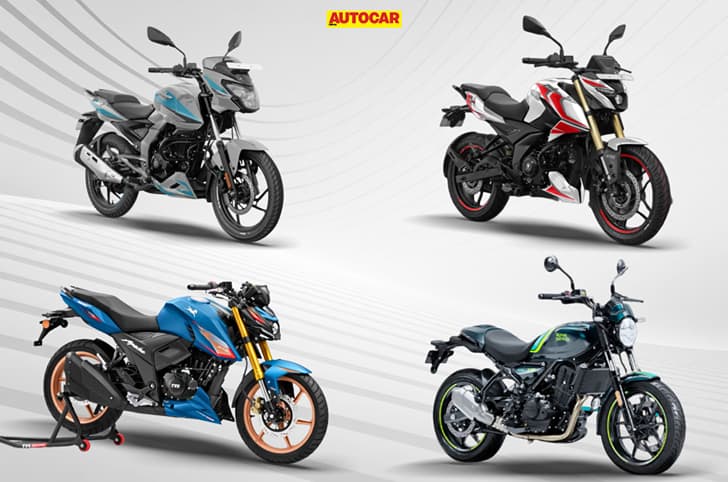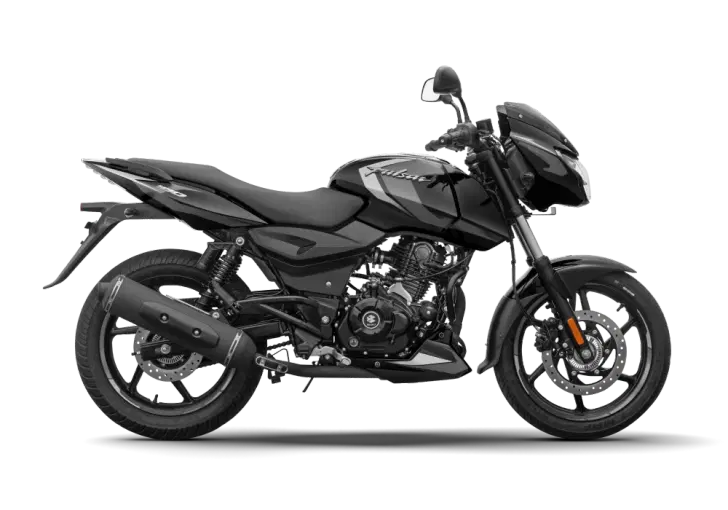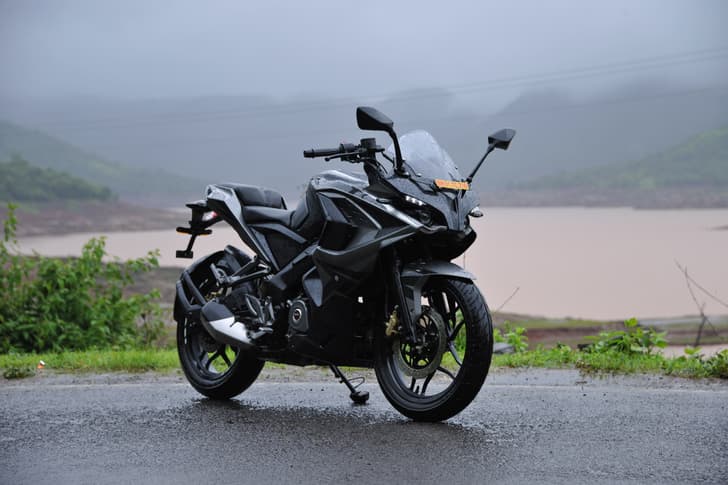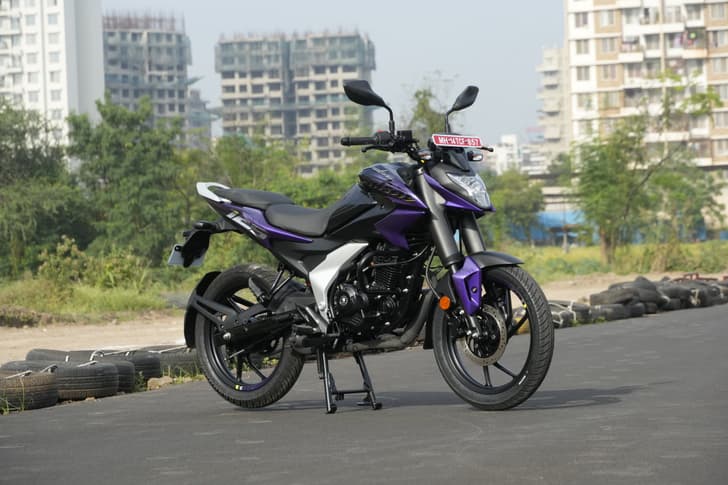

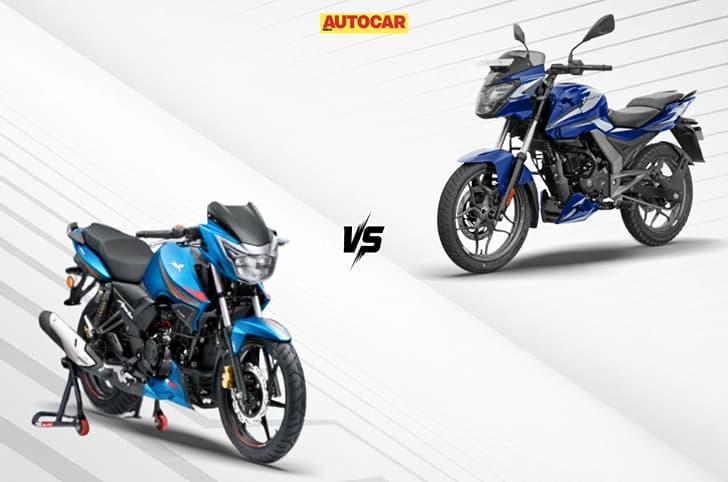
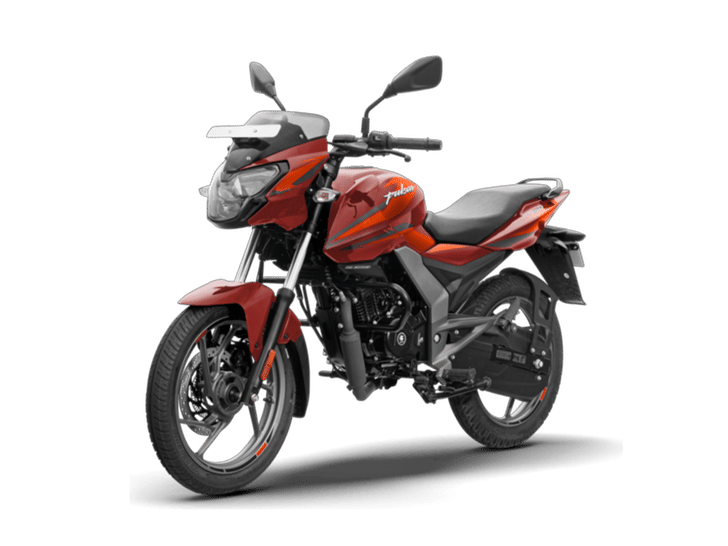
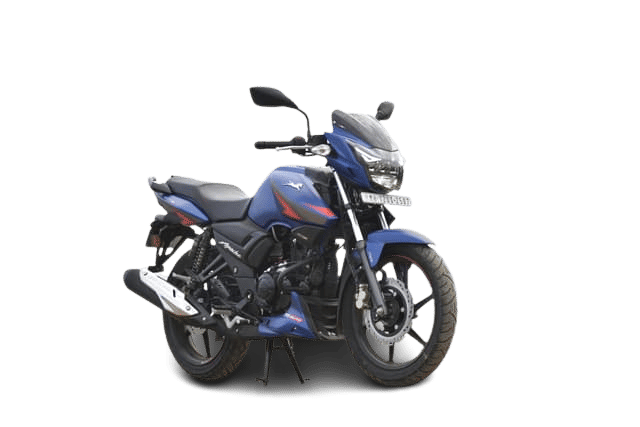
Bajaj launched the very first Pulsar 150 all the way back in 2001. TVS first responded with the Apache 150 in 2005, and upped the ante with the 160 in 2006. Bajaj, for the Pulsar’s 25th anniversary, effectively rebuilt the Pulsar 150 from scratch, marking some of its biggest changes since the original. TVS responded to this by introducing a new top-variant for the Apache 160 2V with traction control. At the time of writing, the difference in prices between the two is less than the price of six litres of petrol. If you’re not sure which one of these street-nakeds is right for you, we can help with that.
Bajaj Pulsar 150 vs TVS Apache RTR 160 (2V): Engine and output
The older motorcycle is… better?
Despite being the older motorcycle of the two, it’s the Apache that has the upper hand in this area. It has the better number for all the metrics; although it delivers both peak power and peak torque higher up in the rev range compared to the Pulsar. The Apache’s power and torque figures vary according to the chosen ride mode, and for this comparison, we’ve taken the figures from the Sport mode, the most powerful one of the three on offer.
Bajaj Pulsar 150 vs TVS Apache RTR 160 (2V): Dimensions and weight
Pulsar gets a notably larger fuel tank
With an all-new diamond frame, Bajaj was able to achieve a weight reduction of 9kg on the Pulsar 150 compared to the previous version. However, the Apache is still lighter by 2kg for its top-most variant. It’s also most accessible with a 5mm lower seat height. Do note that the lower seat height also translates to a 6mm lesser ground clearance, and the Pulsar gives you three extra litres of capacity on its fuel tank. In this segment, that translates to at least 120km, not an insignificant number.
Bajaj Pulsar 150 vs TVS Apache RTR 160 (2V): Tyres, brakes, and suspension
TVS (mostly) has the stronger ride package
Bajaj had reduced the rear tyre size on the Pulsar 150 with the new version; the older top variant (Split Seat) had a 120/80-17 size rear tyre. As things stand, the TVS gets the larger tyre on both ends. Do note that TVS gives a slightly smaller 110/80-17 rear tyre on the lower variant. The Apache also has larger disc sizes for its brakes, but both motorcycles get 130mm drum brakes on the lower variants. Apache is the only motorcycle to offer dual-channel ABS, even if it’s limited to the top-two variants. In this section, the Pulsar’s only real advantage is that its newer frame gives it a monoshock, whereas the TVS continues with a twin-shock.
Bajaj Pulsar 150 vs TVS Apache RTR 160 (2V): Features
Newer is better
This is where the Pulsar makes its strongest case to be your motorcycle of choice. The top variant of the Pulsar 150 now gets a 5-inch TFT screen (first debuted on the Pulsar N160 SS) with Google Maps mirroring support, an integrated starter-motor-generator (ISG) to enable silent starts as well as an auto stop/start system. The TVS makes its age very obvious with its LCD instrument cluster; however, it still has bluetooth on the higher variants and can connect to your smartphone for call and SMS alerts, just like the Bajaj.
Considering how long it’s been since TVS gave it a major upgrade though, it’s impressive how well the Apache holds up against the all-new Pulsar. To give you two examples, both companies offer their own solutions for making low speed riding easier (in stop-and-go traffic, for example); Bajaj calls its version Crawl Mode and TVS calls its version Glide Through Technology (GTT). Both also offer all LED lighting, a feature that reached the TVS later than Bajaj. However, only the Apache gets traction control.
Bajaj Pulsar 150 vs TVS Apache RTR 160 (2V): Price
Neck-and-neck
Bajaj has two variants of the Pulsar 150, with a lower variant replacing the TFT screen for an LCD one and losing out on the features that are associated with it. TVS, at the time of writing, offers seven variants for the Apache RTR 160, all separated by about Rs 3,000 difference. However, it’s the Apache that’s more affordable to purchase, even if the difference is just Rs 660. Hopefully, the other differences are enough to help you choose one over the other.


 Vishal Venugopal
 Ved Janve