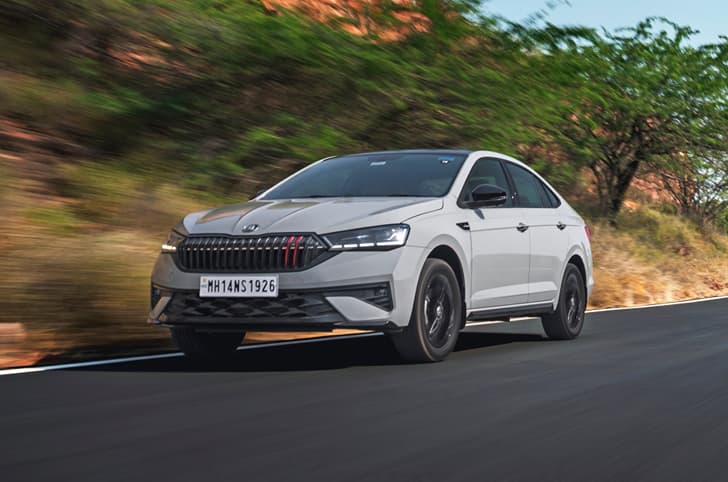
The Ministry of Road Transport and Highways (MoRTH) has proposed making Advanced Emergency Braking Systems (AEBS) mandatory for all M1 category vehicles from October 1, 2032. This category covers passenger vehicles with up to eight seats besides the driver. According to the draft notification, the requirement will apply to all new models manufactured from October 1, 2030, before being extended to all models (including those already in production) two years later. The draft rules are an amendment to the Central Motor Vehicles Rules (CMVR), 1989.
- AIS-185 standard for AEB systems.
- Steering and lane-keeping systems also covered.
- Public consultation open for 30 days.
MoRTH sets AEB timeline for passenger and light goods vehicles
The proposal comes as the government aims to halve road accidents and fatalities by 2030, a target Union Road Transport and Highways Minister Nitin Gadkari has reiterated on several occasions. MoRTH’s draft notification proposes a phased rollout of AEBS, an Advanced Driver Assistance Systems (ADAS) feature that applies the brakes automatically if the driver fails to respond to an emergency, either to avoid a collision or reduce its severity.
From October 1, 2028, M1 and N1 category vehicles offered with the system will need to comply with AIS-185, the Automotive Industry Standard for AEBS. The N1 category covers goods vehicles with a gross vehicle weight of up to 3.5 tonnes. Should the draft be approved without changes, AEBS fitment will become mandatory for all new M1 category models manufactured from October 1, 2030, and for all M1 category models from October 1, 2032.
The proposed timelines take into account the lead time that both the industry and users would need, people aware of the development told The Times of India (TOI). TOI also quoted automobile and mobility expert Rama Pandey, who said the norms could initially focus on ensuring that vehicles already equipped with AEBS, or more advanced systems that can intervene in steering and lane-keeping, comply with the relevant Automotive Industry Standards. “These technologies could prove a boon for commercial drivers who spend hours behind the wheel. By shifting more safety-critical & fatigue-inducing driving decisions to automated systems, ADAS could make driving safer and less strenuous,” Pandey added.
The draft notification is open for public consultation for 30 days, after which the ministry said that it will take objections and suggestions received into consideration.
Steering, lane-keeping and driver-alert systems also covered
Apart from AEBS, the draft notification also proposes norms for steering and lane-keeping systems. From October 1, 2027, steering effort on all motor vehicles will have to conform to AIS-193. Motorcycles, invalid carriages and three-wheelers not fitted with a steering wheel are to be exempted. M1 category vehicles offered with Automatic Command Steering Functionalities (ACSF) from October 1, 2027, will need to meet the same standard, while those equipped with an Emergency Lane Keeping System (ELKS) will have to comply with AIS-191 (Part 1).
The draft also makes both ACSF and ELKS mandatory for M1 category vehicles registered as transport vehicles from October 1, 2029. The new norms would focus more on taxis, with drowsiness and attention-warning systems also set to be made mandatory for them, as per the TOI report.
Other upcoming vehicle safety norms
Commercial vehicles are already set to get more safety tech. New truck and bus models will have to be equipped with AEBS from January 2027, the TOI report added. Blind-spot information, moving-off information, driver-drowsiness detection & alert, and lane-departure warning systems have also been made mandatory for these vehicles. The government has also mandated a revised braking standard for trucks from October 1, 2027, along with electronic stability control (ESC) to improve stability, particularly while braking on curves.
Earlier this year, MoRTH had also proposed making Vehicle-to-Vehicle (V2V) communication systems mandatory on all newly manufactured vehicles from October 1, 2028. The technology allows vehicles to exchange real-time information such as speed, position and direction, and, according to the ministry, is expected to complement ADAS features such as AEB.
 Dhruv Dhaka


 Ajit Dalvi