Public sector oil refiners have formally rejected allegations from the Karnataka state government that retail petrol pumps are dispensing fuel with ethanol levels reaching up to 31.2%, countering that third-party laboratory tests bypassed statutory sampling protocols and standard technical procedures.
The confrontation centers on findings from a state-sponsored survey where four out of five inspected fuel pumps were found selling gasoline exceeding the legal 20% ethanol threshold, according to a Reuters report.
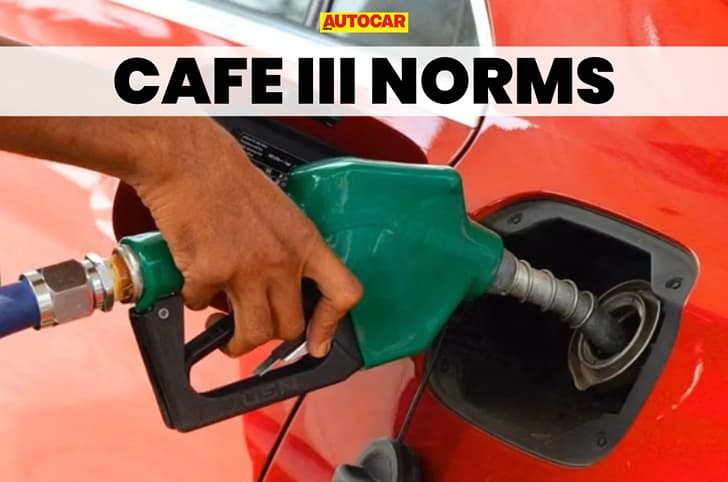
The standoff highlights deepening friction surrounding India’s national mandate to expand E20 fuel, a blend of 20% ethanol and 80% petrol, designed to reduce crude oil imports, lower carbon emissions, and support domestic sugar and grain farmers. While Central government officials maintain the biofuel rollout is scientifically validated and continuously monitored, automotive industry representatives have privately raised warnings regarding contaminated fuel and potential damage to internal engine components.
State Findings and Compensation Demands
According to the Reuters report, an investigation initiated by Karnataka state authorities evaluated 63 fuel samples collected across seven districts after state-run Oil Marketing Companies (OMCs) failed to provide requested ethanol data.
Speaking at a news conference, Rizwan Arshad, Karnataka's state minister for food, civil supplies, and consumer affairs, stated that ethanol concentrations measured between 26% and 31.2% in samples drawn from retail outlets operated by Indian Oil Corporation (IOCL), Bharat Petroleum Corporation (BPCL), and Hindustan Petroleum Corporation (HPCL).
Arshad, a lawmaker from the opposition Indian National Congress party, noted that few vehicles operating on Indian roads are fully E20-compliant, and even compliant models face performance risks if ethanol concentrations surpass statutory caps.
Citing financial fallout for vehicle owners, state authorities alleged that excessive blending causes an estimated Rs 62,000 crore in annual consumer mileage losses and Rs 39,000 crore in vehicle repair costs, aggregating to Rs 1.01 lakh crore. The state government demanded that the federal government establish a dedicated compensation fund for motorists and enforce accountability on refiners.
Refiners Contest Technical Methodology and Protocols
In a joint statement, state-owned refiners IOCL, BPCL, and HPCL refuted the allegations, affirming that all E20 petrol supplied across India strictly conforms to Bureau of Indian Standards (BIS) specification IS 17021.
Refiners asserted that the state's October 2026 survey violated mandatory sampling rules established under the Essential Commodities Act's Motor Spirit and High Speed Diesel Control Order of 2005 and the Marketing Discipline Guidelines (MDG) 2024. Under statutory regulations, six 1-litre samples must be drawn jointly with OMC representatives, signed, and distributed among dealers, refiners, and accredited Schedule III laboratories. Instead, the state's third-party laboratory reports lacked counterpart retention samples and full outlet-level documentation, denying refiners and dealers an opportunity for independent verification or re-testing.
Furthermore, refiners outlined critical technical flaws in the testing methodology. While IS 17021 mandates that Gas Chromatography testing (under ASTM D4815/D6839) include a 1:1 dilution with oxygenate-free petrol and correction against an E10 certified reference material, the state's certificates merely cited "Ethanol % by Gas Chromatography" without detailing specific test standards or dilution procedures. Also, Third-party test certificates reported sample densities between 0.742 and 0.749 g/cc. Because ethanol possesses a higher density than petrol, higher ethanol proportions naturally increase overall blend density above the 0.752–0.760 g/cc baseline recorded during official OMC quality checks.
Independent quality monitoring conducted by the OMC and Centre for High Technology (CHT) Quality Coordination Cell across 893 national samples, including 56 samples in Karnataka that averaged 19.30% ethanol, confirmed 100% compliance within the statutory 19% to 21% range.
Automotive Impact and Commercial Realities
The dispute brings technical realities regarding vehicle fleet compatibility and commercial operations into sharp focus.
While central government officials maintain that blending concerns lack scientific grounding, an August Reuters investigation uncovered internal emails showing that the Society of Indian Automobile Manufacturers (SIAM) had privately warned officials about contaminated E20 fuel risks and potential damage to engine hardware.
However, refiners disputed the state's claims of widespread consumer financial harm, highlighting that over 30 crore two-wheelers and 4 crore four-wheelers operate on E20 daily across India without widespread reports of mechanical breakdowns.
Addressing mileage impact, refiners cited technical studies conducted by the Ministry of Petroleum and Natural Gas, the Automotive Research Association of India (ARAI), and SIAM. According to them, E20-Calibrated Vehicles experience a minor 1% to 2% reduction in fuel economy. On the other hand, non-calibrated Vehicles experience a 3% to 6% mileage reduction depending on vehicle type.
Refiners characterized Karnataka’s assumption of a uniform 10% mileage drop as scientifically unverified. Commercial logic also counters allegations of intentional over-blending: ethanol procurement represents a substantial operational expense, meaning ethanol added beyond mandated proportions increases refiners' procurement costs rather than generating profit. Furthermore, blending operations are governed by automated depot-level calibration systems rather than manual mixing.
Macroeconomic Context and Next Steps
The policy clash occurs against the backdrop of India's broader biofuel initiative, which Central government data shows has generated over Rs 1.97 lakh crore in foreign exchange savings, substituted 316 lakh metric tonnes of crude oil imports, and transferred Rs 1.66 lakh crore to domestic agricultural producers since 2014–15.
To resolve the dispute, IOCL, BPCL, and HPCL have formally requested Karnataka authorities to share complete laboratory documentation and engage in joint re-testing of counterpart samples using official referee methods in the presence of both state and refiner representatives.
 Dhruv Dhaka