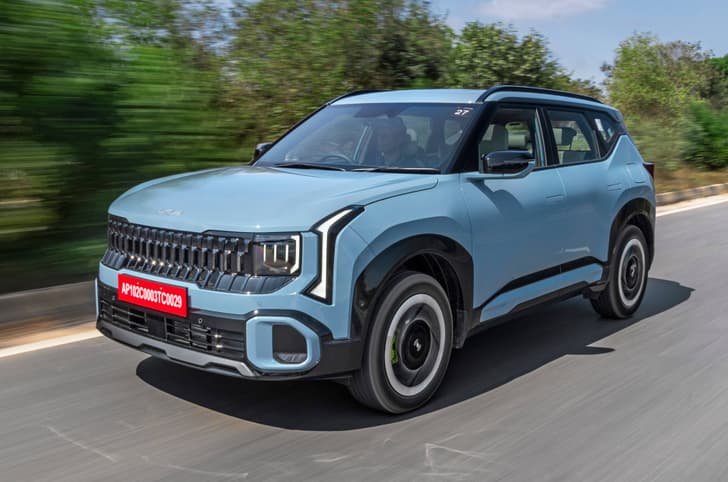
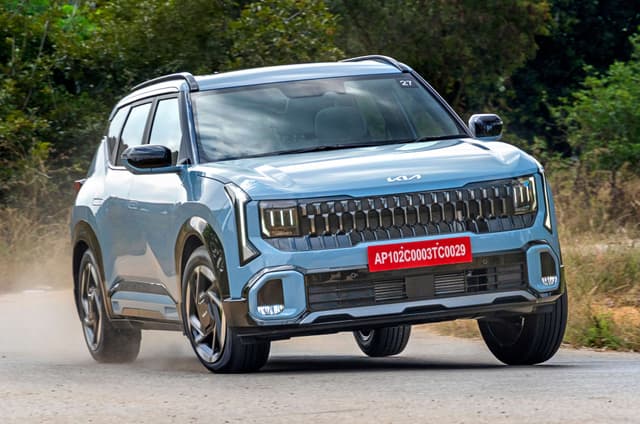
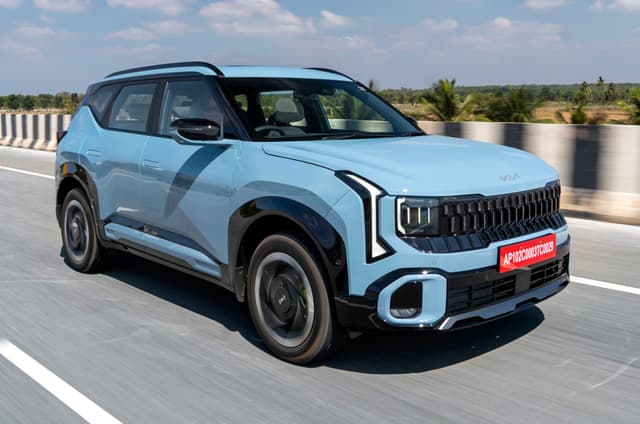
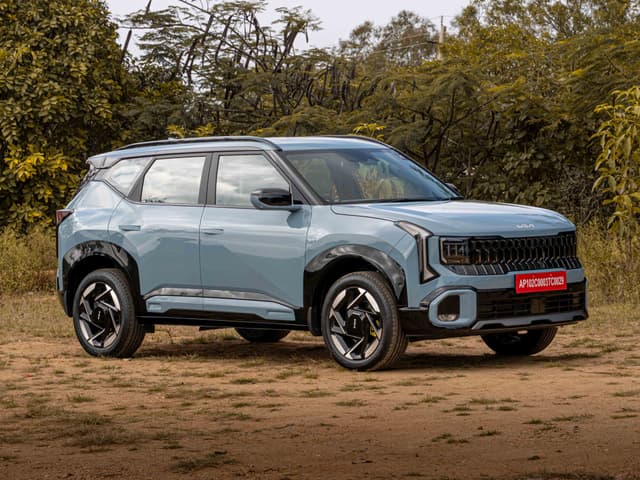
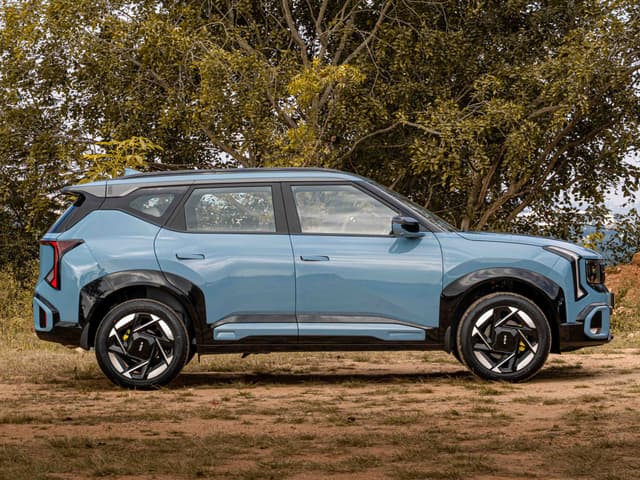
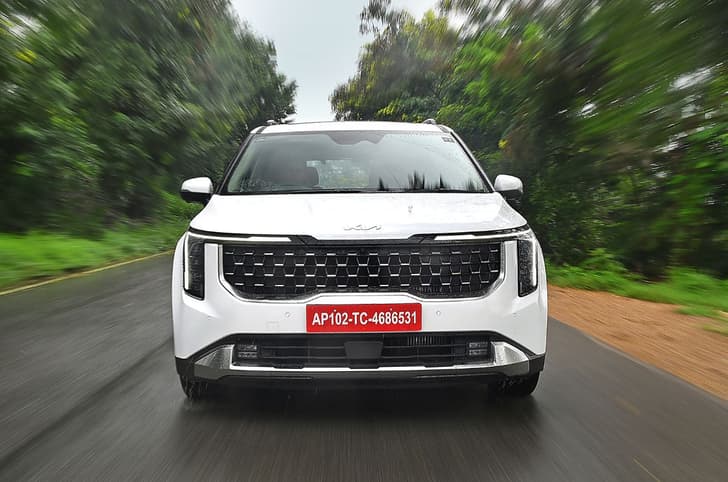
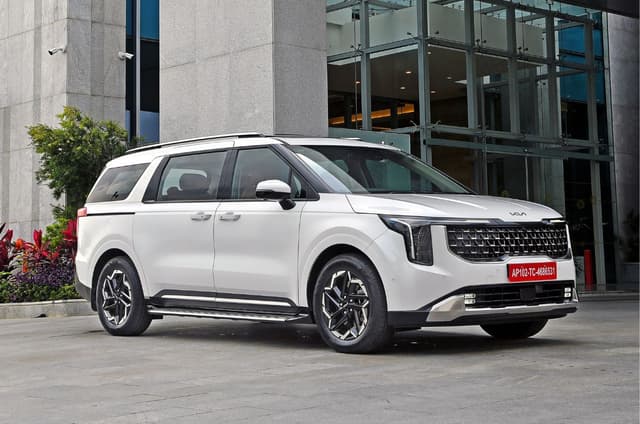
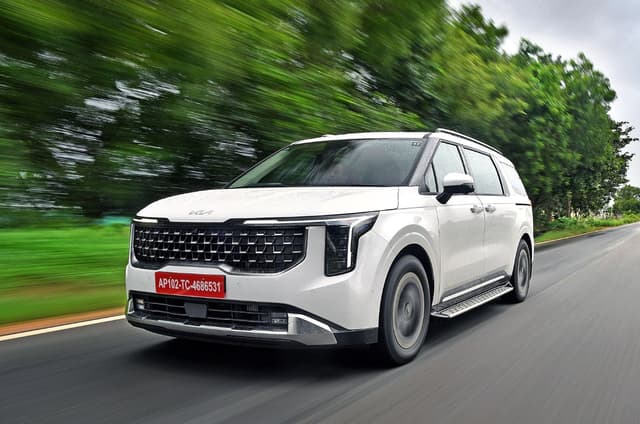
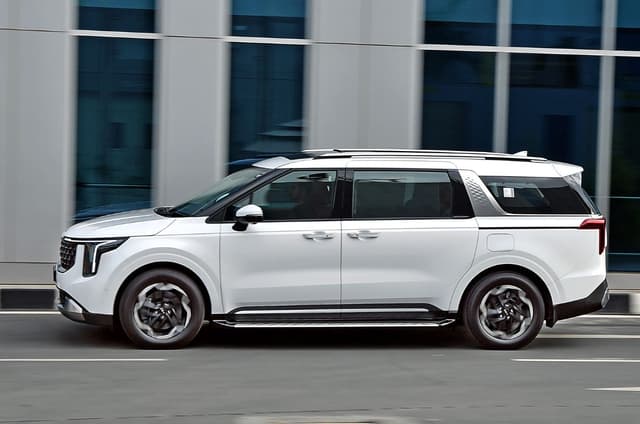
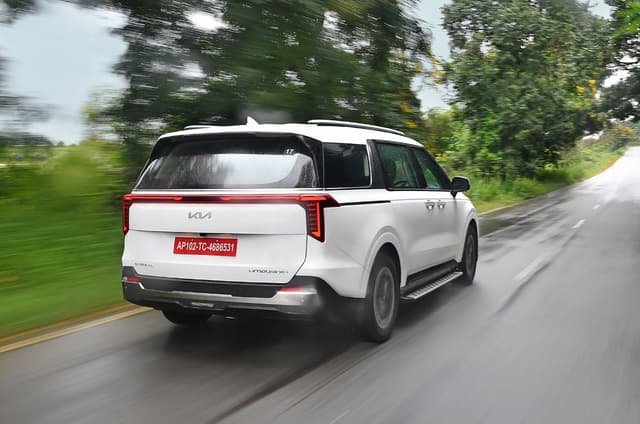
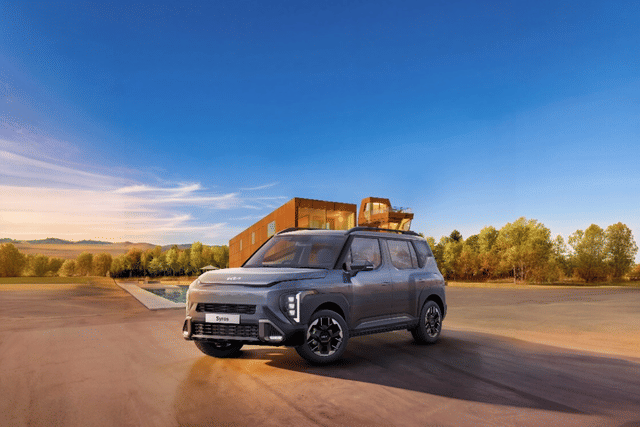
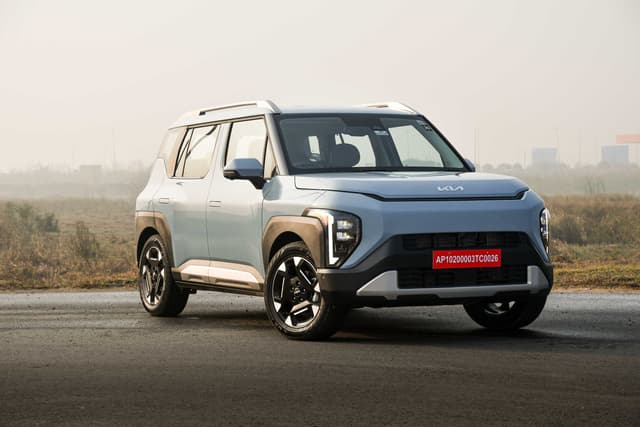
Kia Tc Cars in India (4)
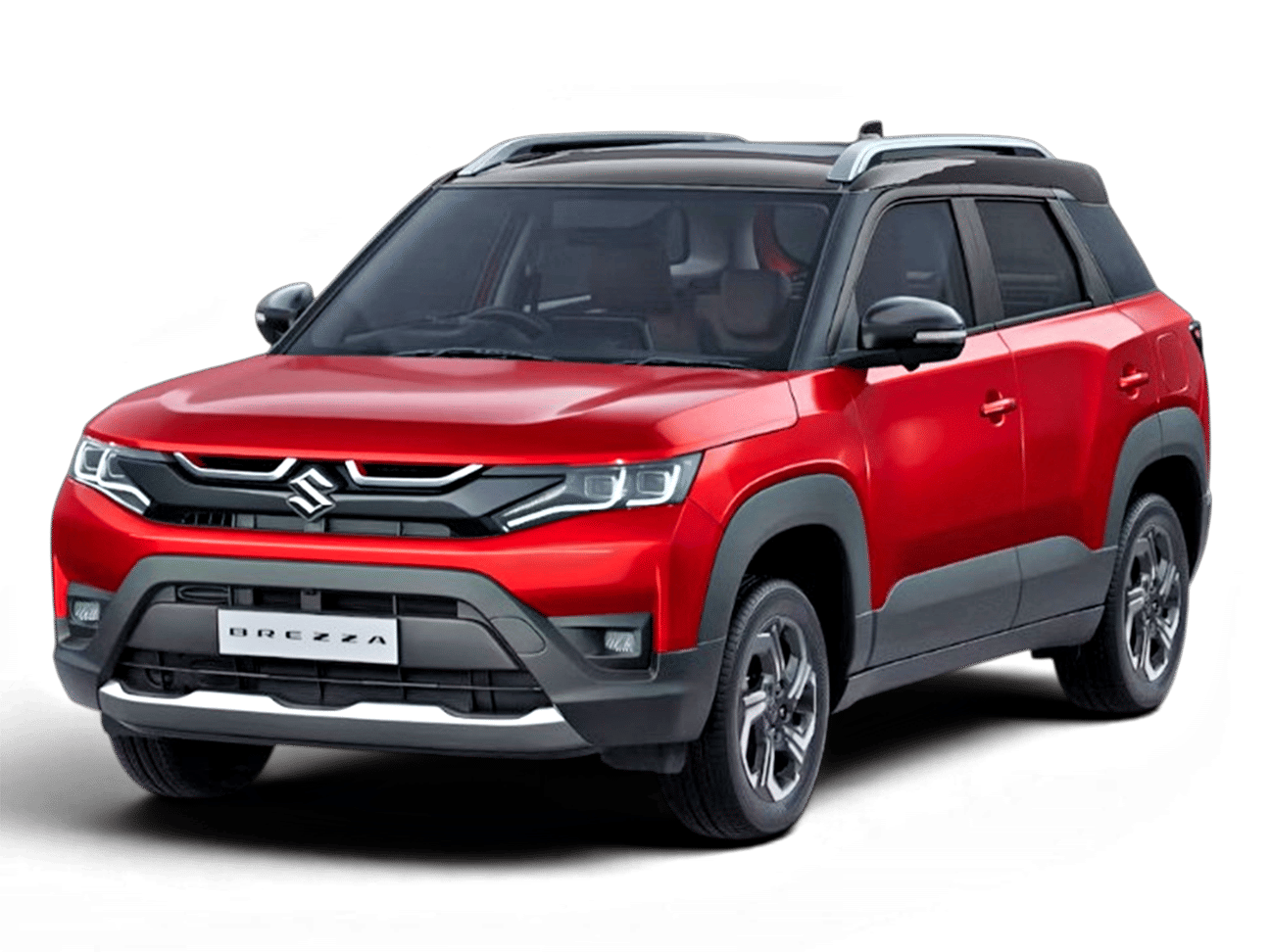
Discover the best Kia Tc Cars. Our comprehensive guide covers detailed specifications, expert reviews, pricing information, and buying advice for Kia Tc Cars. Find the perfect cars that matches your requirements and budget.


Still have more question?
Get answers from Autocar experts and owners
- 9,000+discussions
- 20,000+users online
- 10,000+members
Trending Questions on Kia Cars - Answered by Autocar Experts
Hello Autocar community, I'm planning to buy a Kia Sonet HTX variant diesel torque convertor automatic. My only concerns are the car's safety and the possibility of a next-generation model launching next year. The current HTX variant is sufficient enough for me but since there is no crash rating and safety rating, I am not that confident about purchasing it. What is the owner's review of the safety of Kia Sonet diesel automatic?
The Kia Sonet diesel automatic is one of our favourite compact SUVs. The combination of the smooth and refined 1.5-litre diesel engine and the six-speed torque converter automatic delivers a polished and very upmarket drive experience that you don't expect in this segment. As a long-distance car, it works brilliantly. While the Sonet doesn't have a crash test rating, it does comply with India's latest crash safety standards, which are a good baseline to begin with. Yes, a global NCAP or Bharat NCAP crash test rating would have added more assurance but it's not a reason to avoid the Sonet. The second-generation Kia Sonet is due to arrive in 2027 and will offer the same engine and gearbox. Going by its cousin - Hyundai Venue - the next-gen Sonet promises a slightly roomier cabin and more tech. At the same time, the current Sonet still feels up to date in its tech and features, and is still a very tempting package.
I owned a 2019 Maruti Vitara Brezza ZDi+ manual and sold it in 2024 to buy a Virtus GT DSG. I regret selling the Brezza, although the Virtus is a great car. I bought it because my wife wanted a sedan, and I chose the automatic partly for her, but she hardly drives it. The Virtus has covered nearly 60,000 km in two years. I’m planning to replace it with a new car. I drive at least 80% on the highway and 20% in the city. At least twice a month, I make a round trip of 640 km, and my annual mileage is at least 25,000 km. I’ve decided that my next car should be a diesel. I like the Tata Harrier, but I’m concerned about reliability and potential issues. I’m also considering the Kia Seltos, Mahindra XUV 7XO, and the upcoming Hyundai Creta. I’d choose a top-end variant and am open to either a manual or an automatic. If I go for an automatic, it must have a torque-converter gearbox. What would you recommend?
Between your picks, the Kia Seltos diesel automatic is the easiest recommendation. Its diesel powertrain is very refined and is paired with a slick 6-speed torque converter automatic. It also offers enough performance for highway driving, while ride quality is significantly better than that of the previous generation. The cabin feels premium, with good-quality materials, more space than the previous generation and an infotainment system with a very user-friendly interface.The Mahindra XUV 7XO offers better outright performance from its 2.2-litre diesel engine and a more plush ride quality. It also has a more commanding road presence, thanks to its sheer size. The cabin is premium and spacious, with the added advantage of a third row. However, its size can make it cumbersome to park in the city, while its infotainment interface takes some getting used to.If you can wait, the next-generation Hyundai Creta is expected sometime in mid-2027. It will move to the K3 platform, just like the Seltos, making it larger than the current model and allowing for a more spacious cabin. It is expected to retain the current Creta's powertrain options, so a diesel variant should still be on the cards. Other details are scarce at the moment, but it could make for a compelling alternative to the Seltos.Overall, if you don't need the third row or the added performance, the Seltos is a better fit for your needs than the XUV 7XO. While it doesn't have the outright performance of the Mahindra, it offers a good balance and better fuel efficiency.
I am currently using a 2013 Polo Petrol. I want to buy an automatic (TC or IVT) car as my primary vehicle. Since my parents are getting older, easy ingress/egress and good ride comfort are mandatory. My driving speed is usually between 60 and 90 km/h, with an 80:20 city-to-highway usage split. I prefer a car with the best-in-class insulation and NVH levels. Please suggest 2 cars from each of the following segments within an on-road budget of ₹20 lakh: Sub-4m SUV Midsize SUV I do not prefer Tata due to poor after-sales service.
Given your priorities of refinement, low NVH, ride comfort and easy ingress and egress for your parents, we would suggest skipping the sub-4m SUV segment and looking at a midsize SUV instead. The smaller SUV cars at the higher end of the segment often use three-cylinder turbo petrol engines, which aren't the most refined. Midsize SUVs also tend to offer better sound insulation and a more comfortable ride.Within your Rs 20 lakh budget, the Kia Seltos and Hyundai Creta with the 1.5-litre naturally aspirated petrol engine and IVT would be our top two recommendations. This engine and gearbox combination is among the smoothest in the segment, while both cars offer good sound insulation, a plush ride, and a comfortable seating height. Their wide-opening doors should also make getting in and out easier for your parents.Between the two, we would pick the Kia Seltos. It is the newer product, feels more premium inside, and offers slightly more cabin space. The Creta remains a close alternative, but the Seltos gets our vote for your requirements.
Hi Autocar team, I am looking to buy a new petrol automatic car for my family of three. Most of my driving will be in Bengaluru city, with occasional highway trips of 100-500 km. I prefer a torque-converter automatic or a CVT. We have test-driven the Skoda Slavia 1.0 TSI, Kylaq and Kushaq, Volkswagen Virtus 1.0 TSI, 2026 Honda Elevate facelift, Kia Sonet, Tata Punch AMT, Tata Sierra DCT and the Tata Punch EV with its automatic transmission. I personally liked the Slavia for its performance, handling, ride quality and safety, but I am concerned about EPC warnings and reliability. My wife is a beginner driver who currently drives a manual turbo sedan and a hatchback. She prefers relaxed driving and liked the Honda Elevate CVT more than the Sonet. I enjoy strong performance and effortless overtaking on highways, although neither of us is an outright driving enthusiast. With so many options, which automatic would you recommend?
Since your wife preferred the Honda Elevate over the Kia Sonet and is still building confidence, the smooth, predictable response of the Honda's CVT makes it an easier daily companion in Bengaluru traffic. Its upright seating position and suspension also suit the city's broken roads, while the naturally aspirated petrol engine avoids the added complexity of a turbo.The Skoda Slavia is more engaging on the highway, with stronger mid range punch and enjoyable handling, and its eight-speed torque converter automatic is a good match for someone concerned about dual clutch reliability. EPC warnings and reliability concerns are worth discussing with the dealer, but they aren't a reason to rule out every Skoda car. The Elevate's main drawback is that its engine can sound strained when accelerating hard, and it won't deliver the same effortless overtaking response as the Slavia.Given that you both drive the car, choose the Elevate CVT if ease of use and relaxed ownership come first; choose the Slavia automatic if you both test drive it and are happy with its driving behaviour and service support.
I'm looking to buy the Seltos HTK(O) automatic but am confused between the 1.5 NA petrol IVT and the 1.5 diesel turbo TC. The petrol is costing me around Rs 17.9 lakh, while the diesel is around Rs 19.7 lakh, before any discounts or negotiations. My monthly running is likely to be around 1,200-1,300km, with roughly 60 percent highway and 40 percent city driving. This includes a 700km highway run to Dwarka from Bathinda and back, which is a regular trip, around 300-350km of office commute, and another 100-150km for weekend outings. In the petrol, I'm mainly concerned about E20-related issues such as moisture, the possibility of higher ethanol blends in the future, lower mileage and the engine feeling slightly underpowered, particularly during occasional trips to the mountains. With the diesel, my main concern is the possibility of DPF and EGR-related issues. The car will be driven by both me and my wife. Which one would you suggest for this usage? I'm more inclined towards the diesel, but the concerns around DPF issues are making me reconsider.
Go for the Kia Seltos HTK(O) Diesel AT. Your running is around 1,200-1,300 km a month with a 60% highway bias, which is exactly the kind of usage where a diesel makes sense. The diesel engine is stronger on the highway, offers better overtaking performance and will be more efficient over long distances, so the higher upfront cost will be recovered over time. The DPF concern is understandable, but your usage pattern is actually ideal for a modern diesel – regular highway runs keep the system healthy and minimise the risk of issues. The petrol IVT is smooth and reliable, but it will feel less punchy on the highway and in the hills, and the fuel cost difference will add up over time. As for E20, modern engines are engineered to handle it, and there is no official roadmap beyond E20, so it should not be a reason to avoid petrol, but in your case the diesel is simply the better fit. The Seltos diesel automatic is a well-rounded package and will suit your usage perfectly.
Last Updated on: 18 Nov 2026