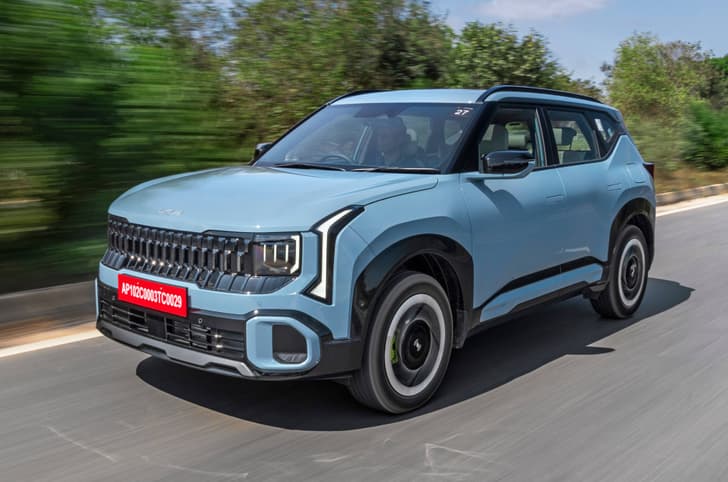
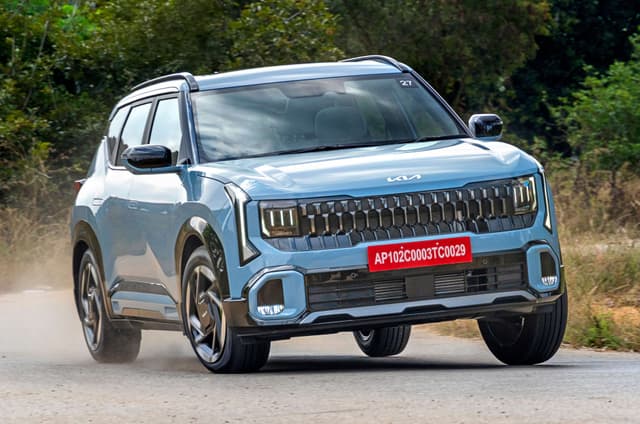
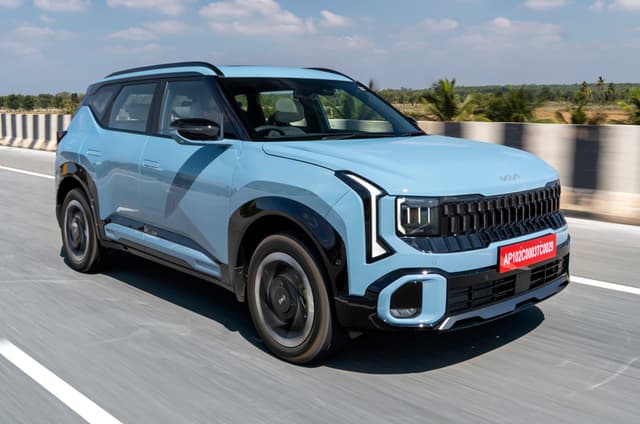
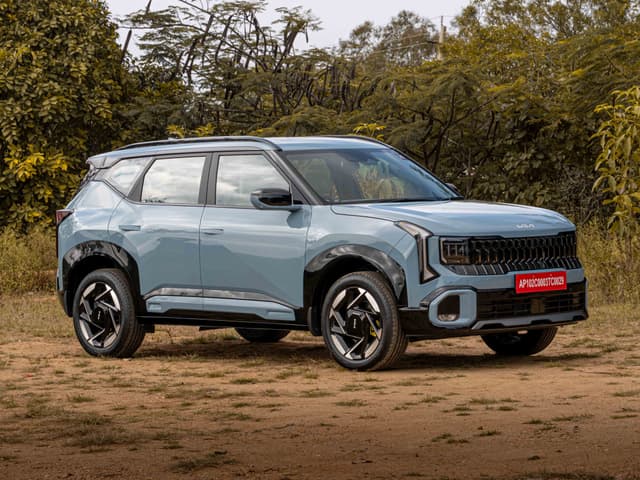
Kia Cars Under 15 Lakh in India (7)
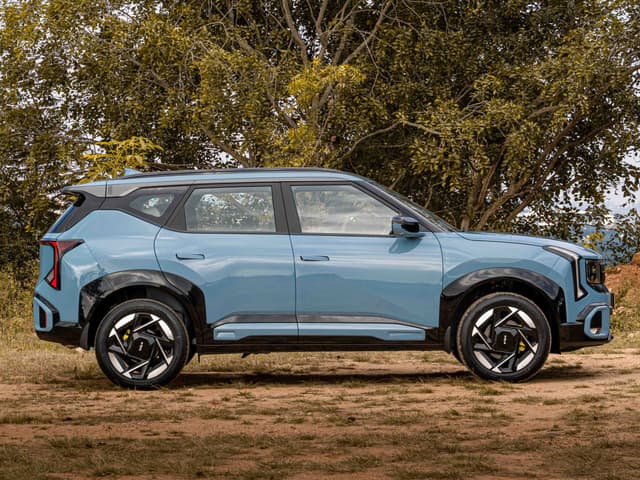
Discover the best Kia Cars Under 15 Lakh. Our comprehensive guide covers detailed specifications, expert reviews, pricing information, and buying advice for Kia Cars Under 15 Lakh. Find the perfect cars that matches your requirements and budget.


Filter your search



Filter your search


Filter your search
Trending Questions on Kia Cars - Answered by Autocar Experts
I am currently using a 2018 Baleno Petrol Alpha. My usage is 4,000km monthly, with 85%-90% highway travel. The car is usually driven with a driver and two rear-seat passengers. I am looking for a new car with excellent mileage, 5-star safety, and good rear-seat comfort. I also have a 2019 i20 Asta for city commute and a 2017 XUV500 for family outings. I have no issues with buying a diesel or strong hybrid within a Rs 15 lakh budget.
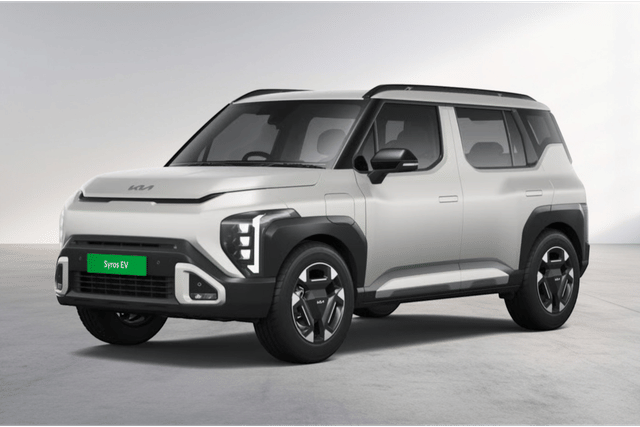
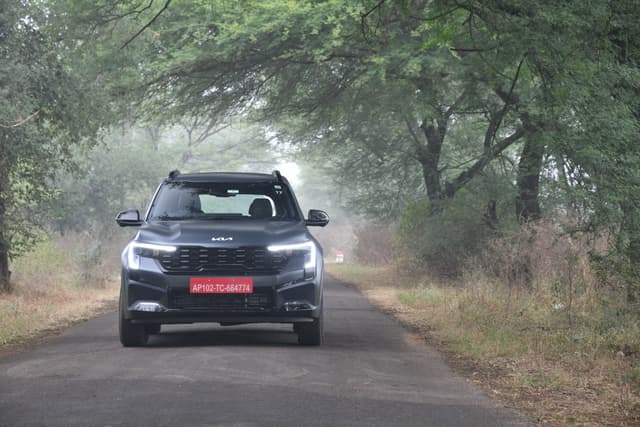
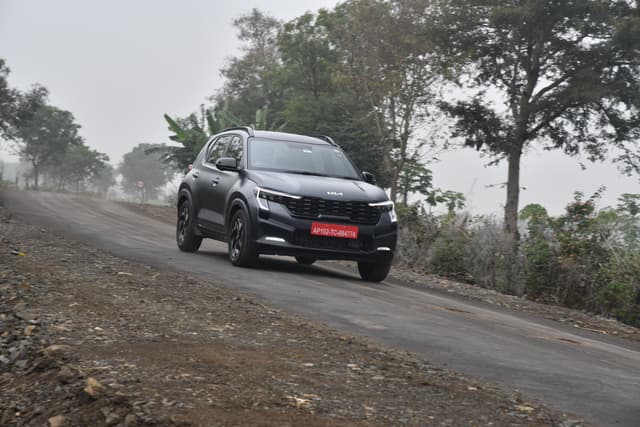
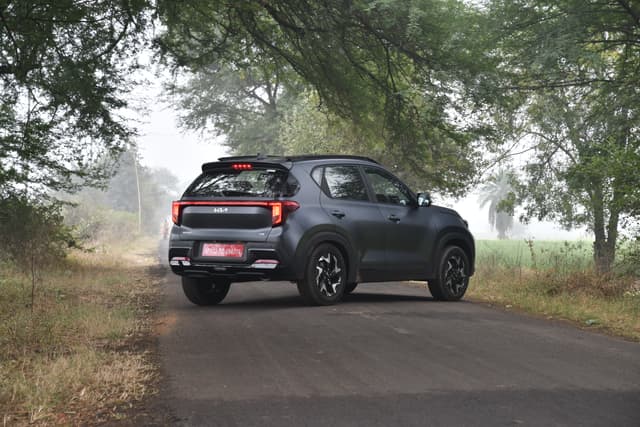
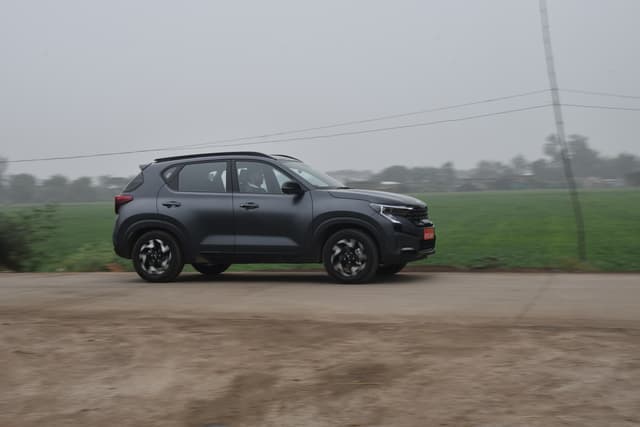
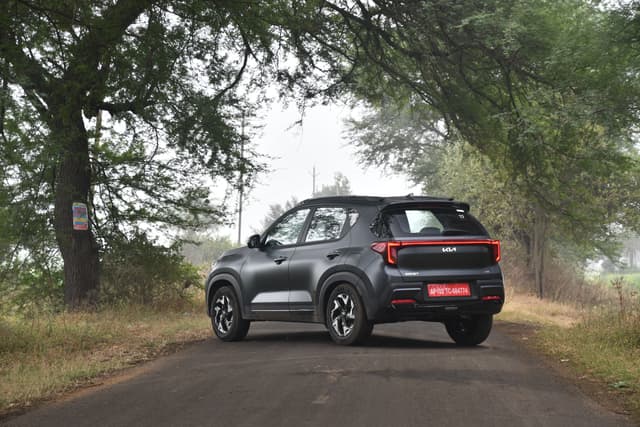
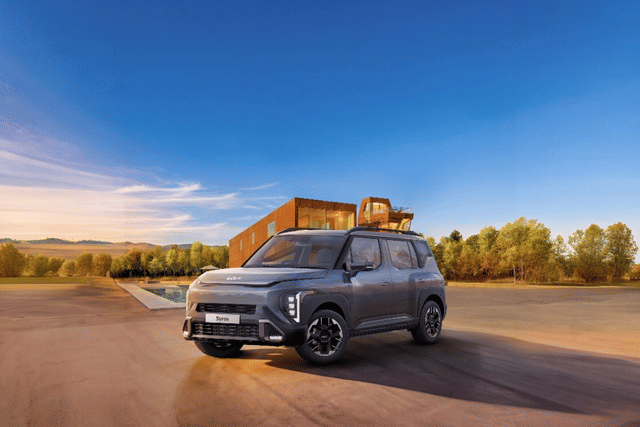
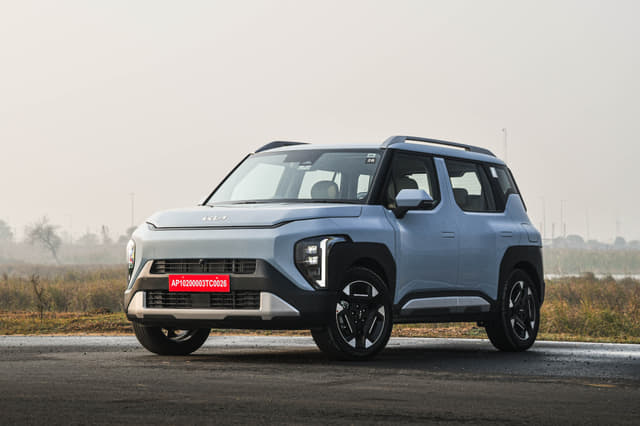
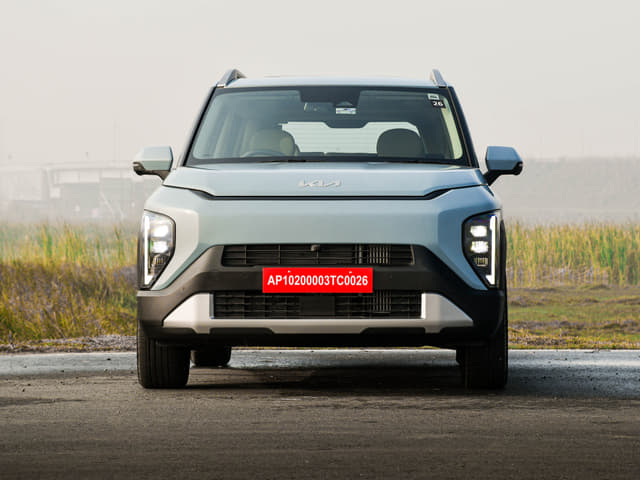
Unfortunately, there are no strong-hybrids available within Rs 15 lakhs. Since you're usage is significant, and you're chauffeur-driven usually, we'll recommend you consider the entry-level diesel-manual variants of the Kia Seltos and Tata Sierra. Both of which will deliver impressive fuel efficiency, have comfy back seats and have secured a 5-star BNCAP crash safety rating. The entry-level variants of both these cars are equipped with ample safety kit, as well as the basics that you'd expect in a car of this price.If you want something a bit smaller, you can consider the Kia Syros diesel-manual too, which is surprisingly spacious for its size, and being a segment lower, you'll get more equipment too. What's more, the Syros' rear seats can recline to a very comfortable angle, and even slide back to free up more legroom. Even the Syros has scored 5 stars for its crash safety.
I am currently using a 2024 VW Virtus 1.5 GT (electric seats variant) and have completed 16,000 km. My current monthly running is around 1,000 km, mostly in the city. Should I continue with this car or switch to an EV? My Virtus has an online resale value of around Rs. 14 lakh, and I do not want to spend more than Rs. 3-4 lakh over its resale value. Please suggest whether I should buy an EV within this budget or continue with the Virtus.
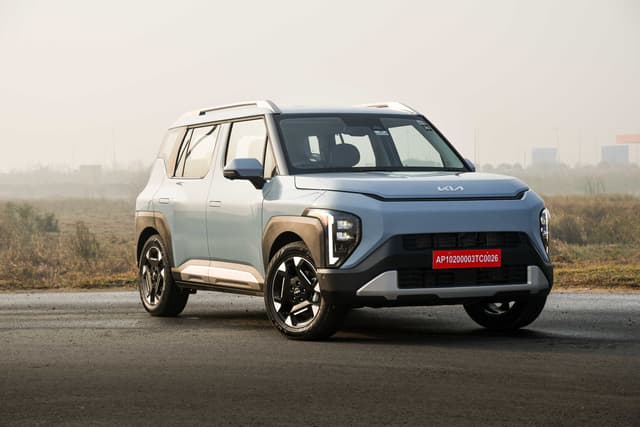
If you enjoy driving, we'd recommend you stick with your Volkswagen Virtus 1.5 GT. At 16,000km and a 1,000km/month usage pattern, mostly in the city, the car is still relatively new and well within its prime ownership window. The 1.5 TSI is a strong, efficient engine and the Virtus is a genuinely enjoyable car to drive, especially in urban conditions where its size and performance are well suited. Your budget of Rs 14 lakh resale plus Rs 3-4 lakh extra puts you in the Rs 17-18 lakh range, which limits your electric car options to models like the Tata Nexon EV, Mahindra XUV 3XO EV, MG Windsor and Kia Syros EV. While these are competent cars, they will not feel like a meaningful upgrade over the Virtus in terms of overall ownership experience. The financial case for switching to an EV at this stage is also weak given the depreciation hit you would take on a nearly new car. Unless you have a strong desire to go electric, it makes more sense to continue with the Virtus for a few more years and revisit the EV decision when your usage pattern or the EV market justifies it.
Hello Autocar Team, I am from Pune, and my father owns a 2021 Kia Sonet HTX 1.0 iMT. Our annual running is between 5,500 and 6,000 km, and most of our usage is in the city. Due to concerns about E20 compatibility and a significant drop in fuel efficiency, he is considering selling the Sonet and buying a Maruti Suzuki Baleno AGS (Zeta or Alpha). He also wants the convenience of an automatic transmission. His budget is Rs. 10 lakh on-road. Considering our usage pattern and fuel efficiency concerns, would buying the Baleno be a practical decision, or should he continue with the Sonet?
If your 2021 Kia Sonet 1.0 iMT is serving you well without any issues, we'd suggest you retain it. On the E20 issue, ethanol blends can reduce fuel economy slightly, but the drop is not likely to be significant enough to justify selling a good car. Keep in mind that you will lose a fair chunk of money as far as residual value goes, which won't justify the additional outlay your next new car will command.The bigger question is whether the Baleno AGS is the right upgrade. At under Rs 10 lakh on-road, you are looking at the Zeta AGS, which is a well-equipped car. This Maruti Suzuki car is comfortable, reliable and very easy to drive in the city. The AGS gearbox is an automated manual, which will be more convenient than the iMT. And the Baleno's 1.2 NA petrol will certainly be more efficient than the Sonet's 1.0 Turbo. That said, as far as quality and performance go, the Baleno will feel like a step backwards compared to your outgoing Sonet.If your father is looking for a smoother city driving experience and better fuel efficiency, the Baleno AGS is a good choice. If the Sonet is otherwise running well, there is no urgent need to sell it purely because of E20 concerns.
I commute nearly 90 km a day for work. I previously drove a 10-year-old Honda Jazz petrol and wanted to switch to an EV, but I live in a gated society where the committee doesn't permit residents to install a personal charger - I'd have to rely entirely on the common charger they provide. That dependency made me uncomfortable running an EV as my only car, so I bought a pre-owned 2024 Kia Carens diesel instead. I now plan to run two cars: the EV for my daily 90 km commute, and the Carens diesel for long drives and highway trips. My budget for the EV is under Rs. 15 lakhs, and I'd be charging only on the shared society charger. Which options would you recommend?
Given your 90km daily commute and the fact that you will be relying entirely on a shared society charger, the key is to choose an electric car with a strong real-world range and fast enough charging speeds. The Tata Punch EV is the most sensible recommendation here. This Tata car should give you a real-world range of around 250km, which gives you plenty of buffer for your daily commute even if you cannot charge every single day. Tata’s EV ecosystem is well established, and the Punch EV is a proven product with good service reach and a robust ownership track record. The Tata Nexon EV is another strong option. It is larger and more spacious, and with a larger battery, you could get more out of a single charge. However, since you have a Carens diesel for big-car duties, the smaller Punch EV makes for a far better city car. Plus, while you will only get a low-spec variant of the Nexon EV in your budget, you will get a fully loaded variant with all the bells and whistles. Both Tata EVs charge at up to 7.2kW on an AC charger and 60kW on a DC fast charger, which is decent when you have to use a common charger.
I commute nearly 90 km a day for work. I previously drove a 10-year-old Honda Jazz petrol and wanted to switch to an EV, but I live in a gated society where the committee doesn't permit residents to install a personal charger. I would have to rely entirely on the common charger they provided that made me uncomfortable running an EV as my only car, so I bought a pre-owned 2024 Kia Carens diesel instead. I now plan to keep two cars: an EV for my daily 90 km commute, and Carens diesel for long drives and highway trips. My budget for the EV is under Rs. 15 lakhs, and I would be charging only on shared society charger. Which options would you recommend?
Given your 90 km daily commute and the fact that you already have a Carens diesel for long trips, an electric car makes a lot of sense as your primary city car. The key consideration here is your charging situation which is relying solely on a shared society charger. That means you need an EV with good efficiency and a battery size that gives you enough buffer so you are not constantly worrying about range.The Tata Nexon EV is the most sensible recommendation here. It is well priced, efficient and has a battery size that is well suited to your daily commute. The car itself is compact and easy to drive in the city, but still feels substantial enough for occasional highway use. Most importantly, it has enough range to allow you the flexibility of charging it every other day in case your society's common charger is occupied. Get into the practise of topping up your battery whenever the common charger is free so you are always topped up and ready to go.
Last Updated on: 31 Jul 2026