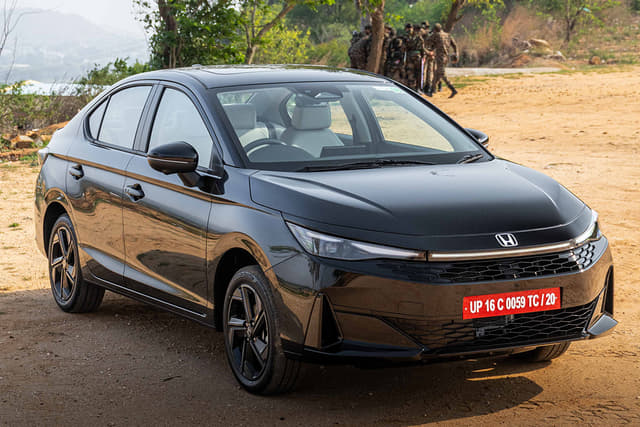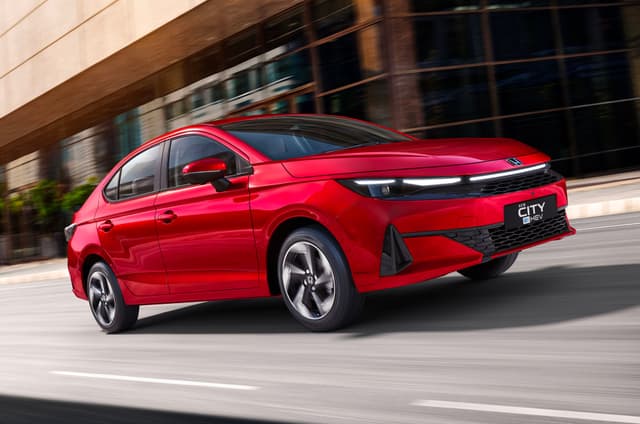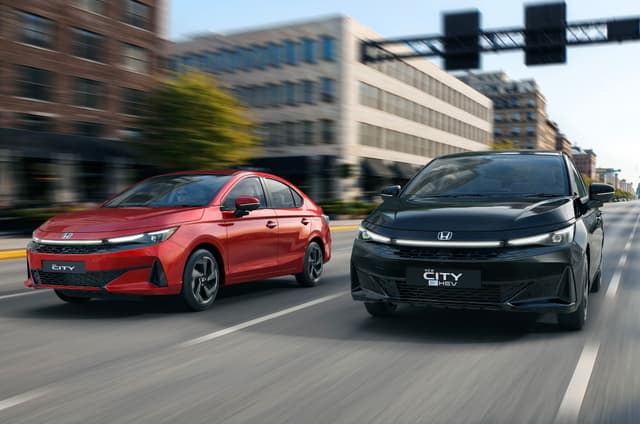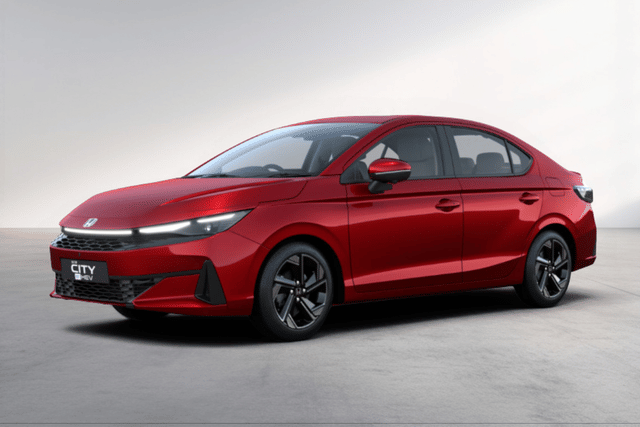

Honda cars in India (7)
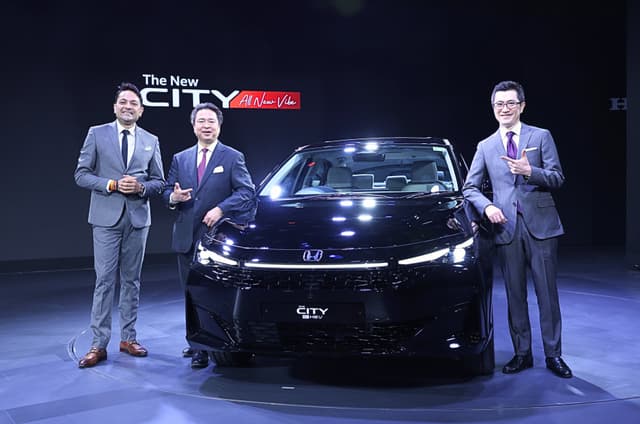
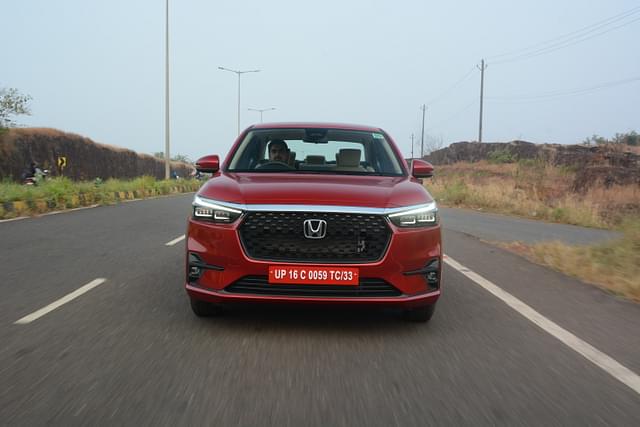
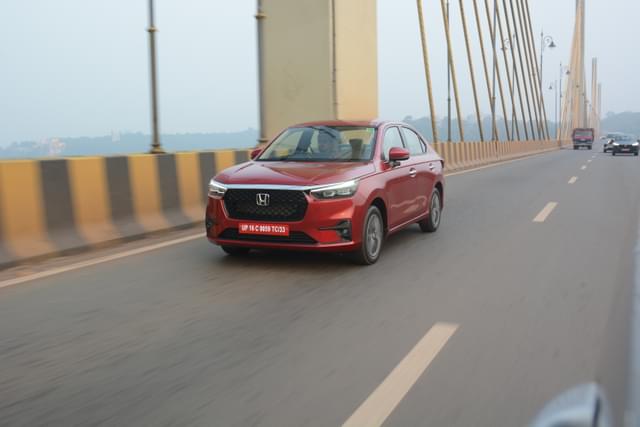
Honda Cars India Ltd. (HCIL) is a subsidiary of Honda Motor Co. Ltd, a Japanese automobile company. The brand has been present in the Indian market since the mid-1990s, when it set up a manufacturing facility in Greater Noida, Uttar Pradesh. Its first model for India was the Honda City, which remains one of its most popular cars even today. Over the years, Honda introduced a range of models across segments, including the Accord, CR-V, Brio, BR-V, and Mobilio, many of which have now been discontinued.
Honda Latest Update
Here are the latest updates related to the Honda cars in India, as of June current_year}}:
- May 15, 2026: The brand has unveiled a new hybrid sedan prototype, featuring an updated hybrid system that aims to improve fuel efficiency by more than 10 percent over the previous setup.
- May 14, 2026: Honda has announced plans to introduce new compact and midsize SUVs for India, with launches set to begin from 2028
- January 14, 2026: Honda increases Elevate prices by up to Rs 60,000.
- January 13, 2026: Honda to introduce a new logo from 2027 for its future models
Find cars by body type
FAQs
As of now there are 3 Honda cars available for sale in India. The Honda car price starts at 7.51 lakh and goes up to 20.00 lakh (ex-showroom), depending on the model and variant selected.
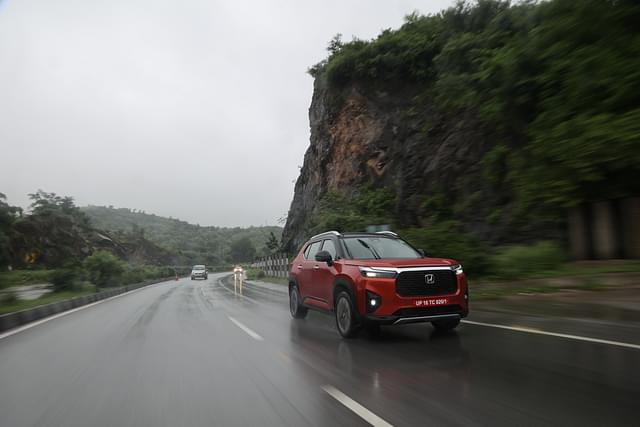
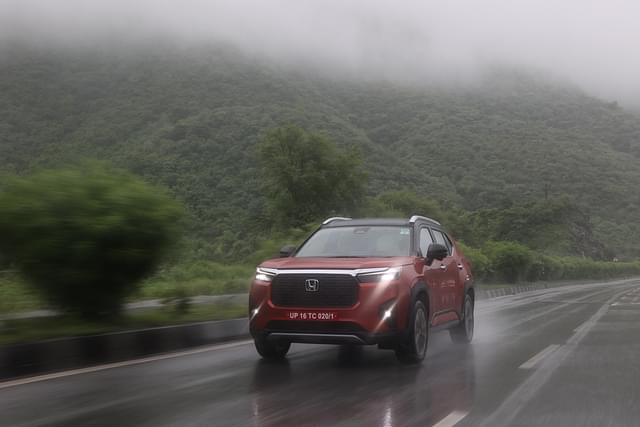
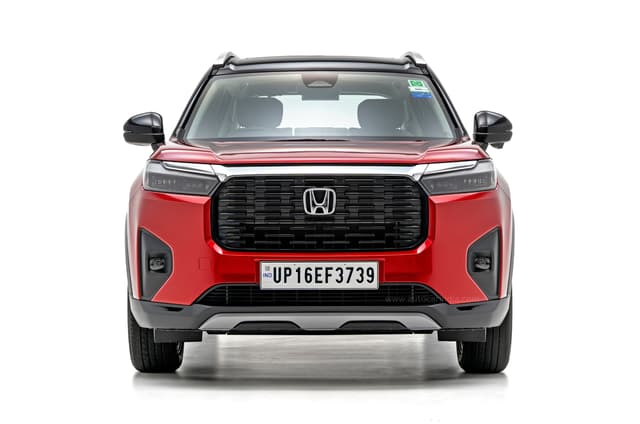
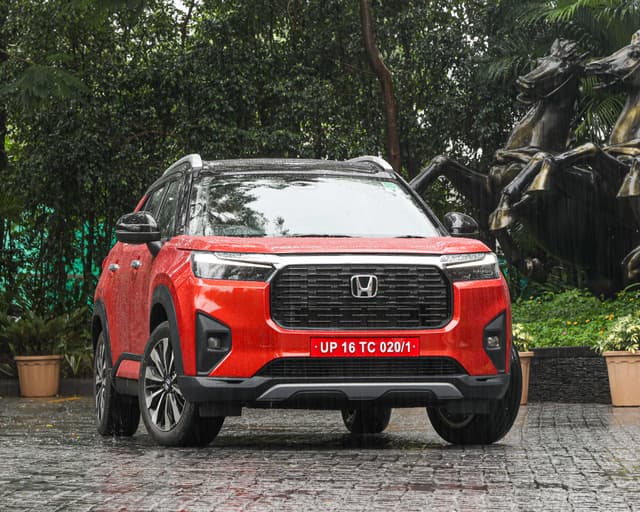
Honda currently sells one SUV in India, the Honda Elevate. Its ex-showroom price starts at ₹11.68 lakh.
Honda offers two sedans in India: Amaze and City. The Amaze is priced between ₹7.51 lakh and ₹10.00 lakh. Meanwhile, the Honda City price starts at ₹12.00 lakh and goes up to ₹20.00 lakh (ex-showroom).
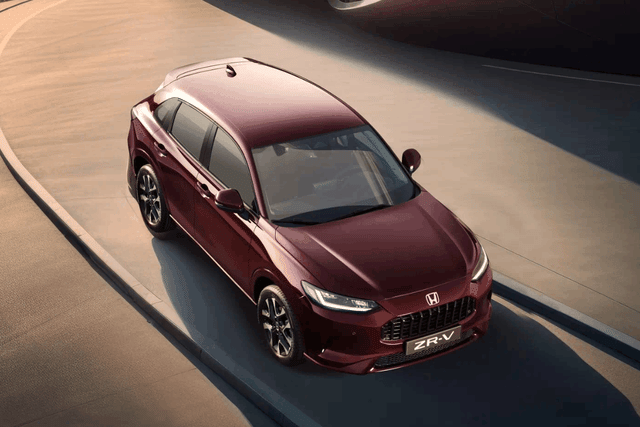
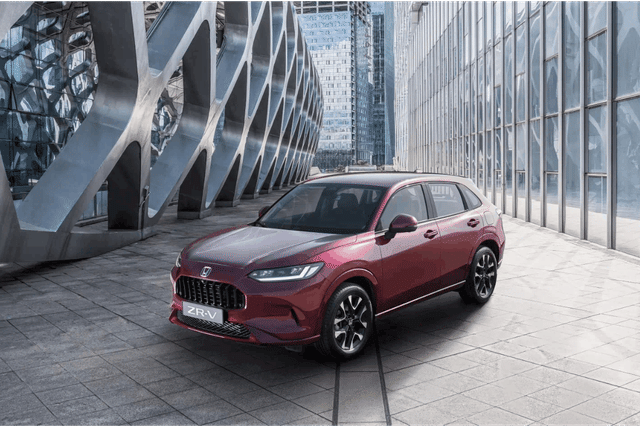
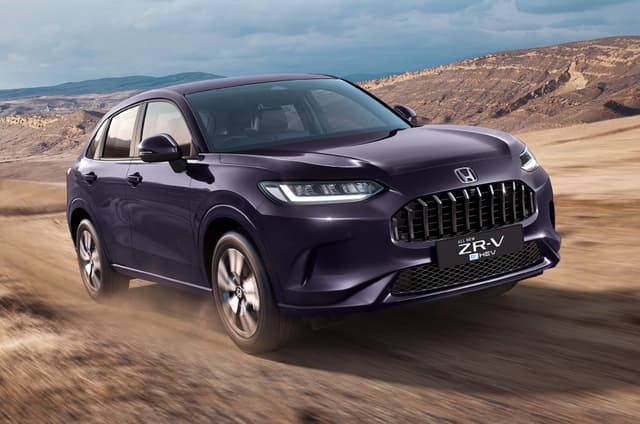
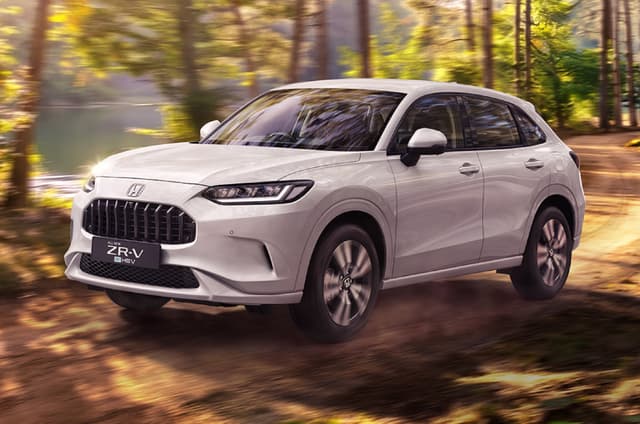
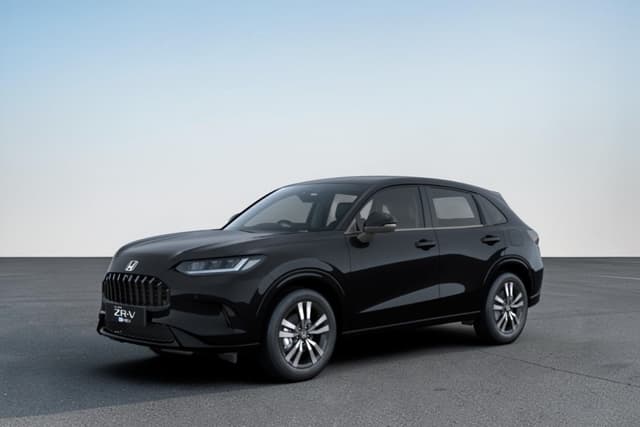
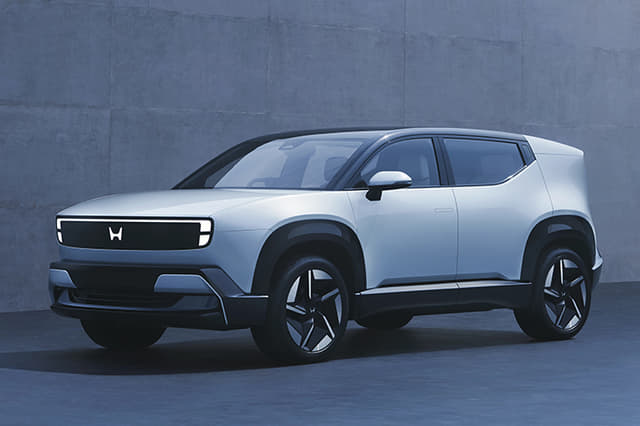
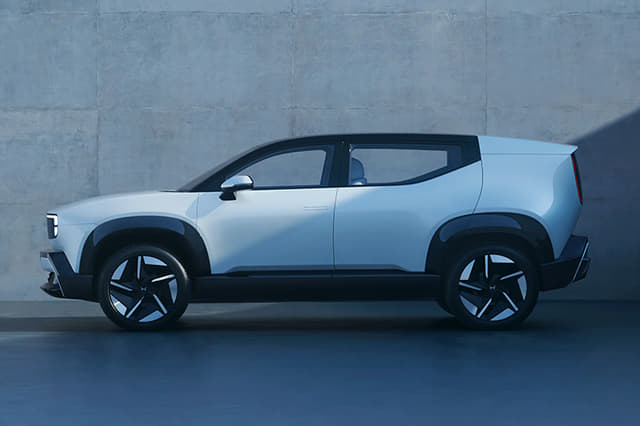
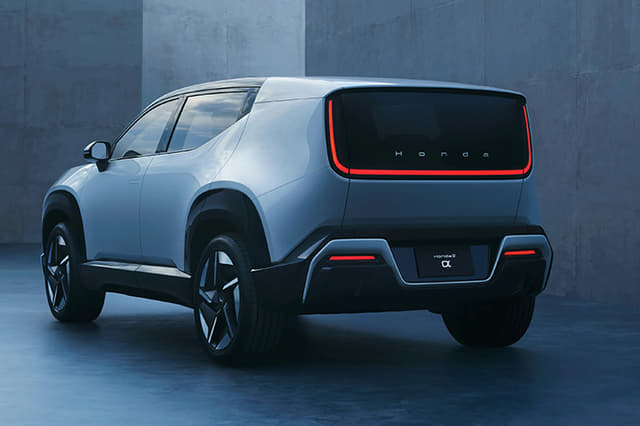
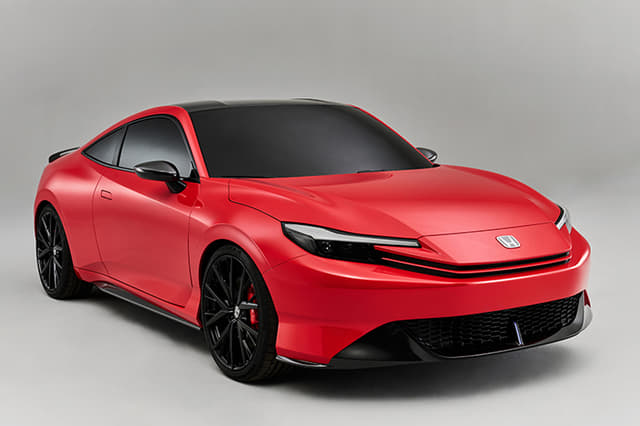
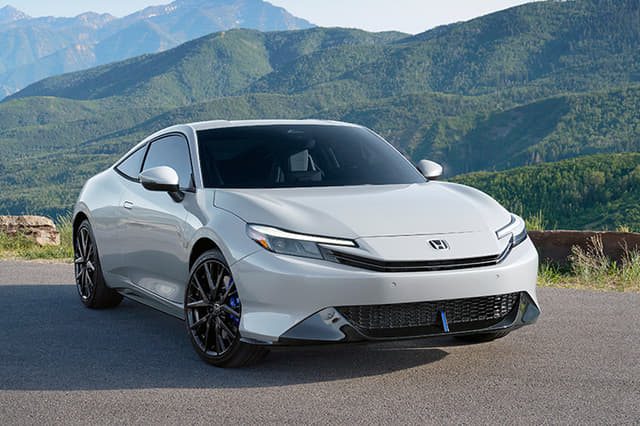
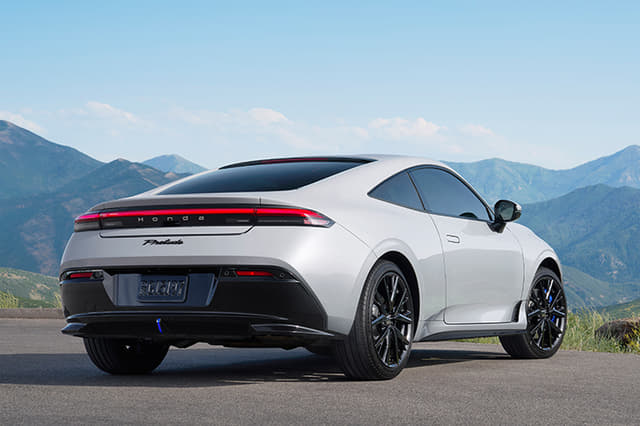
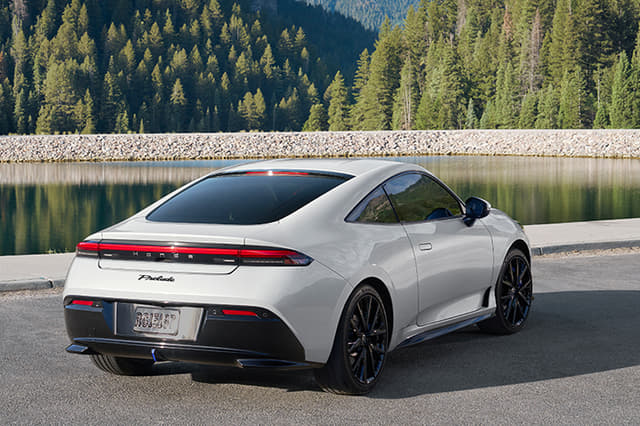
Yes. There are 4 new Honda cars scheduled to launch in India. The list includes: Honda City facelift, Honda Elevate facelift, Honda Prelude, and Honda ZR-V. All are expected to launch in 2026. The brand has also unveiled 0 Alpha concept.
Trending Questions on Honda Cars - Answered by Autocar Experts
Prior to my Innova HyCross, I was driving a Honda CR-V for a very long time. I am thinking of buying the Honda ZR-V, but I am unsure about the product and pricing. Any suggestions from Team Autocar?
If you enjoyed owning the Honda CR-V, the Honda ZR-V will feel like a natural successor. It carries forward the same Honda traits of refinement, comfort and effortless drivability, while adding a modern 2.0-litre strong-hybrid powertrain producing 184hp and 315Nm, paired with an e-CVT.The only caveat is the price. At an expected Rs 40-50 lakh (ex-showroom), the ZR-V comes to India as a full import (CBU), which will make it considerably more expensive than similarly sized SUVs. That's where we feel the value proposition becomes difficult to justify.If you're happy with your Innova HyCross, the ZR-V won't necessarily feel like an upgrade in terms of space or practicality. The HyCross offers a roomier cabin and will arguably be the more versatile family car. The ZR-V is aimed more at buyers who want a premium five-seat crossover with excellent refinement and hybrid efficiency rather than maximum practicality.
My annual running is below 7,000 km, and I plan to keep my next car for 12-15 years. I am confused between Grand Vitara, Hyryder, Elevate, Creta, Seltos and Victoris. My priorities are reliability, a good balance of power and fuel efficiency, family comfort, low maintenance and long-term ownership. I am also concerned about India's future ethanol-blending policy (E20 and higher blends). Which of these would be the best long-term choice and why?
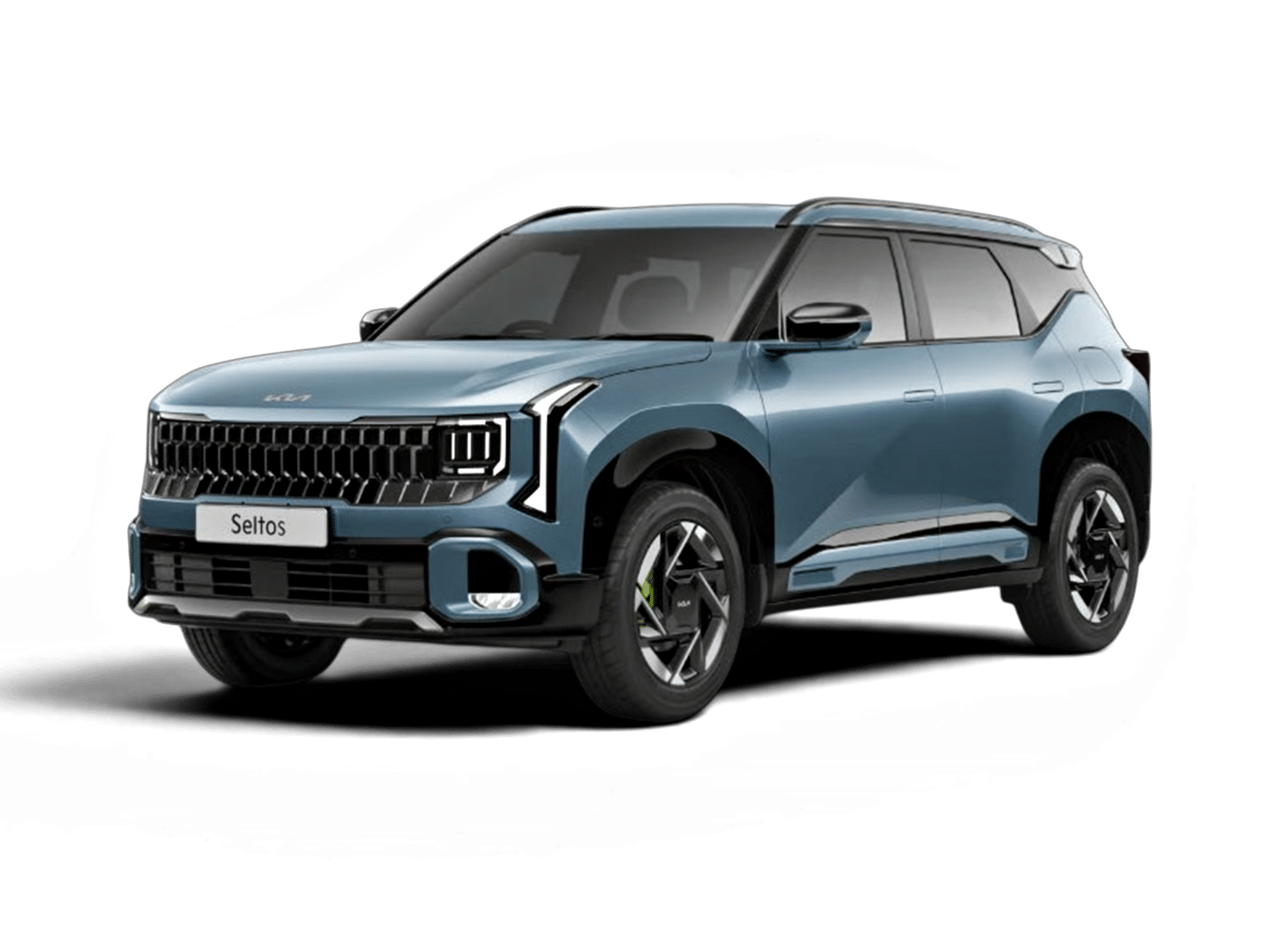
With an annual running of less than 7,000km, fuel efficiency should not be the deciding factor. Instead, you should focus on comfort, reliability, ownership experience and how well the car will age over the next 12-15 years. That's why we wouldn't prioritise the Grand Vitara, Hyryder or Victoris Hybrid. Their hybrid systems command a price premium that you'll struggle to recover with such low annual usage.Between the remaining options, the Kia Seltos strikes the best balance. It offers a refined and proven naturally aspirated petrol engine, a smooth IVT automatic, a spacious and premium cabin, excellent comfort and a strong ownership experience. It also feels newer and more upmarket than the Elevate, while the Creta is due for a generational update sooner.The Honda Elevate deserves a mention for its simplicity and reliability. If absolute mechanical simplicity is your priority, it is arguably the safest long-term bet. However, it doesn't feel as premium as the Seltos. The engine and CVT combination isn't quite as refined, and Honda's dealer network is smaller.As for ethanol blending, we wouldn't let it influence your purchase decision. While there is plenty of discussion around E25, E27 and E30 fuels, there is currently no confirmed roadmap for such a transition. More importantly, all of these cars are E20-compliant, and manufacturers have engineered a degree of tolerance beyond that. The most likely effect of higher ethanol blends would be a small reduction in fuel efficiency and slightly accelerated wear of certain fuel-system components over a very long period, not a major reliability issue.
Which electric car should I buy under Rs. 17 lakh for a daily commute of 50-80 km: the Tata Nexon EV Fearless 45, Maruti Suzuki e Vitara base model, MG Windsor EV, Tata Punch EV, or any other better 5-seater EV option?
The MG Windsor EV would be our recommendation here. Coming from a Honda City diesel, you're likely looking for a comfortable, spacious and practical family car. Among the EVs you've shortlisted, the Windsor feels like the most complete package. It offers the roomiest cabin, excellent rear-seat comfort and enough space for five adults to travel comfortably. It also feels like a genuine upgrade from a sedan in terms of practicality and everyday usability.The Nexon EV 45 would be our second choice. It is a proven product, offers good performance and range, and is a sensible option if you prefer a more compact SUV. However, it cannot match the Windsor for rear-seat space and overall family-car appeal.The Maruti Suzuki e Vitara is worth considering, but it does have some notable shortcomings. The rear-seat headroom and boot space are limited, the seating position is slightly knees-up, the ride can feel busy and there is more road and tyre noise than we'd like. Given how late it is to the EV market, we expected Maruti to address some of these areas more effectively.The Punch EV continues to offer excellent value, but it is a segment smaller than the others and may not feel like a significant upgrade from your Honda City in terms of space and overall comfort.
Which would be the best and most value-for-money choice for me among the Honda Elevate, Hyundai Creta, and Kia Seltos, considering the top-spec petrol variants with ADAS? My daily running is very low, with only occasional trips of around 400 km. There is no Honda dealership in my city, although Hyundai and Kia showrooms are available. The Honda Elevate appears to offer the best value for money, especially with the current discounts and offers that make it even more affordable. However, I am concerned that the upcoming facelift could negatively affect its resale value.
The Kia Seltos IVT would be our recommendation. While the Honda Elevate undoubtedly offers the best value for money at current prices, there are two factors working against it in your case. First, you don't have a Honda showroom in your city, which could make routine servicing and warranty-related work less convenient. Second, the Elevate facelift is expected in the not-too-distant future, which could impact resale values of the current model.Between the Seltos and Creta, we'd pick the Seltos. It feels a little more premium inside, has a richer feature set and remains one of the best-looking SUVs in the segment. It is also newer than the Creta and therefore likely to remain fresh for longer. The naturally aspirated petrol engine paired with the IVT automatic is smooth, refined and perfectly suited to your low daily running and occasional 400km trips.
Hello Autocar, Can you please advise on the following options? Buying my first car, daily city commute 25 kms, weekends 100, once in 6 months highway 300kms. Toyota Taisor AMT S variant Honda Amaze CVT VX Kia Sonet DCT HTX(O) Regards Deb
Pick the Honda Amaze CVT VX. It’s the smoothest in stop-go traffic, which is where you’ll spend most of your 25 km daily, and its easy, linear responses make a first car feel friendly from day one. It’s compact to park yet has a big boot for your weekend runs, and the ride is comfy enough to shrug off bad patches. For the rare 300 km highway trip, it cruises calmly, though you’ll need a firmer press for quick overtakes.The Kia Sonet DCT HTX(O) is the fun one and sits taller, but that twin-clutch setup can feel a little jerky in crawling traffic and tends to drink more fuel in the city. The Toyota Taisor AMT S gives you a higher seat and light controls, but the AMT’s shifts are slow and can get in jams, and the S trim feels bare for the money.Only honest catch with the Amaze: it isn’t tall like the SUVs, and it won’t feel as quick as the Sonet on the highway. For your usage mix and as a first car, the Honda still makes the most sense.
My monthly drive averages 1400 km, and I have had an i10 car since March 2020. My height is 5 ft 11 inches, my back pain problem. Please advise on a 16 lac budget for a new car.
Buy the Honda Elevate, since you have back trouble, seat comfort would be a high priority, and in this regard, the Elevate does well. The seats set a benchmark for comfort and have a finely judged foam density, which is not too hard and not too soft, so they should provide your back with good support. Under-thigh support is also generous. However, we would recommend you sit in it and test drive it yourself to make sure it suits your body type. Within your budget, you would get the mid-range automatic version, and we would recommend you opt for an automatic as it would reduce your left leg strain in traffic, which would also help alleviate some of the back pain. Ride quality is also good; it is on the firmer side, but the long travel suspension with well-judged damping means it can soak up bumps and potholes well without jarring you too much. If you would like to stick to something small, you could consider the Tata Punch. The entry and exit height is just right, the ride is well-damped and comfortable, and the seats are well cushioned and supportive enough. The top-end version would also come in well under your budget, and you would enjoy some top-end features too.
Hi, I am currently using a Ford Figo 1.2 petrol, 2019. I love the car, but I am looking to upgrade as Ford has left India, and I may have issues selling it after a couple of years. Q1. Should I go ahead and sell the car, or can I keep it for a couple of years? Q2. The car has been driven around 65k, and I have been offered 2.75 lakhs. I think it's a good value, thoughts? Right now, my running in the city is approx 500-600 kms per month. I mostly use a car for my office commute, and I don’t have a bike as of now. And yearly, out of the city running of around 2000 kms per year. Please, my city running may increase in future if I change my house location or office. I am very much confused about EV and petrol cars. In EVs, I was considering the Nexon EV. In petrol I was considering, Honda Elevate, VW Taigun 2025 (1.0 and 1.5), as I am getting some deals on them, Skoda Kylaq ( budget option with the same engine). As I am coming in a Ford Figo, I am looking for something which feels great to drive. Please suggest the correct car option. Reiterating question- Q1. Should I go ahead and sell the Ford Figo, or can I keep it for a couple of years? Q2. Ford Figo has been driven around 65k, and I have been offered 2.75 lakhs. I think it's a good value, thoughts? Q3. Will EV be the correct option for me? ( looking at my running) Q4. Or should I go ahead with petrol cars? (This E20/E30 discussion has created so much confusion) Q5. If I were to choose a petrol car, which option would be great for me? Thanks!
You don’t have to sell the Figo yet. If it’s healthy, keep it 1-2 years more; parts and service are still fine, and depreciation from here is slow. The Rs. 2.75 lakh offer is fair for a 2019 petrol at 65k km. Try direct sale or multiple portals and aim closer to Rs. 3 lakh-plus if the car is clean.Pick the VW Taigun 1.5 if you upgrade now, because it’s the only one on your list that truly feels like a step up from your Figo for daily drives and relaxed highway runs. The 1.5 is punchy, and the steering and body control make city and highway drives enjoyable. One honest catch: the automatic can feel a bit hesitant in crawl; the manual is more fun if you don’t mind a clutch. The Honda Elevate is nice, but it isn't as enjoyable as the VW/Skoda SUVs.With 500-600 km a month in the city and about 2,000km a year out of town, an EV like the Nexon EV won’t pay back quickly unless you have cheap home charging and your running shoots up.Go petrol. Don’t stress about E20/E30 - the VW-Skoda 1.0/1.5 are E20-ready, and should not pose issues if and when E30 is rolled out.
Hi Autocar team, I'm replacing my 2017 Maruti Baleno Alpha petrol and would appreciate your recommendations. Location - Currently based in Pune - BH registration planned because there is a reasonable possibility of moving to another state in the future (likely Madhya Pradesh or Bangalore or Delhi) Usage - Primarily city driving (90%+) - Occasional highway trips, sometimes very long (up to 1,000 km) - Usually 2 adults + 1 child - Must comfortably accommodate 4 adults + 1 child when required - Annual running currently under 8,000 km, but could increase significantly because there will be two drivers and an automatic car is likely to be used more Drivers - One experienced driver comfortable with any size car - Second driver is relatively new and gets intimidated by judging the front-left corner and vehicle dimensions - Features such as a rear camera have helped significantly in building confidence Budget - Initially started looking around the Rs. 10 lakh on-road mark - Comfortable spending around Rs.14-16 lakh if the improvement in safety, confidence and ownership experience is clearly noticeable - Looking for the best overall fit rather than trying to maximise budget Priorities (in order) 1. Reliability and hassle-free ownership 2. Safety 3. Easy manoeuvrability and confidence in city traffic What I dislike about my current Baleno - Feels flimsy and dents very easily - Doesn't inspire confidence on highways anymore - Braking confidence is not great Preferences - Automatic transmission is mandatory - Open to petrol, hybrid or EV - Dedicated parking is available, and home charging is possible - Mostly good roads with occasional monsoon-related road damage - I value predictable ownership, service quality and peace of mind more than outright performance Test-drive observations We have driven a few hatchbacks and compact SUVs with automatic transmissions. One thing that became clear is that a commanding seating position and a clearer view of the road ahead significantly increase confidence, especially for the newer driver. However, we are still unsure whether this benefit alone justifies moving up from a hatchback to an SUV. Long-term thinking Initially, I thought a small hatchback would be ideal because I could pass it on to my parents after 3-5 years. However, if a slightly larger vehicle provides substantially better safety, comfort and confidence, I would rather keep it for 5-10 years and buy my parents a separate car later. Question Based on the above requirements, what would be your top 5 recommendations and in what order? More importantly: - Which body style would you choose: premium hatchback, compact SUV, midsize SUV, hybrid SUV or EV? - Which popular models would you eliminate despite their popularity, and why? - How much weight should I give to reliability versus crash safety when choosing a family car that will mostly be driven in the city but occasionally undertake long highway trips? - Am I likely to regret staying with a hatchback, or is moving up a segment the more sensible long-term decision for my use case?
Given your requirements, a compact SUV would be a good next car for you. The higher seating will put the new driver at ease and will have a great bearing on confidence behind the wheel. Your priority for space, reliability and stress-free ownership leads us to the Maruti Suzuki Brezza AT and Hyundai Venue DCT. The Brezza is a no-nonsense compact SUV with good space, proven reliability and a practical interior. Your comfort and experience with Maruti's aftersales make it the one we'd recommend for you. You'll get a similar hassle-free experience with Hyundai as well. The new Venue ticks the important boxes for you, but it is pricey at the top end, in case the latest features are a must-have. The Venue's turbo-petrol engine does deliver punchier performance than the Brezza, but fuel economy isn't as good. If you want a larger SUV, there's the Honda Elevate CVT. However, the new driver in the family might not feel as comfortable driving it, given its size. If the hatchback form factor suits you, the Hyundai i20 CVT is a very likeable choice. Among EVs, the Punch EV is an option, but your running doesn't really justify going electric. You'd rather spend similar money on a larger or better-equipped petrol-automatic car.
My daily running is around 50 km, and I am looking for a 1.5-litre petrol manual sedan. Which would be the better choice among the Honda City SV, Volkswagen Virtus, and Hyundai Verna? Considering my usage pattern, which of these offers the best balance of performance, comfort, fuel efficiency, and long-term ownership experience?
Honda City SV manual suits your 50 km daily run best. Its 1.5 petrol is the smoothest here and the clutch and steering are light, so long city commutes will feel easier. In real traffic you will usually see better economy than the other two, and the rear seat space and ride comfort are still the class benchmark for family use.Volkswagen Virtus 1.5 TSI is no longer available with a manual so your choices are either the 1.5 TSI DSG or the 1.0 TSI manual. They are the fun pick if you love strong mid‑range and highway performance. For daily stop‑go, though, the turbo’s appetite will make it a bit costlier to run.Hyundai Verna 1.5 manual is very smooth and well equipped, but the Honda City still remains the better car to drive and be driven in.
Hello! I am planning to buy an automatic petrol car with a budget of up to Rs. 15 lakh. I am a new driver, and my usage will mainly be in the city, including heavy traffic conditions like those in Mumbai, along with occasional highway trips with my family of five every few months. I would like a car that is comfortable, safe, fuel-efficient, and relatively low-maintenance. Considering my requirements, which would be the best car options for me?
Consider the Honda Elevate V CVT. In Mumbai traffic, it is one of the smoothest, most stress-free automatics at this price, and the light controls make tight lanes and parking easy. It should fit within your Rs. 15 lakh on-road budget, and there are usually discounts to be had. It hasn't been crash tested in India, but the made-in-India Elevate has scored 5 stars in Japan NCAP tests. The engine also offers good performance for a naturally aspirated unit and returns decent fuel economy too.The catch is that it isn't as feature-packed as its rivals. However, being a Honda car, reliability is strong and service is generally well regarded, which is important for a first-time buyer.
Last Updated on: 27 Jun 2026