Autocar India

BYD cars in India (6)
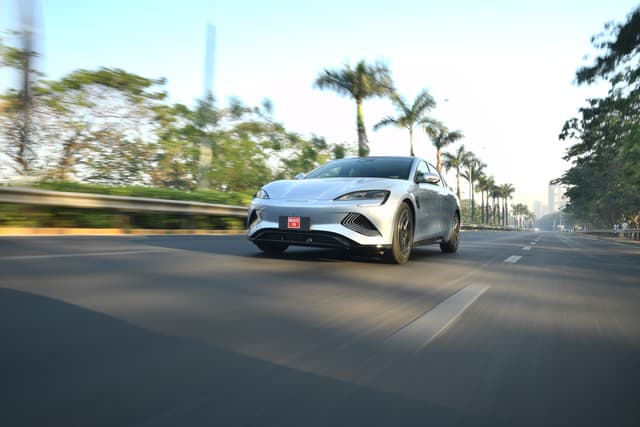
BYD stands for Build Your Dreams. The company was founded in China in 1995, initially as a rechargeable battery manufacturer. It later expanded into electronics, automobiles, renewable energy and rail transit. BYD’s automotive business has become one of the world's largest new-energy vehicle manufacturers.

BYD cars in India currently comprise four electric models: the Atto 3, eMAX 7, Seal and Sealion 7. The range spans SUVs, a sedan and a three-row MPV, with prices starting at around Rs 25 lakh and going up to Rs 55.90 lakh (ex-showroom). BYD has built its Indian portfolio around electric powertrains, with its battery technology and strong focus on EVs being among its key differentiators. 

BYD Electric Car Technology

BYD's background in battery technology has a direct influence on its electric cars. The company develops key EV components in-house, including batteries, electric motors and power electronics, as part of its vertically integrated approach to electric vehicles.

The company's Blade Battery uses lithium-iron-phosphate (LFP) chemistry and a long, blade-like cell design that allows the cells to be packaged efficiently within the battery pack. BYD also uses dedicated electric vehicle architectures across its range, integrating the battery and electric powertrain into the vehicle's structure while keeping the centre of gravity low. 

This focus on electrification is reflected across the Indian range. Every BYD passenger car currently sold in India is an EV, with the models offering different combinations of range, performance, space and price.

Are BYD Cars Safe?

None of the four BYD models currently sold in India has been tested by Bharat NCAP, so there is no India-specific crash-test rating for the Atto 3, eMAX 7, Seal or Sealion 7. The Atto 3, Seal and Sealion 7 have, however, been assessed by Euro NCAP.


BYD car

Bharat NCAP

Euro NCAP

Atto 3

Not tested

5 stars (2022)

eMAX 7

Not tested

Not assessed

Seal

Not tested

5 stars (2023)

Sealion 7

Not tested

5 stars (2025)

Safety equipment varies by model and variant. All BYD cars sold in India come with electronic stability control and a Level‑2 ADAS suite, but airbag counts range from 6 (eMAX 7) to 11 (Sealion 7), with the Atto 3 offering 7 airbags and the Seal offering 9 airbags.

Things to Consider Before Buying a BYD

  • EV-only range: All four BYD models sold in India are electric. There are no petrol or diesel alternatives, so charging access and regular driving patterns are important considerations.
  • Sales and service network: BYD has expanded its presence in India, but its network remains smaller than those of established mass-market carmakers. This can be an important consideration for buyers outside major cities.
  • Premium positioning: The Atto 3 starts at Rs 24.99 lakh, while the eMAX 7 is positioned slightly higher. The Seal starts at Rs 41.50 lakh and the Sealion 7 at Rs 41.90 lakh, placing both in a significantly higher price bracket than the two more affordable models.
  • Long-term ownership data: BYD has a shorter history as a passenger-car brand in India than established manufacturers. There is therefore less long-term data on resale values and ownership costs.

BYD Cars in India: Which One Makes Sense?

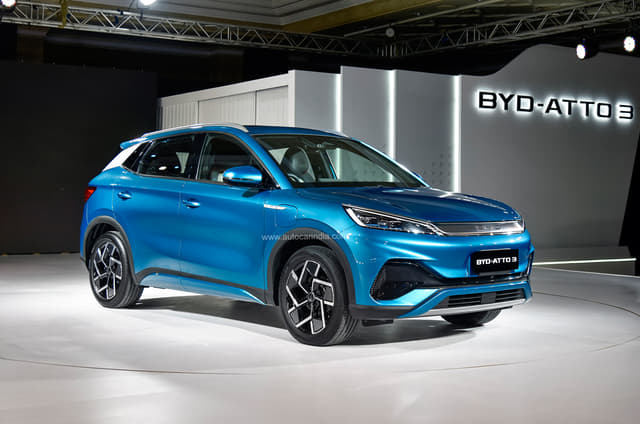
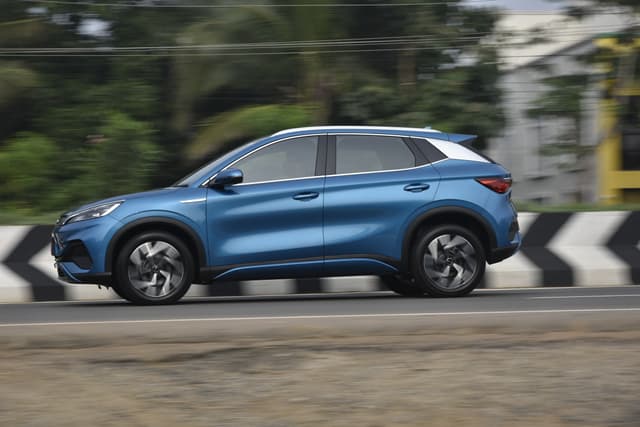
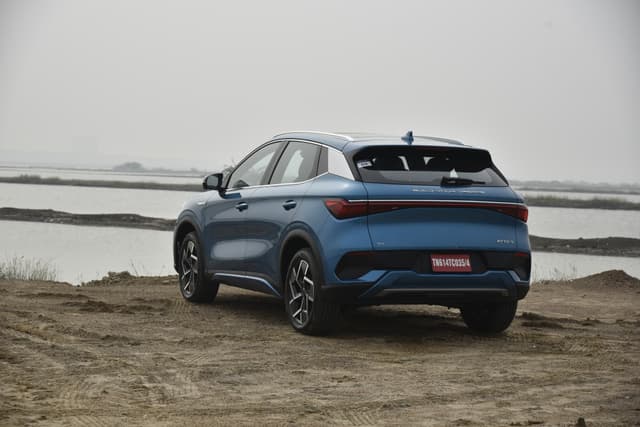
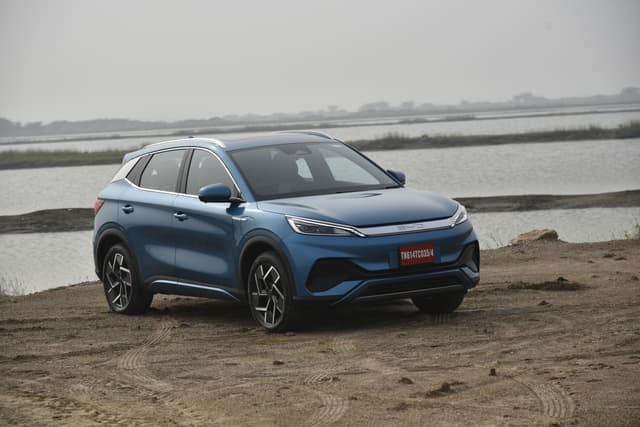
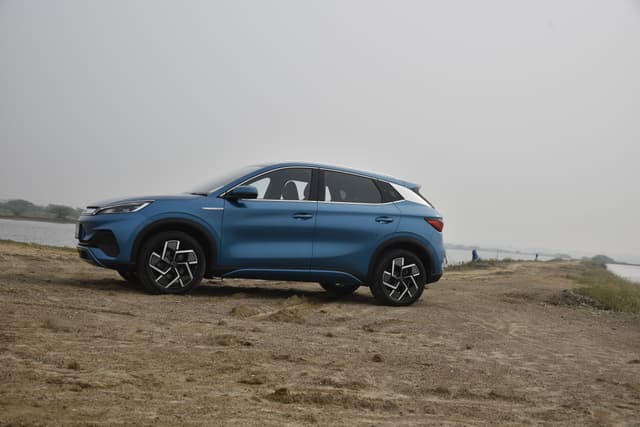
The Atto 3 is the entry point to BYD's SUV range and the most affordable way into the brand's current line-up. It is a five-seat SUV suited to buyers looking for a premium electric family car without moving to the larger Sealion 7.

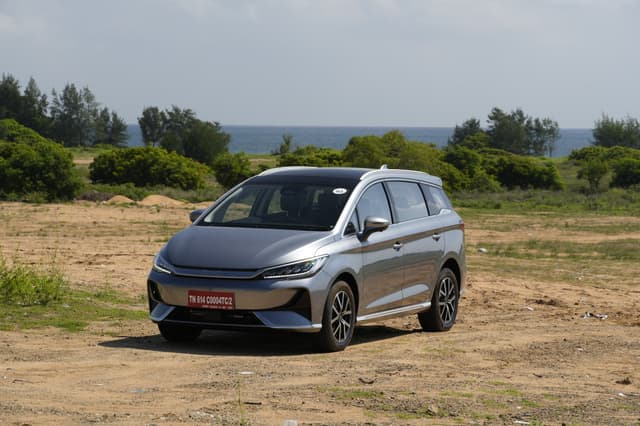
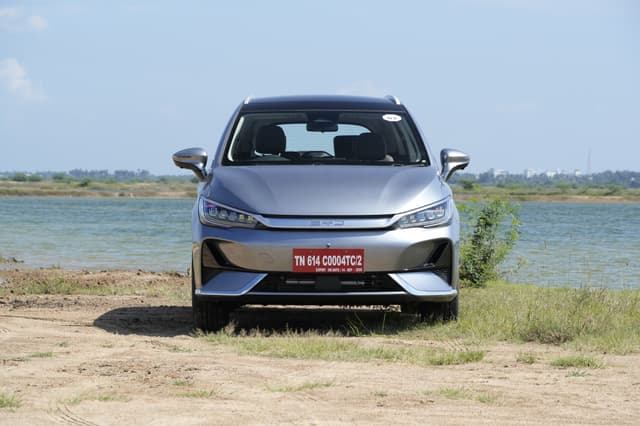
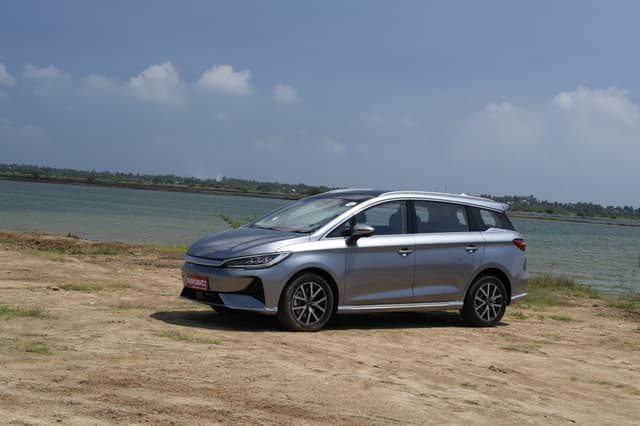
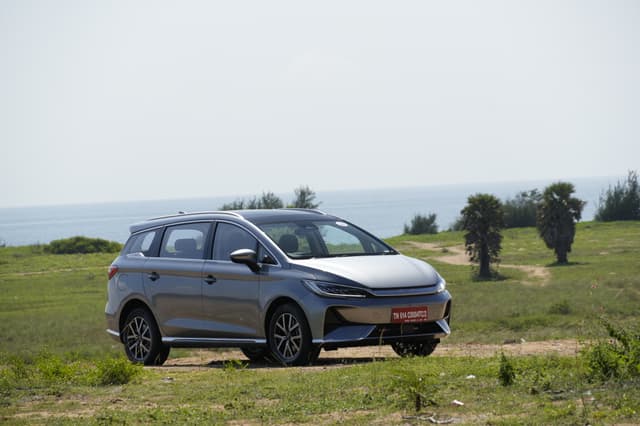
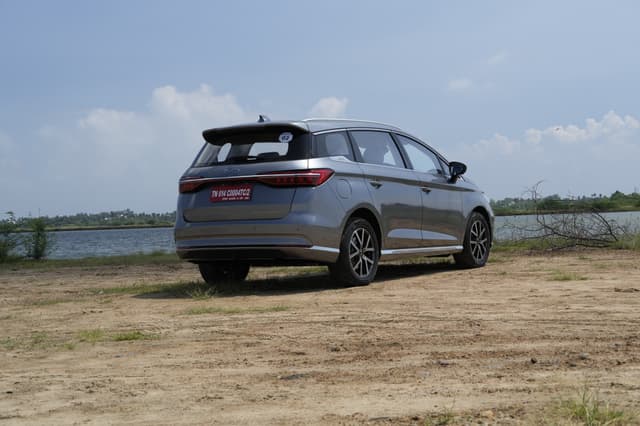
The eMAX 7 is the practical choice in the range. Its three-row layout and larger cabin make it better suited to buyers who need more seating capacity and space than the Atto 3 can offer.

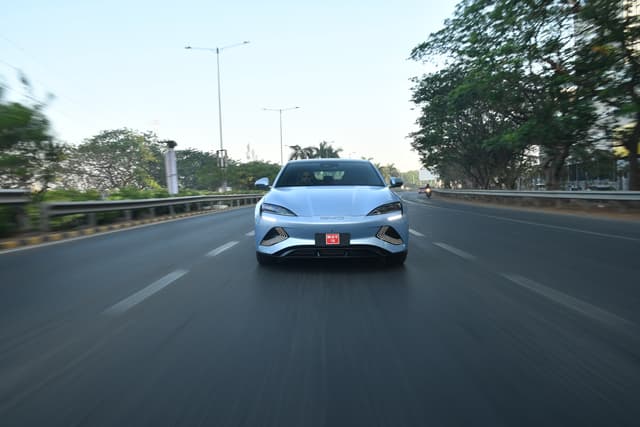
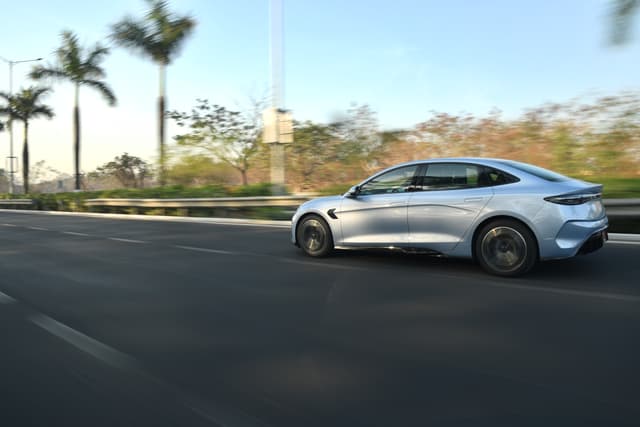
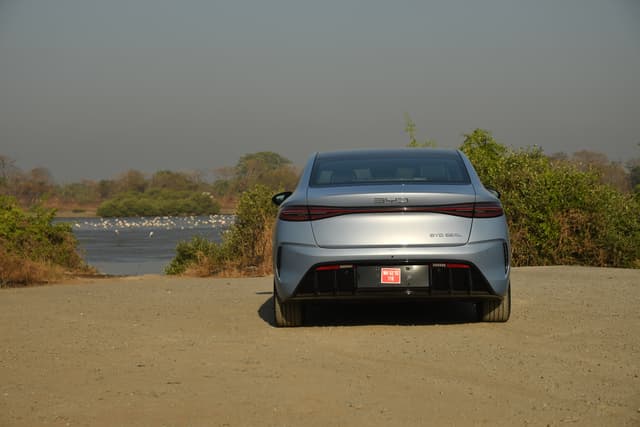
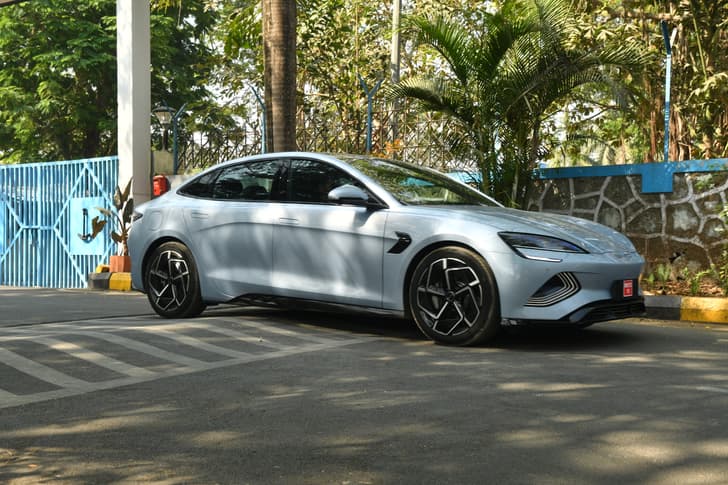
The Seal is BYD's electric sedan and sits higher in the range. Its appeal is centred more around performance and driving ability, making it the option for buyers looking for a premium electric sedan rather than an SUV or MPV.

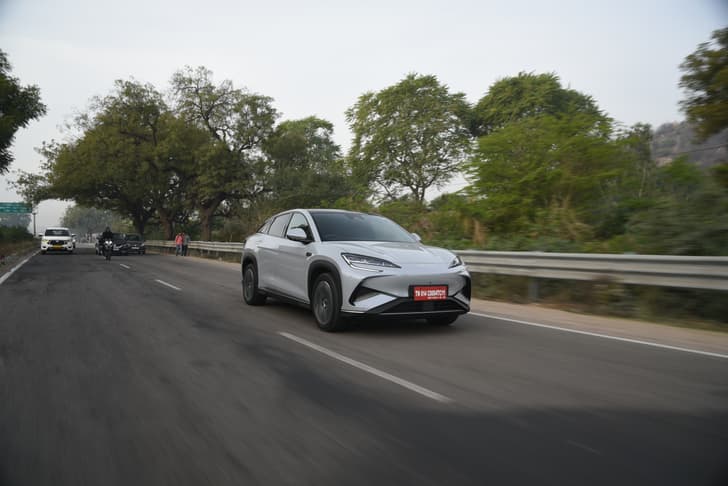
The Sealion 7 is the largest SUV in BYD's current Indian range. It combines a more spacious cabin with stronger performance, particularly in the Performance version, and is positioned as the brand's premium electric SUV.


Show more
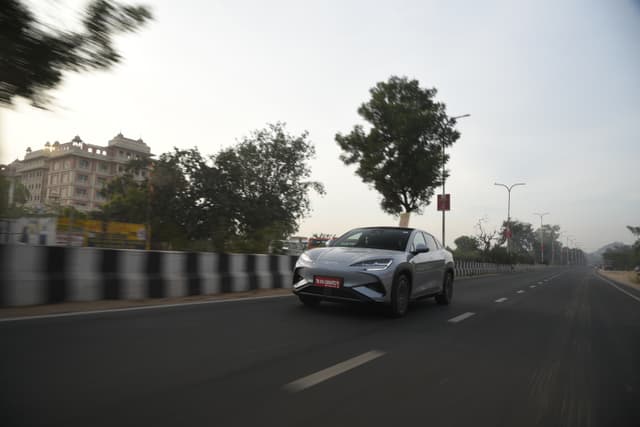
BYD Seal Front Left Three Quarter
BYD Seal Front Right Three Quarter
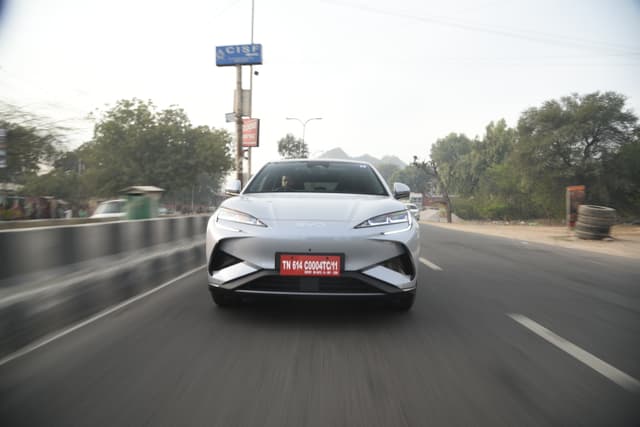
BYD Seal Front View
BYD Seal Front Right Three Quarter
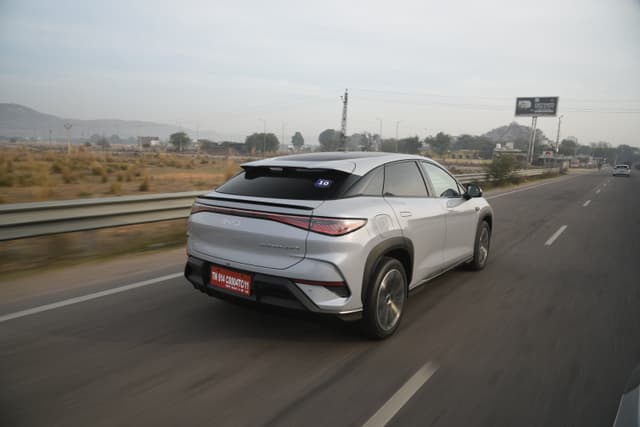
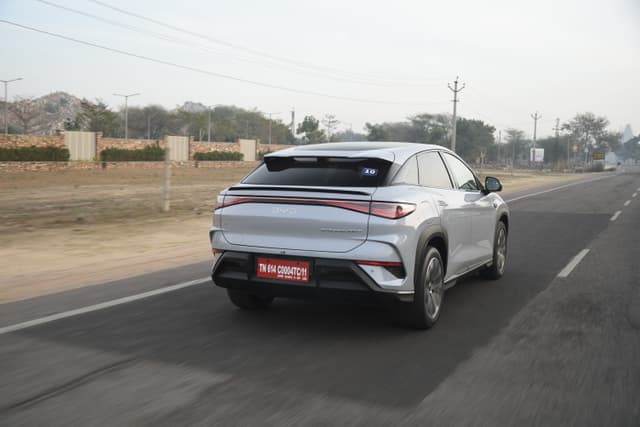
BYD Seal Rear View
9
510-650 km
Electric icon
Electric
5 seater
BYD Sealion 7 Front Right Three Quarter
BYD Sealion 7 Headlight
BYD Sealion 7 Front View
BYD Sealion 7 Rear View
8
520-567 km
Electric icon
Electric
5 seater
Upcoming
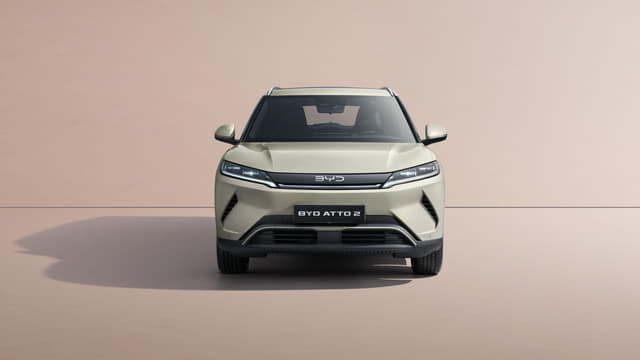
BYD Atto 2 Front View
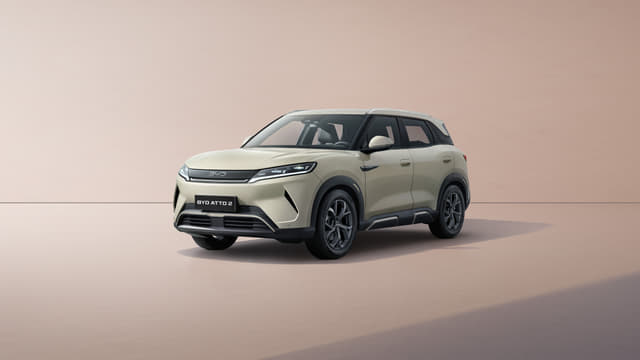
BYD Atto 2 Front Right Three Quarter
BYD Atto 2 Alloy Wheels
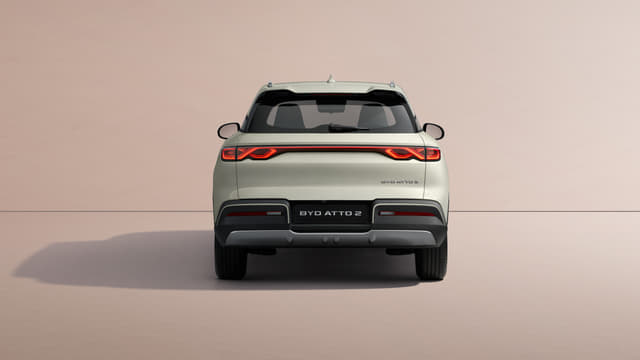
BYD Atto 2 Rear View
BYD Atto 2 Dashboard
8
2026
Exp. Launch
Electric icon
Electric
SUV
Upcoming
BYD Seal U
Late 2026
Exp. Launch
Petrol-Electric Hybrid
SUV
BYD eMax 7 Front Left Three Quarter
BYD eMax 7 Front View
BYD eMax 7 Headlight
BYD eMax 7 Front Right Three Quarter
BYD eMax 7 Rear View
7
420-530 km
Electric icon
Electric
6-7 seater
BYD Atto 3 Front Right Three Quarter
BYD Atto 3 Rear View
BYD Atto 3 Front Right Three Quarter
7
468-521 km
Electric icon
Electric
5 seater

BYD Cars - FAQs

BYD car prices in India start at around Rs 25 lakh and extend to around Rs 56 lakh (ex-showroom), placing them in the upper to premium range.

Yes, BYD offers the Seal electric sedan in India.

Yes, all BYD cars are electric at the moment. However, BYD will launch its first plug-in hybrid for India by end-2026.

All BYD EVs are powered by the company’s Blade Battery, designed for higher safety and durability.

BYD cars like the Atto 3 and eMax 7 are assembled in India via the CKD route, while more premium models like the Seal and Sealion 7 are sold as fully imported CBUs.

Need an expert opinion on your car related queries?

Trending Questions on BYD Cars - Answered by Autocar Experts

2w

How do the Maruti Suzuki e Vitara, Toyota Urban Cruiser Ebella, BYD Atto 3 and Hyundai Creta Electric compare in terms of performance and overall package?

Verified
1w

The Maruti Suzuki e Vitara, Toyota Urban Cruiser Ebella, BYD Atto 3 and Hyundai Creta Electric are all fundamentally different electric cars targeting different buyers. The Maruti e Vitara and Ebella are essentially the same car underneath, with the Ebella offering a slightly more premium interior and Toyota’s stronger brand perception; however, it is also significantly more expensive than the e Vitara.The BYD Atto 3 is a larger, more premium EV with a bigger battery and a claimed range of around 521km. It offers a more spacious cabin, a more premium interior and a more mature EV ownership experience, but it is also significantly more expensive.The Hyundai Creta Electric sits somewhere in between, offering a familiar Creta package with a 51 kWh battery. It is a well-rounded EV with a strong brand and service network, but it does not offer the same level of range or premium feel as the BYD Atto 3.If you are looking for a value-focused, efficient city EV, the e Vitara or Ebella are the better choices. If you want a more premium, spacious EV with a more mature ownership experience, the BYD Atto 3 is the better option. The Creta Electric is a good middle ground, but it does not stand out like the other two.

VehicleMaruti Suzuki e Vitara
VehicleBYD Atto 3
VehicleHyundai Creta Electric
VehicleToyota Urban Cruiser Ebella
4w

I am confused between TESLA MODEL Y L and BYD sealion 7. There is more than 10 lakh difference in pricing. Which car is best in terms of value for money, road presence, comfort and in terms of reliabilty as well.

Verified
2w

When it comes to outright value for money, the BYD Sealion 7 makes a very strong case for itself. It is substantially more affordable than the Tesla Model Y L, while offering a plush, well-equipped cabin, strong performance and a more conventional premium-SUV feel. It also has more road presence, thanks to its lower, wider stance and more dramatic styling.The Model Y L justifies some of its premium with a more spacious three-row 2+2+2 layout, so it is the better choice if you genuinely need to carry six people. Its cabin is also more seamless in the way the software, controls and features work together. Tesla’s charging ecosystem is still a big advantage too, especially for frequent long-distance travel, and the Model Y L’s 681km WLTP range gives it an edge on paper. That said, the third row will be useful mainly for children or occasional use, rather than as a full-time adult seating solution. The Sealion 7 is a five-seater, but it feels more premium in terms of cabin ambience and equipment, and its warranty cover is reassuring: BYD offers an 8-year/1.6 lakh km warranty on the high-voltage powertrain and a 6-year/1.5 lakh km comprehensive vehicle warranty. Reliability is harder to call conclusively at this stage because Tesla is still relatively new to India, while BYD has built a more established local presence. Both are mature EV makers globally, but BYD’s longer warranty and local dealer support give it a slight advantage for peace of mind.Unless you specifically need the extra seats, the Sealion 7 is the one to go for. It delivers better value, stronger road presence, more cabin comfort and enough performance without the sizeable price jump to the Model Y L.

VehicleBYD Sealion 7
VehicleTesla Model Y
2w

Six months with the Windsor EV now, and the battery-as-a-service model has actually worked out cheaper than I expected on my monthly budget.

3w

Hi, I have been using a VW Polo TDI for the last 10 years, and it has done 1,20,000 km. I am planning to exchange it for an EV and would like to know which would be a good car for my budget of Rs. 20-25 lakh. I am looking for something that offers good value for money, reliability, and hassle-free ownership. I like the VinFast VF7, BYD Atto 3, and Mahindra XEV 9S. I have shortlisted the XEV 9S because, within my budget, it seems to offer good value for money, with a 79kWh battery and 7-seat capacity. I have not considered the Tata Sierra or Tata Safari. I also feel the Creta Electric and MG Windsor have a lower range, so I have not considered them. Considering everything, including after-sales service and long-term ownership, which would be the best overall car for my budget? This is a significant investment for my family, and I plan to keep the car for at least 10 years.

Verified
3w

The BYD Atto 3 is a well-built and reliable EV with a proven track record, but it is a 5-seater and does not offer the same level of practicality, feature set or even the performance as the XEV 9S. The VinFast VF7 is an interesting option, but you can only get the entry-level variant in your budget, and while it has strong performance, as a package, it still trails behind the XEV 9S. Since you want a 7-seater, the Tata Sierra EV is ruled out considering its 5-seater layout. The Mahindra XEV 9S is the best choice in your budget and given your requirements. It offers a large battery, good range and a practical 7-seat layout, making it a sensible family EV. However, it is worth noting that the third row is best suited for children or occasional use, and the boot space is limited with all seats up. Within Rs 25 lakh, you can get the Pack One Above variant with the bigger 79kWh battery pack and a decent feature set. Given your priorities of value for money, reliability and hassle-free ownership, the Mahindra XEV 9S is the best fit if you need a 7-seater.

VehicleBYD Atto 3
VehicleMahindra XEV 9S
VehicleVinfast VF7
9w

This will be my second car. I already own a Toyota Glanza MT for city driving, and this car will mainly be used for weekend highway trips and family travel (around 4000-6000 km/year). With a budget of Rs 40-42 lakh and a plan to keep it for 10-15 years, is the Innova HyCross Hybrid ZX(O) the best overall choice, or would you recommend any other petrol, hybrid or EV in this price range?

Verified
9w

Buy the Innova HyCross Hybrid ZX (O). For weekend highways with family and a 10-15 year plan, nothing in this price range gives you the same mix of space, comfort and hassle-free ownership. It is genuinely easy to live with, seats are comfortable for long stints, the third row is usable, and with it folded, you get a huge boot for bags. Toyota’s hybrid system is smooth and proven, and among hybrid cars, Toyota’s long-term support and resale value are about as worry-free as it gets.One point to remember is that at highway speeds, the hybrid doesn’t save as much fuel as in the city, and when you floor it, the engine can sound a bit strained. Ride on the ZX(O)’s 18-inch wheels is a touch firmer too - if you value plushness over kit, the ZX on 17s rides nicer and costs less.If you want a richer drive, the Skoda Kodiaq is lovely, but it will likely stretch Rs. 40-42 lakh on-road and long-term costs are higher. Electric cars like the BYD Seal are soothing and quick, but they are 5-seat only, and highway charging still needs planning; with 4-6k km a year, you won’t save much anyway.Overall, the Toyota car remains the smart pick.

VehicleToyota Innova HyCross
VehicleSkoda Kodiaq
VehicleBYD Seal

Last Updated on: 7 Sept 2026