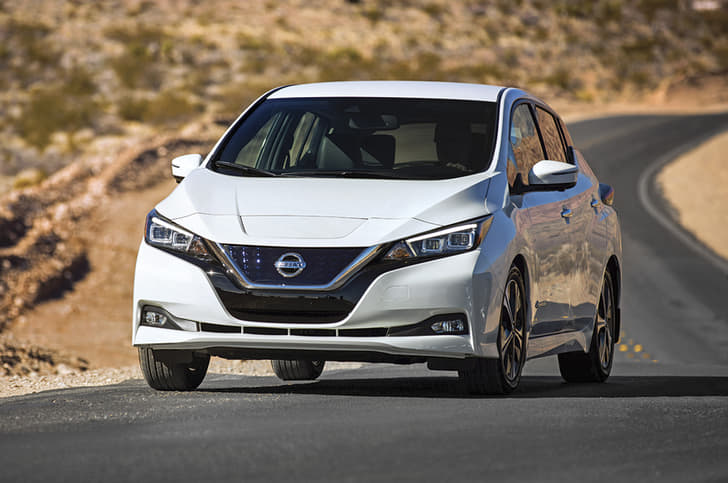
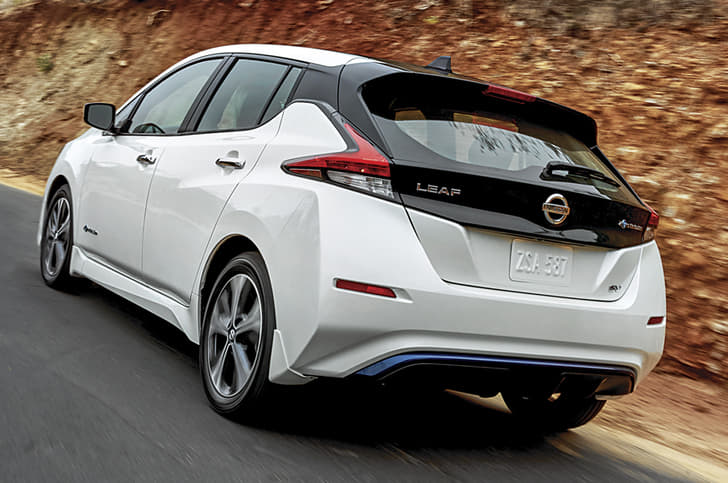
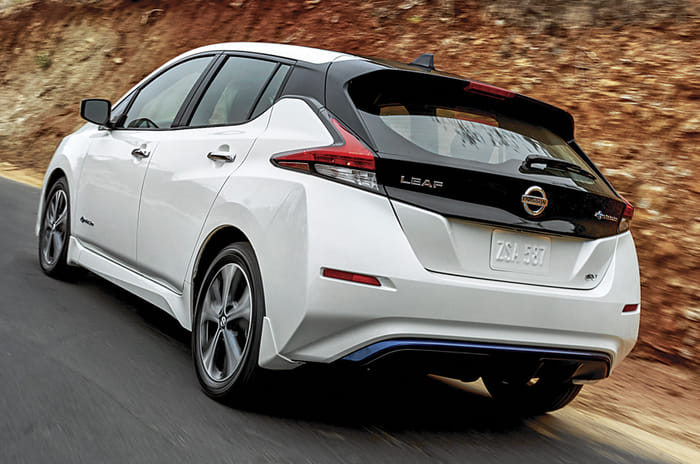
They say ‘What happens in Vegas, stays in Vegas’. I wholly subscribe to the notion, but as a conscientious auto journalist I’m forced to make an exception here. With me is the second-generation Nissan Leaf and I think it’s prudent to talk about the car in some detail. Not only because it’s the follow-up to the world’s best-selling electric car, but also because this is a model that you just might see on sale in India in the not-too-distant future.
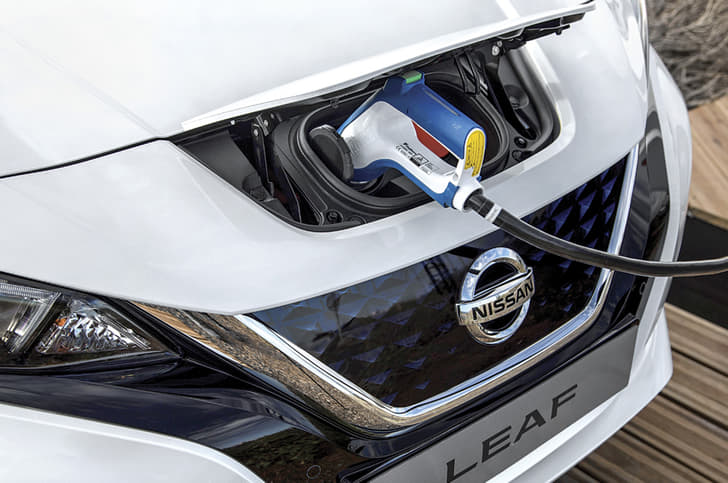
The plan is to drive out of Las Vegas to the canyons some 80km away, snap some photos quick and drive back. A 160km round trip in an electric car would have induced high blood pressure and range anxiety some years ago, but the Nissan executives with us are happy to inform us those days are gone for good. Depending on which country’s car-certification agency figures you go by, the Leaf has been tested with a range of 240-400km on a single charge. For the record, the Leaf’s 40kWh battery pack takes eight hours to charge fully. There’s also the option of fast charging that juices the battery pack up to 80 percent in 40min. If you think about it, that’s a range of a good 150km or so in the time you’d have a meal.
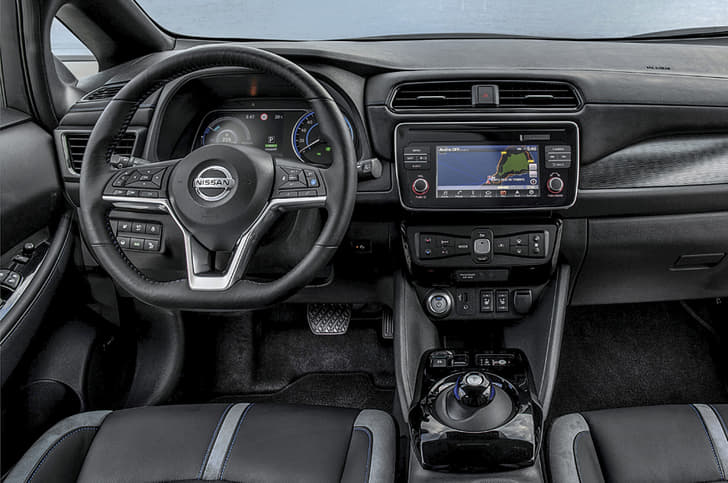
As I get into the cabin, I’m not blown away by what I see. The Leaf feels like any other modern (international) Nissan on the inside, which is a polite way of saying it’s neat and tidy, if a bit lacking in personality. Anyway, stubby gear lever moved to ‘D’ and we are good to go. The sensation of moving in a car that makes no noise feels eerie to begin with but I get used to it quickly enough. The going is easy, passing by the famous landmarks of the Las Vegas Strip, and soon enough we make it to the roads leading out of the oasis of a city. The real insights come when we join the freeway. Speeds are up to 110kph and the Leaf diligently builds pace without feeling anemic as we picture EVs this side of Teslas to be. Initial acceleration is strong, and the car is responsive to accelerator inputs when I need to overtake. The new Leaf uses a 110kW (about 150hp) electric motor (the old Leaf made 80kW or 109hp) that puts ample power at your disposal. This is no slow coach, that’s for sure. What’s also commendable is how refined the new Leaf is; I’m talking road and wind noise here. It feels like a premium European hatchback in this regard, which is praise indeed.
The Leaf itself may not make much noise but Nissan surely wants you to hear about the car’s unique ‘e-Pedal’ feature. The e-Pedal mode maximises regenerative braking, so lifting off the accelerator has the same effect as mild braking. Think of it as pronounced engine braking in a conventional car, and you’ll get the picture. Merely lifting off the throttle will (eventually) get the car to a halt, and should you need more braking force there’s always the traditional brake pedal. Nissan’s idea is that e-Pedal allows single pedal (read accelerator only) operation in typical driving scenarios. The carmaker is really onto something because the system feels natural and very easy to get used to. I can only imagine how much such tech could lower driver stress levels in the average Delhi, Mumbai or Bengaluru rush-hour grind.
Of the other things, the Leaf does feel skittish on the odd bad patch of road, and the steering isn’t involving either but for now I’d much rather focus on one of the Leaf’s other talking points – ProPilot. Nissan calls it a ‘single-lane autonomous driving technology’ that in essence marries adaptive cruise control with lane-keep assist. In this mode, the Leaf will adjust its speed in reference to the car ahead (it will come to a stop and restart too), and will also keep centred to the lane. The caveat is you can’t take you hands completely off the wheel. ProPilot works quite well for the time I use it, but on poorly marked stretches of road it completely hands back the reins to me. Also, being a camera-based system, it’s efficacy is subject to the camera’s ability to ‘see’ clearly.
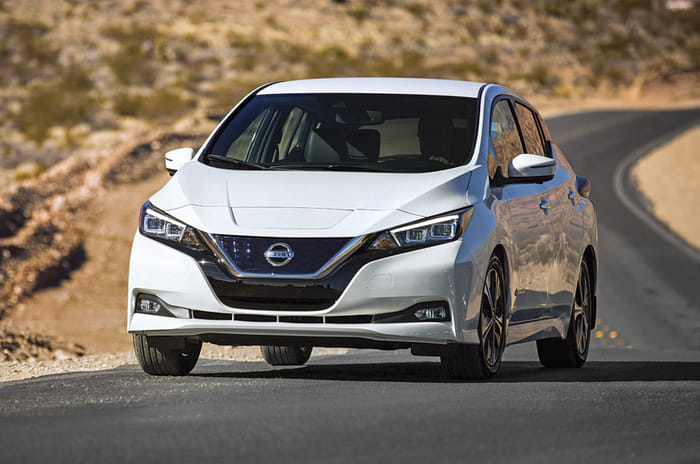
As for what you see, there’s much to like. The styling is sharp and not quirky like the first model. Actually, this Leaf looks like it’s designed to fit in as any other car rather than stand out as an electric car. It’s practical too, with a large boot, though rear seat passengers might find the floor set a bit high. The battery pack sits under the floor, you see.
So, when can we expect the Leaf to roll into India? Well, the car is under evaluation for a possible launch, but even if it does come, it will be brought in as an import and will cost about as much as a luxury sedan. A technology demonstrator? Yes. A mass market EV? No. And then there’s the usual questions of charging stations, et al.
In the spirit of the gambling haven that is Vegas, I’d wager the Leaf isn’t it for India. A low cost EV from Nissan? I’d bet on that.
 Lenny D'sa
 Sergius Barretto
 Saumil Shah
 Soham Thakur