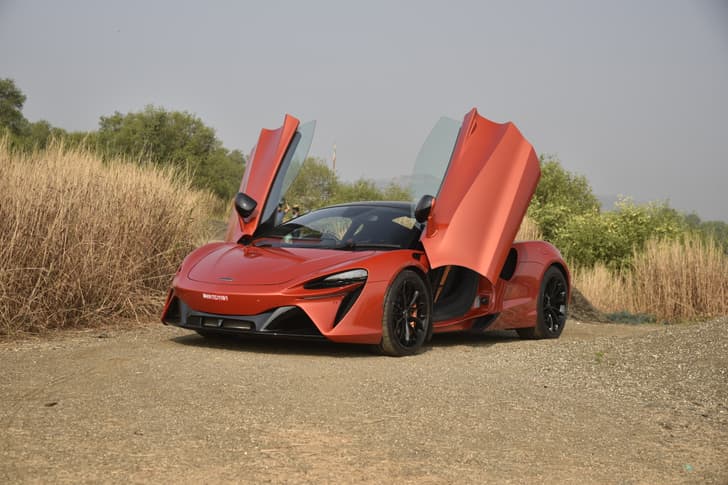

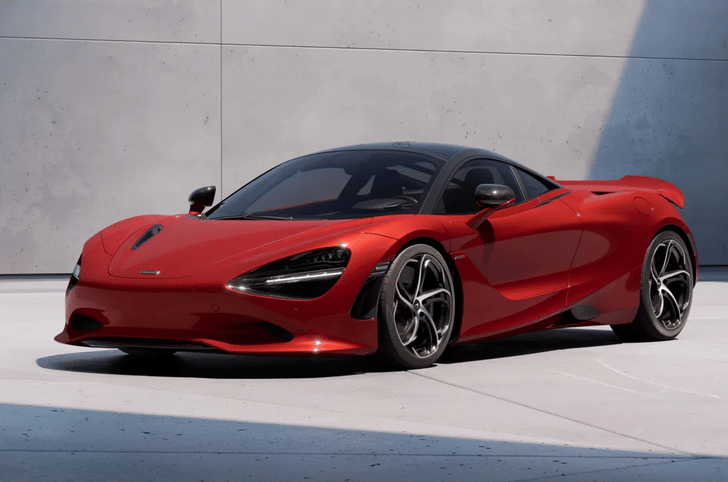
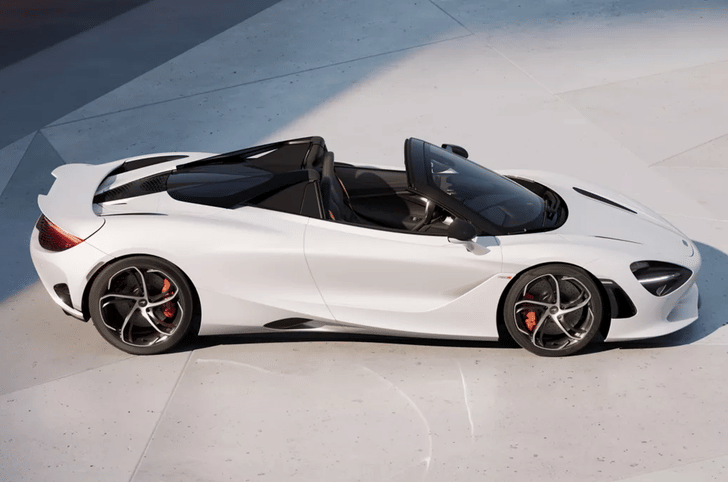
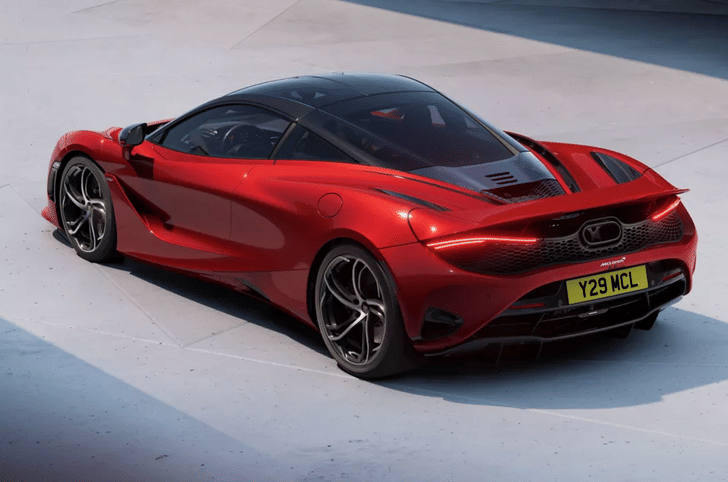
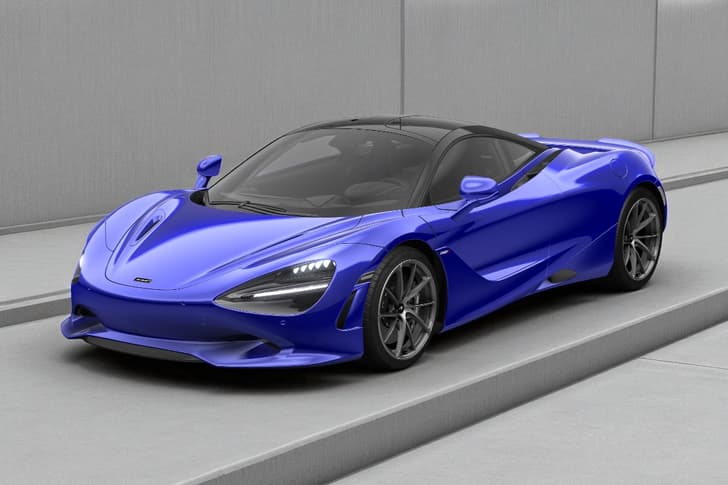
McLaren has revealed the new 750S as a successor to the popular 720S. The new McLaren 750S looks like a subtly restyled iteration of the 720S, but is said to be 30 percent new under the skin.
- The 750S is lightest series-production McLaren road car yet
- Gets segment-leading power-to-weight ratio
- Rivals the Ferrari 296 GTB plug-in hybrid
The brand says the 750S – once again available in hard-top and Spider guises – has been designed to provide "a new benchmark" in the supercar segment, boosting not just usability over its predecessor, but also ramping up the fun factor.
McLaren 750S powertrain, performance technical details
As the name suggests, it brings a power bump over the 720S, to 750hp, which, in conjunction with a weight saving of 30kg to bring it down to 1,277kg dry, gives a "segment-leading" power-to-weight ratio of 587hp per tonne. Its closest rival, the Ferrari 296 GTB plug-in hybrid, claims a ratio of 560hp per tonne.
The 750S is the lightest series-production McLaren road car yet, tipping the scales at just 79kg more than the track-honed Senna hypercar, without fluids. Weight-shaving measures extend to new carbon fibre-shelled alloys saving 13.8kg, 17.5kg lighter carbon fibre-shelled race seats and even a trimmed instrument cluster, which contributes a 1.6kg saving.
As a result of the weight loss, power boost and a shorter final drive ratio, McLaren claims it accelerates 10 percent faster than the 720S across the board; the 750S screams from 0-100kph in just 2.8 seconds and only needs another 4.4 seconds to clock 300kph. Top speed, though, is very slightly down, at 331kph.
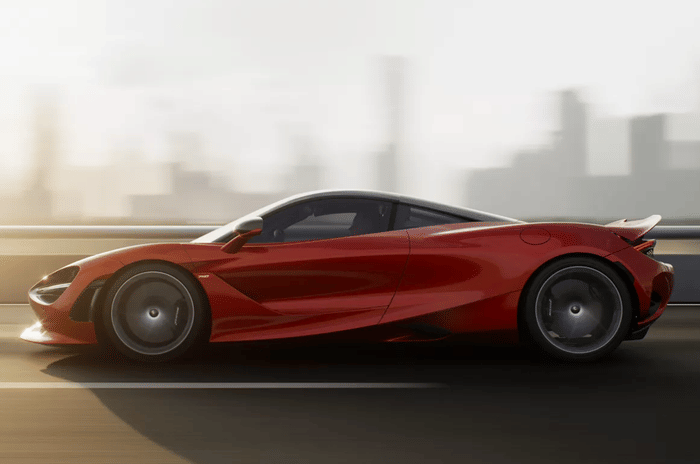
The enhancements to the twin-turbocharged 4.0-litre V8 are subtle but, evidently, effective. Aside from being newly calibrated for improved power delivery, there's a new triple-layer head gasket, new twin fuel pumps, higher-pressure turbos, lighter pistons and a standard-fit sports exhaust – exiting through the centre of the rear deck à la McLaren P1.
Plus, the engine mounts have even been modified to give "an intensified sense of connection", and the whole power lump can be put on display courtesy of a new optional glass decklid. The chassis revisions are just as extensive.
Chief engineer Sandy Holford said the 750S development programme was “focused on delivering agility, feedback and connection”, and ultimately combining the ‘fun factor’ of an amped-up Longtail supercar with the everyday utility of a standard McLaren.
To this end, the 750S brings a 6mm increase in front track, a faster steering rack, lighter springs – which are 3 percent softer at the front and 4 percent stiffer at the rear – a new brake booster for improved pedal feel, and an upgraded version of McLaren's Proactive Chassis Control system that keeps roll in check and enhances rolling refinement.
McLaren 750S interior, exterior details
The overhauled cockpit aims to minimise distraction and promote the connection between the driver and the road. The instrument display now moves with the steering column to optimise visibility for all drivers, for example, and the drive mode selector controls are mounted on the side of the binnacle so the driver needn’t remove their hands from the wheel to make a change. This frees up room next to the 8.0-inch central touchscreen for new, easier-access buttons for launch control and aerodynamic adjustment controls.
.png?w=700&c=0)
The 750S also promises tangible benefits from a functionality standpoint: the infotainment screen is higher-definition and more responsive to inputs, the in-car microphone is said to be better at recognising speech commands and the park-assist camera gives a clearer view. Plus, Apple CarPlay and a wireless charger are now standard-fitment.
As an evolution of the 720S, rather than an entirely new model, the 750S cuts a familiar figure, but subtle visual revisions mark the new car out from its forebear. There is a new front bumper incorporating a larger splitter for optimised aero performance, larger air intakes to boost cooling and slim new LED headlights, but most notable is the noticeably larger active rear wing, which has a 20 percent larger surface area and is claimed to boost both downforce and stopping performance.
McLaren 750S India launch timeline
International deliveries for the new McLaren 750S are expected to begin in September this year, and build slots are all already allocated through 2023. Expect the car to be introduced in the Indian market by end-2023 or early next year.

 Viraaj Bhatnagar
 Dipan Sur
 Dhruv Dhaka

 Saptarshi Mondal