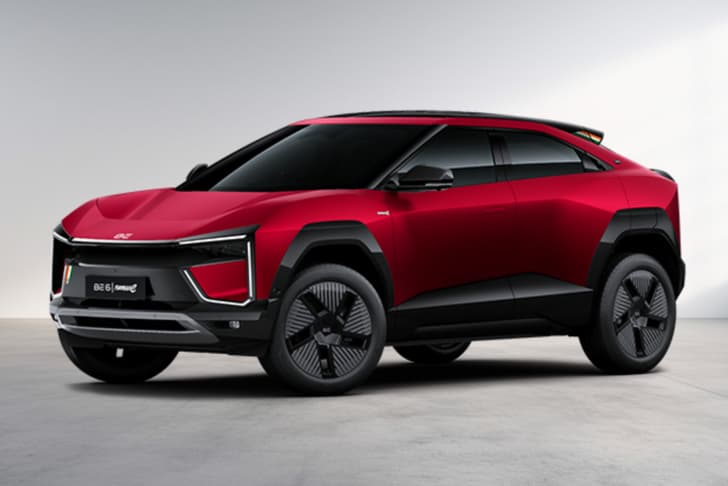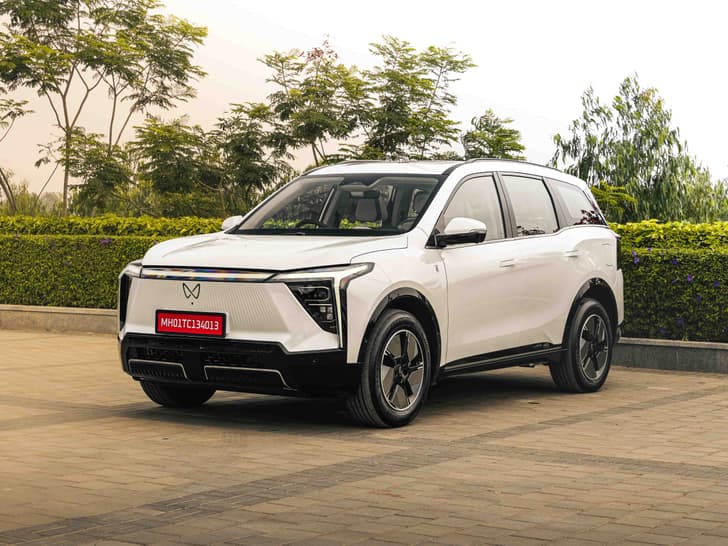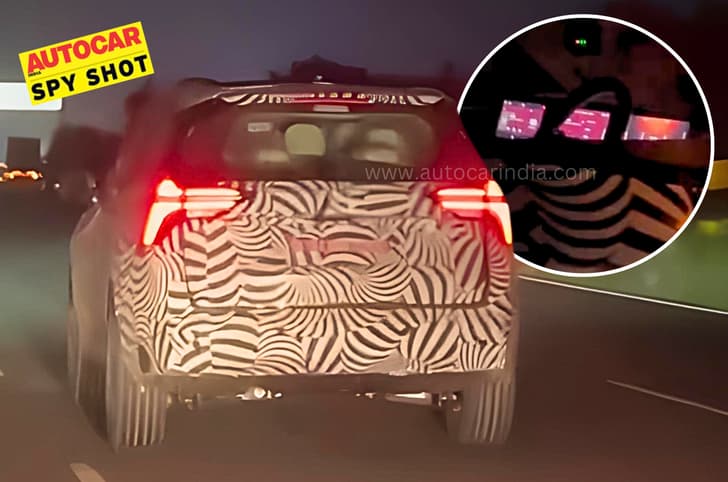
The long-awaited range of Mahindra’s born-electric SUVs is finally round the corner, the first of which is expected to be the BE.05 slated for a launch in January 2025. This will be followed by the XUV.e8 and the XUV.e9 duo soon after.A recent camouflaged sighting of the former has given us sneak peek at its full-width, three screen setup in action.
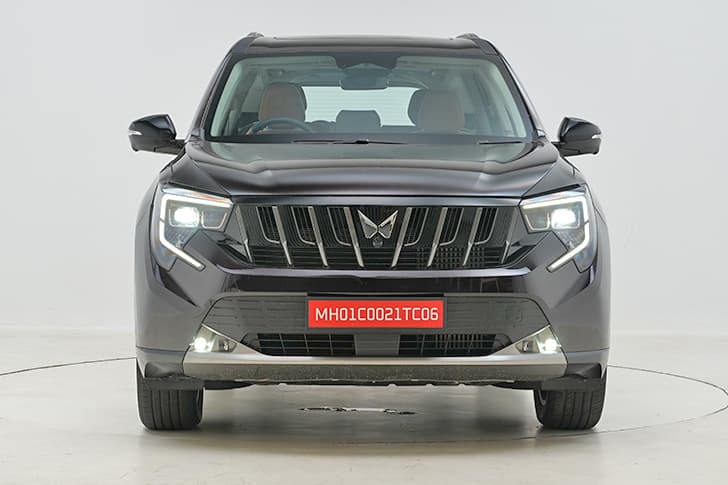
- XUV.e8 will be an electric version of the XUV700
- Will share sheet metal parts and interior trims, features
- Will have a battery pack of up to 80kWh
Mahindra XUV.e8 interior and features
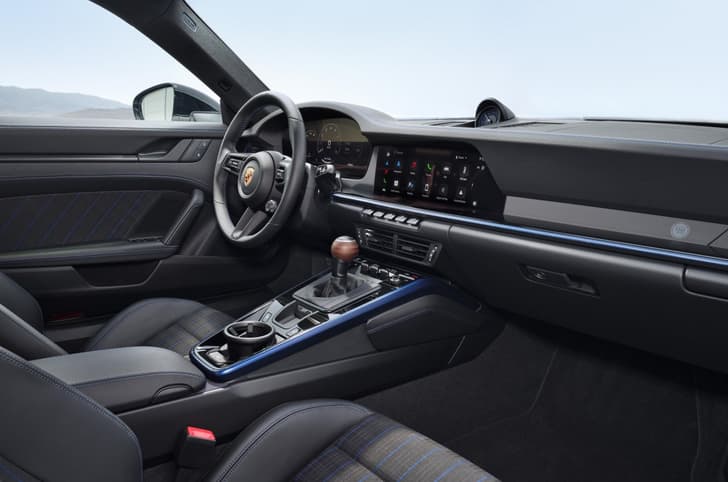
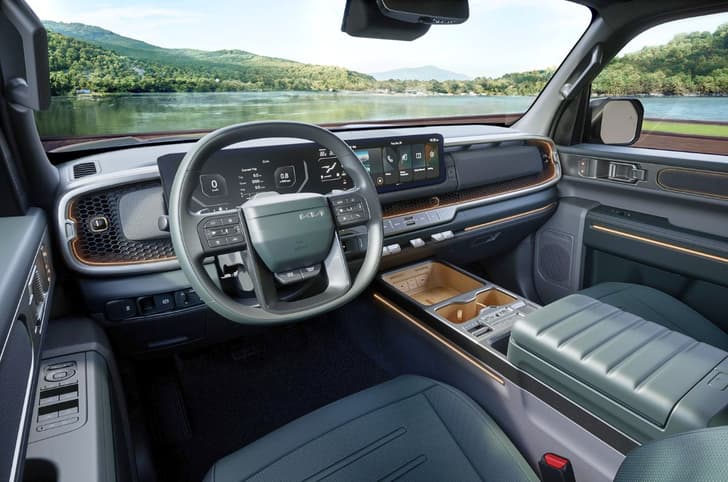
The spy shot reveals that three individual screens housed in a single casing spanning the dashboard’s width. It appears to be an extension of the XUV700’s dual-screen setup with an additional passenger screen and will likely be flanked by AC vents on either side. Such a setup will be quite a novelty in the mass segments, available only in luxury cars in India till now, as seen in Mercedes and Porsche models.
The three screens will likely be 12.3-inch units each with a 1920x720 display, running Mahindra’s Adrenox software. It will also come with Liquid Optically Clear Adhesive (LOCA) bonding and an Oleophobic (anti-smudge) coating.
The XUV.e8 will also feature a new two-spoke, flat-bottomed steering wheel with a glass-like finish on the boss and would likely have an illuminated logo. Elsewhere, the XUV.e8 is expected to carry over some switchgear from the XUV700, such as the HVAC and the centre console controls. This interior layout will also be shared with its coupe-SUV derivative, the XUV.e9.
Mahindra XUV.e8: what else do we know?
Conceptually, the XUV.e8 will be quite similar to the XUV700, sharing a familiar profile and three rows of seats. It measures 4,740mm long, 1,900mm wide and 1,760mm high, with a 2,762mm wheelbase, making it 45mm longer, 10mm wider and 5mm taller than the XUV700; its wheelbase will be just 7mm longer than the XUV700’s.
Mahindra previously confirmed that the XUV.e8 will come with an all-wheel-drive system and battery pack of up to 80kWh. Power outputs could be anywhere from 230hp to upwards of 350hp.
The production-spec XUV.e8 is expected to debut in the coming months before it goes on sale sometime next year. It will face competition from the Harrier EV, also due in 2025.
 Viraaj Bhatnagar
 Dipan Sur
 Dhruv Dhaka