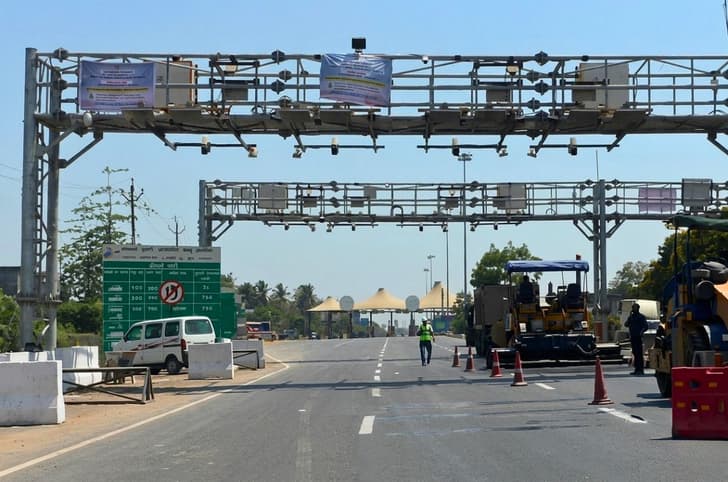
India’s first Multi-Lane Free Flow (MLFF) barrier-less tolling system has been launched at the Choryasi Toll Plaza on the Surat-Bharuch stretch of NH48 in Gujarat. The system eliminates the need for vehicles to stop at toll plazas. It uses Automatic Number Plate Recognition (ANPR) cameras along with FASTag integration to identify vehicles and deduct toll charges electronically while vehicles continue moving at normal highway speeds.
- High-quality ANPR cameras and FASTag to enable barrier-free tolling
- Under this framework, unpaid tolls are flagged electronically
Barrier-free tolling system in India: All you need to know
Govt aims to enable up to 80kph speeds at toll plazas
While the National Highways Authority of India (NHAI) has not prescribed a fixed speed threshold for automatic toll deduction under the new system, the minister for Road Transport and Highways, Nitin Gadkari, had stated in Parliament in December 2025 that the aim is to enable cars to pass through toll points at speeds of up to 80kph without stopping.
Officials said the newly launched MLFF system is designed to reduce congestion at toll plazas, cut travel time, improve fuel efficiency, lower emissions and reduce human intervention in toll operations. The rollout is being positioned as a key step toward fully digital and barrier-free highway infrastructure. Reports suggest that the government plans to implement this barrier-free tolling system on over 1,000 toll booths by the end of 2026.
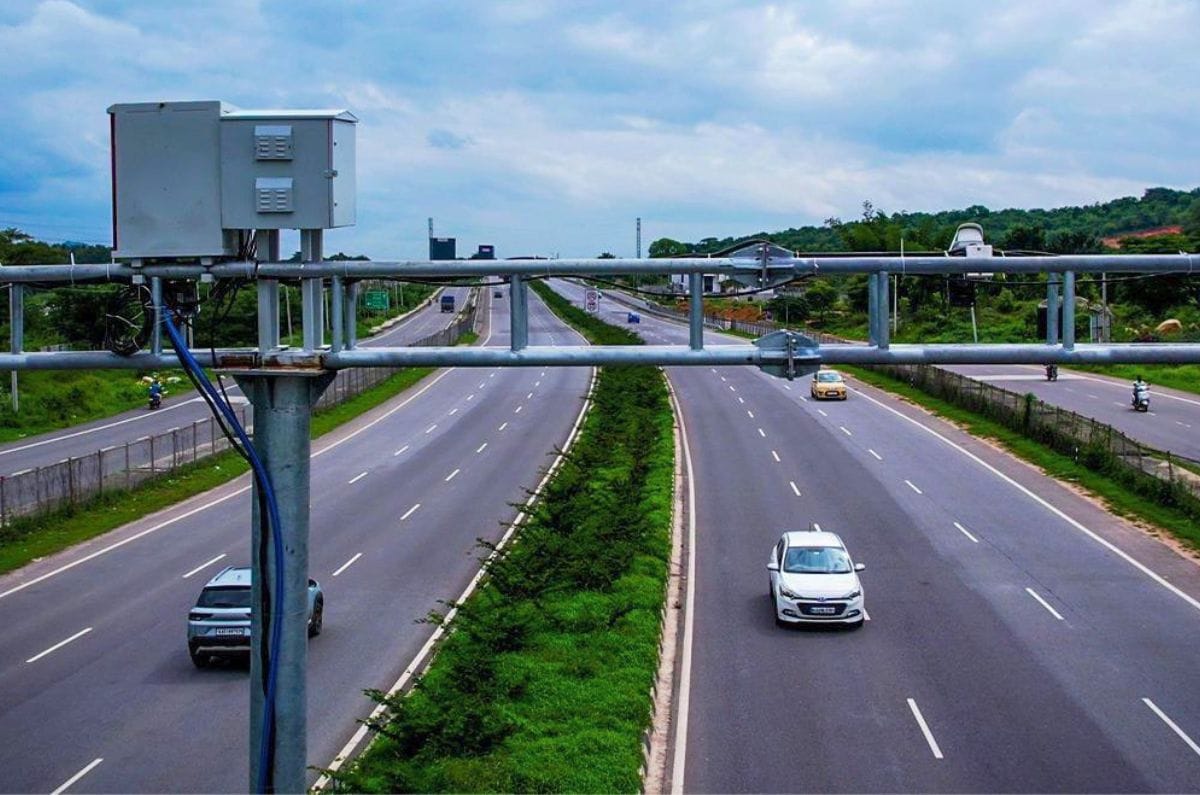
This follows earlier measures introduced by the government to strengthen digital toll enforcement. Under this framework, unpaid tolls are flagged electronically. Vehicle owners receive e-notices with full trip details and are given a 72-hour window to pay the original toll without penalty. If payment is not made within this period, the charges can increase to as high as twice the original fee.
Users can also dispute notices within 72 hours, and cases must be resolved within a set timeline. Unpaid dues that remain unresolved beyond 15 days are linked to the Vahan database, which may restrict access to vehicle-related services until cleared.

 Viraaj Bhatnagar
 Dhruv Dhaka
 Saptarshi Mondal