The Ministry of Road Transport and Highways (MoRTH) has notified draft rules for the next phase of Bharat NCAP under AIS-197 (Revision 1), laying out a more comprehensive safety assessment framework. Called Bharat NCAP 2.0, the proposal expands testing and scoring to give buyers a clearer picture of real-world protection.
Ratings will now be based on five verticals, moving beyond the current focus on adult and child occupant protection and basic safety assists.
What Bharat NCAP 2.0 changes
Five-pillar scoring, mandatory safety kit
MoRTH’s proposal introduces a 100-point rating system split across five pillars: Crash Protection (55 percent), Vulnerable Road-User Protection (20 percent), Safe Driving (10 percent), Accident Avoidance (10 percent) and Post-Crash Safety (5 percent).
Electronic stability control (ESC) and curtain airbags will be compulsory for any model seeking a star rating. Autonomous emergency braking (AEB) remains optional. Models with side-facing seats will not be eligible for a rating.
From 2027-29, a 5-star rating will require 70 points, and this would rise to 80 points from 2029-31. Minimum scores will also apply across each pillar.
New crash tests under Bharat NCAP 2.0
More realistic five-test crash protocol
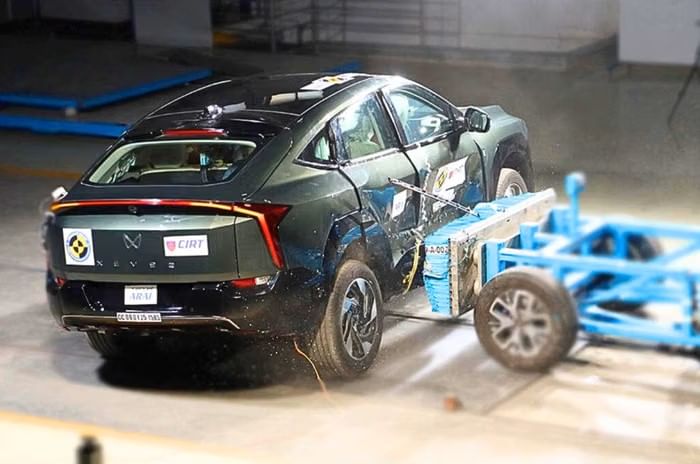
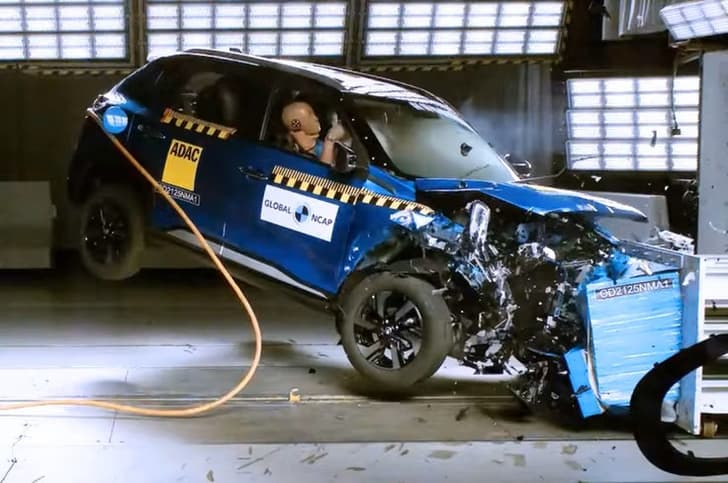
Testing will expand to five crash evaluations, conducted on a model’s base variant:
- 64kph offset frontal impact
- 50kph full-width frontal impact
- 50kph mobile lateral barrier impact
- 32kph oblique pole side impact
- 50kph mobile rigid rear impact
The added full-width frontal and rear-impact tests aim to better replicate real-world crashes.
Bharat NCAP 2.0: Rollout timeline
Draft open for comments; implementation from October 2027
Bharat NCAP 2.0 is set to replace the current protocol in October 2027, once the existing guidelines expire on September 20, 2027.
For buyers, the updated system promises clearer, more comprehensive safety ratings. For manufacturers, stricter thresholds mean advanced active and passive safety tech will be essential for achieving higher star scores.

 Viraaj Bhatnagar
 Dipan Sur



 Saptarshi Mondal