


Maruti Swift vs Maruti Baleno: design and engineering
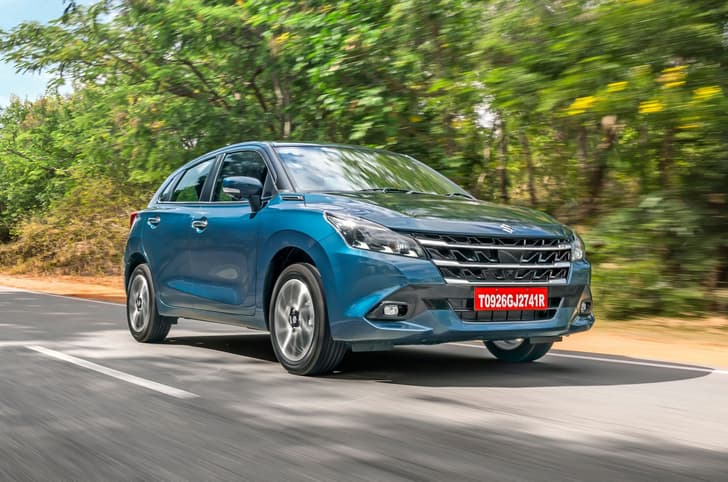
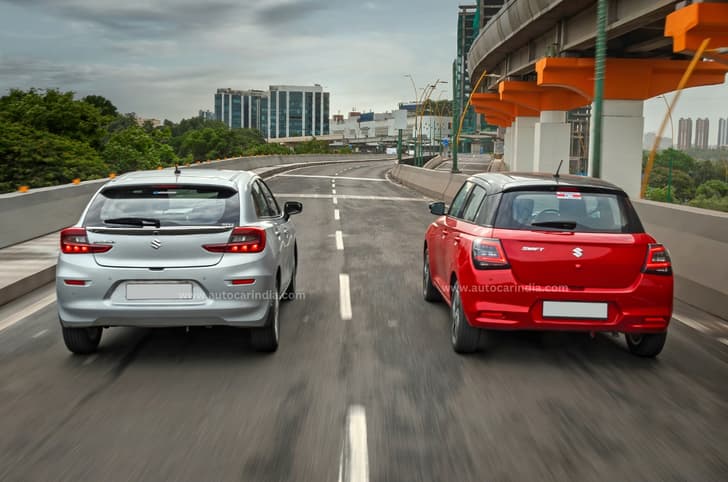
The Swift’s unmistakable silhouette, clamshell-like bonnet and a distinctive body line which runs through its length, shape this new-generation’s character, as do the L-shaped LED headlamps and an oval front grille. In this company, the Swift certainly looks more youthful and in line with its exuberance. Maruti offers it with bright body colour options like the ‘Sizzling Red’ (worn by our test car). The Baleno, on the other hand, is available with more mature paint options.

Both cars are based on Maruti’s Heartect platform. However, the Baleno is shorter in height, but is longer and wider. Its horizontally-oriented head and tail lamps accentuate its width, while the larger 16-inch wheels complement its stance. Chrome garnishing on the grille and boot adds a touch of premiumness.


Maruti Swift vs Maruti Baleno: interiors
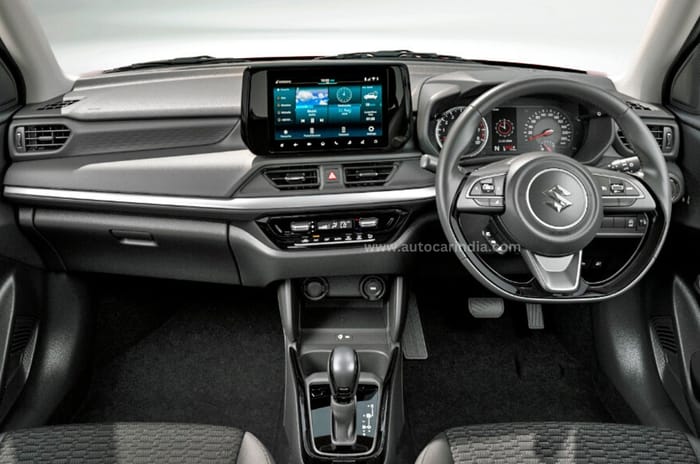
The Swift's layered dashboard with a free-standing screen follows a design philosophy similar to the Baleno's. However, its dark-themed cabin lacks vibrancy that could have enhanced its perceived quality and youthful vibe. Both cars share several interior components, which are mostly hard plastic, which don’t feel very premium. Notably, the Swift’s flat-bottomed steering and superbly sculpted front seats feel very sporty.
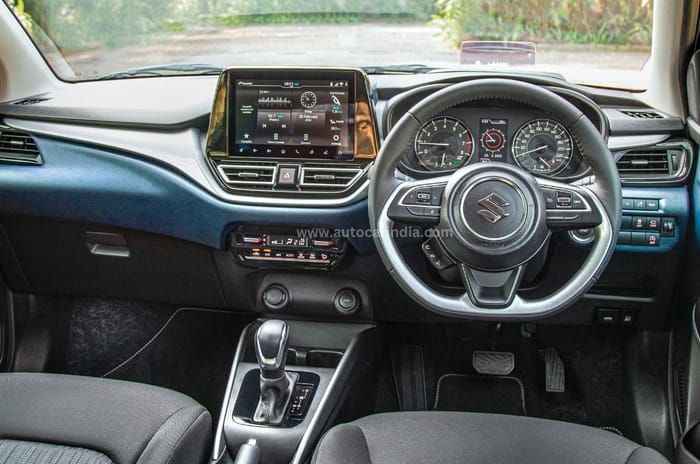
With the Baleno, the designers have been more adventurous by opting for a blue and black colour scheme. In comparison, it comes with ample padded components, including a front armrest which adds to the comfort. Additionally, the driver gets steering reach and rake adjustment, unlike the Swift which only offers rake adjustment, to fine tune the driving position.
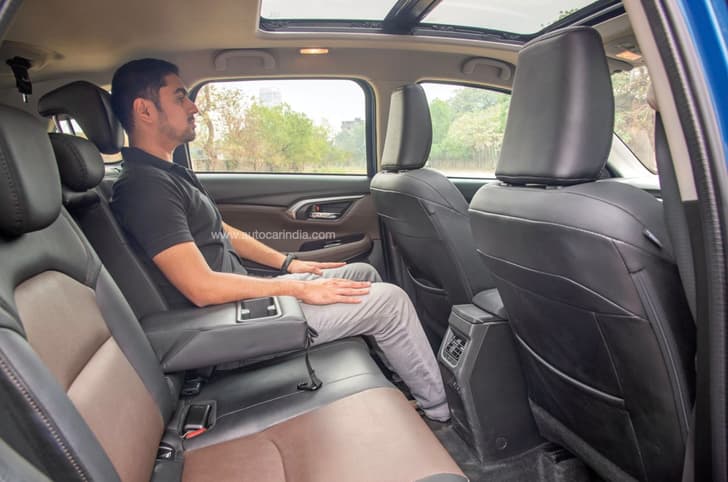
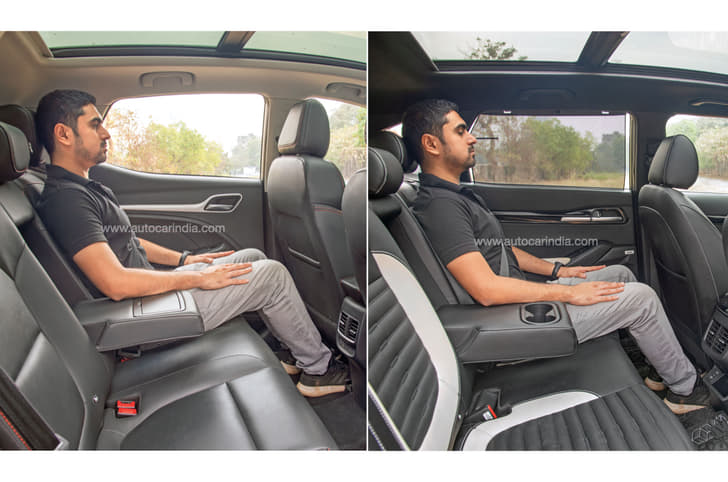
Headroom and seat comfort are similar in both cars. However, the Baleno's longer wheelbase and wider rear bench translate to more rear knee room and better shoulder room, accommodating a third passenger. Additionally, while both cars have three-point seatbelts for all rear passengers, only the Baleno offers three adjustable rear head restraints, whereas the Swift gets just two.
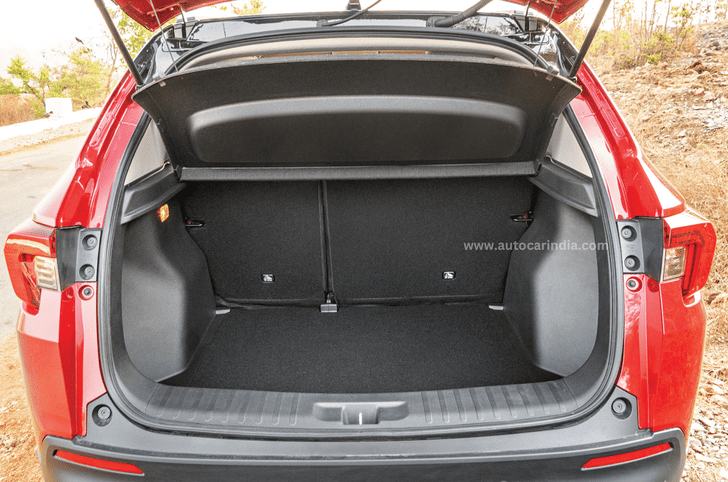
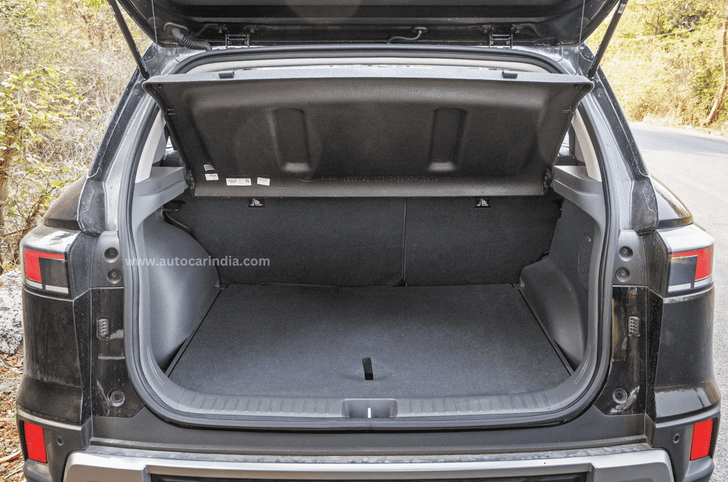
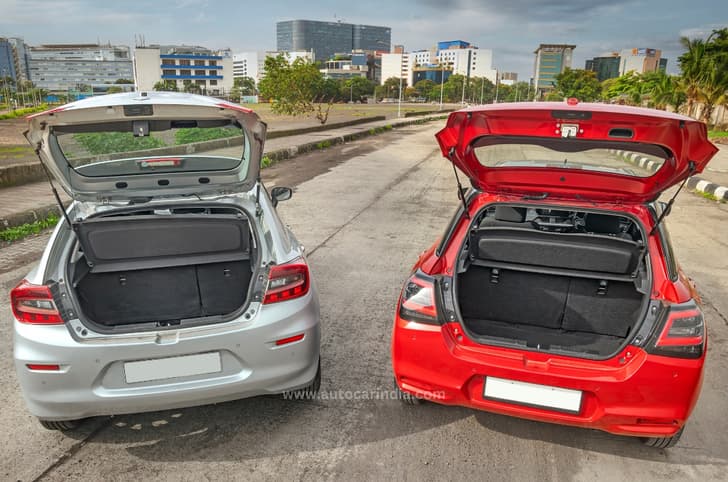
The Baleno features a more voluminous 318-litre boot versus the Swift's 265 litres. Both cars come with 60:40 split rear seats for added flexibility. While their boot lips are high, the Swift's is lower, making it slightly easier to load and unload heavier cargo.
What's your first reaction to Baleno?
Maruti Swift vs Maruti Baleno: equipment and safety
Maruti Swift vs Maruti Baleno: performance
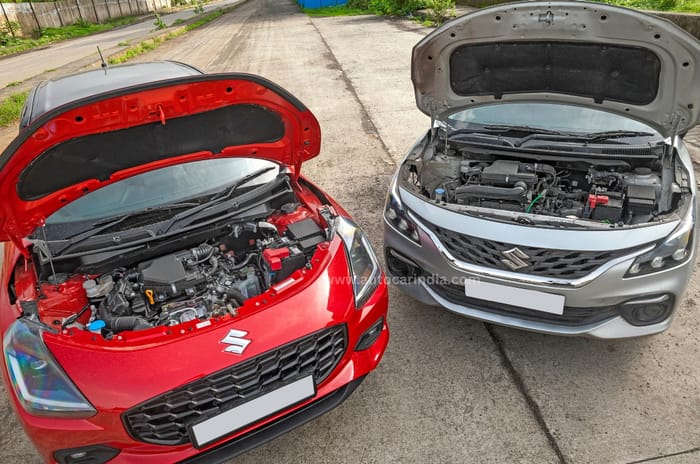
The Swift's new 82hp three-cylinder petrol engine is less powerful than the Baleno's 90hp four-cylinder petrol engine. But we’re happy to report that the Swift's drivability doesn’t feel compromised. It feels adequately peppy in urban environment, and its 5-speed automated manual transmission (AMT) is well-tuned. In fact, the AMT in the Swift feels smoother and more intuitive compared to the Baleno's AMT unit.
What community is saying on the Baleno?
* Figures are not as per Autocar India test standards
Despite its three-cylinder engine, vibrations in the Swift are well in check, and the engine is quite muted. Even at higher revs, the added sound insulation keeps the three cylinder thrum at bay. However, the Baleno’s four-cylinder engine provides an edge — not only does it sound more pleasing, but the cabin is also free from vibrations, which can be felt (at idle) in the Swift, especially if you're attentive.
Maruti Swift vs Maruti Baleno: ride and handling

Swift is more fun-to-drive thanks to its sharper handling and a better tuned AMT.
That said, the Baleno’s softer suspension shines when it comes to low speed ride comfort. It is one of the nicest in its class, absorbing potholes and road imperfections in a very mature manner. But when you increase the pace, road shocks come through rather sharply and at high speeds, its ride feels relatively busier.




 Gavin DSouza
 Soham Thakur
 Sergius Barretto