A newly surfaced Yamaha patent application overseas, indicates the company is exploring deeper integration between radar-based rider assistance systems and semi-automatic transmissions.
- Patent application shows integration of radar-based rider aids and semi-automatic gearbox
- System can automatically downshift during adaptive cruise control intervention
- Tech aims to improve stability and braking performance during deceleration
Yamaha adaptive cruise patent: what does it show?
In simple terms, the system aims to automatically downshift and use engine braking during deceleration.
The thinking behind the system is fairly straightforward: if the motorcycle already has radar, electronically controlled braking systems and an automated gearbox, Yamaha’s patent suggests the gearbox could help slow the bike too.
The patent outlines a setup where a motorcycle equipped with adaptive cruise control and a semi-automatic gearbox can automatically downshift while slowing behind traffic. The aim is to combine conventional braking with engine braking to improve stability and help the bike decelerate more smoothly.
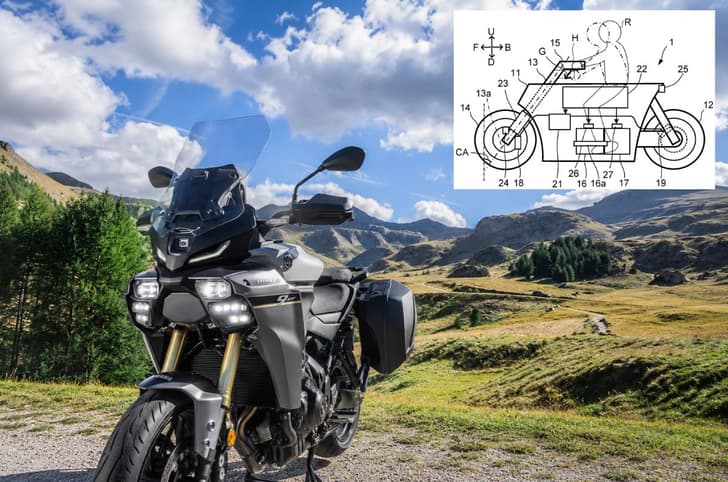
The technology appears to build on systems already seen on the overseas-spec Yamaha Tracer 9 GT+ Y-AMT, which combines radar-assisted adaptive cruise control with an electronically controlled transmission, unified braking system and semi-active suspension.
According to the patent drawings, the system can coordinate brake pressure, suspension behaviour and gear shifts simultaneously during deceleration. By automatically shifting to lower gears, the bike can use engine braking to assist the brakes while also reducing excessive front-end dive.
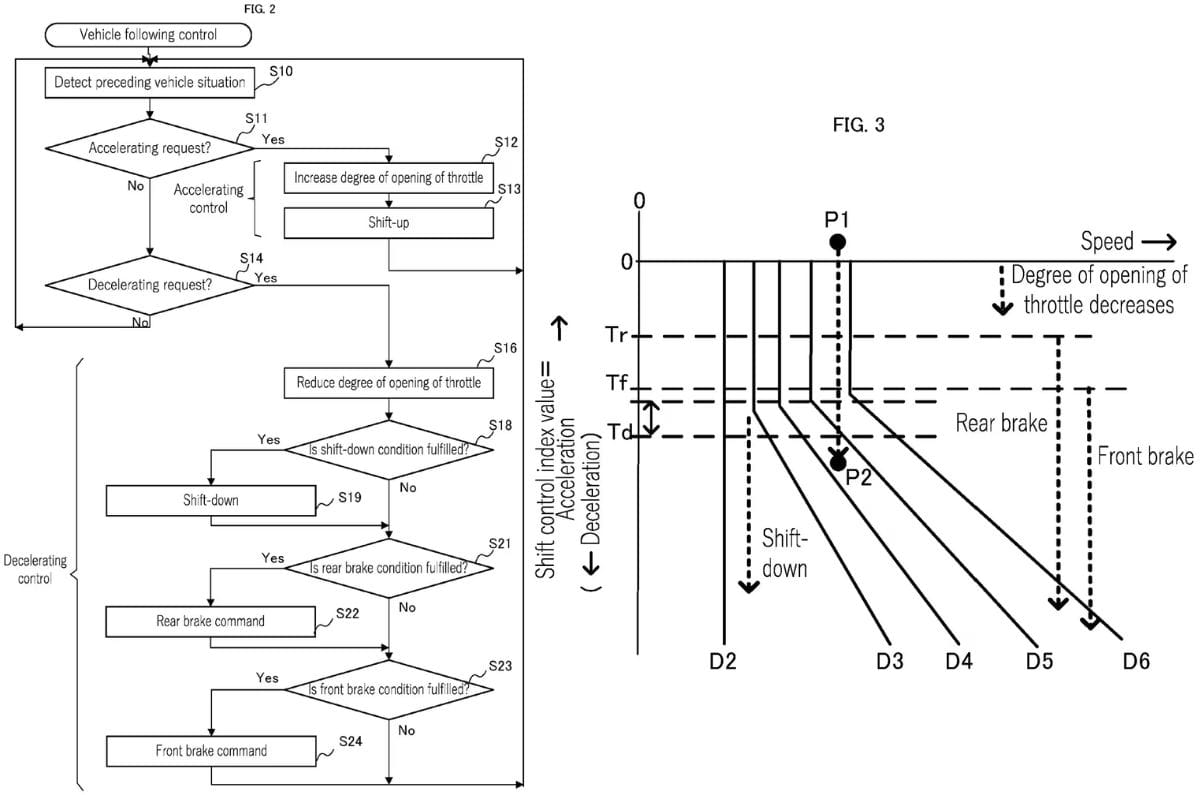
The patent flowcharts also suggest the system layers deceleration progressively, much like an experienced rider would. Instead of relying heavily on front brake intervention immediately, the motorcycle first reduces throttle, then introduces engine braking through downshifts before increasing brake pressure if required.
What makes the system interesting is that it appears designed to imitate the way experienced riders naturally slow a motorcycle. During hard deceleration, riders instinctively roll off the throttle, apply the brakes progressively and downshift together to keep the motorcycle balanced and stable. Yamaha’s patent suggests the bike could recreate this behaviour automatically by coordinating braking, engine braking and suspension inputs together.
This is also where semi-automatic transmissions become important. Unlike a conventional manual gearbox, a semi-automatic setup allows the motorcycle’s electronics to control gear shifts during braking interventions.
While this technology would likely remain limited to premium motorcycles initially, reports suggest radar systems, electronic rider aids and automated transmissions are gradually making their way into more accessible segments.
The development also reflects broader trends in the automotive industry, where automatic emergency braking and collision mitigation systems are becoming increasingly common. However, it is important to note that a patent filing does not directly confirm production plans, as manufacturers often file patents simply to protect intellectual property.
Image credits: Ben Purvis/Cycle World
 Vishal Venugopal
 Stephen Raj Antony