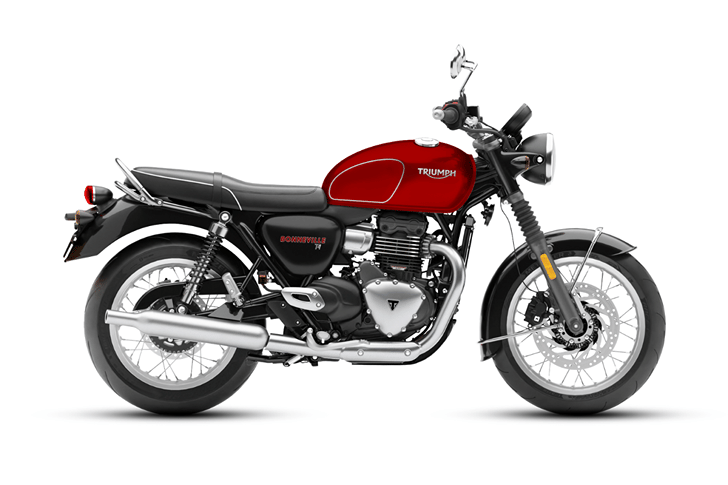




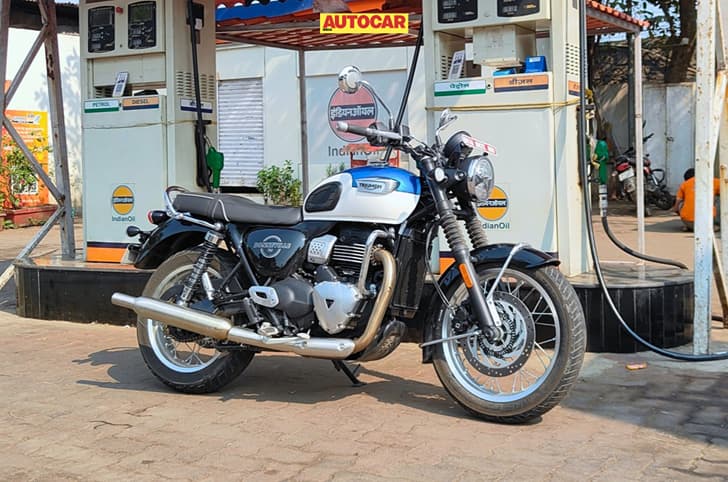
The new Bonneville T40 is the latest addition to the Bajaj-built 349cc Triumph range of bikes and it is also the most different. This bike’s engine has seen substantial internal revisions and its chassis is also remarkably different to its brethren. Naturally, in the Indian context, a pertinent question needs to be answered so here’s how the baby ‘Bonnie’ fared in our real-world fuel efficiency tests.
Triumph Bonneville T40 real-world fuel efficiency
It returned 27.9kpl in the city, 32.64kpl on the highway
As is our established routine, we first started by running the Bonneville T40 on our highway loop for just over 50km, after which we needed to add 1.59 litres of fuel to brim the tank once more. This meant the bike returned a fuel economy number of 32.64kpl.
Once that was done, we headed to the traffic-riddled streets of South Mumbai where we rode the ‘Bonnie’ for a shade under 50km and the bike needed 1.77 litres of fuel to brim its tank once more. Thus, the fuel economy number we arrived at was 27.9kpl.
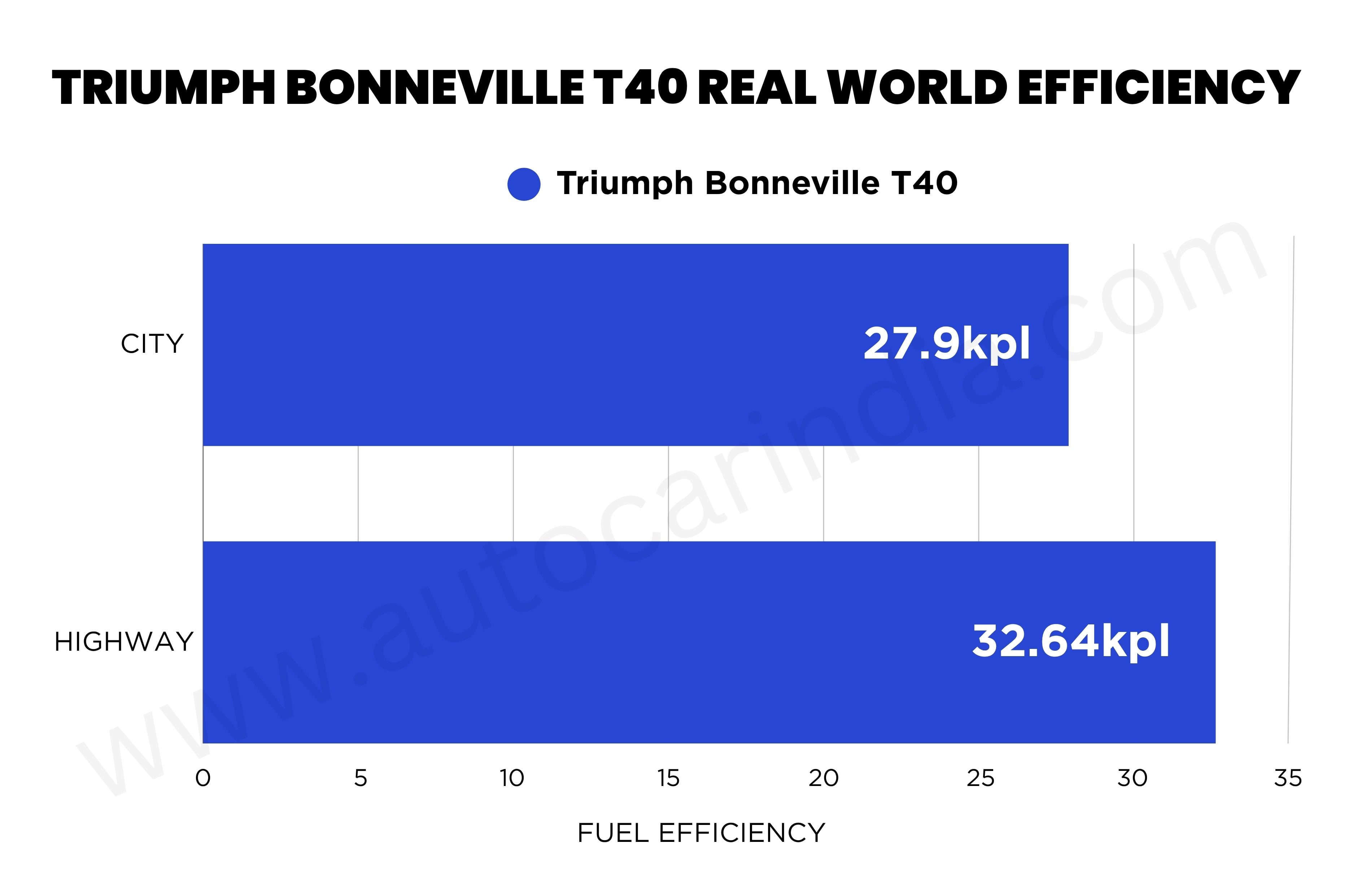
Triumph Bonneville T40 fuel efficiency analysis
What community is saying on the Bonneville T40?
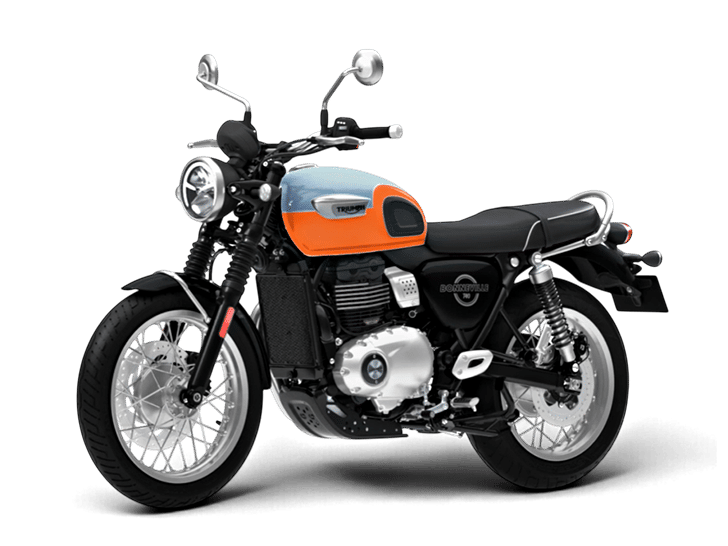
Motor prioritises low- and mid-range grunt, 195kg weight plays its part too
The India-spec Bonneville’s downsized 349cc motor has seen extensive internal changes to deliver an effortless riding experience shoppers in this segment will expect. In that regard, Triumph and Bajaj have done a remarkable job of differentiating this engine’s character from the other single-cyl models. You rarely need to twist the throttle to the stop or make downshifts to make progress.
Between 2,000-7,000rpm is the motor’s sweet spot and the bike makes effortless and brisk progress in this zone, no matter the gear you’re in. Out on the highway, at 80kph (the legal speed limit on our testing patch), the needle hovers around the 4,000rpm mark and the Bonneville T40 feels absolutely placid at these speeds, with plenty left in reserve for a quick overtake should the need arise.
Inside the city too the motor’s healthy dose of effortless grunt helps the Bonneville’s case and seizing through gaps in traffic is simply a gentle twist of your wrist away. The bike’s overall gearing is well-judged too but what potentially hinders its fuel efficiency a little bit, is its hefty 195kg kerb weight.
Autocar India’s fuel-efficiency testing
Our fuel-efficiency testing routine starts by first brimming the tank and ensuring the bike is running the manufacturer’s recommended tyre pressures. The bike is then ridden on fixed city and highway routes, where we maintain average speeds that best mimic real-world scenarios as well as keeping speed limits in mind. The payload on the bikes is kept constant by balancing rider weights and ballast, ensuring consistency across different vehicles and riders. At the end of the test cycle, the fuel tank is once again filled to the brim, giving us an accurate figure of how much fuel has been consumed against the trip meter reading.


 Stephen Raj Antony


 Vishal Venugopal
 Suraj Sreekumar