
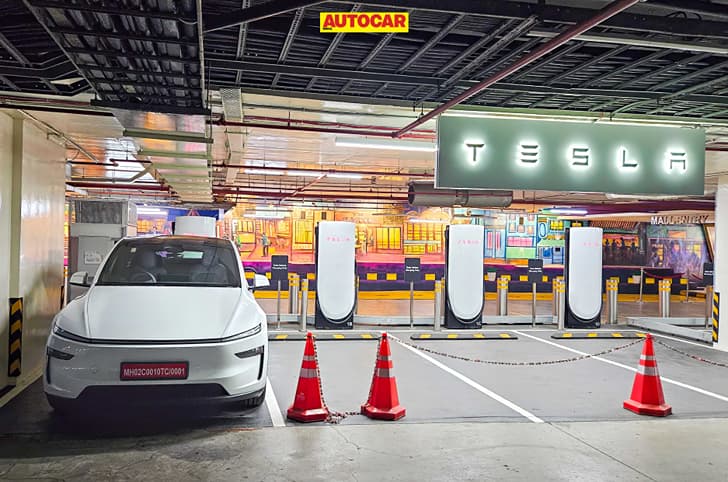
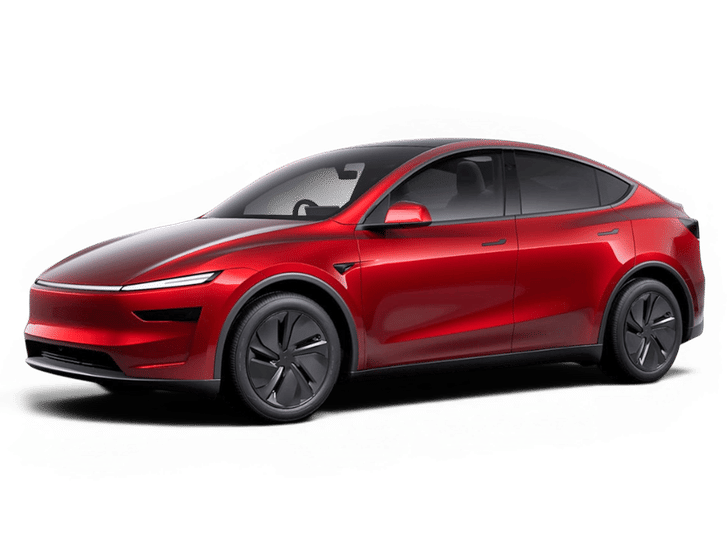
With a re-jigged Model Y lineup, Tesla is now offering the 2026 version of this 5-seater electric crossover with only a single (rear) motor, in one variant, with a 60kWh LFP battery (64kWh gross), and now its pricing is a lot more aggressive than before, at just Rs. 50.9 lakh. We put this 2026 Tesla Model Y RWD Premium variant to the test to calculate its real-world efficiency.
- We used 'Chill' driving mode for our tests
- 20-80 percent recharge takes 23 minutes on a 250kW Tesla Supercharger
- Has a kerb weight of 1,928 kg
Tesla Model Y Premium RWD: Range, Efficiency tested
The Model Y is powered by a rear-mounted electric motor which produces 299hp and 420Nm of torque. It is equipped with two drive modes – Standard and Chill, the latter being an Economy setting, which we used for our tests. It also gets two levels of regenerative braking – Standard and Reduced. For our runs, we used ‘Standard’ (most aggressive) in the city and ‘Reduced’ on the highway.
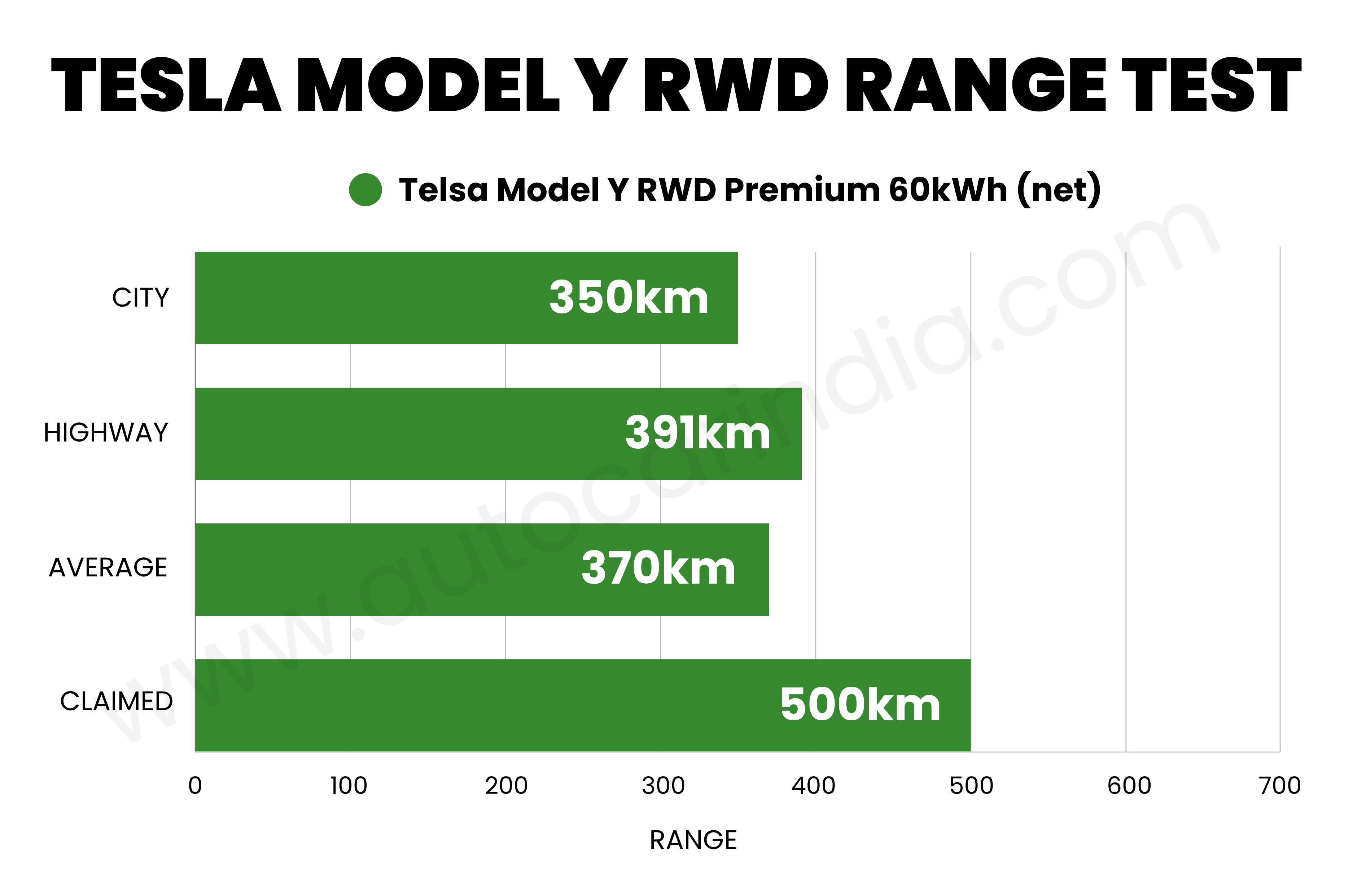
In the city, it delivered an efficiency of 5.84km/kWh extrapolating to a range of about 350km. On the highway, it was much more efficient, delivering 6.52km/kWh, resulting in a range of about 391km. With the overall efficiency of 6.18km/kWh, you can expect a real-world range of about 370km, which is reasonable for this 1.9-tonne crossover.
What community is saying on the Model Y?
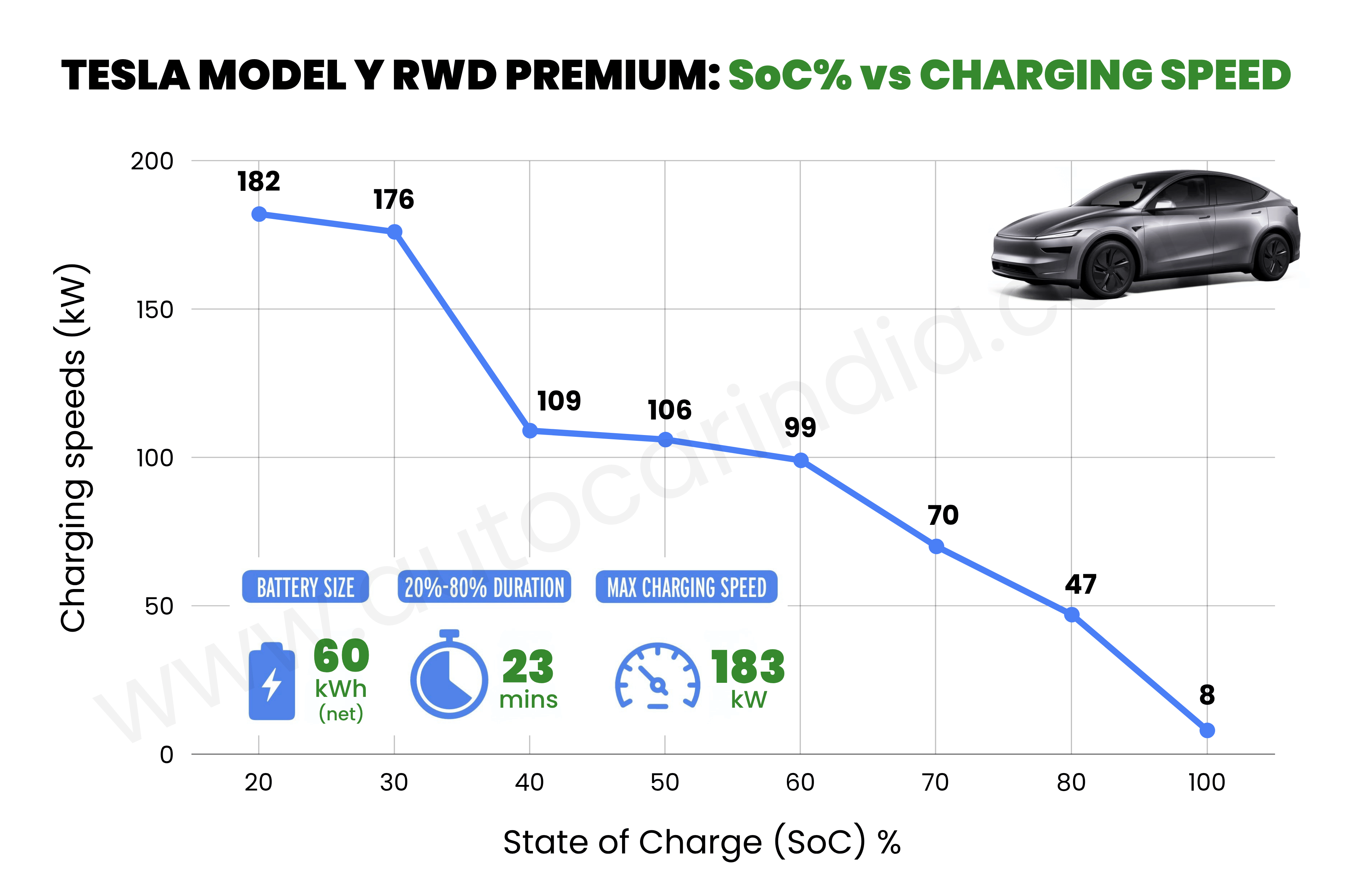
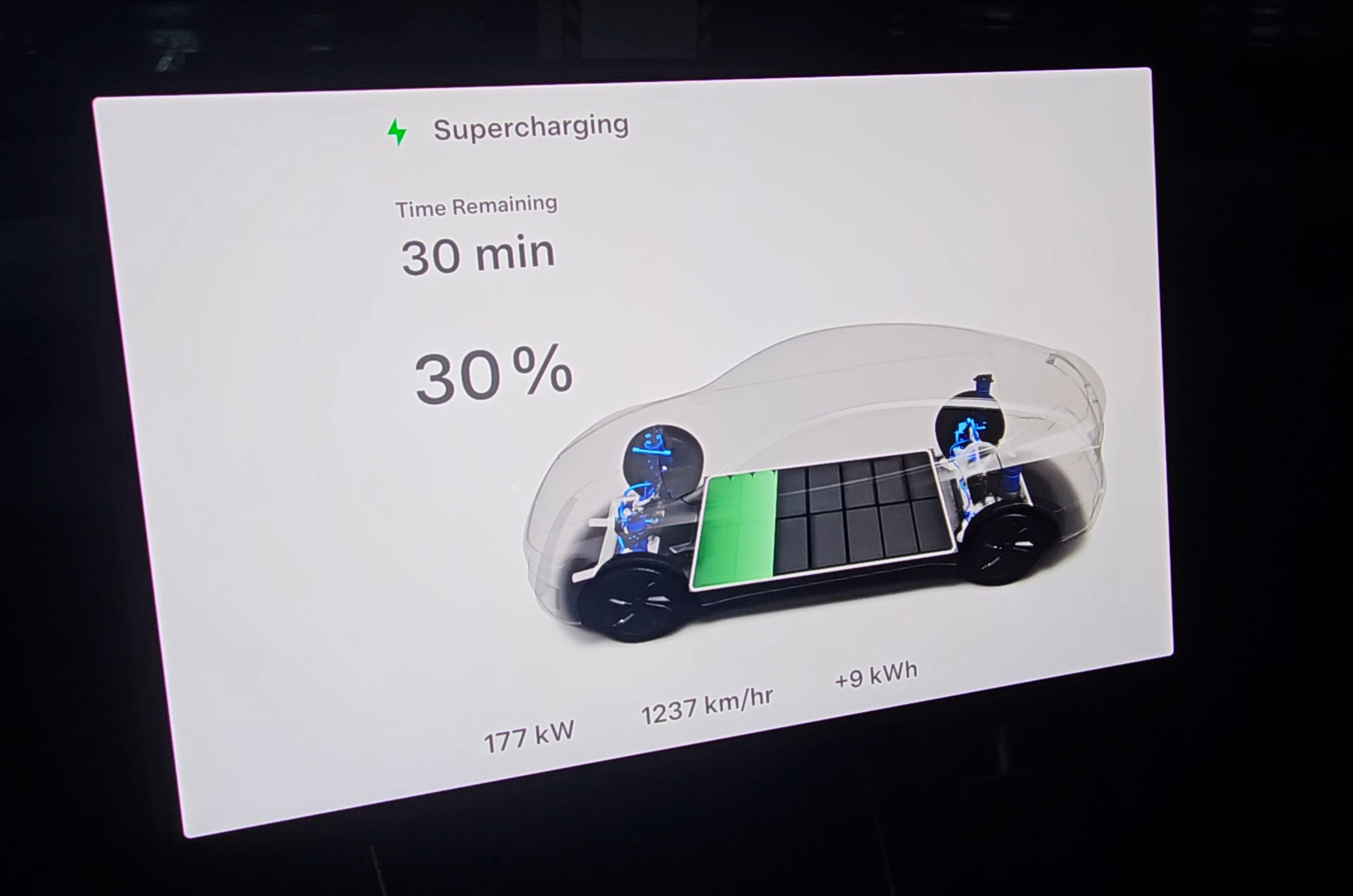
We also plugged the Model Y into a 250kW Tesla Supercharger. Notably, we noticed peak charging speeds (displayed) at 183kW. However, the charging speeds dropped rapidly from 176kW at 30 percent SOC to 109kW at 40 percent SOC, and thereafter the speeds kept dropping gradually throughout. As far as time goes, the Tesla Model Y’s battery charged from 20-80 percent SoC in 23 minutes, and it took another 30 minutes to charge from 80-100 percent.
Autocar India’s range testing
Before our real-world range tests, the battery of our test car was fully charged and we maintained tyre pressures in accordance with the manufacturer’s recommendations. The car was driven on a weekday in Mumbai city and on the adjoining state highway in a fixed loop, and we maintained the set average speeds. At the end of each cycle, we calculated the range based on the percentage charge consumed.
Throughout our tests, the climate control was set to 22deg C in a full-auto setting, and other electricals, such as the audio system, indicators and ventilated front seats, were used when required, just as a regular user would. We take pride in our testing data, which isn’t merely consistent but also gives users an accurate indication of what they can expect in the real world.

 Uday Singh

 Glenn Noronha
 Dipan Sur