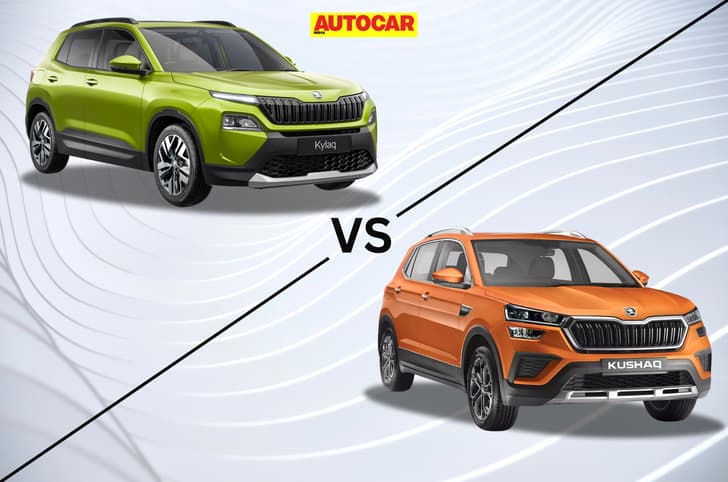
The newly launched Skoda Kylaq is the Czech brand’s first attempt at the rather crowded sub-compact SUV segment. And Skoda hopes the Kylaq will be its key to cracking 1,00,000-unit yearly sales in India. It is based on the Kushaq, sharing a modified version of the MQB-A0-IN platform, but quite a few differences set the two SUVs apart. Let’s take a close look at how the Kylaq and Kushaq differ in terms of dimensions, equipment and powertrain options.
Skoda Kylaq vs Kushaq: design, dimensions
As you can see in the table above, at under 4 metres, the Kylaq’s length is 230mm less than the Kushaq, and its wheelbase is 85mm shorter. Interestingly, though, the Kylaq is 7mm taller and 23mm wider. Both SUVs get 16-inch wheels on the base and mid-spec trims and 17-inch rims on the top-spec versions. The Kushaq has the edge in terms of boot space, with 25 litres of additional capacity.
.jpg?w=728&h=415&q=75&fm=auto "Skoda Kylaq front quarter")
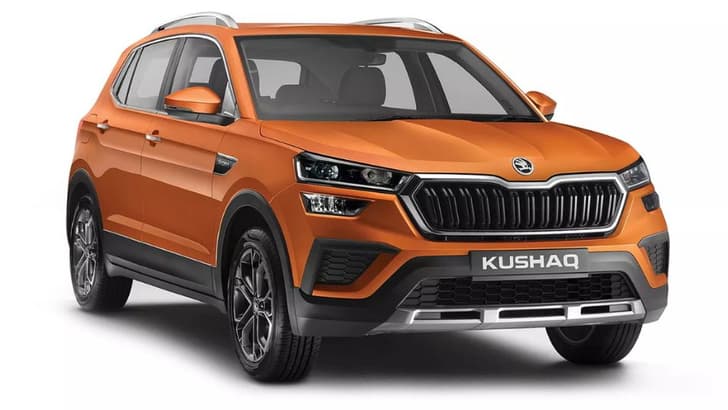
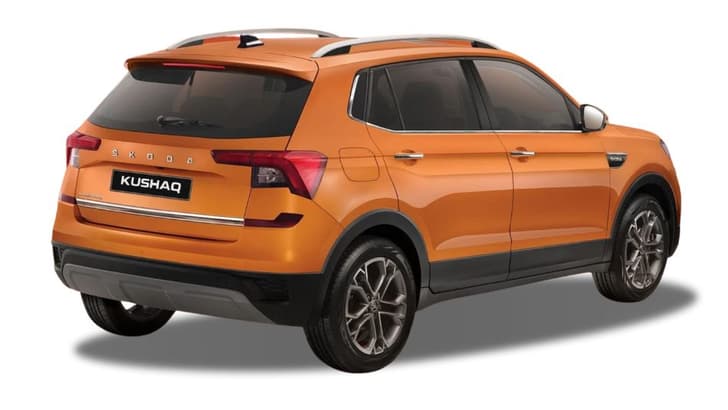
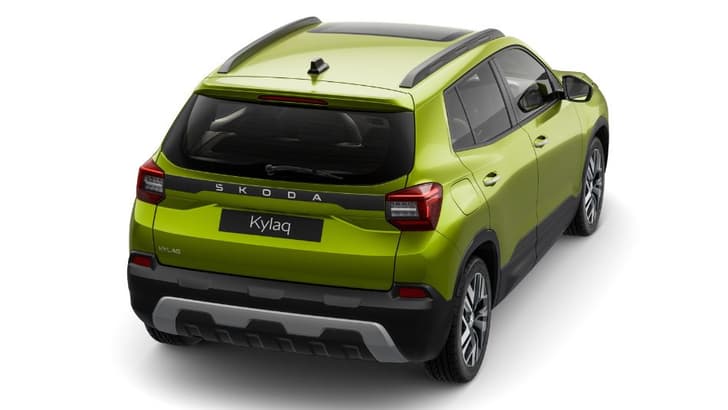
Visually, both the Kylaq and Kushaq have the same Skoda family look, but the former is the first Skoda in India to get the new ‘Modern Solid’ design language, which comes with a more monolithic and two-dimensional approach in its aesthetics. The grille, for instance, is flatter, and the front bumper has smoother surfaces. In profile, too, the Kylaq uses simpler sheet metal surfaces (these also help keep costs down) as opposed to the Kushaq, which features two sharp character lines running across its length. The Kylaq, however, gets chunkier cladding on its doors, giving it a sporty edge.
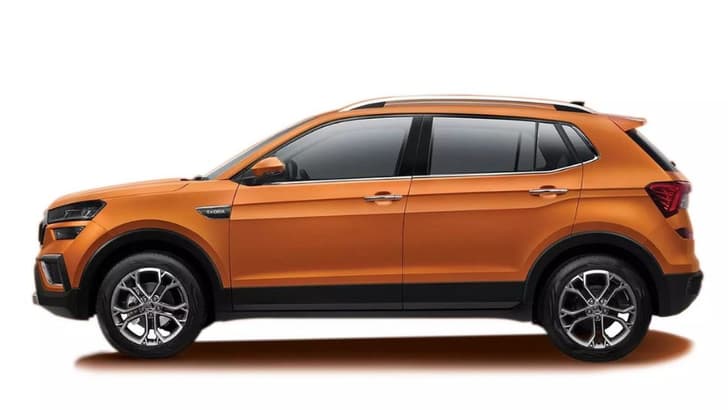
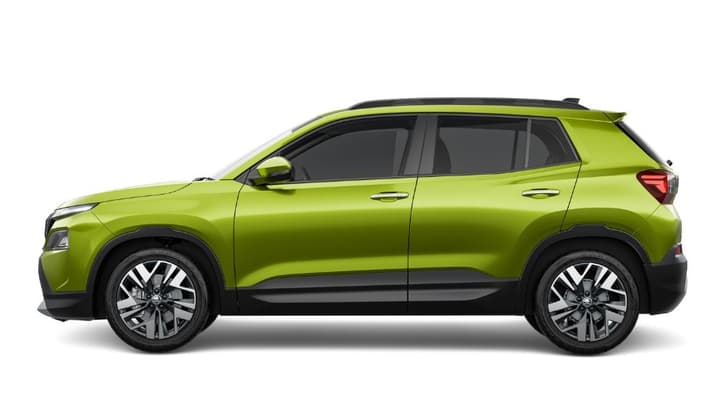
At the rear, both SUVs have a very distinct design. While the Kylaq has squarish tail-lamps connected by a contrasting black band, the Kushaq has standalone L-shaped tail-lamps; the latter also gets an additional chrome strip at the base of the tailgate. Both SUVs have a faux silver skid plate on the rear bumper, but the Kylaq’s plastic cladding has a chunkier look.
Skoda Kylaq vs Kushaq: interior and features
While the Kylaq and Kushaq look quite dissimilar on the outside, their interiors are nearly identical. In higher-spec trims, both SUVs use the same 10.1-inch touchscreen infotainment system, 8.0-inch digital instrument, two-spoke steering wheel and touch-sensitive HVAC controls. The only noticeable distinction is in the design for the passenger side of the dashboard; the colours and textures vary, and the central AC vents look slightly different.
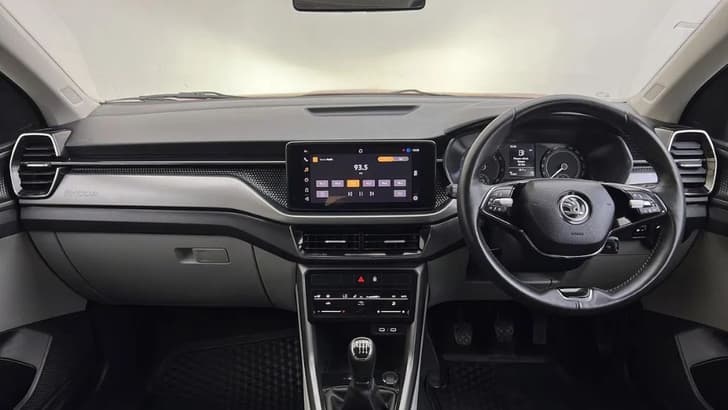
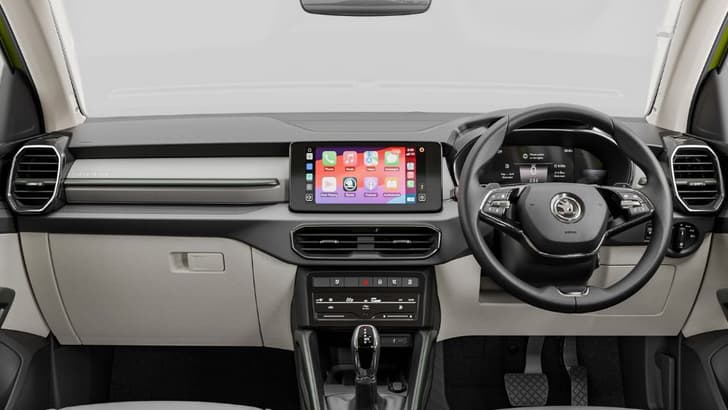
The top-spec trims of the Kylaq and Kushaq come with wireless Android Auto and Apple CarPlay, cruise control, steering-mounted controls, a single-pane sunroof, ventilated and powered front seats, keyless entry, ambient lighting, push-button start-stop, and automatic climate control with rear AC vents. Both SUVs also get six airbags, ABS with EBD, a reverse parking camera, TPMS, ESC, hill-start assist and rear parking sensors as standard.
Skoda Kylaq vs Kushaq: powertrain and specs
Under the hood, the Kylaq carries over the 1.0-litre, three-cylinder, turbo-petrol engine from the Kushaq in the same state of tune. Producing 115hp and 178Nm of torque, it comes coupled to either a 6-speed manual or a 6-speed torque converter automatic.
However, the Kylaq uses a stiffer body (resulting from the length reduction), which has allowed Skoda to soften the suspension tuning, and that should result in a more absorbent ride quality. It also weighs 38kg less than a comparable Kushaq, so performance from the 1.0-litre TSI engine will be sprightlier here. The Kylaq, however, misses out on the Kushaq’s more powerful 150hp, 250Nm, 1.5-litre four-cylinder turbo-petrol engine completely.
Skoda Kylaq vs Kushaq: price
Skoda has so far only announced the starting price of the Kylaq, which, at Rs 7.89 lakh (ex-showroom), is significantly lower than the Kushaq (priced between Rs 10.89 lakh and Rs 18.79 lakh). Given the tax benefits the sub-4 metres segment allows, Skoda will likely be able to maintain a reasonable price difference with other comparable variants of the Kushaq, too. The complete price list is due on December 2, and the Kylaq will likely draw some buyers away from the Kushaq with the sheer value it offers in a sub-compact package.

 Uday Singh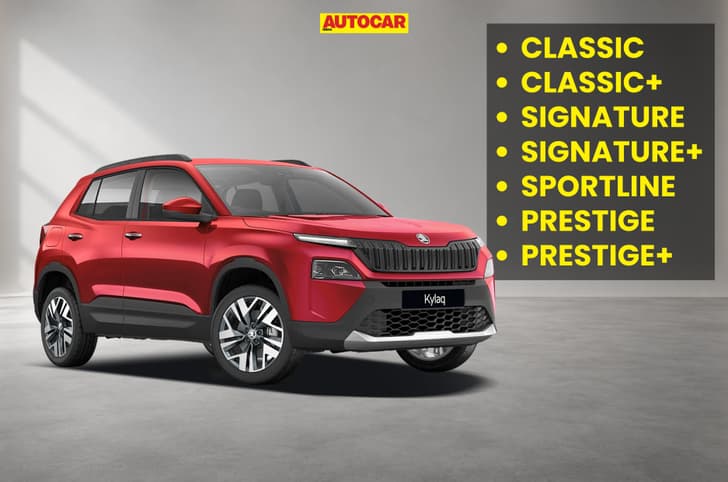
 Glenn Noronha
 Dipan Sur
 Dhruv Dhaka