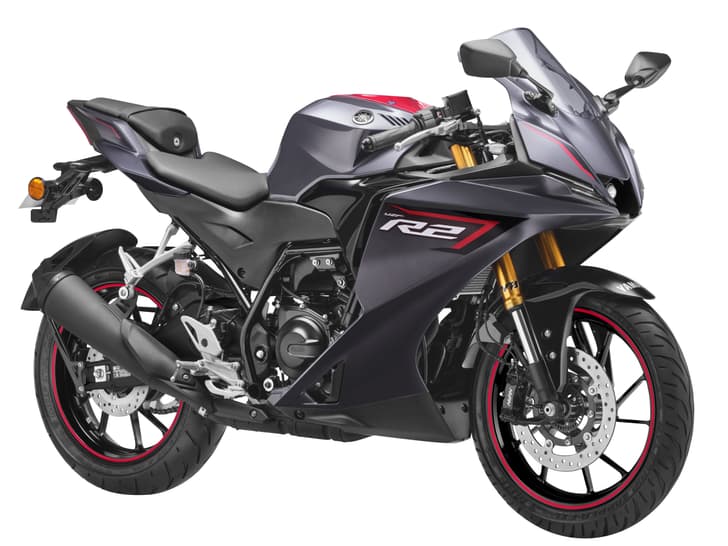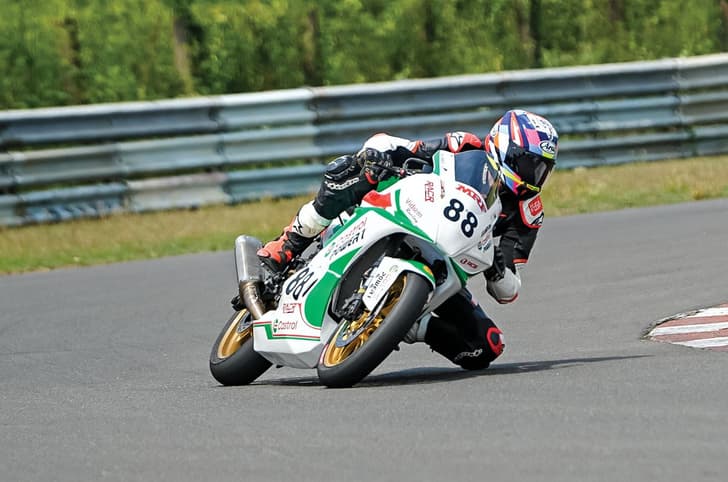
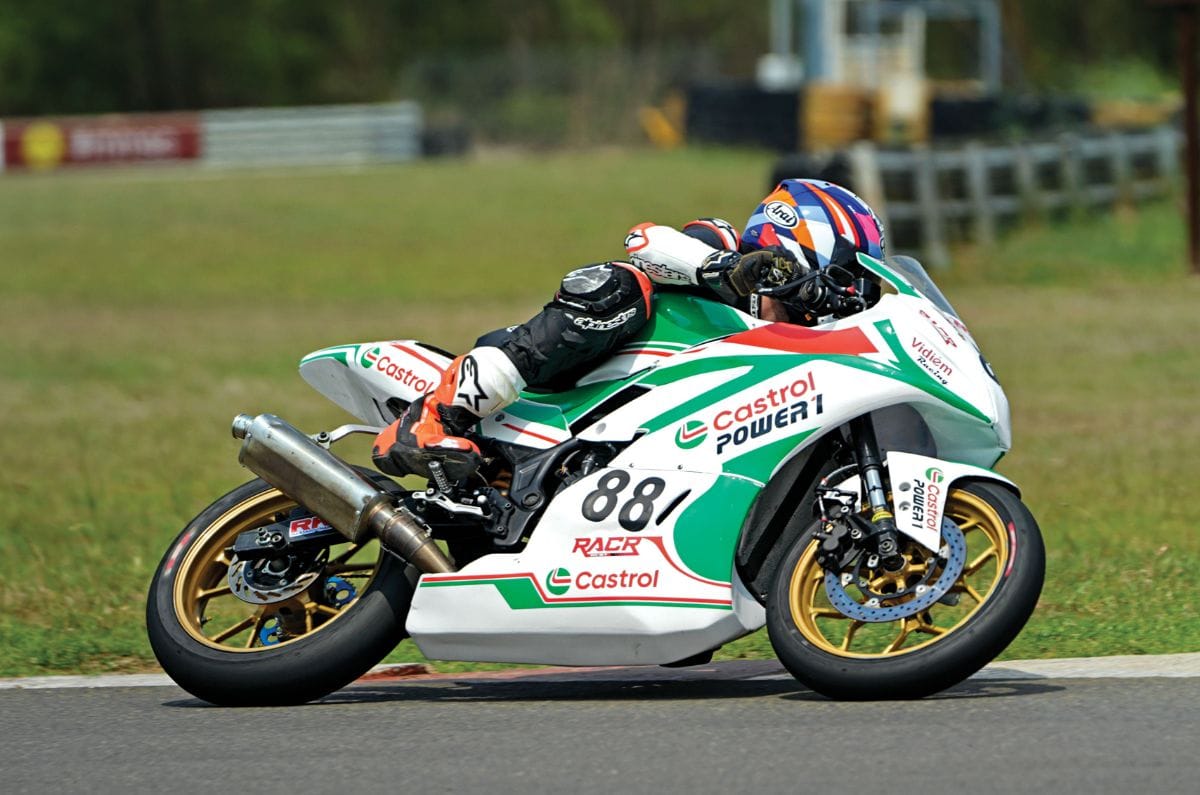
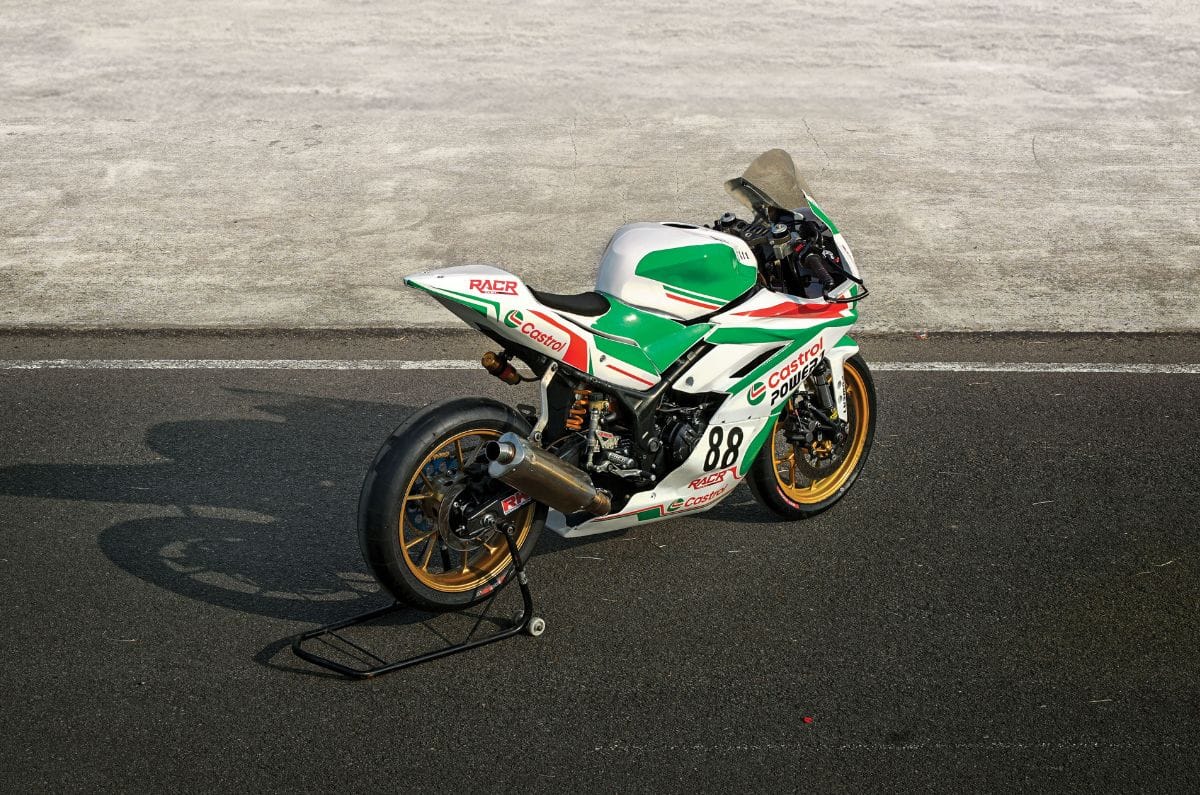
1:47.392. That’s the new lap record set last year by Team RACR’s Rahil Pillarisetty on this very bike. If you know your lap times around the Madras International Circuit, you’ll realise just how devastatingly fast that is. For some frame of reference, the fastest stock bike we ever ran at the Autocar Track Day (back when it used to be held at the MIC) was a 2019 Ducati Panigale V4 S, ridden by 11-time national champion Rajini Krishnan, which set a 1:49.001. Yes, Rajini also would have surely improved the timing if he had more time to work on the bike setup, and yes, the latest Panigale will be quicker. However, it still bends the mind when you realise that this race bike you see here is based on a humble Yamaha R3.
Recipe for speed
As you can imagine, a lot has changed on the donor bike, but there’s still a fair amount of the stock motorcycle’s soul preserved underneath. That’s because this bike comes under the Pro Stock 300-400cc category, which allows a lot of modifications, but also places quite a few restrictions.
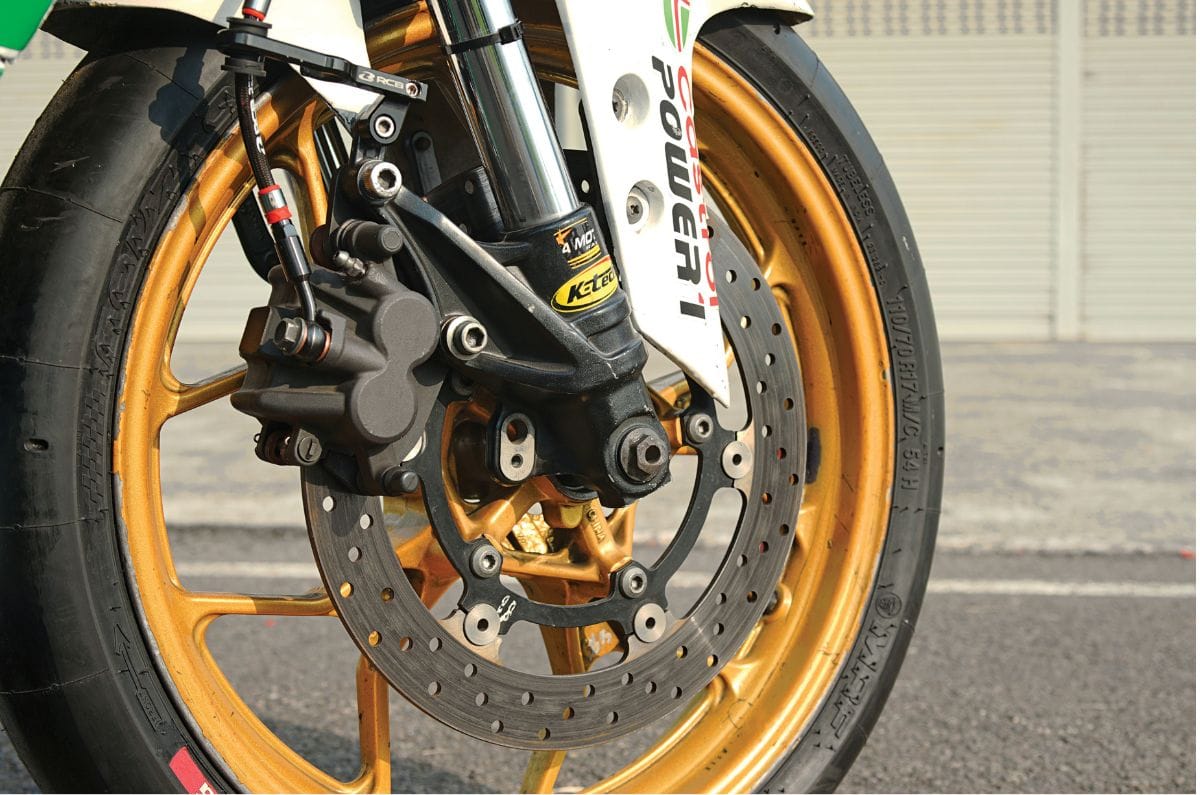
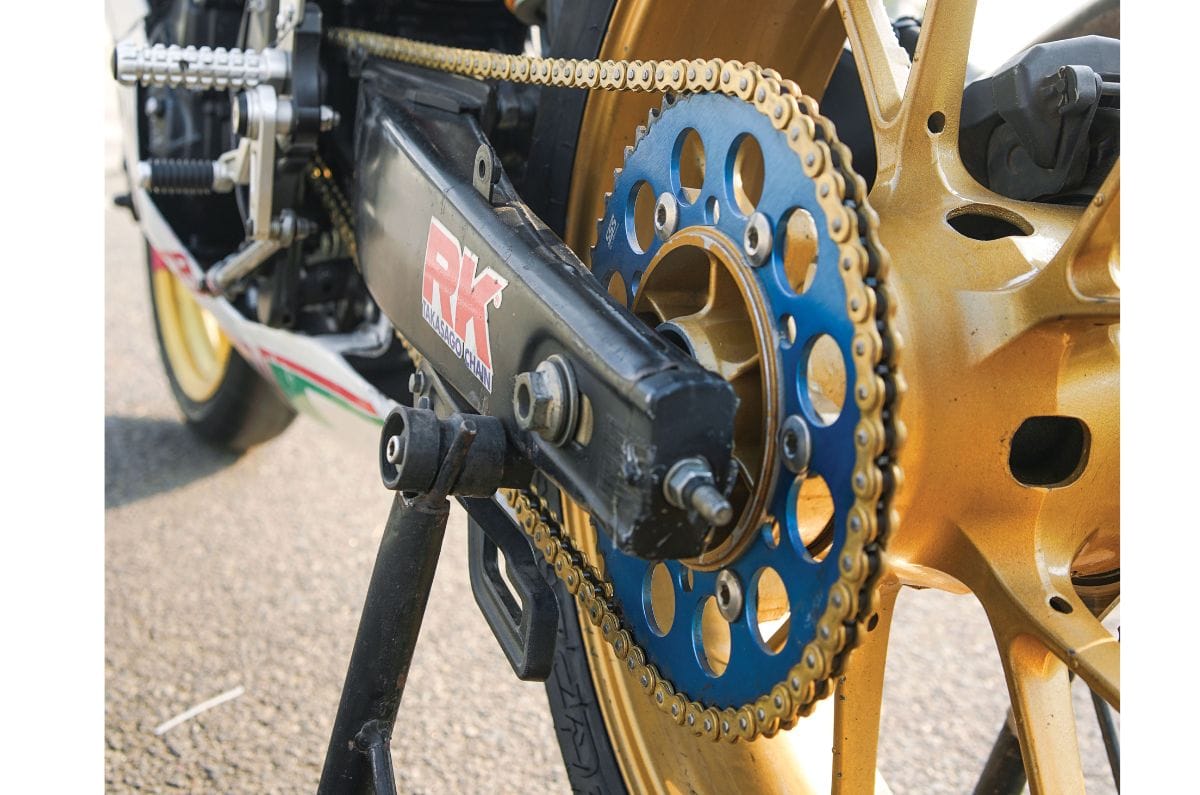
It would be easier to start with the significant things that aren’t allowed. The brake components have to be from any FMSCI homologated vehicle, and aftermarket brakes aren’t allowed. Forged metal or carbon-fibre wheels are not allowed either, although replacement wheels from any Indian-made FMSCI homologated vehicle are permitted. Fancy weight saving materials like carbon fibre, titanium and magnesium are also on the no-no list, and the main chassis has to be absolutely stock.
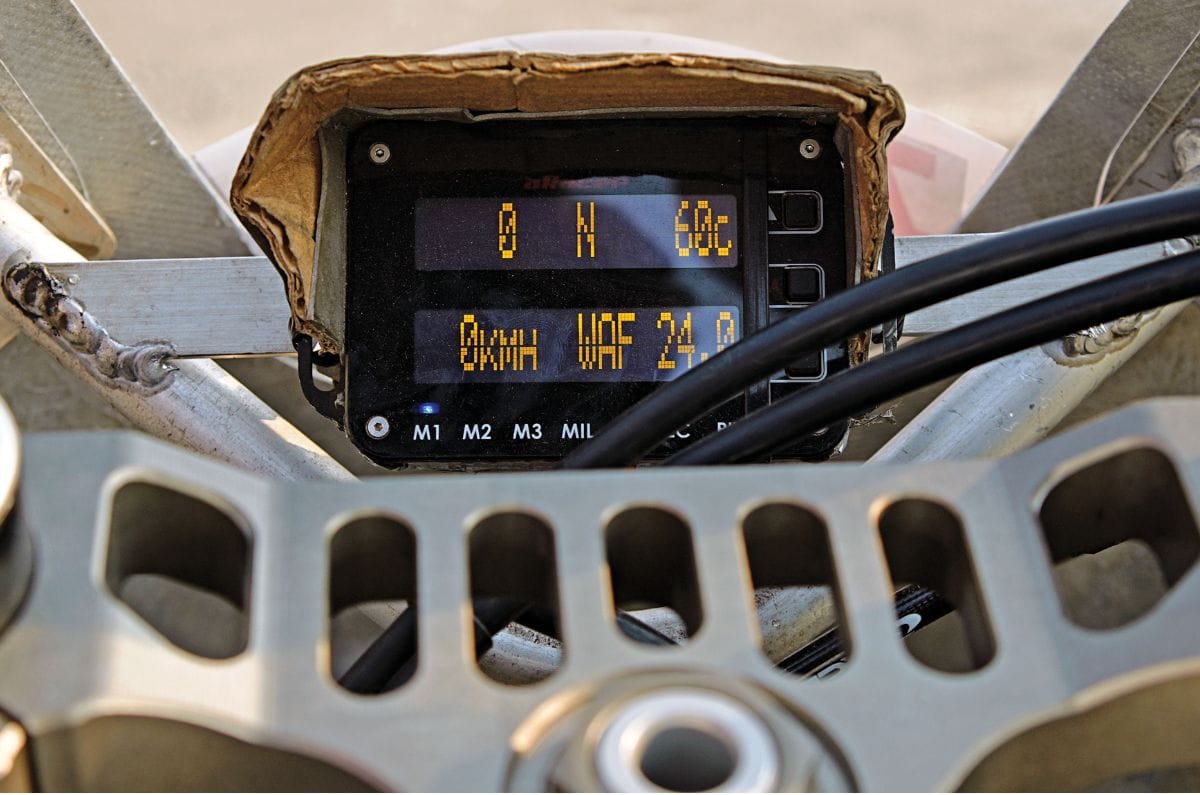
The engine capacity cannot be changed, but major modifications are allowed. This bike uses racing camshafts, larger throttle bodies, a ported head and bigger valves (by 1mm). Engine management is handled by an ARacer ECU, which also brings in a quickshifter, and the engine breathes through large trumpets. Cooling is vital, and the 321cc parallel-twin engine runs a massive racing radiator, which fills up much of the frontal area.
Deceptive power
The result of all these changes is a 55hp power output measured at the rear wheel, which is a big jump over the 36hp dyno figure recorded by the stock motorcycle. The engine redline is set at 14,000rpm, and the peak power sweet spot is between 12,000 and 13,000rpm. That power, combined with a super-light racing chassis, explains how speeds as high as 190kph were recorded during the races at the MIC circuit.
Having ridden plenty of big bikes over the years, I wasn’t initially overwhelmed by the performance. But witnessing how effortlessly it would fly past stock RC 390s and R3s on the straights quickly made it evident that this is a seriously quick bike. In fact, the RACR R3 was never dropped dramatically even by more powerful bikes between the corners.
Because the rules don’t allow gearbox modifications, the engine doesn’t scream through the gears with the short-geared ferocity I’d anticipated. Instead, it spends time revving through each gear, and you have to be careful not to go much higher than that 12-13,000rpm sweet spot. An extremely short throttle action (all of it in about a quarter turn of the accelerator) meant that it’s easy to call for all fifty five horses. However, that quick-turn throttle was also quite heavy, and I found this to be one of the more fatiguing aspects of riding this bike. After all, this was the only ‘heavy’ element to this motorcycle.
Featherweight fun
Things like an aluminium fuel tank and subframe, as well as fibreglass bodywork and a complete strip-down of every non-essential element, help cut the weight down to just 132kg – with its 8-litre fuel tank full! That lack of weight, along with the high-performance K-Tech/Öhlins front/rear suspension combo, is what really made this bike magic to ride.
The corner speeds that it is capable of nearly fried my brain, and this is entirely where the bike makes that incredible lap time. No matter how much I tried, I simply couldn’t get myself to fling the bike into corners with the sort of speed that it is built for. Despite this, I had a blast riding the bike through the day, and that was largely because it was rather friendly and encouraging. The suspension was set to perfectly handle MIC’s bumpy layout, and I only truly realised how well it was doing this when I hopped onto the Ducati Panigale V2 the next day (page 122), and was startled by how much it was being affected by the bumps.
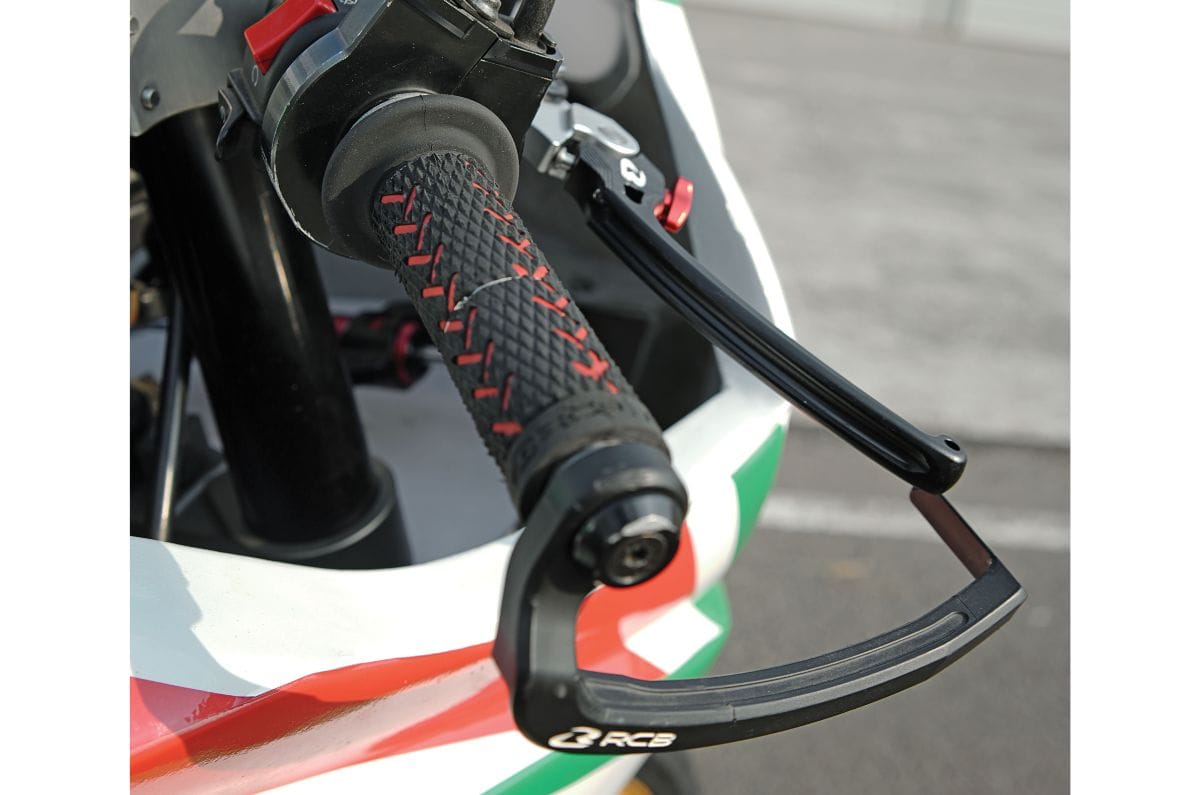
Of course, the bike is quite tiny, but I did manage to fit on it okay after the RACR crew kindly set the adjustable RCB footpegs to their lowest position. We left the suspension settings in Rahil’s setup, and that seemed to work well for me. He is a good ten-fifteen kilos lighter than me, but his immense skill and speed also make the suspension work much harder than I could, so it evened out in the end.
As you’d expect from something that carries such little mass, the R3’s steering is light and incredibly quick, but it also has a reassuring sense of composure. This faith in the chassis quickly allowed me to stop being intimidated by the bike and simply enjoy riding it. All things considered, the bike’s deliciously light and poised handling is why I truly fell in love with it.
Even the stock brakes worked perfectly well, partly because of the lack of weight, and also because MIC doesn’t have many particularly heavy braking zones. Of course, at pure race pace, I imagine it could be quite a different animal, and that’s where the steering damper would earn its place, but for my pace, it was a complete joy.
Racing 101
As you might expect, there are zero electronic rider assists, but I never felt like it needed any. The bike runs on MRF racing slick tyres, which offered very good grip, but not a lot of feedback, and I wasn’t getting much feel for where the limit lay. Team RACR made sure I had the full racing experience, with tyre warmers being slapped on between every session and a giant cooling fan being pointed at the radiator when the bike was parked in the pits.
In fact, a bike like this would make for a superb track toy, and it will teach you the art of carrying higher corner speeds instead of more lazily using the power of a bigger bike on corner exits. However, such major engine modifications are best avoided. Because this is such a highly stressed engine, it needs part changes every race weekend and a full rebuild every two race weekends. The latter includes changing core components like the camshafts, pistons, and even the crankshaft!
In fact, Rajini let me know that running just one of these bikes for an entire season costs about Rs 25 lakh when you factor in routine part-change costs and crash damage. Team RACR ran three of them last year, with Rajini himself piloting one – and they even had an additional bike as a spare!
Racing is undoubtedly an expensive business, and Team RACR does this with no support from Yamaha India, something that will hopefully change soon. What really earns my respect, though, is that this is a relatively small operation that has fully developed this bike in-house in Chennai. Despite this, they managed to beat a factory race team last year, and Rahil won the overall championship on this very bike.
 Autocar India Team
 Stephen Raj Antony
 Vishal Venugopal