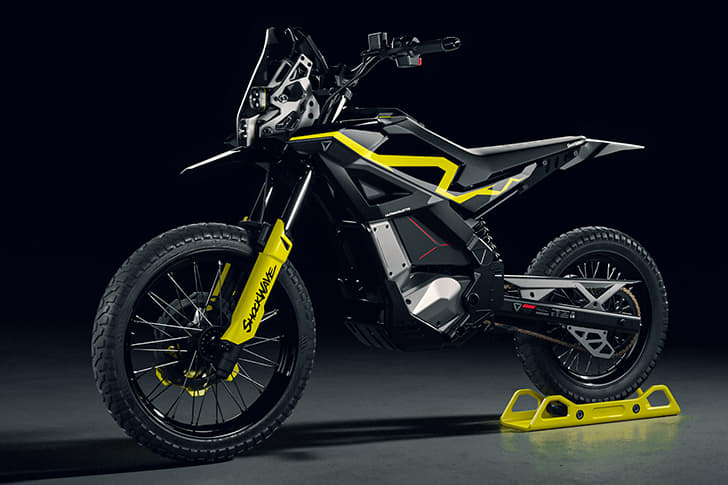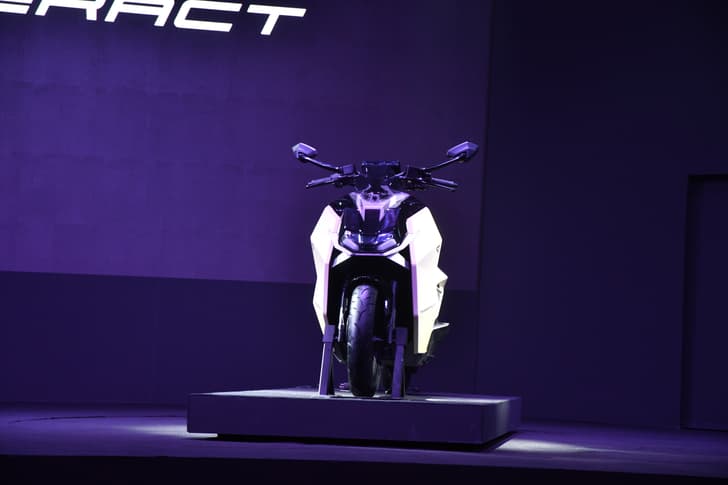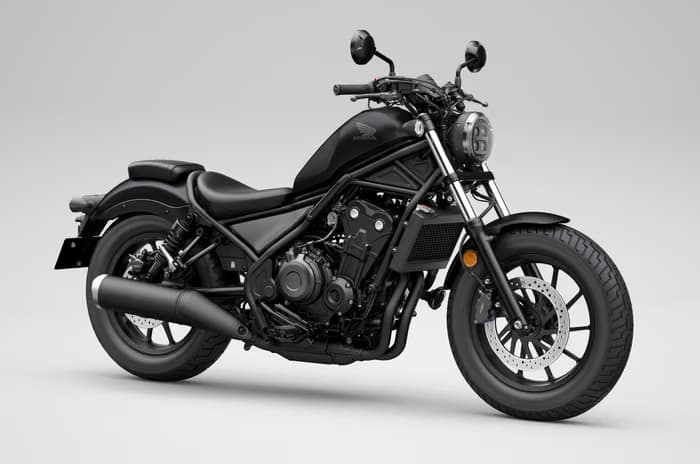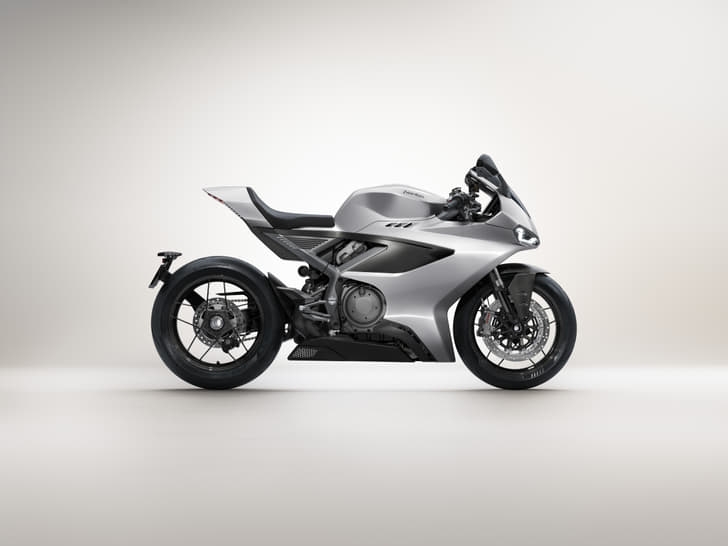
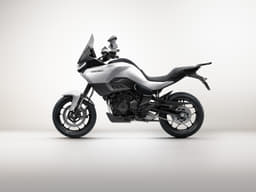

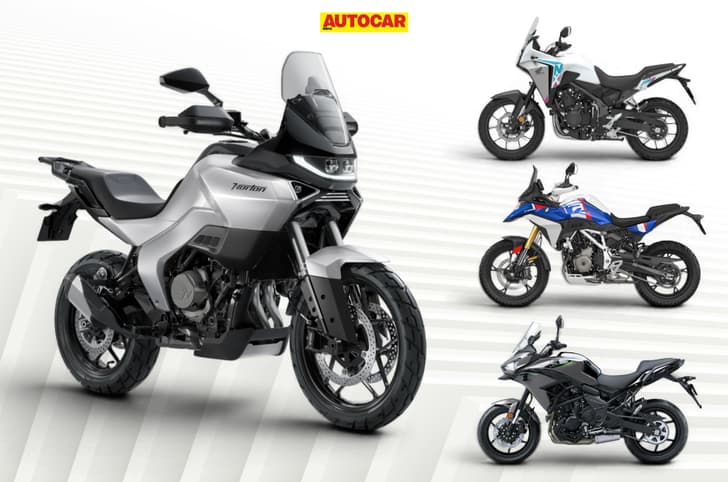
Norton’s introduction in India is gathering momentum, with the company now revealing full specifications for the Atlas and Atlas GT – its two new middleweight adventure bikes that have already been spotted testing extensively on Indian roads. While the Atlas GT adopts a more road-focused approach, the standard Atlas is aimed more at the adventure segment, where it will face an increasingly diverse set of rivals, including the recently launched BMW F 450 GS, the Honda NX500 and the long-established Kawasaki Versys 650. Here’s how the Norton Atlas stacks up against the trio.
Norton Atlas vs rivals: Engine and output
The Versys 650 has the largest engine, but the Atlas makes the most power
All four bikes are powered by a parallel-twin engine. On paper, the Norton Atlas comfortably leads this group on outright power, with its 585cc unit producing 70hp – a healthy margin over the BMW and Honda, and slightly more than the larger-displacement Kawasaki. However, the Versys 650 is the torquiest of the lot. The Honda and BMW are closely matched, with near-identical peak output figures despite a slight difference in displacement.
Norton Atlas vs rivals: Weight and dimensions
The BMW is the lightest by a wide margin
What the BMW F 450 GS lacks in outright displacement and peak output figures, it more than makes up for with its low weight. At 178kg, it is comfortably the lightest motorcycle in this comparison by a sizeable margin.
Norton quotes the Atlas at 188kg without fuel, so a direct comparison isn’t possible. However, once its 15.4-litre fuel tank is filled, the Atlas should exceed the 200kg mark, making it heavier than the Honda NX500 but likely lighter than the Kawasaki Versys 650. At 220kg, the Versys is the heaviest motorcycle here, which is somewhat expected given its larger engine and the biggest fuel tank in this comparison.
In standard form, the Atlas, F 450 GS and Versys 650 all share an identical 845mm seat height. BMW, however, offers an optional low seat that reduces the F 450 GS’s seat height to 830mm – on par with the Honda NX500.
Norton Atlas vs rivals: Suspension, brakes and tyres
The Atlas is available in a GT variant that gets 17-inch wheels at both ends
All four motorcycles use a USD fork up front and a monoshock at the rear, although the level of adjustability varies across the bikes and even by variants. The BMW F 450 GS is the only model here to make do with a single front disc, while the others feature twin-disc setups. That said, during our time with the F 450 GS, we found braking performance to be well judged, offering a good balance of stopping power and feel at the lever.
Of the four, the Kawasaki Versys 650 is the only motorcycle to use a road-focused 17-inch wheel setup at both ends. It’s worth noting that the Atlas GT – the more road-oriented sibling to the standard Atlas – adopts an identical approach. It also gets reduced suspension travel of 140mm front and rear, along with a lower 815mm seat height. So if the road-biased dynamics of the Versys 650 are what appeal to you, the Atlas GT could prove to be the more relevant Norton alternative.
Norton Atlas vs rivals: Features
The Norton and BMW offer a comprehensive suite of electronics
The Norton Atlas comes with a particularly comprehensive electronics package, centred around an 8-inch TFT touchscreen display. A Bosch six-axis IMU enables lean-sensitive ABS, traction control, cornering cruise control, wheelie control and rear slide control. It also gets over-the-air (OTA) updates, five riding modes, keyless ignition and electronic fuel filler cap access.
The BMW F 450 GS isn’t far behind. It offers a 6.5-inch TFT display, traction control, engine brake control, heated grips and Bluetooth connectivity as standard. And the range-topping GS Trophy variant also comes with BMW’s Easy Ride Clutch system.
The Honda NX500 and Kawasaki Versys 650 take a more straightforward approach to electronics. Both get TFT displays and traction control as standard, with the Honda being equipped with a 5-inch screen and the Kawasaki making do with a smaller 4.3-inch unit. Their feature sets may not be as extensive as those of the Norton or BMW, but they cover the essentials most riders are likely to use regularly.
Ultimately, pricing will be a massive factor in how the Atlas is positioned against this trio in India, but Norton hasn’t yet revealed it for our market. Its UK price of GBP 8,250 (approximately Rs 10.56 lakh) gives some indication, but with both Atlas models set to be manufactured at TVS’s Hosur facility, there’s a reasonable chance of a more competitive price tag here. We’ll update this comparison with pricing once it is announced.
 Ved Janve
 Stephen Raj Antony