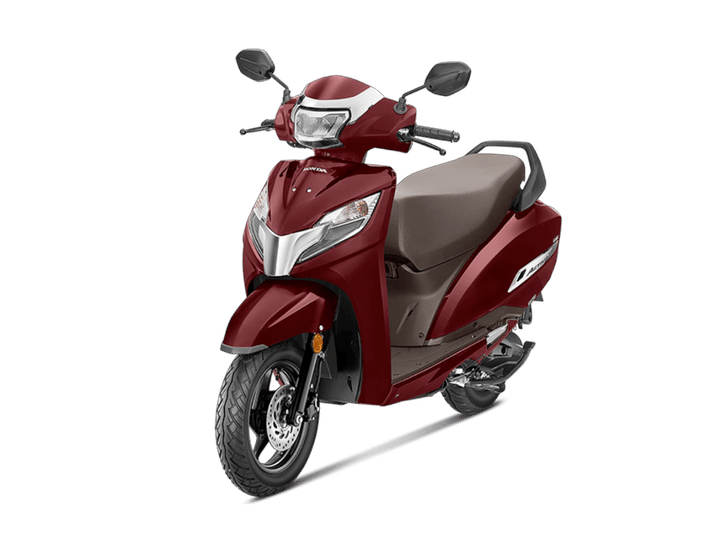

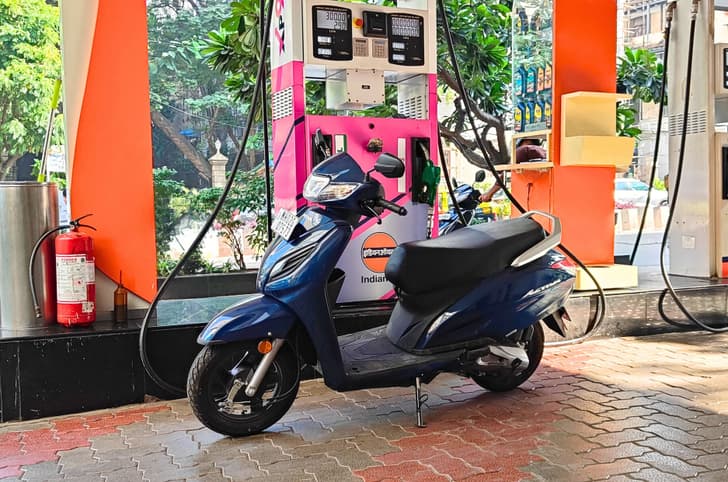
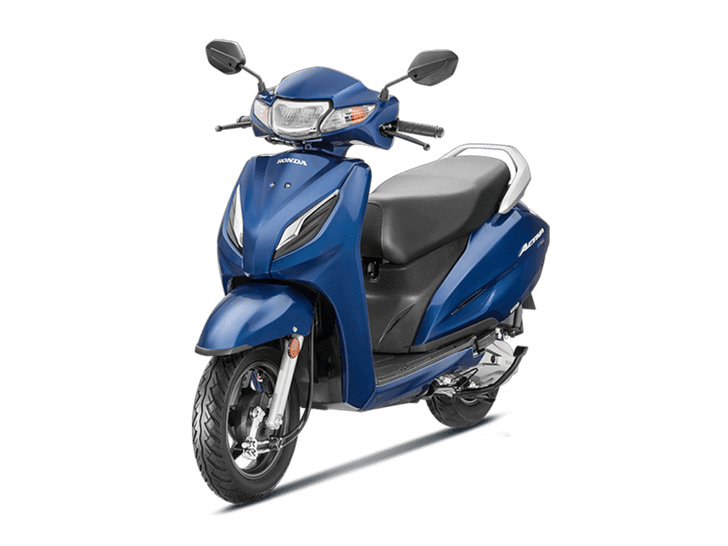
The Honda Activa has cemented its reputation in our market over the past two decades for quite a few reasons - the promise of bulletproof reliability, low running costs and great fuel efficiency. In this story, we’ll examine how the latest generation of India’s best-selling scooter fared when we put it through our fuel efficiency tests.
Honda Activa real-world fuel economy
Activa returned 60kpl (combined) in our tests
As is our routine, we first ran the Activa on the highway for a little over 50km, after which it needed a measly 800ml of fuel to brim its tank once more. Thus, we arrived at an impressive highway fuel efficiency number of 66.2kpl.
After that, we circled back to the jam-packed streets of South Mumbai, where we ran the Activa for close to 50km after which it needed just 900ml of petrol for its tank to be brimmed again. This gave s a city fuel economy number of 54.4kpl.
Honda Activa fuel economy analysis
What community is saying on the Activa 110?
Activa has a start/stop system that's quick on its feet
The Activa’s excellent fuel economy is no surprise because this sort of efficiency is more or less par for the course in the context of 110cc scooters. Even so, there are some nuances which have helped the Activa go the extra mile - literally - per litre of fuel.
The first is that the 110cc Activa, weighing just 105kg, is one of the lightest two-wheelers on sale in India and when the engine doesn’t have to haul around a lot of weight it will naturally return better economy. The second reason is that the Activa’s long-stroke engine is tuned to deliver most of its performance in the lower part of the rev range, which means that in most scenarios you don’t have to twist the throttle wide open to make quick progress.
.png?w=700&c=0) Finally, you have Honda’s excellent fuel-saving start/stop system, which turns the engine off after a few seconds of idling and to restart it all you have to do is twist the accelerator and the scooter gets going almost instantly.
Finally, you have Honda’s excellent fuel-saving start/stop system, which turns the engine off after a few seconds of idling and to restart it all you have to do is twist the accelerator and the scooter gets going almost instantly. Autocar India’s fuel-efficiency testing
Our fuel-efficiency testing routine starts by first brimming the tank and ensuring the scooter is running the manufacturer’s recommended tyre pressures. The scooter is then ridden on fixed city and highway routes, where we maintain average speeds that best mimic real-world scenarios as well as keeping speed limits in mind. The payload on the scooters is kept constant by balancing rider weights and ballast, ensuring consistency across different vehicles and riders. At the end of the test cycle, the fuel tank is once again filled to the brim, giving us an accurate figure of how much fuel has been consumed against the trip meter reading.
 Autocar India Team
 Stephen Raj Antony
 Vishal Venugopal