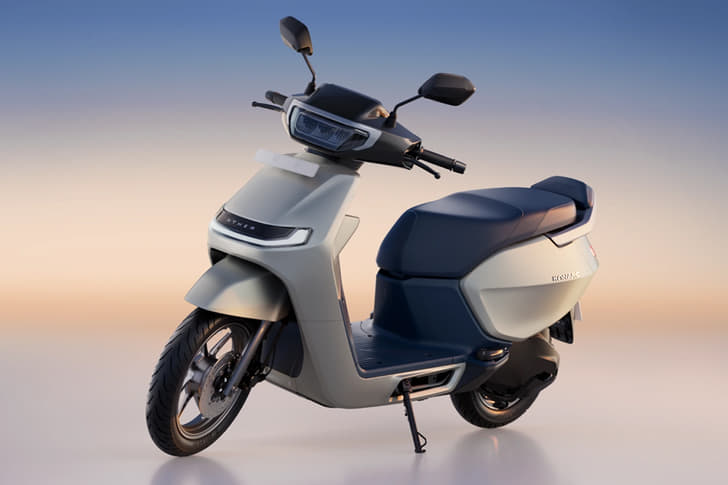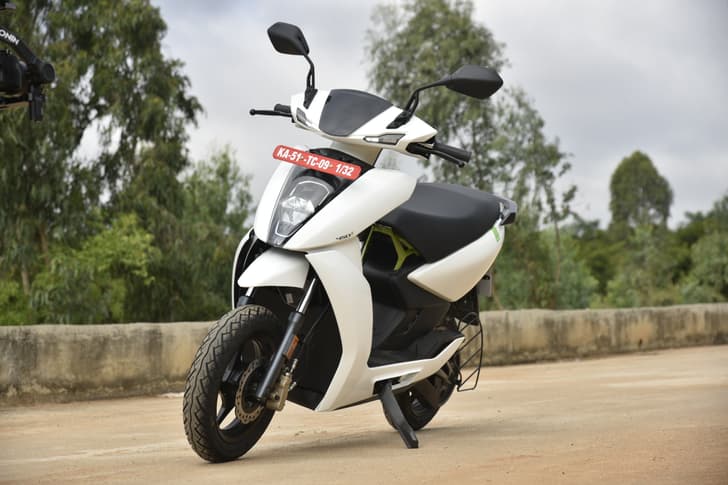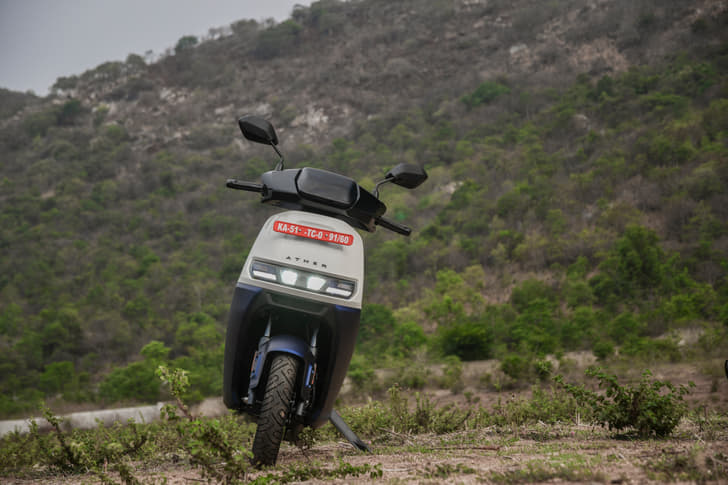

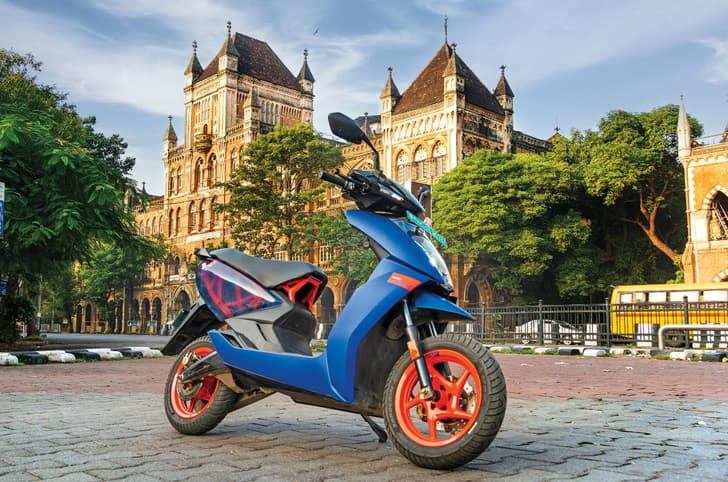
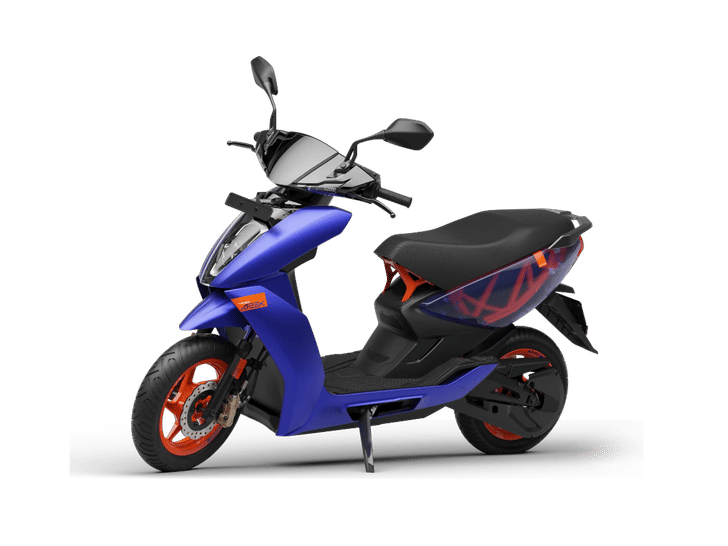
Apart from orange wheels and transparent side panels that reveal the bright orange trellis frame, the Ather 450 Apex gets a Warp+ mode that takes the performance up a notch. Additionally, as part of the Ather Stack 7.0 update, the scooter received some major updates to make the ride experience even smarter, convenient, and more engaging. We recently spent some time with the scooter and here is what our tests revealed. For reference, we also put it up against the 450X.
Ather 450 Apex: Acceleration
The Warp+ mode on the Apex offers really quick acceleration.
The Apex is impressive in the sprint to 80kph, taking just 2.96 seconds. We have also compared it to our test figures of the 450X (Gen 3) which we tested back in September 2022, and the acceleration of the Apex is around 4.5 seconds quicker in the sprint to 80kph. It is worth noting that the 450X (Gen 3) was tested in wet conditions. While there is hardly any difference up to 40kph, the Apex has much sharper top-end performance.
Ather 450 Apex: Roll-on acceleration
The motor in the Apex delivers 7.0kW (9.5hp) of peak power and 26Nm of torque. The 450X in comparison has a peak power output of 6.4kW (8.7hp).
In our roll-on acceleration tests, the bike took 2.72 seconds in the 20-50kph run and 6.05 seconds in the 30-70kph run. Compared to the Ather 450X, the Apex is just a bit quicker in Warp+ mode with the difference being 1.06 seconds in the 30-70kph dash. In the 20-50kph sprint, there is not much of a difference with the time split by 0.46 seconds.
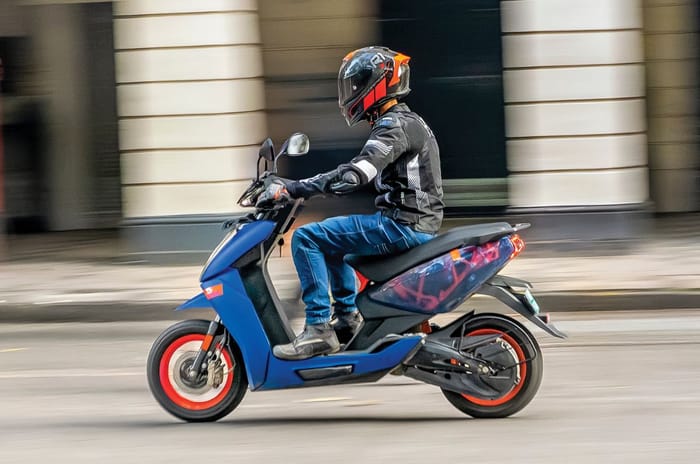
Ather 450 Apex: Braking
Sharp brakes but misses out on ABS.
Braking
Speed
Distance
60-0kph Braking Test
21.66m
Speed Distance | 60-0kph Braking Test 21.66m |
The Apex gets a disc brake at both ends but misses out on ABS. In our braking test, we noticed that the scooter easily locks up under hard/emergency braking, and increases the stopping distance. In normal city riding conditions, the brakes offer sharp bite. At this price point, at least having single-channel ABS would have been a nice addition.
Ather 450 Apex: Specifications and price
The Ather 450 Apex is the most expensive scooter in its segment.
Specifications and Price
Battery Capacity
3.7kWh
Battery Type
Lithium-ion
Peak Power
7.0kW
Torque
26Nm
Kerb Weight
111.6 kg
Seat Height
780mm
Brakes (F/R)
200mm disc / 190mm disc
Tyres (F/R)
90/90-12 / 100/80-12
Price (ex-showroom)
Rs 1,89,999
Battery Capacity 3.7kWh | Battery Type Lithium-ion | Peak Power 7.0kW |
Torque 26Nm | Kerb Weight 111.6 kg | Seat Height 780mm |
Brakes (F/R) 200mm disc / 190mm disc | Tyres (F/R) 90/90-12 / 100/80-12 | Price (ex-showroom) Rs 1,89,999 |
The 2025 Ather 450 Apex has a price tag of Rs 1.90 lakh (ex-showroom), making it a unique and premium offering with no direct rivals. It is a statement from Ather to show what the 450 platform is capable of and a product that will appeal to enthusiasts.

 Autocar India Team
 Stephen Raj Antony
 Vishal Venugopal