
Autocar India
TH

tharun

3h

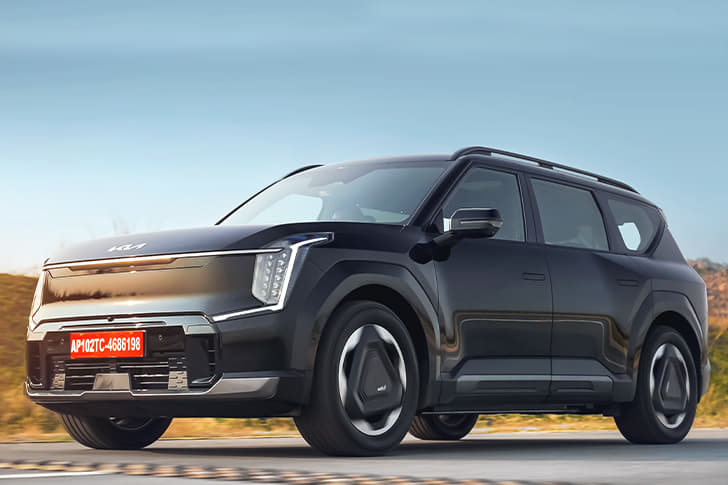
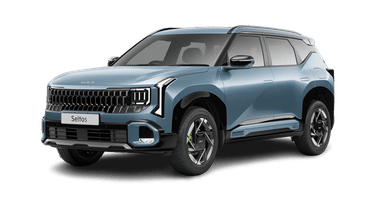
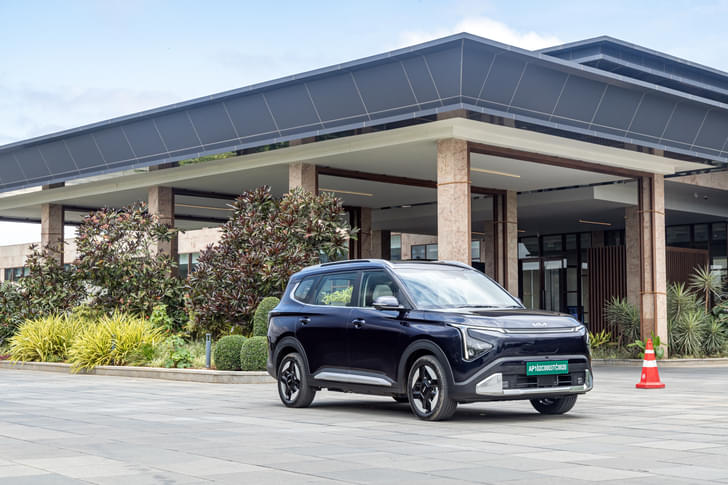
Hi Autocar India, I regularly read your news and advice articles, and I find them both interesting and helpful. I would like your guidance regarding a future car purchase. I am interested in buying an EV, particularly the upcoming Kia Syros EV. However, I have concerns about two aspects. First, as far as I understand, Kia currently does not offer a DC home charging solution, and I would prefer faster DC charging over conventional AC home charging. Second, I am concerned about battery health. My understanding is that current EV batteries cannot stand frequent DC charging. Is there a possibility that Kia could launch the Syros EV with a DC home EV charger and battery technology that can better withstand frequent DC charging? Given these concerns, would you recommend proceeding with the Kia Syros EV when it launches, or would it be wiser to postpone the purchase until these issues are addressed? I would appreciate your advice.

Autocar India team

Autocar India

Verified
5m

No manufacturer currently offers a DC fast charger for home installation as part of a mainstream EV package. Home charging is almost universally done via AC chargers, while DC fast chargers are intended for public charging networks.

As for battery health, there is no evidence to suggest Kia Syros EV batteries are unusually sensitive to frequent DC fast charging compared to other modern EVs. While regular DC fast charging can increase battery wear over very long periods, modern battery management systems are designed to minimise this effect.

If an EV is predominantly charged using DC fast chargers or is rarely charged to a high state of charge, it is generally advisable to charge it to 100 percent occasionally. This allows the battery management system to accurately calibrate and balance the individual cells within the battery pack, helping maintain optimal performance and range estimation. However, there is no need to charge to 100 percent every day. For routine use, most manufacturers recommend keeping the battery within a moderate charge window and reserving full charges for longer journeys or occasional battery balancing.
More questions on similar cars

KI

Kishore

3d

Hi experts, I own a Baleno RS and am looking to upgrade to an SUV. My daily usage is around 20km, and I take a highway trip once every three months. On average, I drive around 8,000km a year. I recently tested the Duster and enjoyed the drive, but the rear-seat space was not up to the mark. I am also thinking of checking out the Sierra. With the current trend of rising petrol prices, I am confused about whether shifting to an EV is worthwhile or if a petrol vehicle would still be ideal for my usage.

Autocar India team

Autocar India

Verified
4h

Pick the Tata Sierra petrol. Your daily 20 km and rare highway runs do not justify the extra price and charging fuss of an electric car, and you already flagged rear space as a concern. The Sierra feels roomier and comfier in the back than the Renault Duster you tried.You enjoyed the Duster’s drive, and rightly so, as it feels more eager and easier to throw around. But for quarterly highway trips and family comfort, the Sierra’s wider cabin and more relaxed ride suit your upgrade better. With 8,000 km a year, the fuel savings from an EV will take a long time to catch up; unless you have easy home charging and plan to keep it for many years, petrol is the simpler, lower‑risk choice.One trade-off is that the Sierra will cost more and won’t feel as engaging to drive as the Duster. If you mostly drive with just one passenger and love that driving feel, the Duster still tempts, but for space and ease, the Sierra wins.

VehicleTata Sierra
VehicleRenault Duster

Popular discussions right now

AD

Abhishek Das

1w

I am planning to purchase a new automatic car and am confused between the Honda Amaze ZX CVT and the Skoda Kylaq Signature Plus AT. My usage will be around 90% city driving, primarily for office commuting between Dwarka, Delhi and my office near IFFCO Chowk, Gurugram (approximately 25 km one way). However, I will not be driving daily, as I often use the Metro as well. The car will also be driven by my 69-year-old father, so ease of driving, comfort, visibility, ingress/egress, and reliability are important considerations. Our previous car was an Alto K10 Manual, so this will be our first automatic car and a significant upgrade. Considering my usage pattern, family profile and the fact that we intend to keep the car for a long period for around 10 years, which of these two would you recommend?

Autocar India team

Autocar India

Verified
6d

Based on your requirement, we would recommend the Honda Amaze ZX CVT over the Skoda Kylaq Signature+ AT. The reason is that your priorities are not outright performance or driving excitement. You are looking for a car that will spend 90% of its life in city traffic, will also be driven by your 69-year-old father, and is expected to stay with the family for around 10 years. In that context, Amaze's strengths line up perfectly with your requirements. The CVT is smoother than the Kylaq's torque converter automatic in stop-and-go traffic, visibility is excellent, the car is easy to place on the road, ingress and egress are straightforward, and Honda's long-term reliability record is hard to fault. Coming from an Alto K10, it will already feel like a substantial upgrade in comfort, refinement and features.The Kylaq Signature Plus AT is the more desirable car from an enthusiast's perspective. The 1.0 TSI turbo petrol has more punch, the higher seating position is nice, and the overall package feels more substantial. However, it is also a larger vehicle to manoeuvre, and while the automatic is good, it is not quite as seamless in everyday traffic as Honda's CVT.Another point in Amaze's favour is that the ZX variant gets Honda Sensing ADAS, which adds useful safety features without making the car complicated to operate. Since your father will also be driving it, that extra layer of safety is a nice bonus.

VehicleHonda Amaze
VehicleSkoda Kylaq

Posted on: 12 Jun 2026