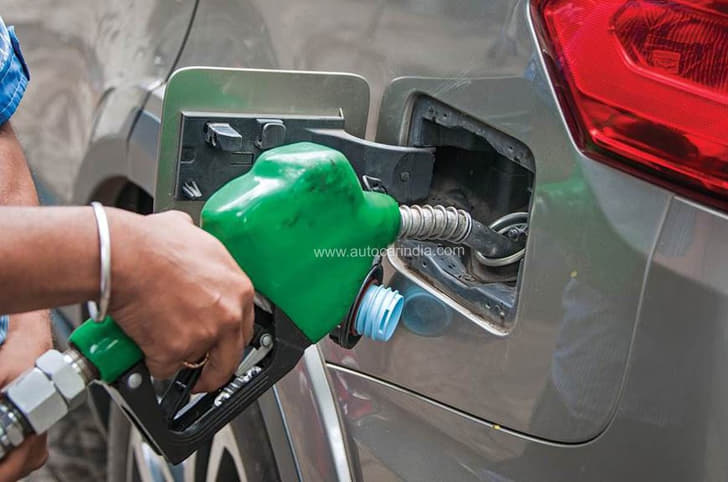
Insurance claims related to damage caused by E20 fuel in older, incompatible vehicles might not be honoured. Standard vehicle insurance policies don't cover consequential damage, which includes wear-and-tear and damage that builds up over time – E20-related damage would fall under this category, as ethanol-blended fuel tends to present issues in non-compliant vehicles over longer periods of time.
- ICICI Lombard statement confirms using E20 won’t invalidate insurance policies
- No clarification yet on whether E20-related damages will be covered
- Add-on covers do not account for “chemical corrosion from fuel”
A recent blog post from prominent private-sector insurer ICICI Lombard stated that using E20 in vehicles certified for E10 blends and lower could be perceived as “negligence”, thereby leading to claim rejection in the event of ethanol-related damage. This raises fresh concerns for the millions of Indian motorists who own E10-compliant or older vehicles, considering that E20 is the baseline petrol blend, and there are talks of increasing the ethanol content further.
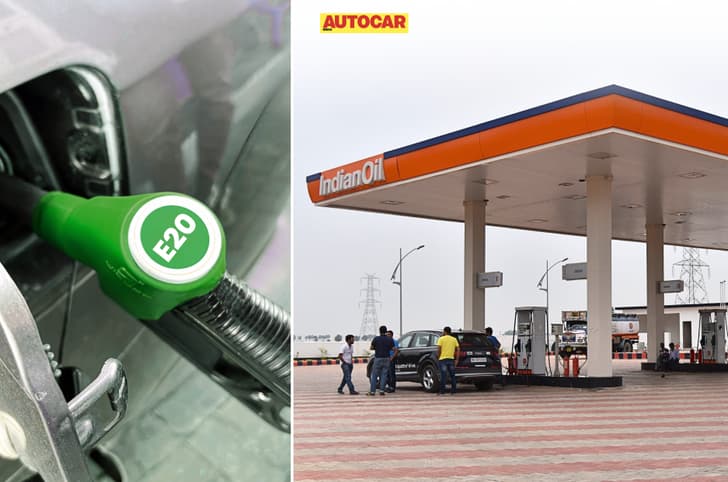
Since April 2025, E20 has served as the baseline petrol blend, so motorists cannot purchase E10 even if they want to. The only other option is XP100 (pure petrol), which is unfeasible due to limited availability and sells for a much steeper price of Rs 160 per litre.
ICICI Lombard says no claim rejections based on E20 usage
In an official statement, ICICI Lombard affirmed that “motor insurance policies remain fully valid by the use of E20 fuel,” and that it does not “treat usage of E20 fuel in older vehicles as negligence”.
“The type of fuel used in the vehicle, such as petrol, diesel, CNG, and so on, is not a determining factor in claim admissibility. Accordingly, if a claim is admissible with conventional fuel, it is equally admissible with E20 fuel, and ICICI Lombard does not reject claims merely on the basis of fuel usage,” remarked the insurer.
The statement was issued following widespread coverage of a blog post published on June 9, 2026, where ICICI Lombard noted that insurance claims arising from damage caused by E20 fuel could face scrutiny if the vehicle was not designed to run on the higher-ethanol petrol blend. According to the insurer, using fuel that a vehicle was not engineered to handle could be viewed as “improper use” or “negligence”, possibly leading to claim rejections.
Uncertainty around coverage from E20-related damage lingers
Reading between the lines, though, ICICI Lombard’s official statement does not address whether insurance claims will be rejected on the grounds of E20-related damage, which is the more pertinent issue here. The blog post stated that not “every damage claim linked to E20 will be approved”, as ICICI Lombard’s “standard policies usually exclude consequential damage, which is damage that builds up over time rather than happening in a single incident, like an accident”.
The primary risk with using E20 fuel in E10-compliant or older vehicles is indeed “consequential damage”, as the increased ethanol content can absorb moisture from the air and corrode fuel system components such as gaskets, seals, tanks and lines over extended periods of time. Purchasing add-on covers won’t help either, as ICICI mentioned: “Engine protection add-ons offer some coverage, but most are designed for water ingress or oil leakage, not chemical corrosion from fuel.”
A substantial portion of cars currently on Indian roads are not E20-compliant
ICICI Lombard’s remarks have sparked major concern among motorists whose vehicles are incompatible with E20 petrol. The government mandated E20 compliance for new vehicles alongside the BS6 Phase 2 emission norms that came into effect in April 2023. Since that was just over three years ago, it’s obvious that a huge chunk of vehicles currently plying on Indian roads are not certified for E20. This means they are at risk of consequential damage, and if the insurer rejects such claims, owners of non-E20-compliant vehicles may have little to no recourse in the future.
The problem doesn’t end there, either, as the government has repeatedly signalled a planned increase in baseline ethanol blending levels, possibly going up to E25 in the short term. ARAI was recently tasked with evaluating the impact of E25 on E20- and E10-compliant vehicles. Should the baseline blend increase to E25 in the coming months, owners of both E20- and E10-compliant vehicles may find themselves in the same boat.
 Autocar India News Desk
 Dhruv Dhaka

 Uday Singh