Kia Dct Cars in India (2)
Discover the best Kia Dct Cars. Our comprehensive guide covers detailed specifications, expert reviews, pricing information, and buying advice for Kia Dct Cars. Find the perfect cars that matches your requirements and budget.


Trending Questions on Kia Cars - Answered by Autocar Experts
Hi, I currently drive a 2014 Maruti Suzuki Dzire Petrol and am planning to upgrade to a new SUV. My shortlisted options are the Kia Seltos HTX(A) DCT and the Mahindra XUV 7XO Petrol Automatic. My biggest concern with the XUV 7XO is its low fuel efficiency. My monthly running is less than 1,000 km, as I work from home, with a 60:40 city-to-highway split in the NCR. I also plan to use the new car for trips to the mountains, so it should offer strong performance, sufficient torque, and confident handling. I also test-drove the new Renault Duster and loved the driving experience, but I wasn't impressed by Renault's showroom and after-sales experience. Which of these would you recommend for my requirements?
Given your usage of less than 1,000km a month with a 60:40 city-highway mix in NCR, the Kia Seltos HTX(A) DCT is the better fit. The Seltos turbo petrol DCT is a strong performer with good mid-range torque, making it well-suited for mountain drives and highway overtakes. It also offers a more polished ownership experience with Kia’s wider service network and better dealership consistency, which is important for long-term peace of mind.The Mahindra XUV 7XO petrol automatic is a more powerful and larger SUV, but it is also heavier and less efficient, which is a concern given your low running. The Seltos strikes a better balance between performance, efficiency and ease of ownership. The new Duster is a genuinely enjoyable driver’s car, but as a package does not score well against the Seltos in terms of equipment and space.The Seltos HTX(A) DCT is the most sensible choice here.
I have a strict budget of Rs. 12 lakh, and I'm looking for an automatic car, preferably with a DCT transmission in Kochi, Kerala. This will be my first car, and I don't have a lot of driving experience, so ease of driving is an important factor. My monthly running is around 500 km, with about 60% of it being in bumper-to-bumper city traffic. I'm primarily considering sub-4-meter SUVs. A reverse camera is a must-have feature for me, and after-sales service is also important. I recently test drove the Kia Sonet Petrol DCT and really liked it. However, I'd love to hear recommendations for other sub-4-meter SUVs in this budget. I'm also curious about the long-term reliability of DCTs. I've come across reports of jerking and drivability issues in heavy traffic after around 70,000 km. How common are these problems, and should they be a concern given my driving pattern, especially considering this will be my first car?
Given your budget and requirements, the Kia Sonet petrol DCT is actually a very sensible choice. This Kia car is one of the most polished sub-4-metre SUVs on the market, with a refined turbo-petrol engine, a well-appointed cabin and a strong aftersales network. The DCT gearbox is quick and smooth in normal driving, and the car is compact enough to be easy to manoeuvre in city traffic. The reverse camera is available on mid-spec variants, so you do not have to stretch your budget to the top-end model. The Kia Sonet price starts at Rs 7.40 lakh (ex-showroom). On the DCT reliability question, it is important to be realistic rather than alarmist. DCTs are fundamentally different from torque converter automatics. They use two clutches and can feel slightly jerky at crawling speeds, especially in stop-start traffic. Over very high mileages, clutch wear can become a factor, but this is not a widespread issue at 70,000 km if the car is driven sensibly and serviced on schedule. The Sonet's DCT is one of the better-tuned units in the segment, and for your monthly running of 500 km, it should not be a major concern. The key is to avoid excessive creeping on the brake and to shift to Neutral when possible.If you are open to alternatives, the Mahindra XUV 3XO petrol automatic is worth considering. This Mahindra car uses a torque converter automatic, which is smoother at low speeds and better suited to heavy traffic. The 3XO is also one of the most spacious sub-4-metre SUVs, with a wide rear bench and a strong safety rating. However, the boot is smaller than the Sonet's, and the overall cabin does not feel as premium.Given your requirements, the Sonet petrol DCT remains the best fit.
If I am going for the new Seltos turbo petrol DCT this year, will I be fine for the next 12-15 years if higher ethanol blended fuel introductions happen, or will the e20 be available till 15 years at least as an option for the customer? Also, what about the case where if I am to sell my Seltos in the next 10 years, will I get similar resale value for the car like the current used car market rates?
We wouldn't let concerns around future ethanol blends stop you from buying the Kia Seltos Turbo Petrol DCT. The car is E20 compliant, and while there has been plenty of discussion around E25, E27 and even E30, there is currently no official roadmap for moving beyond E20. Even if higher blends are introduced gradually in the future, manufacturers engineer a degree of tolerance into E20-compatible engines. The most likely impact would be a slight reduction in fuel efficiency and marginally faster wear of some fuel-system components over a very long period, not a major reliability issue.It's also highly unlikely that E20 fuel would simply disappear overnight. Any future transition to higher ethanol blends would almost certainly be gradual, giving both manufacturers and owners time to adapt. If you plan to keep the car for 12-15 years, we don't see ethanol compatibility as a compelling reason to avoid it today.As for resale, we wouldn't expect an E20-compliant Seltos to be at any disadvantage compared to its rivals. Resale values are influenced far more by factors such as the brand's reputation, service history, condition, mileage and overall demand in the used car market than by concerns over ethanol compatibility. If you maintain the car well, there's no reason to expect it to depreciate disproportionately because of E20.
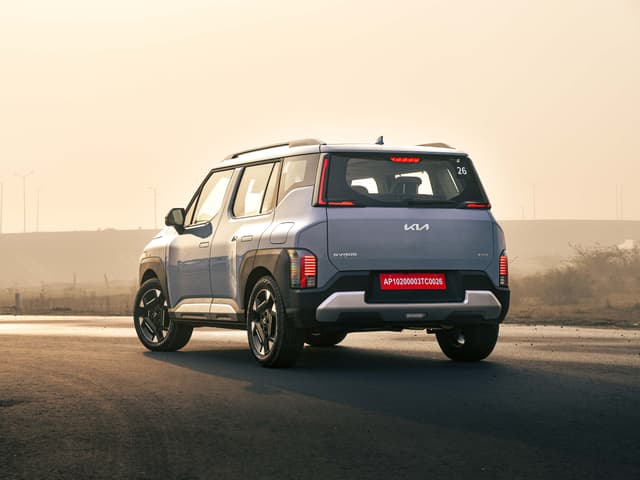
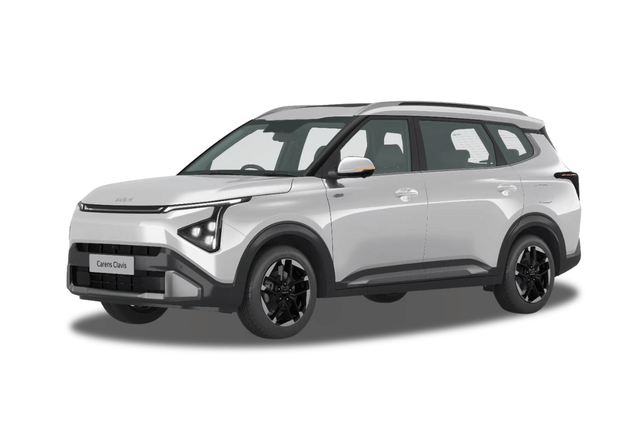
I want to buy a 7-seater family car. I am confused between the Kia Carens Clavis petrol DCT and the Carens Clavis diesel automatic. My daily usage is around 20 km, including 6 km on the highway and 14 km in the city. We also take two long family highway trips every year. My annual running is around 8,000 km. Since the petrol DCT's mileage isn't great, I prefer the diesel automatic. However, I'm concerned about DPF issues. Is it still okay to buy the diesel, considering it allows manual regeneration?
Go for the Kia Carens Clavis petrol automatic. With only 8,000 km a year and mostly city runs, the diesel’s DPF will be the bigger headache than any fuel savings. Short commutes are exactly what trigger frequent regens; yes, you can do manual regeneration, but stopping to run that cycle now and then gets old fast, and ignoring it can put the car in limp mode. Your two highway trips a year will not balance this.The petrol will be smoother and quieter in town. Although it delivers lower fuel efficiency, the annual fuel cost difference at your level of usage is relatively small. You also avoid the higher servicing costs associated with a diesel.If you still lean diesel, be ready to add a proper 20-30 minute highway spin once a week to keep the DPF happy. Otherwise, pick the petrol and drive with a light foot in traffic to keep mileage reasonable.
Hi, my car-buying parameters are these: a 4.3-metre SUV, 5-star safety, an affordable turbo-petrol engine with good highway performance, an automatic transmission for convenience, great ground clearance for Bangalore's bad roads, a large boot for travel, a decent cabin that feels acceptable and at least a little modern, and good stability, ride quality and comfort. I have narrowed it down to two cars: the Kia Seltos HTK/HTK(O) CVT and the Renault Duster Evolution DCT. But now I'm stuck in a vicious circle of confusion because I feel the Duster Evolution's interior, at around Rs 18.8 lakh on-road, is too basic compared to similarly priced Seltos variants like the HTK or HTK(O). I know Renault is offering a terrific engine, a great ride and a stable car, but I can't convince myself that manual AC knobs, no start-stop system and no auto-dimming IRVM are acceptable in 2026. I genuinely love the Duster, and it feels perfect for my family and me. It will mostly be my wife and me, and occasionally my parents and brother, travelling on long weekend journeys. Should I sacrifice the engine and performance and go for the nicer interiors of the Kia, or should I choose the more utilitarian Duster and accept that the cabin is relatively bare? I can't stretch my budget to the Seltos HTK(O) DCT or the Duster Techno DCT. Please help, I'm heavily confused.
Pick the Renault Duster Evolution DCT. Your use is long highway runs with family and Bangalore’s rough roads, and here the Duster’s 1.3 turbo and suspension make life easier and calmer. It overtakes cleanly even with four adults and luggage, rides over broken patches without slowing to a crawl, and feels very stable at speed. The Renault Duster mileage is claimed at 19.41kpl for the 1.0-litre turbo-petrol manual, while the 1.3-litre turbo-petrol delivers 17.75kpl to 18.45kpl, depending on the transmission.The Kia Seltos HTK/HTK(O) CVT is nicer inside, yes, but that 1.5 petrol with the automatic will feel flat when the car is loaded, and you hit inclines or need quick passes.Your worry about the Duster’s basic feature set with the Evolution trim is fair, but that’s the compromise that buys you the better drive for your highway trips. If most of your driving were city commutes, the Kia’s cabin and convenience would win. For your weekend highway touring, this Renault car's strengths will matter every single time.
Last Updated on: 7 Aug 2026