Hyundai Dct Cars in India (3)
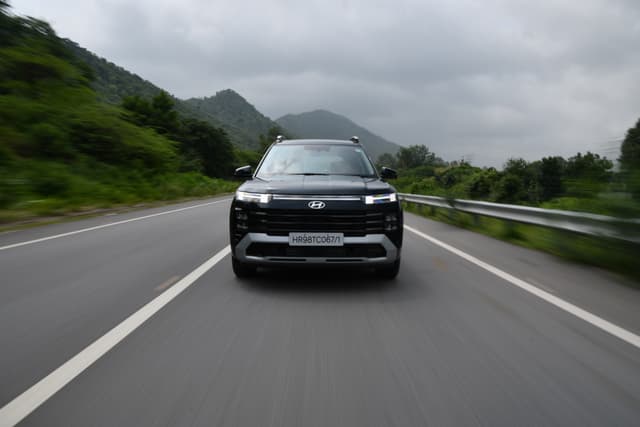
Discover the best Hyundai Dct Cars. Our comprehensive guide covers detailed specifications, expert reviews, pricing information, and buying advice for Hyundai Dct Cars. Find the perfect cars that matches your requirements and budget.

Trending Questions on Hyundai Cars - Answered by Autocar Experts
My budget is Rs 15-18 lakh, and I am currently considering three options: the Kia Seltos HTK(O) IVT, Hyundai Creta S(O) IVT and Tata Sierra Adventure DCT, mainly because it offers a 360-degree camera. I am a relatively new driver, so ease of driving, visibility, parking convenience and overall practicality are important to me. At the same time, I want good real-world mileage because most of my driving will be in the city. I have already test-driven the Creta S(O) IVT and really liked how it drove. However, I have heard that its real-world mileage may not be particularly impressive. Considering my requirements, which of these three would you recommend as the best overall choice? My priorities are: easy and confidence-inspiring for a new driver, good real-world mileage, reliable automatic transmission, 360-degree camera or good parking assistance, comfortable for city driving, and good long-term ownership experience. I am particularly confused between the Creta and Seltos IVT, while the Sierra DCT is tempting mainly because of the 360-degree camera. Which one would you choose in my situation, and why?
Go for the Hyundai Creta S (O) IVT. It is the best fit for your requirements as a new driver. The IVT automatic is smooth, reliable and easy to drive in the city, and the Hyundai Creta offers good visibility, a comfortable driving position and a well-balanced ownership experience.The Kia Seltos HTK (O) IVT is mechanically very similar, but the Creta is the better value package. Moreover, the Creta is slightly smaller and offers better visibility, making it easier to drive and manage for a relatively new driver.The Tata Sierra Adventure DCT is tempting with its 360° camera, but the DCT gearbox is not as well suited to city driving as the IVT, nor is it as efficient. Between the Creta and Seltos, it's quite close, but we'd recommend the Hyundai for its slight advantage in ease of driving.
We are planning to upgrade from a Hyundai i10 to an automatic petrol compact SUV under Rs 14 lakh. We have shortlisted the Hyundai Venue Turbo DCT and Skoda Kylaq Prestige AT. We liked the Venue, but we are not sure about the maintenance cost of its DCT gearbox.
Yes, dual-clutch automatic gearboxes are more complex and can be expensive to repair if something goes wrong. That said, the Hyundai Venue Turbo DCT is quite well-sorted. However, do keep in mind that if you drive a lot in stop-start traffic, it might not feel as smooth as a torque converter.The Skoda Kylaq AT uses a 6-speed torque converter automatic, which is far better suited to Indian conditions. It is smoother, and the Kylaq is more engaging to drive, with a strong turbo petrol engine and a well-balanced chassis. Overall, the Skoda car seems to be the safer and more sensible choice for you.
I am looking for a car that I can keep for the long term, around 8–10 years, with a budget of under Rs 15 lakh on-road in Bangalore. I would prefer an automatic with an SUV stance. My usage will mainly be a 15 km daily office commute, along with occasional highway trips. I am looking for something that looks modern, has enough space, and offers good after-sales service. A few options I have shortlisted are the Hyundai Venue/Sonet with DCT and the Renault Kiger with CVT. My main concern is whether DCTs are reliable for long-term ownership if they are regularly serviced, especially with bumper-to-bumper traffic 2–3 times a week.
Given the budget, usage and long-term ownership focus, we would recommend the Renault Kiger CVT over the Hyundai Venue or Kia Sonet DCT. A daily 15 km office commute with frequent bumper-to-bumper traffic, along with occasional highway trips, is better suited to a CVT than a DCT. CVTs are smoother at low speeds and work well in stop-start traffic. They can also be less demanding in such conditions over the long term.DCTs can be reliable when maintained properly, but they are not the ideal choice for regular stop-start traffic. Repeated low-speed crawling can generate heat and accelerate clutch-pack wear, potentially leading to expensive repairs over time.The Kiger also offers a modern design, a spacious cabin and a good feature set for its price. Renault's after-sales service has improved in recent years, while the Kiger offers strong value for money in this segment. The budget also stretches further with the Kiger CVT, allowing a higher-spec variant with some money left over. In comparison, the Sonet and Venue are positioned slightly higher, so the same budget would typically mean settling for a mid-spec variant.
I want an automatic car for my daily commute in Pune traffic. My daily running will be approximately 20 km for my office commute, along with occasional long trips on weekends. Considering the increasing ethanol blending and rising petrol prices, please suggest which option would be more practical for my usage. I am confused between Honda Amaze VX CVT and the Hyundai Venue HX6 DCT. I have heard that the 1.0-litre turbo DCT delivers significantly lower mileage than the CVT in traffic conditions like those in Pune.
For your usage, the Honda Amaze VX CVT is the more practical choice. Your 20km daily commute in Pune traffic means you need a car that is smooth, reliable and easy to live with, and the Amaze’s CVT gearbox is far better suited to stop-start conditions than the Venue’s DCT. The Venue HX6 DCT is a good car, but the 1.0 turbo petrol paired with a dual-clutch automatic of this Hyundai car is not the most efficient setup in heavy traffic, and the gearbox can feel a bit jerky at low speeds. The Amaze’s naturally aspirated petrol engine is also simpler and more predictable in terms of power delivery and mileage. This also helps with long-term ownership, and Honda’s reliability record is strong.On ethanol blending, both cars are E20-compliant and there is no official roadmap beyond E20, so it should not be a deciding factor. Higher ethanol blends will reduce fuel economy, but most cars are built with higher materials tolerances to handle slightly higher blends, should they be introduced. Honda, especially, has been at the forefront of compliance, being among the first brands to introduce E10 and E20 compatibility, well before their official introduction.The only reason to pick the Venue would be if you specifically want the SUV body style, a more feature-rich cabin or a more premium feel, but for your usage the Amaze is the better fit. The Venue HX6 DCT is also far more expensive than the Amaze VX CVT.
We are first-time car buyers from Warangal, Telangana. Both my parents, who are above 50 years of age, will be driving the car regularly, and nobody in our family has owned a car before. Around 60% of our usage will be on highways. We plan to keep the car for a minimum of 6-8 years. We also expect decent mileage, although we understand that both are turbo-petrol cars, so we are not expecting very high fuel efficiency. Between the Kylaq's torque converter and the Venue's DCT, which one is genuinely easier and less stressful to drive for a 50 years+ first-time driver in daily city traffic? For Kylaq Signature Plus AT owners, how is the automatic transmission performing in real-world city driving? Are there any complaints after a few months of ownership? We do have a Skoda dealership in our city, but we would like to know how smooth the actual service experience has been for owners in similar Tier-2 cities. Given that we previously cancelled our Venue HX8 DCT booking due to concerns about ethanol blending, which was priced at Rs. 16.1 lakh on-road, does going back to the Venue HX6 make practical sense, or are we just going in circles? I'm personally interested in the Kylaq, but the car will mostly be used by my parents. If any issue occurs, I want the service centre to be able to resolve it easily without troubling them too much or having the car remain at the workshop for weeks.
In your case, the Venue HX6 Turbo DCT is the better choice. The Hyundai Venue price starts at Rs 8.00 lakh and goes up to Rs 15.65 lakh (ex-showroom, Delhi).While the Kylaq is the more enjoyable SUV to drive and its torque converter automatic is smoother than the Venue's DCT in slow-moving traffic, your priorities are different. This will be your family's first car, both your parents (50+) will be driving it regularly, and you plan to keep it for 6-8 years. In that context, Hyundai's larger service network, more established ownership experience and easier support in a tier-2 city like Warangal give it the edge.The Kylaq's 6-speed torque converter is an excellent automatic petrol car and is likely to feel more natural than the Venue's DCT in bumper-to-bumper traffic. However, the Venue's DCT has matured over the years and is perfectly manageable with normal driving. On the highway, both cars perform well, but the Kylaq has the better ride and handling balance, making it the more rewarding car to drive.As for going back to the Venue after cancelling the HX8, it doesn't mean you're going in circles. The HX6 sits at a much better price point and represents stronger value for money than the HX8 did. Also, concerns around future ethanol blending shouldn't be the deciding factor today. E20 petrol will continue to remain the standard fuel for the foreseeable future, and manufacturers design their latest turbo petrol engines to run on it.
Last Updated on: 12 Sept 2026