What’s new?
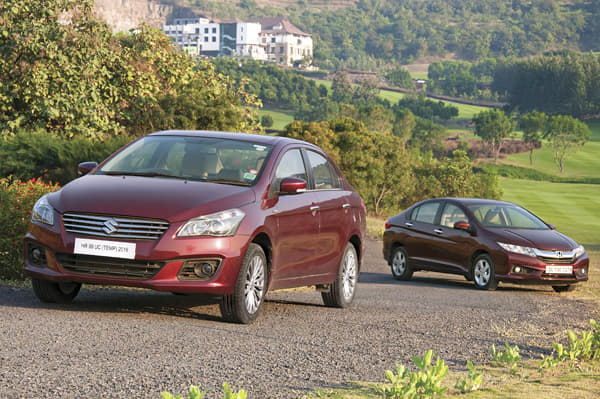
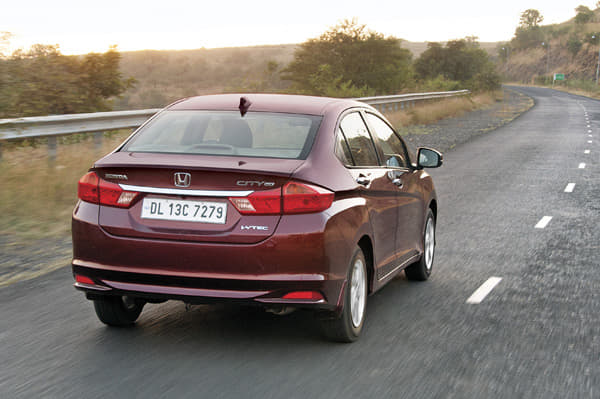
As far as mid-size sedans go, Maruti has never managed to make a dent in the segment. The Baleno was too expensive and the SX4 wasn’t efficient enough to compete with its rivals. With its latest offering, Maruti has made sure it hasn’t faltered on any of those counts, and the Ciaz is easily its best shot at finally cracking the segment that has long eluded it. The Ciaz is big, well equipped, and with a price tag of Rs 8.59 lakh for the top-spec ZXi (O) petrol trim, competitively priced too. Trouble is, the competition has grown stronger. And when we say competition, we mean the Honda City – a car that has dominated this class through its generations. The City is well engineered, has a bomb of a petrol engine and, as a package, is hard to fault. But, at a price of Rs 9.91 lakh for this top VX variant, the petrol City is a good Rs 1.3 lakh more expensive than the Ciaz. Can the Honda justify its premium? That’s what we’re here to find out.
What are they like inside?
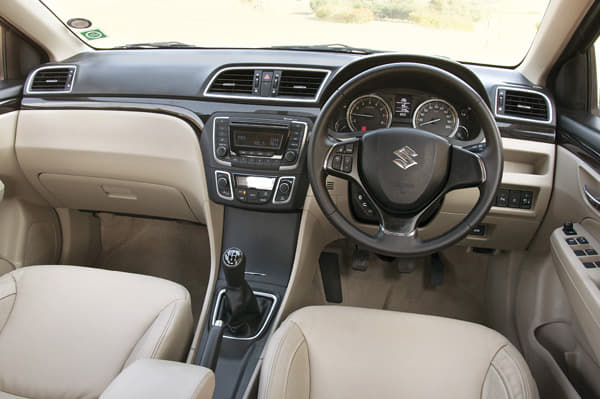
The Ciaz’s uncluttered and European-inspired dashboard looks elegant.Yes, some parts such as the window switches and trip computer are shared with the Swift, but overall, the quality and fit and finish will leave most customers content.
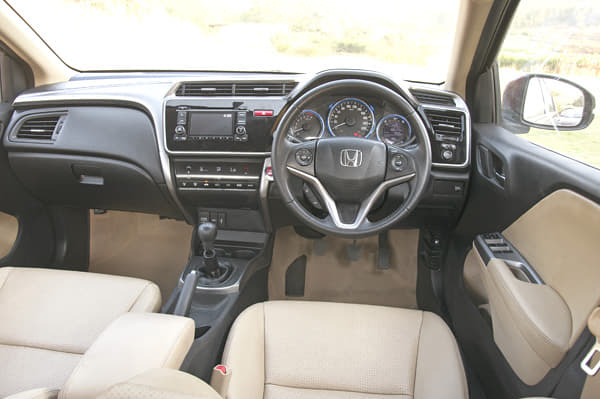
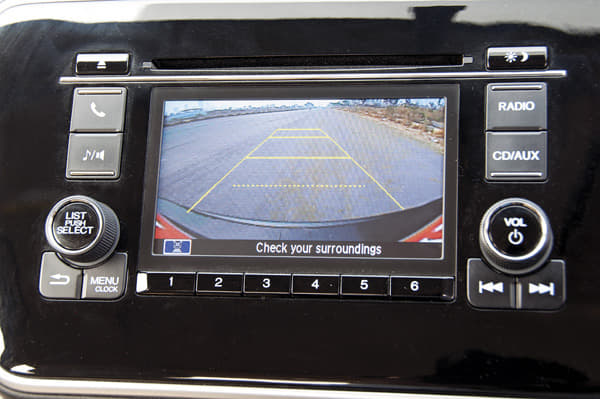
Between the two, we preferred the Ciaz’s dash, and its coherent architecture, over the City’s busy design. What is missing on the Maruti, though, is a colour screen interface, which the City gets, and this makes the Ciaz’s audio system, (though functional) look rather plain.
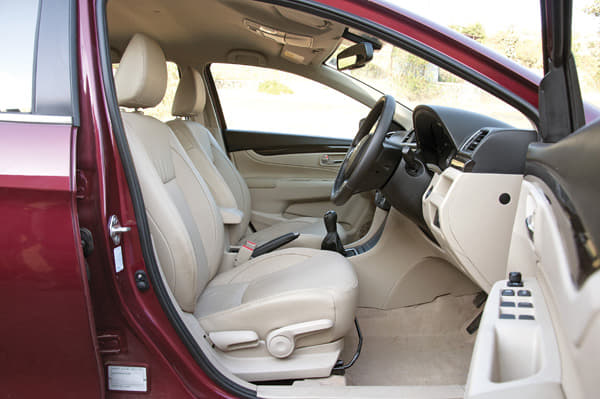
The front seats on the Maruti also feel a bit too high even in their lowest setting, which may make finding an ideal driving position a touch difficult for taller folk. And while the front chairs are pretty comfortable, they are nowhere near as supportive as the City’s.
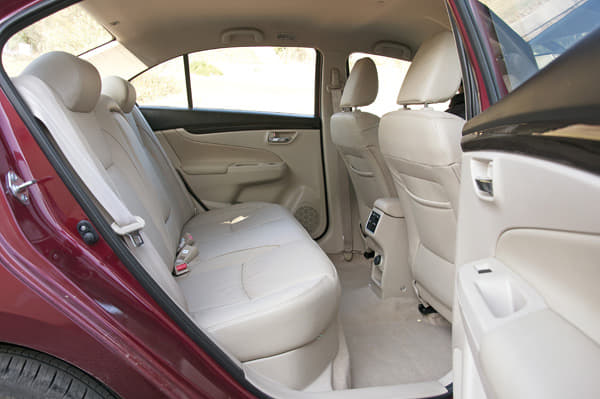
Both cars have fantastic legroom at the rear and would make a great buy for the chauffer driven. There’s almost an excess of legroom in the Ciaz – with the front seats fully pushed back, even taller passengers won’t find knee room in short supply. That said, they won’t feel the same about headroom, which is a bit tight on both cars. Also, the Maruti’s cushioning feels a bit too firm and thigh support is limited as well. This means, while the Ciaz is a bit more spacious, comfort isn’t as good as in the City.
The City’s rear bench is easily the most comfortable in this class. Sure, it doesn’t have as much knee room as the Ciaz, but it is more than enough, and the ample cushioning, generous thigh support and a nicely judged backrest angle make it a relaxing place.
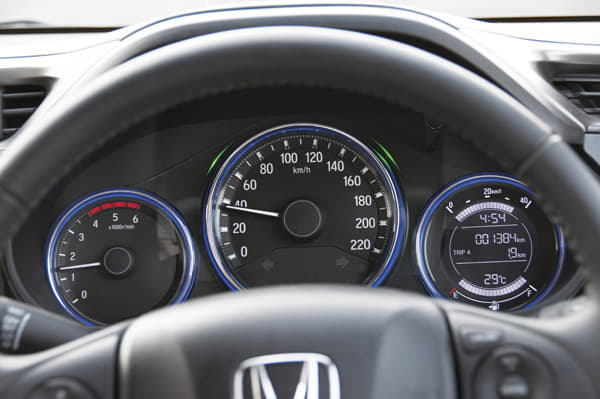
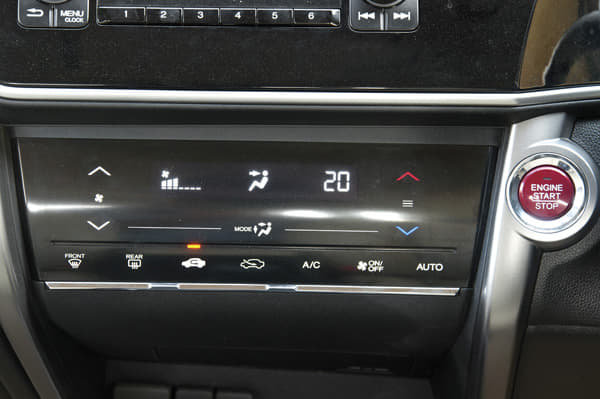
Similarly, the front seatsare very comfortable and it’s easy for most people to get into a good driving position. That said, the busy, asymmetric design of the dashboard draws mixed reactions. The unique touch interface for the climate control looks modern, but you have to take your eyes off the road to operate it. Also, the overall material quality is patchy. While the switchgear and steering feel well made, the hard plastics on the dash don’t.
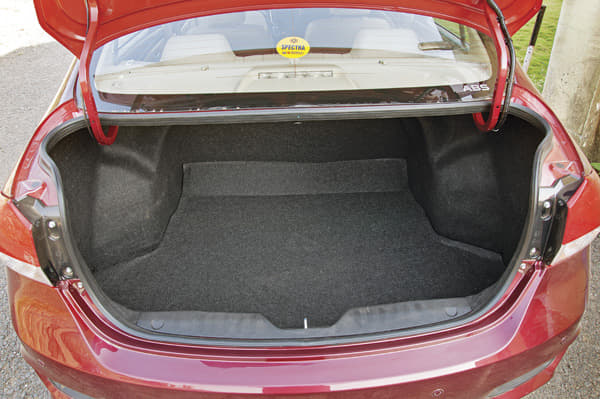
Both cars can hold a fairbit of stuff. The cabins have enough stowage for your phone, MP3 players, bottles and cups, while the boots are large enough for an airport run.
What are they like to drive?
On paper, the Ciaz’s 91bhp, 1.4-litre engine looks underpowered stacked up against the City’s 117bhp, 1.5-litre motor. The Maruti’s engine is the same basic unit as the one in the Ertiga, but Maruti has tinkered with it to improve responsiveness at low speeds. So within urban confines the difference in power doesn’t feel as stark and, surprisingly, the Ciaz feels sprightlier in slow-moving, stop-and-go traffic. The Ciaz performs well on the highway too, but the motor doesn’t like to be pushed hard and punches best between 2,500 and 5,000rpm. The five-speed manual gearbox shifts smoothly but the clutch, though light, isn’t as effortless as the City’s.
On the other hand, the City loves the open roads and this is where its extra 26 horses immediately show up. The Honda’s engine loves to spin fast and delivers its best when pushed. The dizzy 7,000rpm redline combined with a big dose of power near the limit gives the City a big advantage during flat-out acceleration. To put things in perspective, the City takes a scant 10.13 seconds to hit 100kph, which is almost two seconds faster than the Ciaz. It’s also a very flexible motor. You can just stick it in third gear at 30kph and the motor will pull cleanly till 130kph in the same gear!
The City’s motor sounds sporty and enjoyable when spun hard, but under regular driving conditions, the Ciaz’s cabin is quieter and better-insulated from road, engine and traffic noise.

 Dipan Sur
 Viraaj Bhatnagar