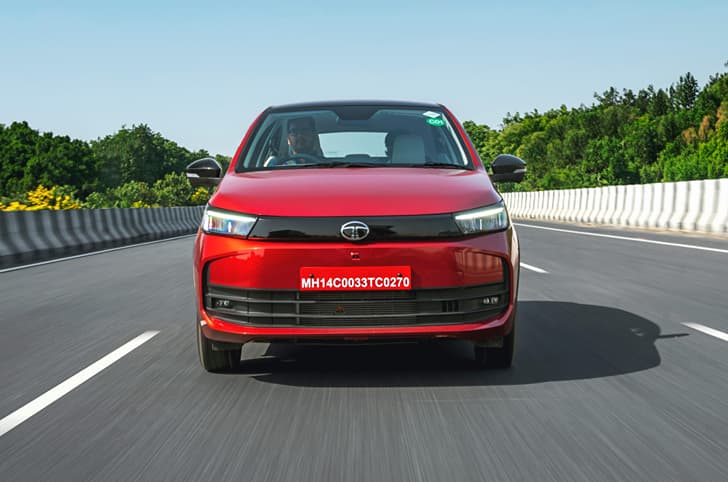

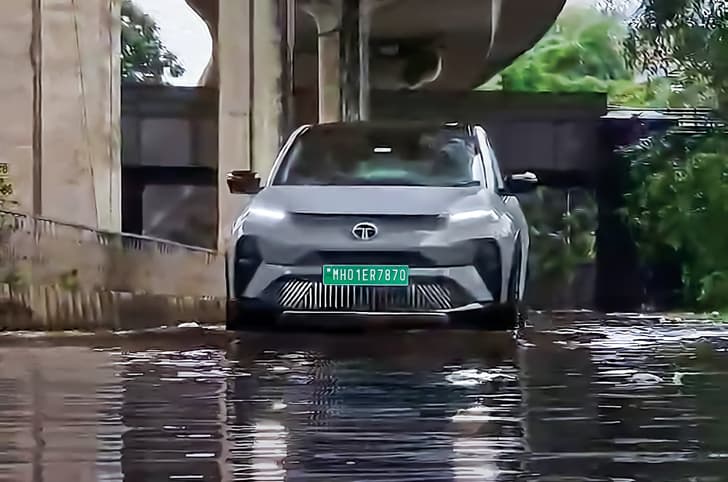
If you thought electric cars were fragile when it came to extreme weather, think again. A spell of heavy Mumbai monsoons proved otherwise for our long-term Tata Curvv EV – and, in fact, cemented my view that EVs may actually be better ‘monsoon cars’ than petrol or diesel equivalents. Unlike combustion engines, there’s no air intake to gulp water, nor an exhaust pipe to drown in floodwaters.
EV battery packs and motors are sealed to rigorous standards. The Curvv, like most modern EVs, boasts an IP67 certification, which means the critical electrical components can withstand dust intrusion and survive immersion in up to a metre of water for 30 minutes. In practice, that means you’re not nervous splashing through waterlogged streets. Flooded streets are something we have to regularly contend with outside Autocar India HQ in Byculla, which is a low-lying area. I have to say, it’s oddly liberating wading silently through standing water that would make some SUVs think twice!

As a daily driver, the Curvv EV has been utterly fuss-free. It starts, goes, and just works. What strikes me the most, switching back and forth with ICE cars, is the refinement. There’s no vibration, no idle thrum, just a smooth surge when you flex your right foot. In the default Sport mode (which I leave it in all the time since city range isn’t an issue), there’s plenty of punch for darting through traffic. The shove of instant torque makes commuting smooth.
I did notice, though, that the initial pedal response feels a little muted for the first centimetre or two of travel. This isn’t accidental. EVs are often programmed this way to prevent abrupt throttle inputs, improve drivability in stop-and-go traffic, and yes, help eke out a bit more efficiency. So that slight ‘dead zone’ underfoot is Tata’s calibration choice rather than a dynamic flaw.
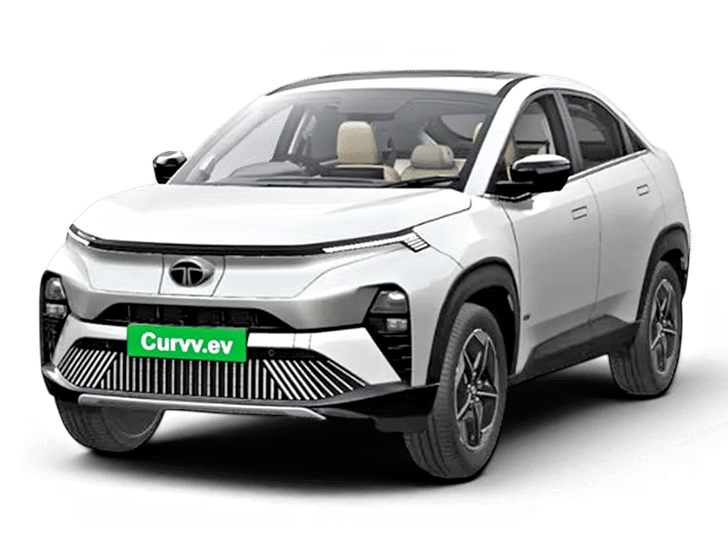
Some thoughtful design choices make life easier. The centrally placed charging flap, for instance, is a small but important detail – it means you don’t have to back into or angle awkwardly at charging points. Similarly, the 500-litre boot is genuinely cavernous, easily swallowing several suitcases on an airport run with room to spare.
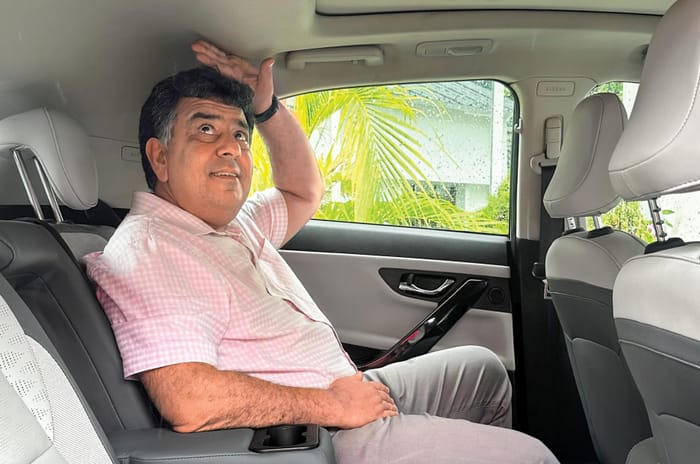
The rear seat, however, isn’t the Curvv’s strong suit. I only sat there once and quickly realised it’s not where you’d want to be for long drives. The sloping roofline eats into the headroom, making ingress and egress less graceful than in a conventional SUV. Add the slightly raised floor – a common EV trait, since the battery pack sits underneath – and you get a more knees-up posture, which can feel cramped.
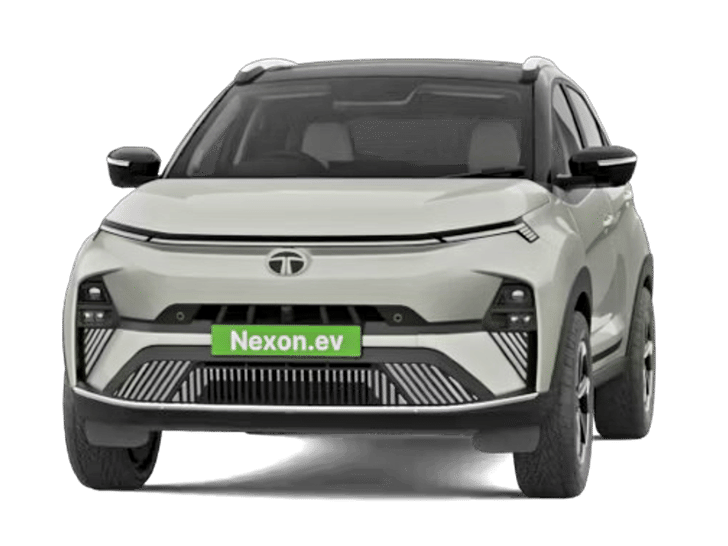
What impressed me is how planted the Curvv feels once you’re doing highway speeds. Some of that can be attributed to its DNA – the Curvv still sits on Tata’s X1-based platform, a structure originally engineered for a GNCAP 5-star crash test (the Curvv EV, too, is a 5-star car) and to carry heavier diesel variants, and that mechanical hardiness carries through here. Stability inspires confidence, though if you’re coming from something like a Nexon EV, I’ve noticed the steering isn’t quite as feelsome. There’s a bit of woolliness around the straight-ahead position, and keen drivers will miss the feedback. Still, it’s accurate enough and light enough in town to never feel cumbersome.
Not all roads are perfectly smooth, though – in fact, in Mumbai, they are atrocious – and this is where the Curvv gets tripped up. The 18-inch wheels, with their relatively low-profile tyres, look aggressive and nicely fill the wheel arches, but sharp potholes thwack through into the cabin more than you’d like. A set of 17-inchers with cushier tyres might better suit our conditions.
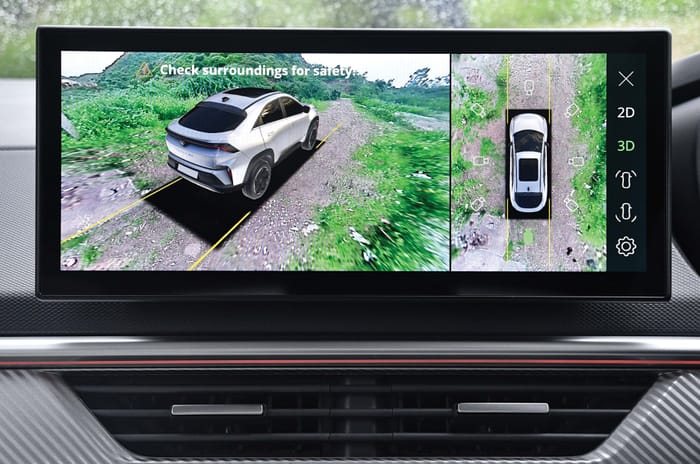
Up front, though, the cabin redeems itself. The JBL sound system is stellar – easily among the best in its class with its clarity and punch. The equipment list is generous too: you get a large touchscreen with wireless Apple CarPlay/Android Auto, a digital driver’s display, a panoramic sunroof, ventilated front seats, a 360-degree camera and connected-car features. In truth, a lot of this I barely touched – things like the voice assistant, the in-built navigation and the Alexa integration – were nice to have, but in practice, my phone did all the heavy lifting.
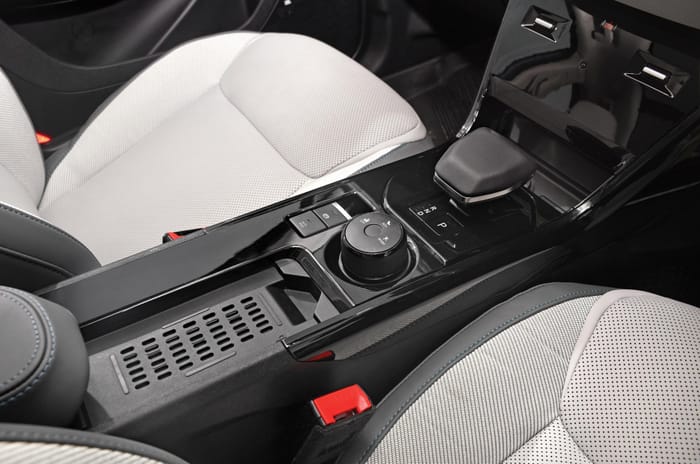
Living with the car has thrown up a few ergonomic niggles. The absence of proper front cup holders is baffling – especially on expressway runs, where I like to grab a cappuccino. The steering offers rake adjustment but not reach, which isn’t a dealbreaker but makes fine-tuning my driving position harder than it should be. These aren’t big issues, but they are reminders that Tata could sweat the small stuff a little more.
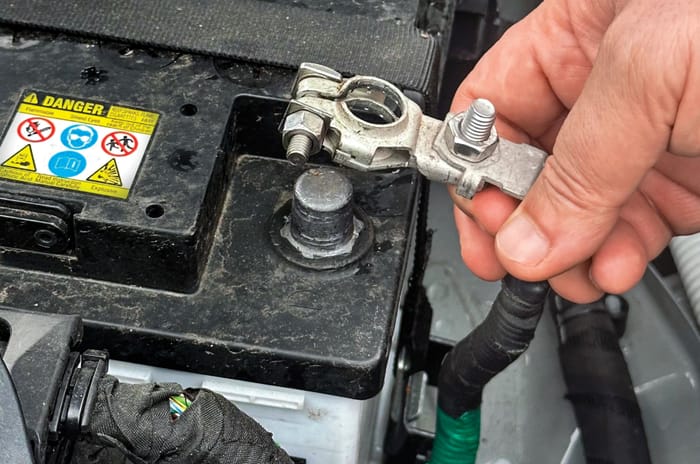
And while I said the Curvv EV has been fuss-free, I spoke too soon! I was left stranded one morning (thankfully, when the car was safely parked) when the 12V auxiliary battery failed. The car went completely dead. No warning, no limp mode, just lights out. A crude hack of disconnecting the terminal and putting it back on brought it back to life, but the experience was a sobering reminder that Tata’s reputation for faults hasn’t entirely gone away. EVs may not have engines or gearboxes, but software and electronics are their weakest links, which Tata Motors doesn’t seem to have completely nailed.
Range anxiety? Honestly, not a problem in town. Driven in my usual mildly enthusiastic style, mostly stuck in Sport, the Curvv still returns 5-6km/kWh. With its long-range battery pack, which translates into well over 350km of usable real-world range – plenty to make it a true daily driver.
So yes, the Curvv EV has proved to be an excellent daily driver but also reminded me of the frustrations Tata owners have long had to live with. This reliability blot notwithstanding, the Curvv EV blended seamlessly into everyday life, doing everything asked of it with ease. And that, really, is what you want from a long-term companion.
What community is saying on the Curvv EV?
Odometer 7315km | Price Rs 21.99 lakh (ex-showroom, India) | Economy 5.2km/kWh |
Faults None | Previous reports April 2025 |
 Sergius Barretto
 Nikhil Bhatia
 Rahul Kakar
 Ameya Dandekar
 Shapur Kotwal