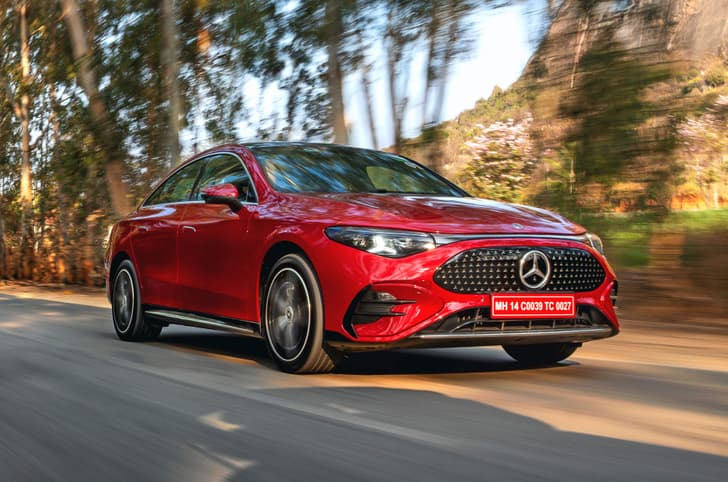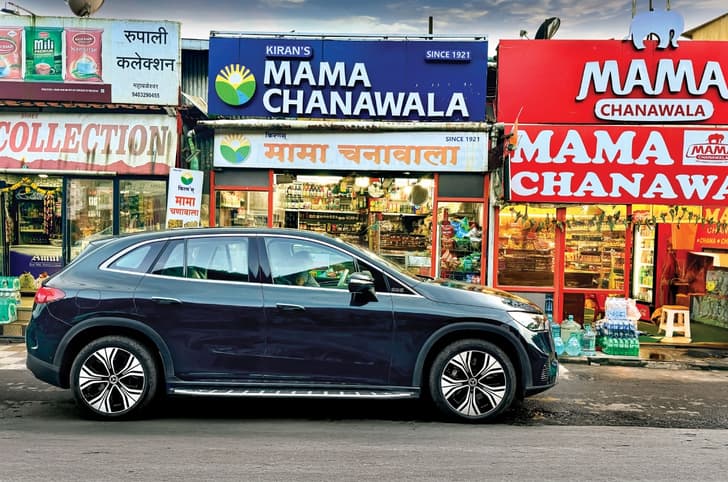
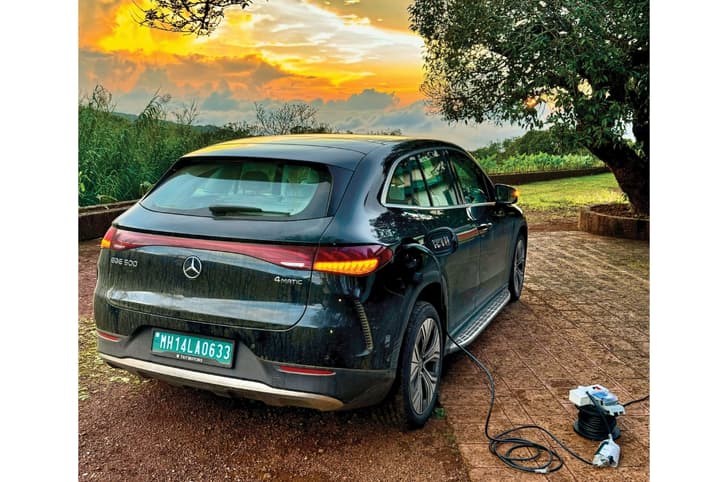
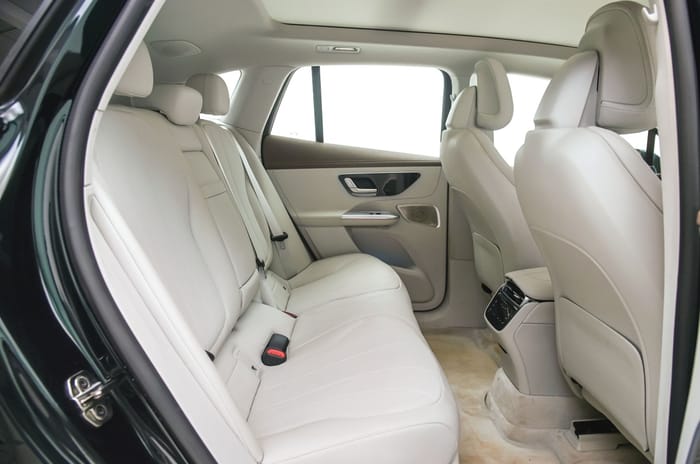
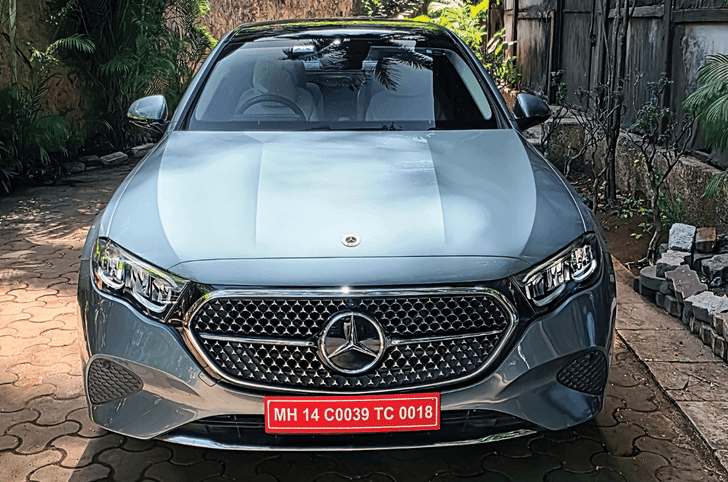
The thing about EVs is that you don’t tend to stray too far from a home charger – or, in my case, the office charger. The Mercedes EQE SUV, which was part of our long-term fleet for a few months, rarely left town. Other than a quick dash to Pune, it’s been pretty much city-bound, gently gliding over Mumbai’s clogged and bumpy roads. Most of the time, I’ve been behind the wheel, enjoying its smooth drive. On occasions when parking is a struggle, I’ve had to switch to being chauffeur-driven. Even then, I find myself preferring the front passenger seat because the rear seat, while spacious, doesn’t hit the mark in terms of comfort. The lack of underthigh support and a backrest that is a touch too upright seriously compromise the ultimate comfort you want and expect from a Merc. The other issue is that the nearly 3-metre-long wheelbase (and the absence of rear-wheel steering) makes manoeuvring through tight spots challenging – or so it seems at first. However, the light controls and surprisingly responsive nature of this 2.7-tonne electric SUV take much of the sting out of navigating confined spaces.
It’s confined spaces I am happy to leave behind as I hit the Atal Setu and head to, yes, you guessed right, Mahabaleshwar. The drive to Mahabaleshwar is my go-to testing ground for cars. The mix of six-lane expressways, single-lane stretches, and the twisty ghat roads that lead to the hill station is a perfect workout for any car.
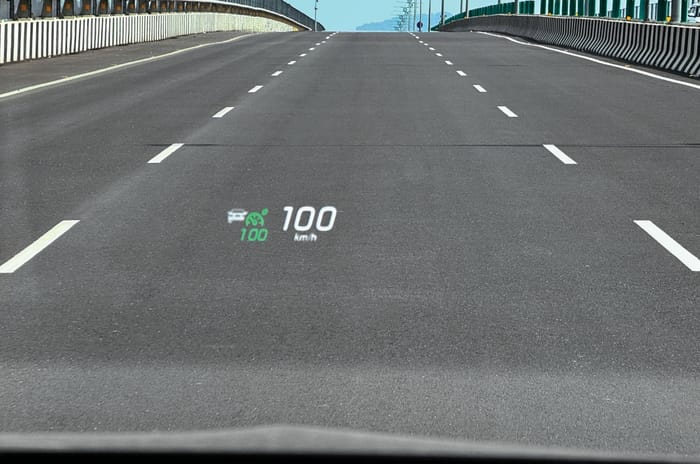
The EQE SUV aced the first leg of this journey, sucking just 55 percent of the battery for the 190km drive (from the office) to Poladpur at the foot of the ghats. The efficiency translated to 4.7km/kWh, which is very impressive for such a big and heavy car.
One of the reasons for this remarkable efficiency is the EQE SUV’s aerodynamics. With a low drag coefficient (Cd) of just 0.26, the EQE SUV slices through the air far more efficiently than most vehicles in its class. Mercedes’ engineers have focused heavily on reducing drag, and it shows – not just in the numbers but in the car’s rounded, less traditional SUV-like design.
This aerodynamic philosophy mirrors what we experienced with the EQS sedan, which played a crucial role in our Guinness World Records title for the longest distance travelled on a single charge. While the EQE SUV’s shape has put off traditionalists looking for a boxy, rugged silhouette – like its ICE-equivalent GLE – it’s hard to argue with the results when you’re covering long distances with minimal energy consumption.
With enough range in my pocket, or rather the battery, I threw range anxiety out of the window for the last 40km up the Ambenali ghat, which, as always, was a blast. The tarmac, which is ripped apart after every monsoon, was in surprisingly good shape this year.
The colossal 858Nm of instant torque from dual electric motors and their near-silent operation made for an exhilarating drive.
The EQE SUV’s ride quality is a bit of a mixed bag. On NH66, it managed the countless speed bumps with aplomb, flitting over them in a way that made the journey incredibly comfortable. However, at speed, the suspension felt a bit floaty and things didn’t improve much on the Ambenali ghat. Even in its stiffest setting, Sport, the suspension couldn’t quite rein in the car’s body movements. The EQE SUV felt a bit roly-poly leaning into corners. While it’s not a deal breaker for daily use, spirited drivers will find this soft setup a bit disappointing.
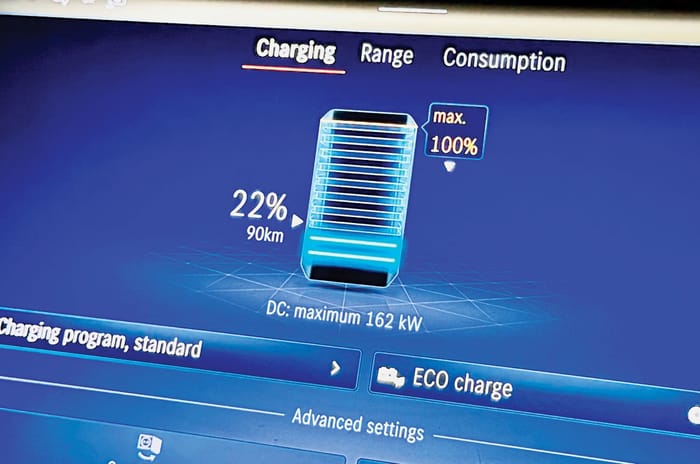
Gravity and a heavy right foot took their toll on the range, which plummeted by the time I reached the top. Still, I arrived in Mahabaleshwar with a decent buffer of 22 percent charge remaining. Considering I completed the drive in a brisk four hours flat, that’s pretty efficient. Under normal conditions, a leisurely highway cruise with no significant elevation changes would translate to a real-world range of around 400km.
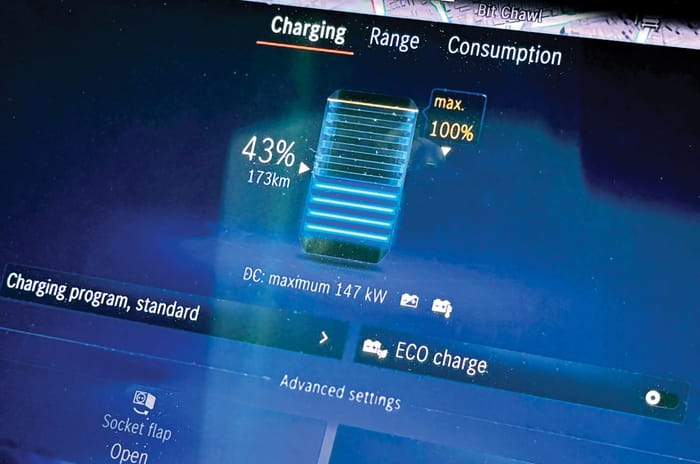
To put the effect of gravity or an uphill climb into perspective, the drive back on the same route, covering the same distance in the same time, resulted in a much healthier 42 percent charge remaining!
No Mahabaleshwar trip of mine is complete without the boot packed to the brim. Whether it’s weekend luggage, shifting books to stock my library in the hills, or a couple of crates of strawberries on the way back, the EQE SUV’s 520-litre boot proved adequate, despite the spare tyre sitting on the flat and wide loading area eating into space.
Charging? Always tricky when you’re out of town. The public charger at the Taj in Mahabaleshwar, which I had planned to use, was out of order – an all-too-common issue in India’s fledgling EV ecosystem. As a result, I relied on my home 3kW slow charger, which, though reliable, is painfully slow and took over a day to top up the large 90.6kWh battery.
Living with the EQE SUV, it’s hard not to be wowed by the cabin. The materials, the design, and the sheer tech on offer make it feel truly special. The Hyperscreen, which stretches across the dashboard, is the star of the show. Not only is it incredibly functional, but it also transforms the cabin into a futuristic lounge, especially at night when the ambient lighting adds to the drama.
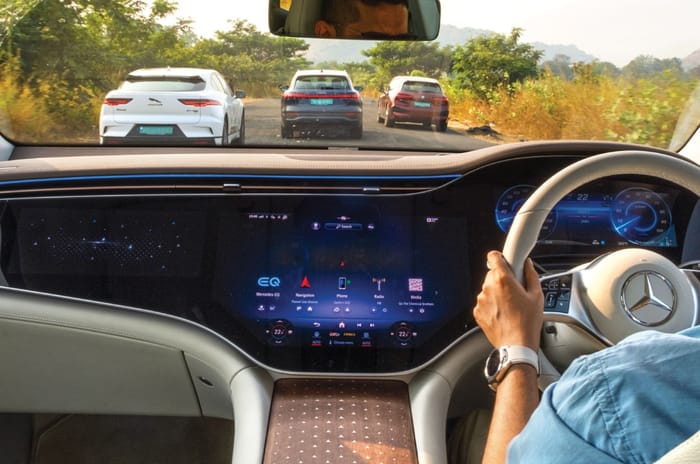
These few months with the EQE SUV gave me a nice taste of the future of electric luxury.
 Gavin DSouza
 Sergius Barretto
 Nikhil Bhatia
 Lenny D'sa