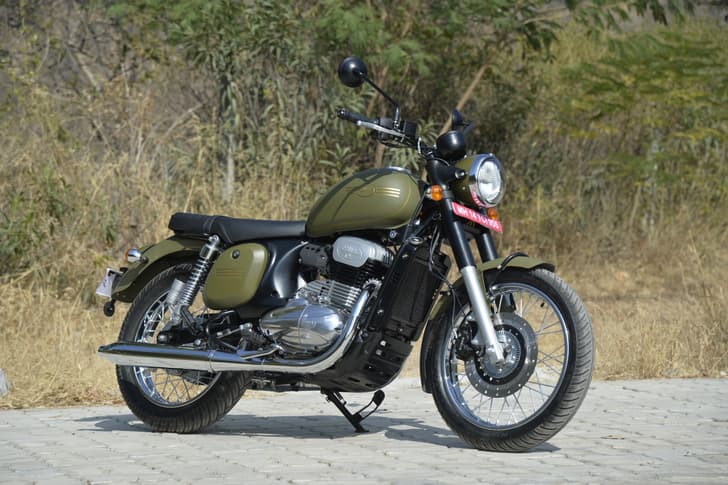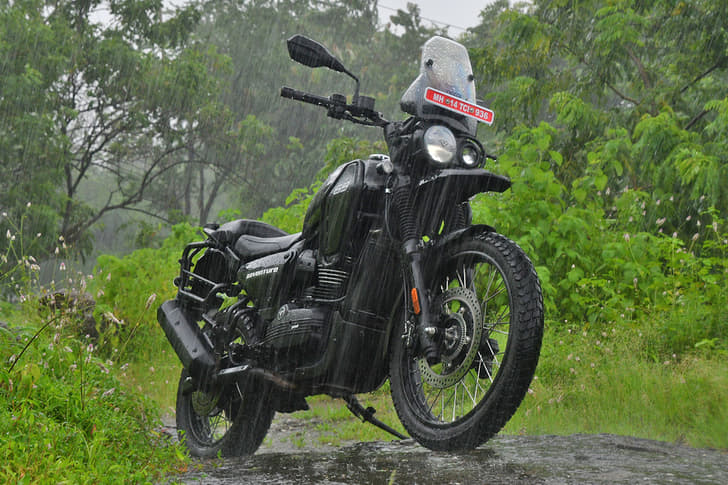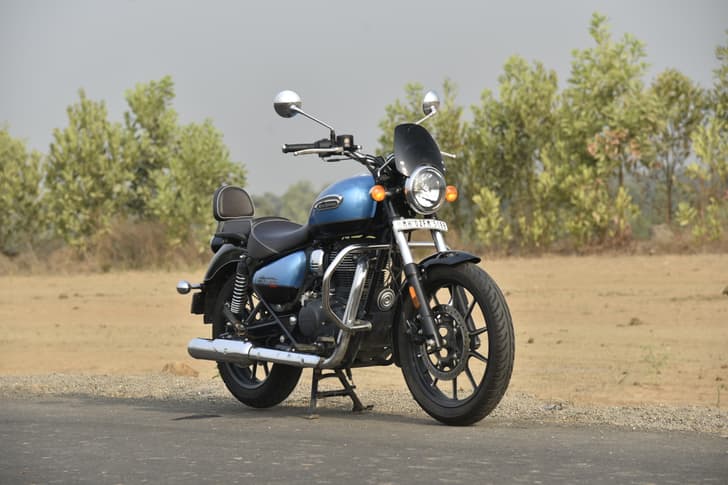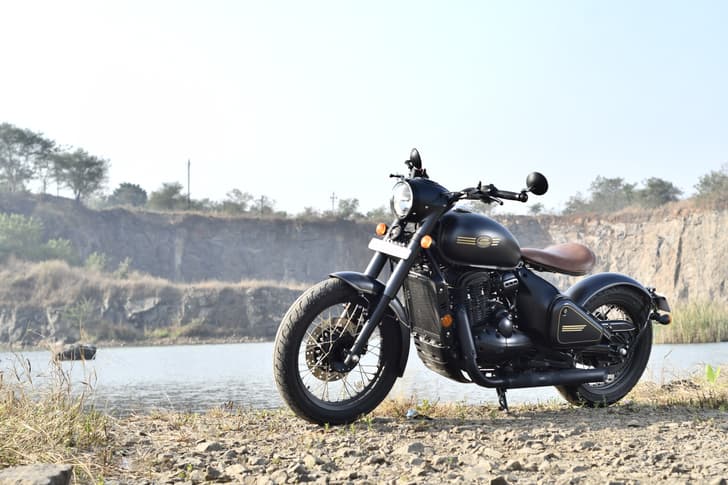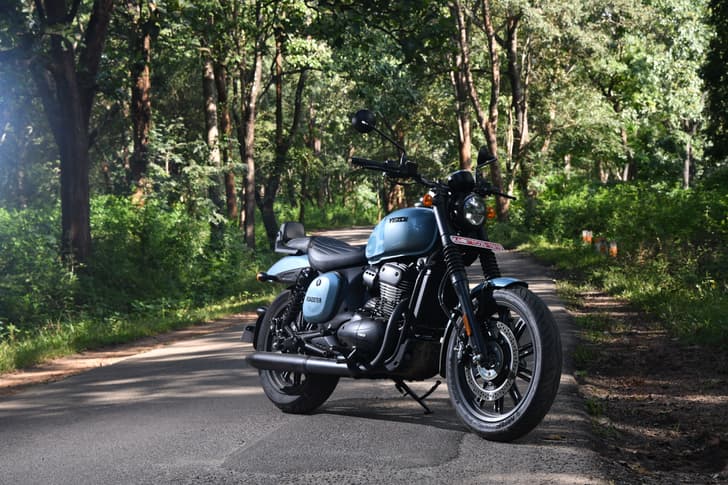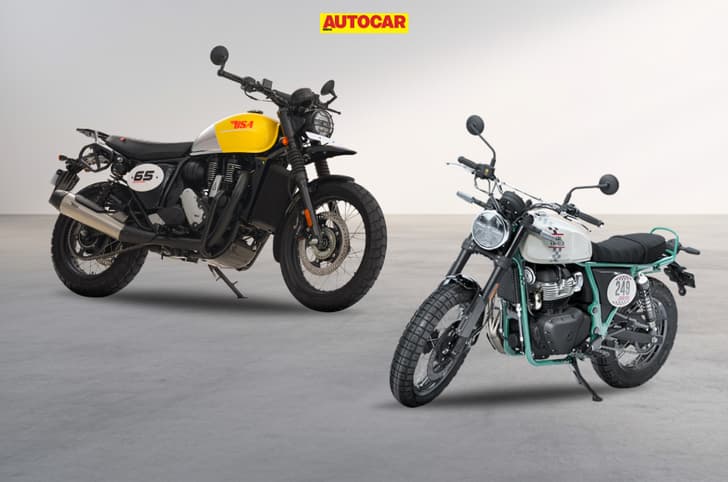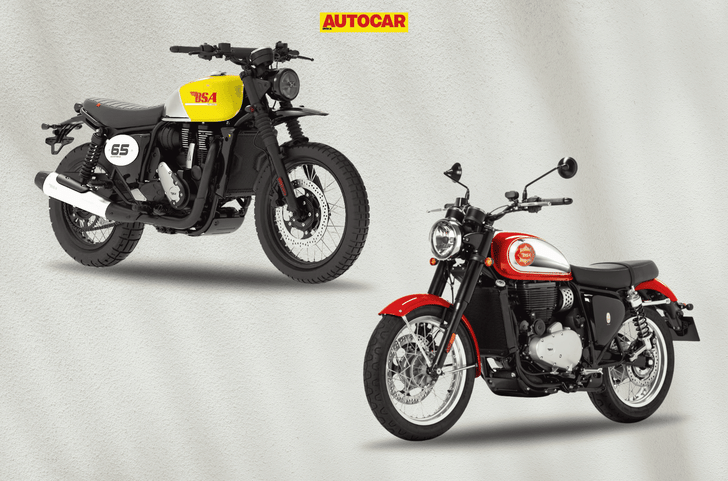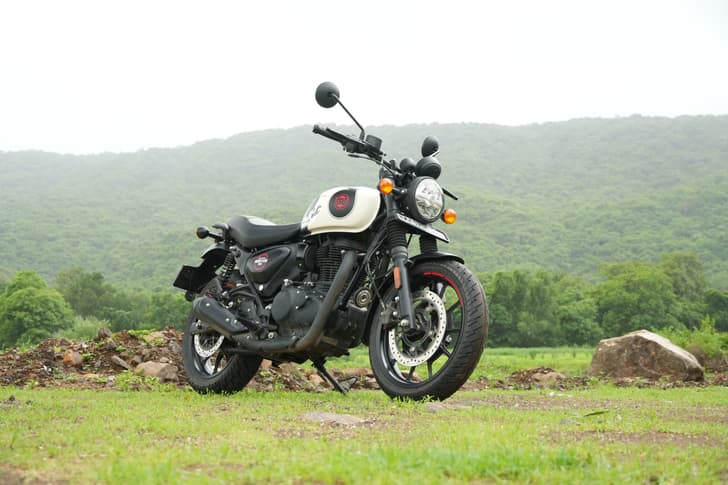

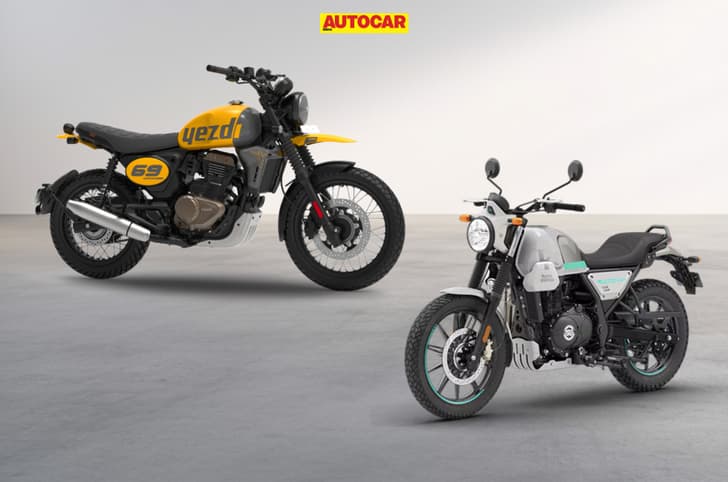
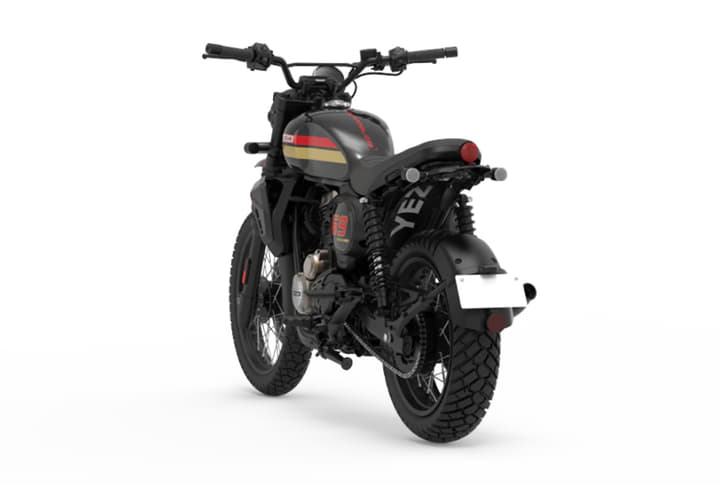
The updated Yezdi Scrambler goes up against the Royal Enfield Scram 440 in the entry-level scrambler segment. The format itself has been gaining traction in recent years, particularly given prevailing road conditions. Scramblers sit between conventional roadsters and larger adventure tourers, offering more versatility for our conditions, while avoiding the size and intimidation that often comes with ADVs.
While both motorcycles target a similar use case, their mechanical setups and performance characteristics differ on paper. Here’s a detailed look at how they compare across key specifications.
Updated Yezdi Scrambler vs Royal Enfield Scram 440: Engine and output
Both engines use different cooling technologies, lending them distinct characteristics.
The Yezdi Scrambler produces higher peak power despite its smaller displacement, which can be attributed to its liquid-cooled setup and a higher-revving tune.
The Royal Enfield Scram 440, meanwhile, is based on a larger-capacity, long-stroke engine that prioritises torque, with an inherent advantage in low and mid-range output.
In essence, the Yezdi’s focus is on peak power, while the Scram 440 is geared towards stronger low end torque delivery lower in the rev range. Both models use a 6-speed gearbox.
Updated Yezdi Scrambler vs Royal Enfield Scram 440: Weight and dimensions
Yezdi only provides wet weight with no fuel
A direct comparison of weight isn’t like-for-like here, as Yezdi quotes a wet weight excluding fuel, while Royal Enfield provides a kerb weight figure. In practice, once fuelled, the difference between the two is likely to be smaller than it appears on paper.
Yezdi also claims an 8kg reduction over the previous Scrambler, indicating a focus on lowering overall mass with this update.
In terms of dimensions, the Yezdi Scrambler has a taller seat height, while the Scram 440’s lower seat could make it more accessible. The
Royal Enfield also has a longer wheelbase, while the Yezdi is comparatively more compact.
The Scram 440’s larger fuel tank, meanwhile, points to a potential advantage in range.
Overall, the Yezdi appears lighter and more compact, while the Scram 440 is larger and likely to offer greater range.
Updated Yezdi Scrambler vs Royal Enfield Scram 440: Tyres, brake and suspension
The Royal Enfield Scram 440 gets significantly more suspension travel
Both motorcycles run a similar front wheel and tyre size, but the Yezdi Scrambler uses a wider rear tyre compared to the Scram 440.
Braking hardware differs slightly, with the Yezdi equipped with a larger front disc, while both use the same size rear disc.
The key difference is in suspension. The Yezdi continues with a telescopic fork and twin shock absorbers, whereas the Scram 440 gets a telescopic fork and a monoshock, along with significantly more suspension travel at both ends.
Updated Yezdi Scrambler vs Royal Enfield Scram 440: Features
Both motorcycles get LED headlight and tailight
Both the Yezdi Scrambler and RE Scram 440 cover the basics with an LED headlight and taillight but the RE makes do with bulb indicators. Both motorcycles miss out on any sort of Bluetooth connectivity. In terms of safety aids, they both get dual-channel ABS. The Yezdi comes with an LCD dash whereas the Royal Enfield comes with a digi-analogue unit.
Updated Yezdi Scrambler vs Royal Enfield Scram 440: Price
The Yezdi benefits from a lower starting price
The Yezdi Scrambler undercuts the Royal Enfield Scram 440 by a fair margin at the entry point. Across its range, the price difference is largely linked to colour options rather than changes in hardware, and it continues with conventional spoked wheels.
The Scram 440, meanwhile, is priced higher, with the base ‘Trail’ variant featuring spoked wheels with tubed tyres. Moving up the range brings the option of alloy wheels on select colour variants, which can be more convenient in the event of a puncture.
Both motorcycles approach the scrambler brief differently. The Yezdi Scrambler positions itself as a more compact, higher-revving offering, while the Himalayan 411 derived Scram 440 has a larger, more substantial presence.
Ultimately, a test ride should give a clearer indication of which motorcycle better suits your requirements.
 Vishal Venugopal
 Stephen Raj Antony