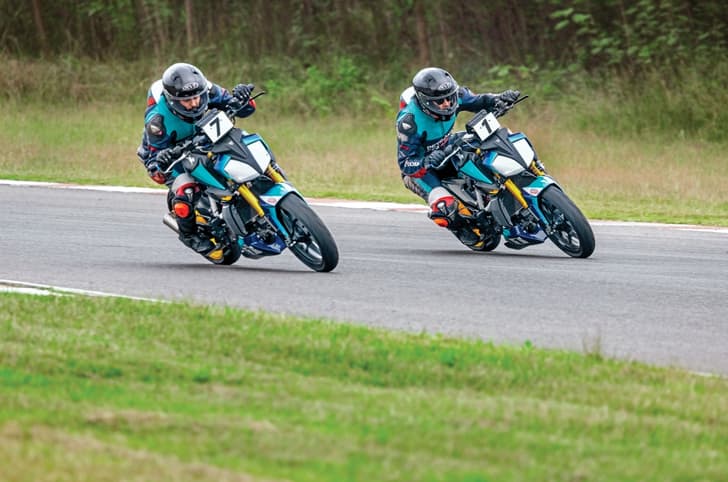
The final round of the TVS Young Media Racer Program brought us back to familiar ground at MMRT. But, unlike earlier rounds, Chennai greeted us with near-perfect conditions. Cool air, overcast skies and a steady breeze meant lower fatigue and sharper focus – a small but welcome advantage when everything else was about to change.
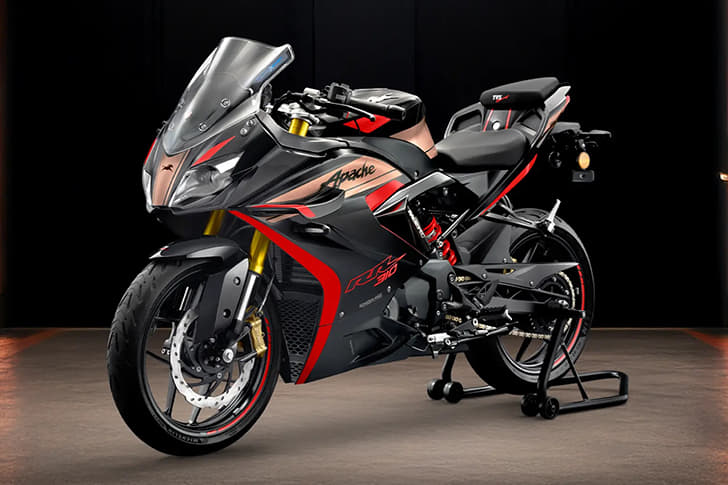
Just before our initial briefing began, TVS threw us a curveball. Instead of racing on the Apache RTR 200, we would be competing on the Apache RTR 310, making its track debut in race-ready form. A sizable bump in displacement and performance over the bike we were used to meant excitement was unanimous, but it also meant resetting everything we thought we knew.
The race-spec RTR 310 was far removed from its road-going counterpart. A remapped ECU with revised fuelling and ignition timing unlocked sharper responses, while every electronic aid was disabled. No ABS, no traction control, no quickshifter and Track Mode was permanently engaged. A full system exhaust and Eurogrip Protorq Extreme tyres completed the package, and nearly 12kg had been shaved off in the process over the road-legal version. On paper, it sounded like a dream, but on track, it demanded respect.
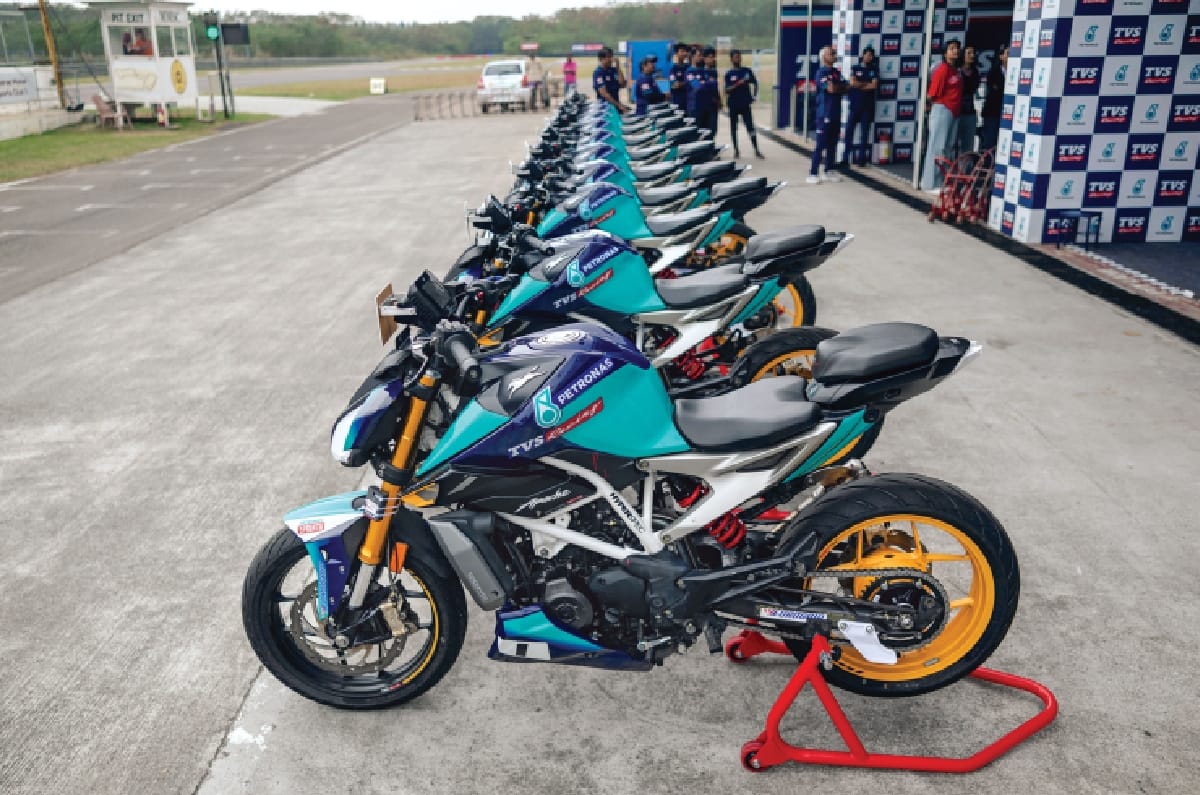
Ergonomics, however, remained unchanged from the street bike, and that quickly became the biggest challenge. Once bike numbers were allotted via the familiar ‘pick a chit’ routine, I found myself on bike number one, which is a number higher than where I’d eventually finish. But more on that later.
From the first lap, the RTR 310 felt like a handful. Shorter gearing, a very sensitive throttle, coupled with cooler track temperatures, meant every corner exit came with a hint of slip. The low-set footpegs scraped far too easily, often unsettling the bike mid corner. Worse still, the pegs and pedals sat so low that upshifts occasionally meant my toes brushed the tarmac.
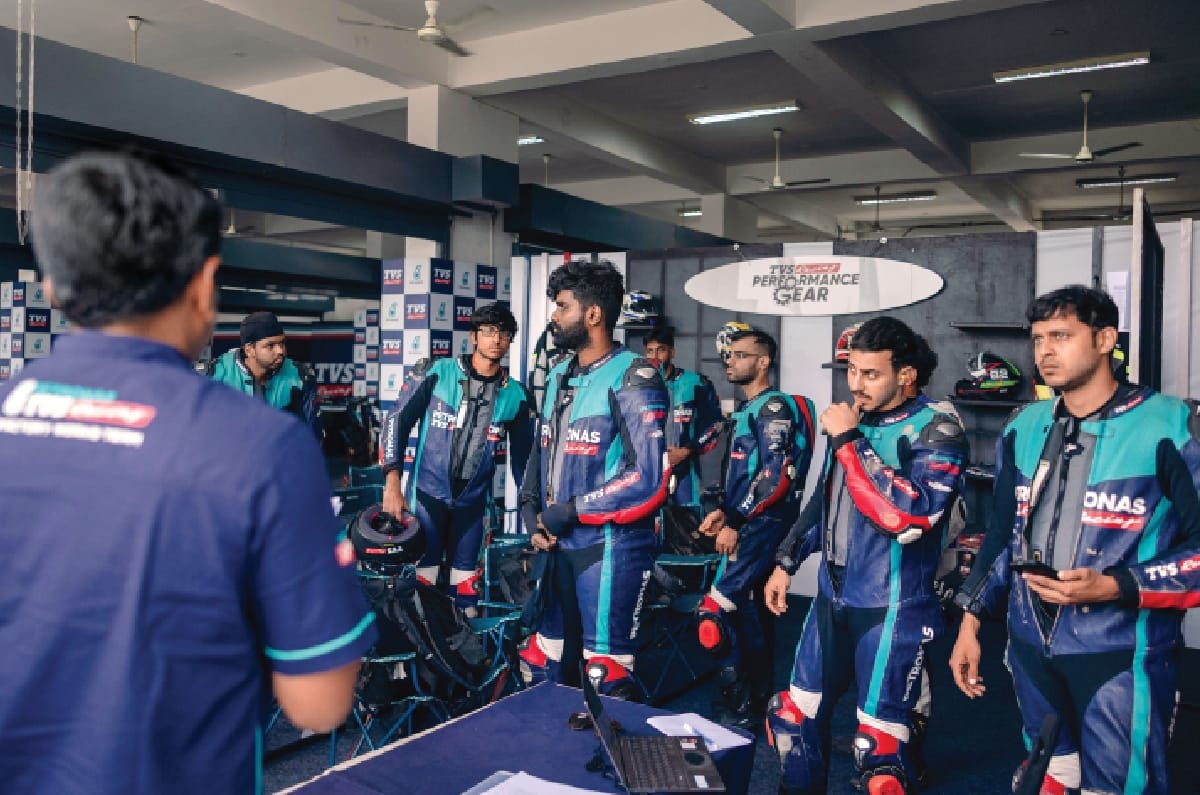
I tried leaning off more aggressively to compensate, but it only delayed the inevitable and the pegs remained the limiting factor. Despite this, I managed to piece together a lap and finished the session fourth quickest with a time of 2:12.330. As before, the post-session feedback discussion with the engineers proved invaluable. With everyone flagging the same issues, TVS raised the front end by 3mm and increased rear preload across all bikes. On my motorcycle, rear tyre pressure was also dropped by 2psi.
Those small changes made a noticeable difference, and the bike scraped less and felt more composed heading into qualifying. The RTR 310 remained intense, with snatchy responses and gearing that forced me to relearn ideal gears for every corner. It was huge fun, but also physically demanding; the kind of motorcycle that makes you realise gym time is not optional. The brakes, in particular, offered significantly more bite than the RTR 200 and demanded measured inputs, especially late into a session.
The improvements showed. I qualified fifth with a 2:10.853, just a tenth of a second shy of fourth place. It was close enough to believe that a podium was possible if everything aligned.
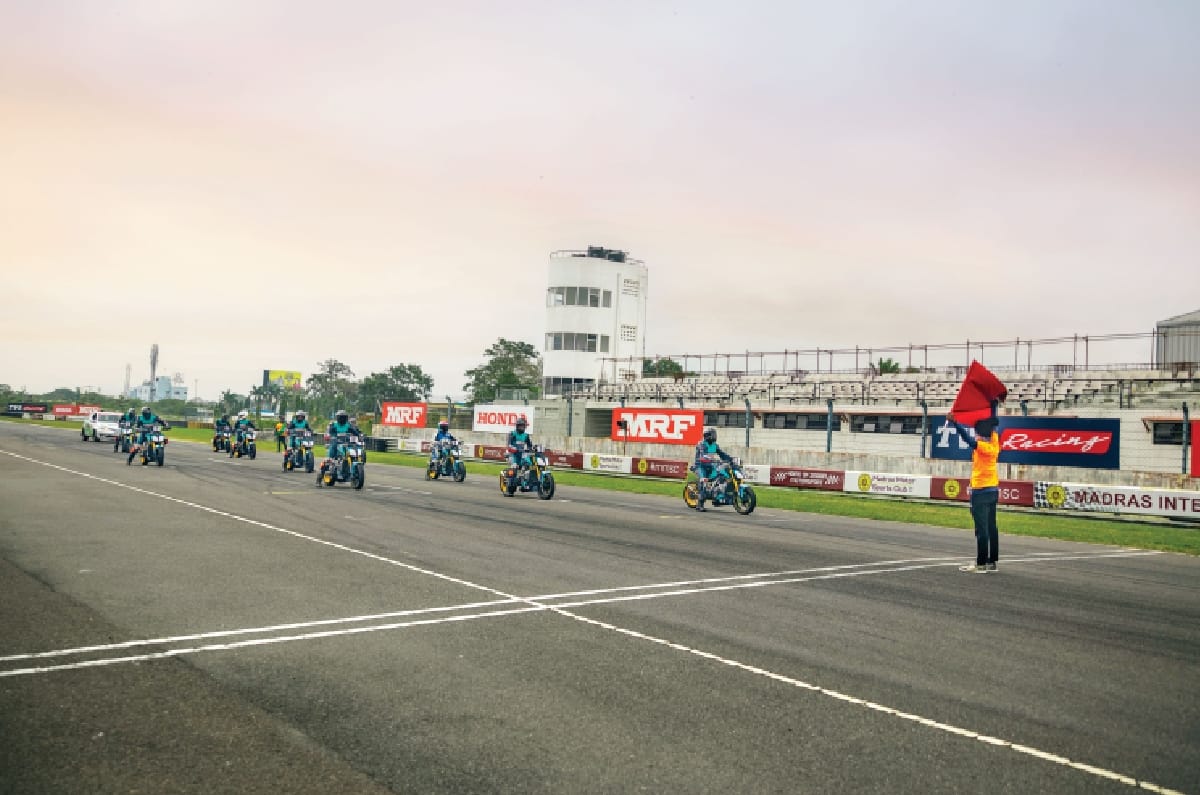
Race day brought its own challenges. From personal experience with the RTR 310 on the road, I knew launches could be tricky. The front wheel had a habit of lifting eagerly, and with little time to practise starts, I chose caution. The plan was to launch conservatively and make positions into Turn 1. Instead, everyone else got a better start, and by the time we funnelled through the opening corners, I had work to do.
I fought my way up to fourth and settled in. The leading trio began to edge away, but patience felt like the right call. Then opportunity struck and the rider in third place went down, promoting me into a podium position with two riders glued to my tail. The pressure was intense; every corner became a defensive exercise and every braking zone a test of restraint.
Eventually, I made a rookie error and carried too much speed into a corner, and then braked and downshifted aggressively. With no electronic safety net, the rear locked, and I found myself skating off track and briefly touching grass. I rejoined quickly, but the damage was done. Three positions lost in a moment.
With two laps remaining, I pushed to recover but accepted reality. I crossed the line in sixth, setting my best lap of the race at 2:09.703. It was progress, but everyone else had progressed too. Looking back, the final round of YMRP was everything it promised to be. Demanding, humbling and deeply rewarding.
TVS once again delivered a professionally run program where all we had to do was turn up and give it our best. While a podium eluded me yet again, the growth did not. Competing in a controlled racing environment sharpened my instincts, improved my feedback as a journalist, and reinforced the respect modern motorcycles deserve when pushed to their limits. Not every lesson ends with a trophy, some end with perspective. While the track was incredibly fun, it’s off to the gym for me so that I’m in better shape next time.
 Vishal Venugopal
 Ved Janve
 Stephen Raj Antony