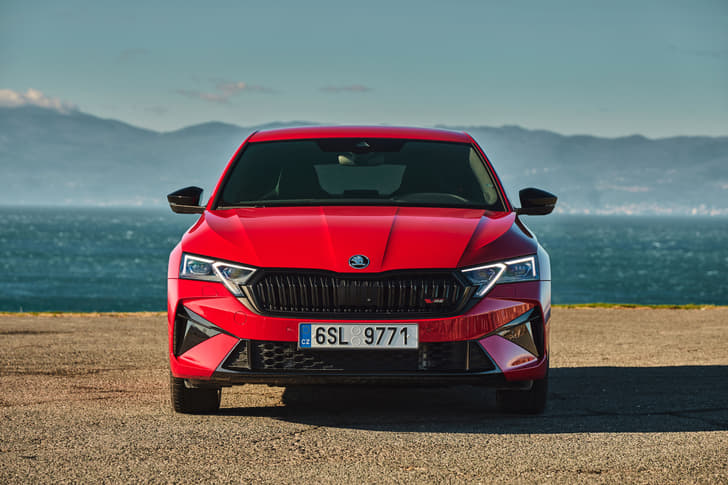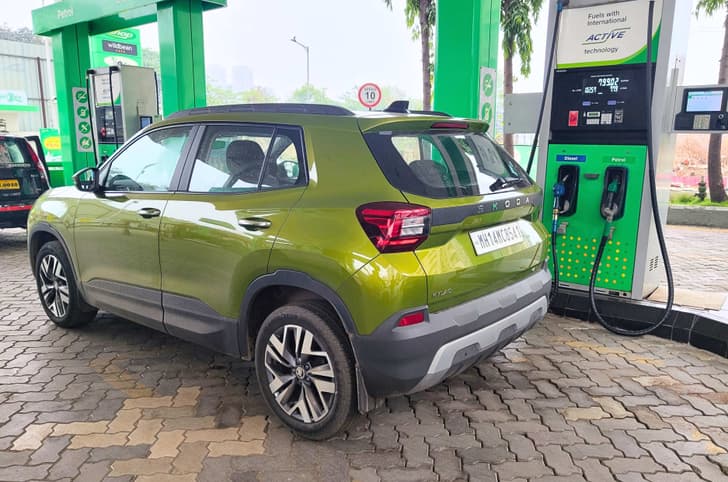
The Skoda Kylaq is the Czech carmaker’s answer to the likes of the Kia Sonet, Hyundai Venue, Tata Nexon and Mahindra XUV 3XO. Priced between Rs 8.25 lakh to 13.99 lakh (ex-showroom), the Skoda Kylaq is offered with a solitary turbo-petrol engine. We’ve now subjected the compact SUV to our real-world fuel efficiency tests and the results are as follows.
- Kylaq claimed mileage is 19.05kpl (MT) and 19.68kpl (AT)
- Both versions feature auto engine stop/start tech
Skoda Kylaq real world fuel efficiency explained
Kylaq MT real world average is 12.86kpl; Kylaq AT's mileage is 11.03kpl
The Skoda Kylaq is powered by a 1.0-litre, three-cylinder, turbo-petrol engine that puts out 115hp and 178Nm, and comes with the option of either a 6-speed manual or a 6-speed torque converter automatic. The Kylaq’s claimed ARAI mileage is 19.05kpl for the MT and 19.68kpl for the AT.
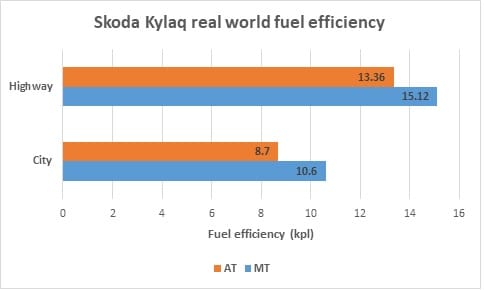
In our city test cycle, the Skoda Kylaq manual returned 10.6kpl while the automatic managed 8.7kpl. Both versions feature fuel-saving auto engine stop/start tech which aids efficiency in the city, but the system won’t keep the car off for too long in order to maintain cabin temperature. The Kylaq doesn’t get an ‘eco’ drive mode either.
In our highway test cycle, the Skoda Kylaq manual returned 15.12kpl, compared to the automatic’s 13.36kpl figure. Interestingly, the manual’s engine spins at around 2500rpm at 100kph in sixth gear, while the automatic’s is closer to 2000rpm. It’s worth noting however that, ambient temperatures during our tests were in the range of 30-36degC so the AC was working harder than usual to keep the cabin cool.
Autocar India’s fuel efficiency testing
Before our real-world fuel efficiency tests, we fill our test cars’ tanks to the brim and maintain tyre pressures based on the manufacturer’s recommendation. These cars are driven in fixed city and highway loops in and around Navi Mumbai, and we maintain certain average speeds. Throughout the tests, there is only one person in each car, running the aircon and other electricals, such as the audio system, indicators and wipers, when required, just like a regular user would. Periodic driver swaps further neutralise variations in driver patterns. At the end of each cycle, we calculate efficiency by filling the tanks to full again.

 Uday Singh
 Glenn Noronha
 Dipan Sur
 Dhruv Dhaka
 Aditya Panicker